
Think of interior design services as your secret weapon in real estate marketing. It’s not about fluffing pillows—it's about strategically presenting a property to forge an immediate emotional bond with buyers. This is a direct investment to slash a listing's time on market and significantly boost its final sale price, helping buyers see a house as their future home.
How Interior Design Services Drive Faster Sales

In a crowded market, that first impression is non-negotiable. An interior design service closes the gap between a property’s current state and a buyer’s dream, turning a simple structure into a compelling lifestyle vision. You're essentially telling a story, making potential buyers feel like they belong from the moment they see the listing online or step through the front door.
For you as an agent, this has a direct impact on your bottom line. A thoughtfully presented property doesn't just get more clicks and showings; it solidifies the asking price, warding off lowball offers and endless back-and-forth negotiations. By playing up a home’s best features and downplaying its quirks, you craft a powerful narrative that resonates on an emotional level.
The Financial and Emotional Impact
The numbers don't lie. The interior design services market is set to explode, growing by an estimated $31.77 billion between 2024 and 2029, because it flat-out works. Agents who use professional staging and virtual restyling can see listing times drop by as much as 73%. Today's digital tools are a game-changer, letting you transform a drab, empty space into a buyer’s dream in an instant.
But it’s not just about speed; it's about perceived value. When you help buyers visualize their life unfolding in a space, you remove doubt and build their confidence in the purchase. You can see the incredible difference for yourself in these house staging before and after examples.
Maximizing a Property's Potential
Every single property has hidden potential. An interior design service is what unlocks it. It’s not about stamping a generic, one-size-fits-all style on every home. It's about pulling out the property's unique character and presenting it in a way that clicks with the widest possible audience.
An empty room is just a box, but a well-designed room tells a story. Your goal as an agent is to sell that story, not just the square footage.
This can mean anything from simple decluttering to creatively showing how an odd-shaped room can be perfectly functional. To get the full picture, it's also smart to understand various strategic upgrades for resale that can prep a property for success. When you invest in design, you're not just decorating—you're building a high-impact marketing tool that secures faster, more profitable sales.
Choosing the Right Design Service for Your Listing

Not every property needs a full-blown makeover to capture a buyer's heart. The real skill is matching the right service to the listing's specific needs, maximizing its appeal without blowing the budget.
Think of it this way: you wouldn't recommend a total engine rebuild for a car that just needs a good wash and wax. The goal is to pick the single most effective strategy to fix a property's weaknesses and amplify its strengths. That means truly understanding the core services in your toolkit and knowing exactly when to use each one.
From Simple Edits to Full Transformations
You’ve essentially got four primary services to choose from, and each one solves a different problem. Accurately diagnosing a property's condition before prescribing a solution is the whole game. Get it wrong, and you're wasting time and money. Get it right, and you can drastically speed up the sale.
Here’s a quick breakdown of your options:
- Decluttering: This is non-negotiable for any occupied home. It’s all about removing personal photos, extra furniture, and anything that makes a space feel small or specific to the current owner. You're "editing" the home's story so buyers can see the structure, not the seller's life.
- Restyling: This is perfect for a home that has decent furniture but just feels… off. Maybe it's dated or lacks a cohesive style. Restyling uses the owner’s existing pieces, rearranging them to improve flow and create a more modern, inviting vibe. It’s a budget-friendly refresh that packs a surprising punch.
The most powerful interior design service is the one that solves the biggest barrier to a buyer's imagination. Whether that's clutter, an outdated style, or an empty room, your job is to clear the path for them to envision their future.
When a Deeper Intervention Is Needed
For properties with bigger issues, just moving a sofa won't cut it. This is where staging and virtual renovations come in, offering more substantial visual upgrades that grab buyer attention and justify the asking price. These services help buyers see what could be, not just what is.
Your more intensive options include:
- Staging (Physical or Virtual): Got an empty house or a home with mismatched, awkward furniture? Staging is the answer. It brings in professionally selected furniture and decor to define each room’s purpose and make it feel like a place someone would actually want to live. You can learn more in our complete virtual staging guide.
- Renovations (Physical or Virtual): This is the heavy hitter, reserved for true fixer-uppers or properties with seriously dated kitchens and bathrooms. Virtual renovations are an incredible tool here, letting you show buyers the home’s amazing potential after a remodel—without ever lifting a hammer.
The data backs this up. For property managers, remodeling is a huge opportunity, with 40% of projects now being virtual-first. And for agents, the ROI is undeniable. Staged homes sell up to 73% faster and for 1-5% more than their empty counterparts, according to industry research. The global interior design forecast shows this trend is only growing.
By choosing the right service, you’re not just decorating; you’re directly influencing the property’s performance on the market.
Navigating the Traditional Design Workflow
To really get why new tools are changing the game, you first have to understand the old way of doing things. The traditional interior design process is a long, winding road. It's thorough, for sure, but for a real estate agent trying to get a property on the market, it’s a minefield of potential delays.
It all kicks off with a deep-dive consultation where the designer gets a feel for the client's goals, budget, and style. From there, the designer disappears for weeks, pulling together mood boards, fabric samples, and detailed floor plans to pitch their vision.
Once everyone signs off on the concept, the real logistical headache begins. This is where the project moves from paper to reality, and it's also where timelines tend to fall apart.
From Sourcing to Staging
The execution phase is a complicated dance of phone calls, emails, and scheduling that can easily drag on for weeks—or even months. Every vendor has to be managed, every delivery tracked. For an agent, each day a property sits empty is another day of carrying costs and another day it’s not being sold.
Here's what that looks like in practice:
- Furniture and Decor Sourcing: The designer starts placing orders for every single piece, from the sectional sofa down to the last throw pillow.
- Vendor Coordination: This is a scheduling puzzle—lining up painters, electricians, and floor installers in the right order so they don't trip over each other.
- Shipping and Receiving: Furniture arrives, gets inspected for damage (a common problem), and is stored until it's time for the final install.
- Installation and Styling: Finally, everything is moved into the home, arranged just so, and styled for the all-important listing photos.
A single backordered sofa or a painter who gets sick can throw the entire project into chaos. This domino effect is the biggest weakness of the old-school interior design model.
Understanding the Bottlenecks
The two biggest killers in the conventional workflow are time and inflexibility. Lead times for custom furniture can be anywhere from 8 to 16 weeks, and that’s if you’re lucky. Even items supposedly "in-stock" can get stuck in shipping purgatory.
Trying to get a half-dozen independent contractors to align their schedules perfectly is nearly impossible. Things happen.
For real estate agents, this means a traditional interior design service injects a huge amount of uncertainty into the listing process. It's this slow, manual grind that makes faster, more agile solutions not just a nice-to-have, but an absolute necessity in today's market.
Calculating the ROI of Design Services
Sooner or later, every conversation about interior design services with a client hits the same question: is it worth the money? The trick is to stop talking about it as a cost. Frame it for what it is—a strategic investment with a clear, measurable return. When you know the numbers cold, you can confidently show sellers how a small upfront expense unlocks a much bigger payday.
First, let's break down how designers typically charge. Most traditional pros stick to one of two models. An hourly rate is common for consultations or smaller projects, while a flat-fee structure often covers bigger jobs like full-home staging. This gives your client cost certainty right from the get-go.
A Simple Framework for ROI
You don't need a degree in finance to calculate the return on investment here. It's a simple comparison: weigh the cost of the design service against the money it generates. The formula is just the cost of the service versus the combined benefits of a higher sale price and lower carrying costs.
A faster sale literally saves your seller money every single day the property sits on the market. Those savings add up fast and include things like:
- Mortgage payments
- Property taxes
- Homeowners insurance
- Utility bills (water, electricity, etc.)
- HOA fees
When you add those saved expenses to the bump in the final sale price, the value of that initial investment becomes undeniable.
Putting It Into Practice
Let's walk through a real-world example. Say your seller is balking at a $3,000 quote for professional home staging. Your market analysis shows that similar staged homes in the area don't just sell for about $10,000 more—they also go under contract a full month faster.
If that seller's monthly carrying costs—mortgage, taxes, insurance—total $2,500, the math is a no-brainer. The $3,000 investment leads to a $10,000 higher offer and saves them $2,500 in carrying costs. That's a total net gain of $9,500.
By presenting the numbers this way, you completely change the conversation. The interior design service is no longer an expense; it's the single most effective marketing tool to protect their equity and maximize their profit.
This data-driven approach pulls emotion out of the decision-making process. It empowers clients to see design as a critical piece of a winning sales strategy, justifying the investment and getting them the absolute best outcome for their property.
How AI Is Flipping The Script On Real Estate Design
Let’s be honest: the traditional interior design workflow is slow, expensive, and a logistical nightmare. For years, agents have been stuck with long lead times just to get a property staged.
But that’s changing. Artificial intelligence isn't some far-off concept anymore; it's a practical tool that’s here now, solving the biggest headaches for agents and brokerages: speed, cost, and flexibility.
Think of it like having a digital design studio in your pocket. Instead of waiting weeks for a stager to show up, you can take a photo of an empty room and instantly fill it with furniture. You can digitally declutter a messy space or even show a buyer what a full kitchen renovation could look like. AI removes the physical and time-based roadblocks that used to slow down every single listing.
Speed And Efficiency That Actually Keep Up
The most obvious win here is the massive speed boost. A traditional design project can drag on for weeks, from the initial consultation to scheduling movers and photographers. AI gets you visuals in minutes.
This is a complete game-changer when you're on a tight deadline and need to get a property on the market yesterday.
And it’s not just about staging. Modern AI tools can automate your entire visual marketing pipeline. Just upload a video walkthrough, and platforms like Bounti can spin out a whole suite of assets for you:
- MLS-Ready Photos: Crisp, enhanced stills pulled right from your video.
- Virtual Staging: Furnish empty rooms instantly in any style you want.
- Decluttering and Restyling: Erase personal items or swap out dated decor with a click.
- Virtual Renovations: Show buyers the hidden potential in that dated bathroom.
This diagram breaks down exactly how these services impact your bottom line.
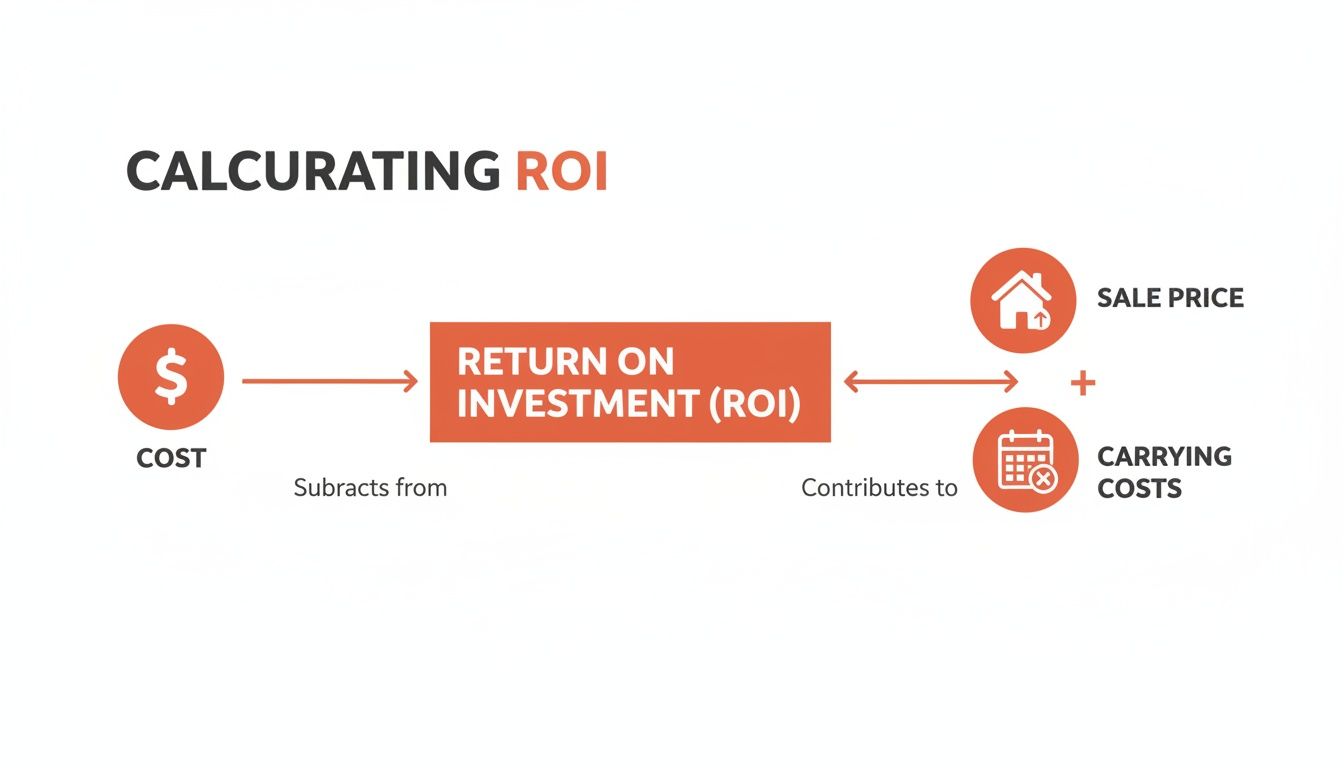
As you can see, the ROI isn't just about chasing a higher sale price. It's about slashing your carrying costs by getting the property sold faster.
Flexibility And Savings You Can’t Ignore
Beyond pure speed, AI gives you incredible flexibility. What if a buyer loves the house but hates the furniture? With AI, you can show them how the living room looks in a Scandinavian style and a mid-century modern look, right on the spot. It helps buyers form an emotional connection by letting them see the home their way.
The cost savings are just as significant. We know that 94% of buyers consider high-quality photos essential. But traditional staging easily runs $2,000 to $5,000 per property and takes weeks to pull off. AI-powered virtual tools can slash those costs by up to 90% and have been shown to boost buyer engagement by 200%.
To put this in perspective, here’s a quick comparison of the old way versus the new way.
Traditional vs AI-Powered Interior Design Services
The bottom line is that AI makes professional-grade design accessible for every single listing, not just the high-end ones.
AI doesn't replace the principles of good design; it just makes them available to everyone. It gives every agent the power to show a property in its absolute best light, instantly and affordably.
With these tools, you can showcase the true potential of any home, whether it needs a simple declutter or a full-blown virtual renovation. And if you're looking to take your listing photos to the next level, check out our guide to the best AI photo editing software.
Selecting the Right Interior Design Partner
Now that you know your options, picking the right partner is all about matching their skills to your listing’s specific needs. Whether you go with a traditional designer or a modern AI platform, you need to be thoughtful. The goal is to find a resource that clicks with the property, your client's budget, and your timeline.
When you’re vetting a traditional interior design service, treat it like you’re hiring for a critical role on your team. Their portfolio is their resume. Look for a track record in real estate—a designer who primarily does custom residential projects might not get the urgency or the need for broad appeal that a for-sale property demands.
Don’t just stop at their past work, either. Check their references. Call up other agents they've worked with and ask about their process, how they communicate, and if they actually deliver on time and on budget.
Vetting Your Options
The way you evaluate a human designer versus an AI tool is totally different. For a person, you’re focused on their experience and how well they collaborate. A big part of this is just knowing where to look for qualified pros, which guides like How Do I Find an Interior Designer Near Me in Northern New Jersey? can help with.
For an AI-powered solution, you’re kicking the tires on the tech itself:
- Ease of Use: How quickly can you get what you need? The whole point is to save time, not to spend hours learning a complicated new tool.
- Realism of Output: Do the final images look believable? Low-quality virtual staging or renovations can make a listing look cheap, doing more harm than good.
- Range of Services: Can it handle everything you throw at it? Look for a platform that covers decluttering and restyling as well as full-blown virtual renovations.
- Transparent Pricing: Are the costs crystal clear? You don't want to get tangled up in confusing credit systems or hit with surprise fees.
The best partner, human or AI, is the one that removes friction from your sales process. It might be a designer who executes a staging plan flawlessly or an AI tool that gives you incredible visuals in minutes. Either way, your choice should make your job easier and your listing more successful.
Frequently Asked Questions
Even when the ROI is crystal clear, you’ll find that sellers can still get cold feet about investing in any kind of interior design service. The key to getting them on board is to stop talking about it as a cost and start framing it as a crucial part of the marketing strategy.
Here’s how to handle a few of the most common questions you'll get.
How Do I Convince a Seller to Invest?
Lead with the numbers. Show them hard data from your market that proves professionally presented homes sell faster and for more money. Don't call it a "cost"—call it a marketing expense that protects their equity by getting the deal done quicker, for a better price, and with fewer carrying costs.
Nothing makes the point better than a dramatic before-and-after. Show them a powerful virtual transformation that makes the value completely obvious. When they see the impact on a buyer’s perception, it's a lot harder to say no.
Is Virtual Staging as Effective as Physical Staging?
For getting eyeballs on the listing? Absolutely. We all know that over 90% of buyers start their search online, so you have to nail that first impression.
Virtual staging gives you the power to show off a vacant property’s full potential, and you can test out endless styles for a tiny fraction of the cost of moving actual furniture. Just be sure you’re transparent and label the images as “virtually staged.” Its real job is to get buyers to fall in love with the idea of the home so they book a showing.
Virtual renovations are a game-changer for marketing fixer-uppers or homes that just need a few updates. You can help buyers see past the tired kitchen and envision its future value, all without needing to hire an architect for renderings.
Ready to transform any property listing in minutes? With Bounti Labs, you can generate stunning, MLS-ready photos with AI-powered staging, decluttering, and renovations from a single video. Explore how Bounti makes it fast and easy to create visuals that sell.