If you're getting ready to sell, the first thing to understand is that decluttering your house for sale isn't just a chore. It's a critical marketing move that directly influences your final sale price and how fast you get an offer. Think of it as the single most effective way to boost your property's value before it even hits the market.
The Real Value of a Clutter-Free Listing
Before you start shoving things into boxes, let’s talk about why this matters so much. This isn't about creating a perfectly minimalist space. It’s a calculated decision that pays off in real dollars. A decluttered home doesn't just look better in photos—it fundamentally changes how buyers feel when they walk through the door.
There's some simple psychology at work here. When a potential buyer sees a house filled with family photos, overflowing bookshelves, and crowded countertops, they're seeing your life. That creates an invisible wall, making it tough for them to picture their own furniture, their own routine, their own future in that space.
Your job is to clear the slate. You're creating a neutral, welcoming canvas that invites them to imagine their story starting right there.
Why Less Stuff Means More Money
One of the most immediate impacts of a good decluttering session is how much bigger the rooms feel. Stacks of magazines, that extra armchair in the corner, and surfaces covered in knick-knacks all eat up visual space. When you clear them out, the home's actual square footage and architecture can shine.
You’re not just selling rooms; you’re selling potential. And a space that feels open, bright, and airy just feels more valuable.
This isn't just a feeling; the numbers back it up. We've included a table below to show just how significant the impact can be.
Decluttering Impact at a Glance
The data is clear: the time you invest in decluttering comes back to you in both profit and a shorter time on the market.
Building Buyer Confidence
An organized, clutter-free home sends a quiet but powerful message to buyers: this property has been well-maintained.
It’s a subtle cue that builds a ton of trust. A buyer thinks, "If they took this much care with what I can see, they probably took good care of the things I can't see, like the plumbing and electrical."
That confidence often leads to faster, stronger offers. Buyers who feel good about a home’s condition are less likely to come in with a lowball offer, assuming there are hidden problems. By clearing the clutter, you're proactively removing doubts and paving the way for a smooth sale.
You can see the stunning power of this strategy by looking at house staging before and after examples. Ultimately, every item you put into storage is a strategic move toward showcasing your home’s true potential and getting the best possible price.
Your Decluttering Game Plan and Timeline
Jumping into a whole-house declutter without a strategy is a recipe for burnout. It’s that feeling of shuffling boxes from one room to another, only to feel more overwhelmed than when you started. A solid game plan turns that chaos into a series of small, manageable wins.
The only way to get this done is to treat it like a non-negotiable appointment. Block out the time on your calendar, whether it's an hour every evening or a full-on weekend blitz. Committing to a schedule is how you’ll see real progress, especially when you're already juggling work, family, and the stress of a move.
The Four-Box Method
To keep moving and avoid getting bogged down by every single item, the Four-Box Method is your best friend. It’s brutally simple and incredibly effective. As you go through each room, every item you pick up must go into one of four designated boxes or piles. No exceptions.
- Keep: The essentials. Things you love, use all the time, and definitely want in your new home.
- Store: Think seasonal decor, bulky furniture that cramps a room's style, or meaningful keepsakes that aren't part of the staging plan. These items should be packed up for an off-site storage unit or a corner of the garage you’ve already cleared.
- Donate or Sell: This is for anything in good condition that you just don't need anymore. Remember, one person's clutter is another's treasure.
- Discard: Broken, expired, or just plain junk. Be ruthless here. The whole point is to lighten your load for the move.
This method forces an immediate decision, which is the secret to actually clearing clutter instead of just rearranging it.
Your Strategic Timeline
Trying to tackle everything at once will crush your motivation. A smarter approach is to break the process down over a few weeks. Always start with the areas you don't use daily. This builds momentum and gives you space to temporarily stash boxes from other rooms.
3-4 Weeks Before Listing
This is the time for a deep dive into your low-traffic zones. You can make huge progress here without messing up your daily life.
- Focus Areas: Attic, basement, garage, and those forgotten storage closets.
- Your Goal: Get aggressive. Aim to clear out at least 50% of what's in these spaces. Buyers absolutely peek into storage areas, and seeing empty shelves makes them feel the house has more than enough room for their own stuff.
- Actionable Tip: Rent a small dumpster for the weekend. It simplifies everything and saves you countless trips to the dump with broken furniture, old project materials, and random junk.
2 Weeks Before Listing
Now, turn your attention to the rooms that get used, but aren't the heart of the home. I’m talking about guest rooms, home offices, and playrooms.
The key here is total depersonalization. A buyer needs to walk in and immediately imagine their home office or a welcoming space for their guests—not see a shrine to your hobbies and family photos.
Pack up personal files, craft supplies, and any extra furniture that makes the room feel smaller than it actually is.
This flowchart shows the simple but powerful value you create when you move from a cluttered house to a decluttered, sale-ready property.
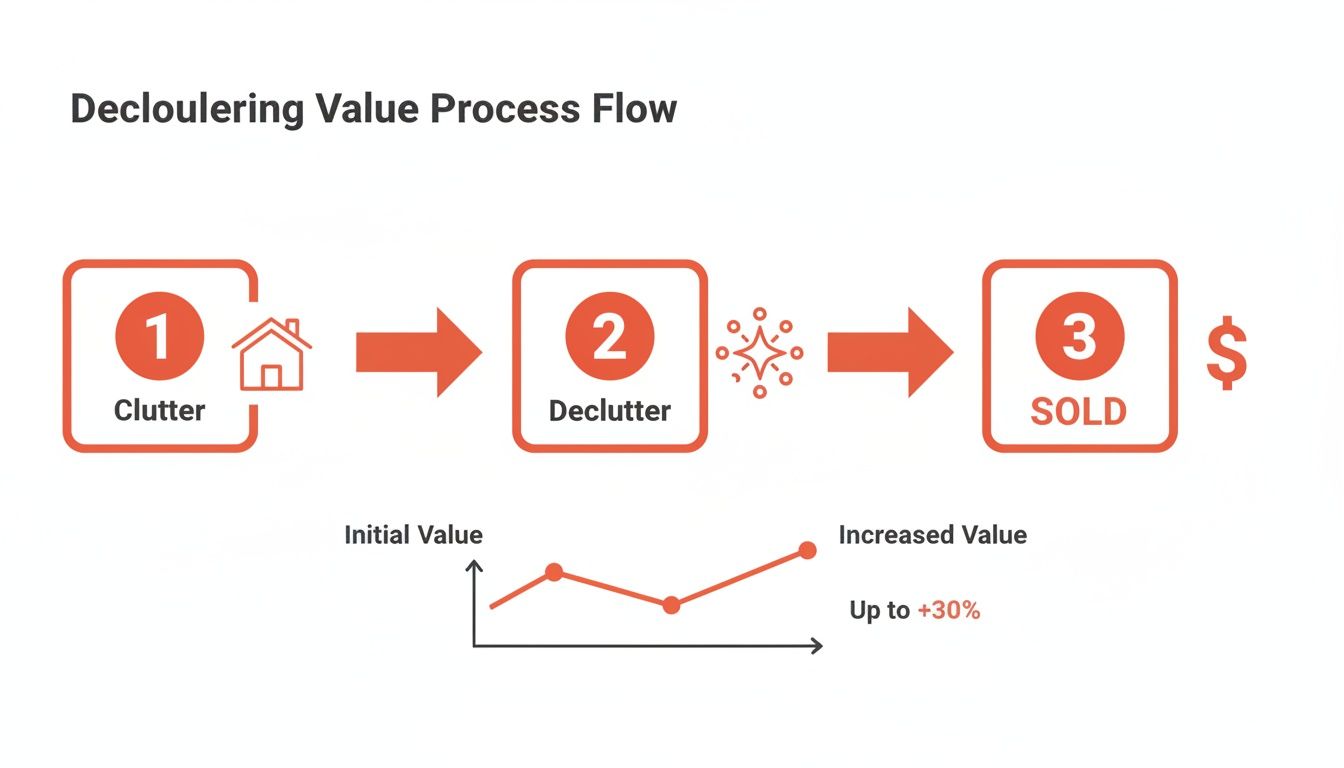
Clearing the clutter is a direct path to maximizing your home's financial potential on the market.
The Final Week Before Photos
Save the high-traffic, everyday spaces for last. This keeps your home livable for as long as possible before it needs to be picture-perfect.
- Focus Areas: Kitchen, primary bedroom, living room, and bathrooms.
- Your Goal: Create a "model home" look. Countertops should be almost completely clear, closets should look spacious (not stuffed), and every personal touch should be packed away.
- Actionable Tip: Grab an empty laundry basket for a final sweep right before the photographer arrives. Toss in the daily clutter—mail, keys, phone chargers—and hide it in your car. This one trick ensures every surface is pristine for the shoot.
A Practical Room-By-Room Decluttering Checklist
Alright, this is where the rubber meets the road. We’re going to break this down room by room, turning a monster of a job into a series of small, satisfying wins. Forget vague advice—here’s a high-impact checklist for the areas that buyers judge the hardest.
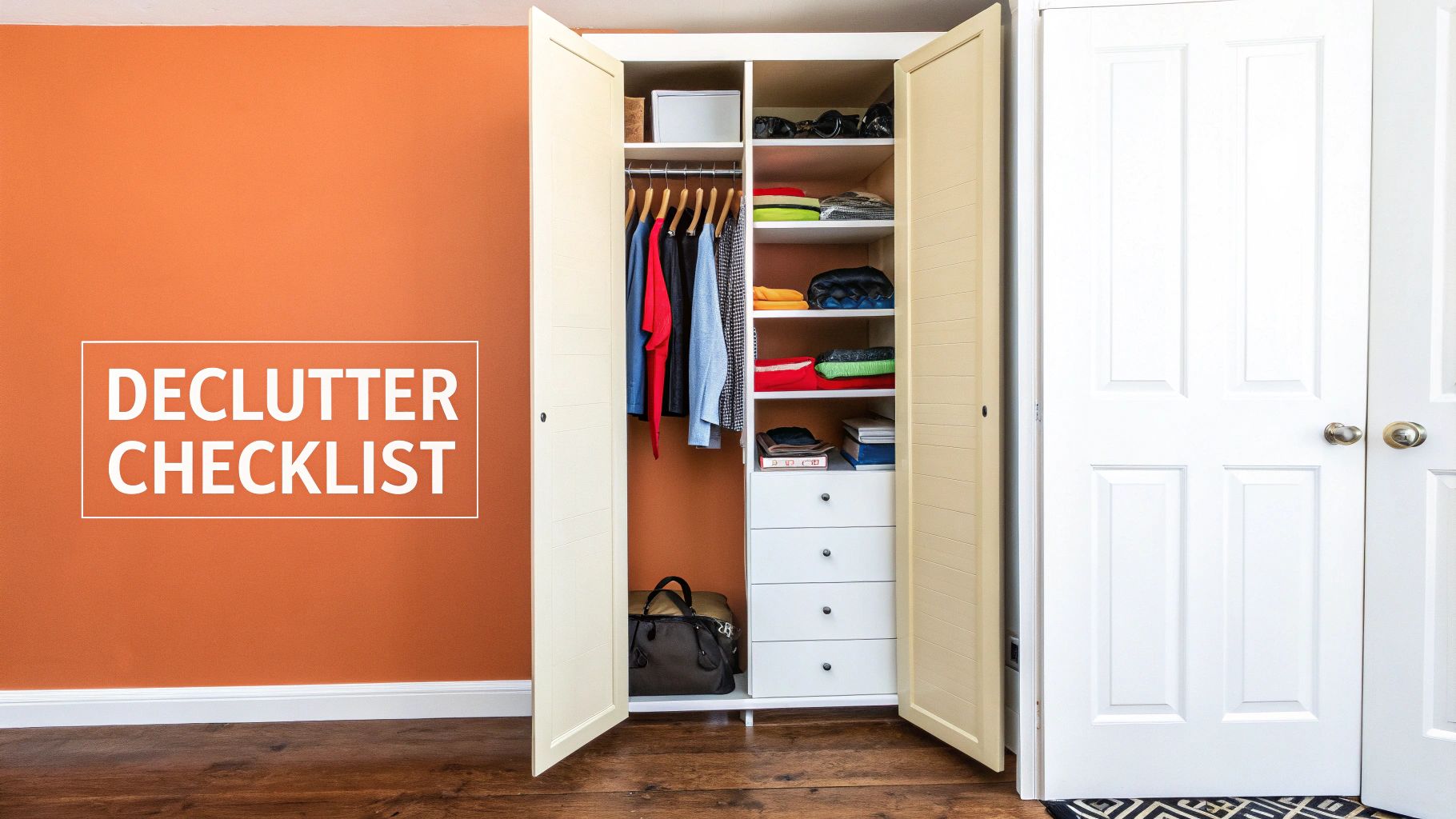
The goal here isn't just cleaning up; it's merchandising. You're creating a clean, neutral backdrop that lets your home's best features pop. Think of yourself as a set designer preparing the stage for buyers to imagine their own lives unfolding in each room.
To keep your efforts focused, this table breaks down the top priorities for the most important rooms. It’s all about creating that critical first impression.
Room Decluttering Priorities
Getting these three things right in each key area will have an outsized impact on how buyers perceive your entire home.
The Living Room: An Open Invitation
The living room is your handshake—it's the first interior space most buyers see, and it sets the tone for everything else. Your job is to create an instant feeling of "wow, this is spacious and bright."
- Edit Your Furniture: Let’s be honest, most of us have too much stuff in our living rooms for selling. Ditch the extra armchair, that oversized ottoman, or any side table that makes the walkway feel tight.
- Wipe All Surfaces Clean: Coffee tables, end tables, mantels—they all need to be nearly bare. A single art book or a simple vase is all you need. Anything more is just clutter.
- Depersonalize Completely: This is a big one. Pack away the family photos, the kids' drawings, and your personal collections. Buyers can't picture their life in your home if yours is everywhere.
- Manage Media Clutter: That tangled mess of wires behind the TV? Fix it. Those stacks of DVDs and video games? Store them. Create a clean, organized entertainment zone.
You want a buyer to walk in and think, “This room feels so airy,” not, “Where would my couch even fit?” Every item you remove makes it easier for them to say yes.
The Kitchen: A Clean Slate
For so many buyers, the kitchen seals the deal—or breaks it. They’re looking for function, tons of storage, and a clean, modern vibe. When you declutter your house for sale, the kitchen is where you need to be absolutely ruthless.
Even everyday items like a toaster can signal a lack of counter space to a critical eye. Your mission: get those countertops as empty as humanly possible. This one move can radically change the perception of your kitchen’s size.
- Clear the Countertops: The coffee maker, the knife block, the utensil crock... they all have to go. Store them. The only thing you should leave out is one simple decorative item, like a bowl of fresh lemons.
- Organize Cabinets and Pantry: Buyers open doors. It's what they do. Make sure when they peek inside, they see neatly stacked dishes and organized food items, not chaos. Toss anything expired. The goal is to scream, "There's plenty of storage here!"
- Neutralize the Refrigerator: Take every single magnet, photo, and calendar off the door. A clean, blank fridge surface makes the whole room feel tidier and better maintained.
Bedrooms: A Peaceful Retreat
Bedrooms should feel like a serene escape, not a multi-purpose command center. You’re transforming your personal sanctuary into a tranquil, hotel-like space that promises relaxation. That means getting rid of anything that feels too personal or just creates visual noise.
A critical mistake I see sellers make all the time is ignoring the closets. An overstuffed closet is a massive red flag for buyers. It immediately tells them the house doesn't have enough storage.
Focus on showcasing space and calm.
- Clear All Surfaces: Nightstands and dressers should have nothing on them but a lamp and maybe a single book. This creates a minimalist, peaceful vibe that sells.
- Conquer the Closets: This part is non-negotiable. Your goal is to have closets that are at least 30-50% empty. Pack away all out-of-season clothes and shoes. Pro tip: buying a pack of matching hangers is a cheap trick that makes closets look amazing.
- Simplify the Bed: Use crisp, neutral, and inviting bedding. A few decorative pillows are great, but don't go overboard. Let the bed look like a place to rest, not a pillow showroom.
Smart Ways to Handle Unwanted Items
You’ve done the hard work of sorting. Now you're staring at piles for keeping, storing, donating, and trashing. This final push is all about logistics—getting the excess stuff out of your house without adding more stress or cost to the process.
What you do next really depends on your goal. Are you trying to make a little cash, clear everything out as fast as possible, or be as eco-friendly as you can? Each path requires a slightly different game plan.
The Storage Decision: Off-Site vs. On-Site
For everything you’re keeping but need out of the way for showings, you’ve got two choices: rent an off-site storage unit or stash it in your own garage or basement. Using your own space is tempting because it's free, but it's a risky move. Trust me, buyers open every closet and door, and a garage packed to the rafters screams, "this house doesn't have enough storage!"
Renting a small, temporary storage unit is almost always the smarter investment. For a pretty modest monthly fee, you can completely clear out closets, the garage, and other storage spots, letting buyers see their full potential. A 5'x10' unit is usually plenty to hold the contents of a single room, making it a surprisingly affordable staging tool.
Donation and Disposal Strategies
The "donate" pile is usually the biggest. Do a little homework on local charities. Some, like Habitat for Humanity ReStore or Goodwill, will actually come to you and offer pickup services for large furniture, which can be a massive help. Don't forget to ask for a receipt—it could come in handy as a tax deduction later.
For the items that are just broken or worn out, you have a few options:
- Bulk Trash Pickup: Check your town's website for their bulk trash collection schedule. It’s often a free service for getting rid of things like old mattresses or busted furniture, but you might need to schedule it ahead of time.
- Junk Removal Services: If you’re short on time or have a mountain of debris, calling a junk removal service is the path of least resistance. They do all the heavy lifting and know how to dispose of everything properly. It's the most stress-free option, hands down.
Turning Clutter into Cash
That "sell" pile can be a great way to fund your moving expenses. The key is using the right platform for the right stuff.
As you sort, you'll inevitably run into old gadgets. Instead of letting them collect dust, you can sell them for a decent return. A good guide can show you where to sell old electronics so you get the best price safely.
For big things like furniture, stick to local options like Facebook Marketplace or OfferUp. You avoid the nightmare of shipping, and buyers almost always handle their own pickup. For smaller, high-value items—think designer clothes or collectibles—apps like Poshmark or Mercari will connect you with a much larger audience of potential buyers across the country.
Once you've cleared everything out, you're left with a clean slate. This is the perfect moment to shift your focus to the final, crucial step: staging. To see how you can make your beautifully decluttered home look its absolute best, check out our virtual staging guide.
Perfecting Your Home's Final Presentation
You've done the hard part. The sorting, the packing, the hauling away—it's all behind you. Now, your home is a clean slate, and it's time to shift from decluttering to deliberate staging. Think of it less as filling a space back up and more as transforming it into a product that buyers can't resist. The goal is to add back just enough personality to feel warm and inviting, helping people instantly fall in love.

This is what "market ready" looks like. The minimal furniture and neutral palette create a feeling of bright, open space, making it easy for buyers to imagine their own life unfolding here.
The Art of Intentional Staging
Staging isn't about re-cluttering with fancy decor; it's about defining each room's purpose. Smart furniture placement alone can make a small room feel surprisingly spacious or draw the eye to a beautiful window. Try pulling furniture away from the walls to create cozy conversation areas. It instantly improves the flow.
Next, bring in a few simple, neutral touches to breathe life back into the space without imposing your own style.
- Soft Textiles: A couple of light-colored throw pillows on the sofa or a neatly folded blanket on a bed add instant texture and comfort.
- A Touch of Greenery: Even a single small plant or a simple vase of flowers can make a room feel fresh and lived-in (in a good way).
- Simple Artwork: Stick with abstract pieces or landscapes in neutral tones. They add a focal point without being distracting.
These small details are what turn a house into a potential home in a buyer's mind. For more great ideas, check out these expert tips on home staging and decluttering.
Remember, buyers are purchasing square footage and potential. Every staging decision should focus on making the home feel as large, bright, and welcoming as possible.
This final layer of polish is what helps your property command its asking price and stand out from the competition.
Winning the Digital First Impression
Let's be honest: in today's market, the first showing doesn't happen at the front door. It happens on a phone screen. Your listing photos are your single most important marketing tool. After all the work you've put in, you need pictures that do it justice.
This is where technology can give you a serious edge. Even after a massive clean-out, some imperfections might remain, or empty rooms can look cold and sterile online. Forget hiring expensive physical stagers—AI-powered tools are completely changing the game.
Services like Bounti let you take a simple video walkthrough of your home and instantly generate stunning, professionally staged photos. The AI can digitally erase any lingering clutter, furnish empty rooms with stylish virtual pieces, and even suggest new wall colors to create the perfect look.
The speed is incredible. The market for property services, including decluttering for sale, hit US$ 15 billion in 2023 and is on track to hit US$ 30.4 billion by 2033. Why? Because sellers need to move faster. Decluttered and staged homes sell in just 23 days on average—that's a 49% speedup. AI helps agents and sellers get that market-ready look almost instantly.
Creating an Aspirational Vision Online
Using AI for virtual decluttering and staging isn't just a clean-up tool; it's about selling a lifestyle. It lets you showcase a room's absolute best potential without having to lift another box.
- That awkward, empty spare room? Now it's a beautiful home office.
- A living room with dated furniture? Instantly modernized with a few clicks.
- That pile of boxes you couldn't move in time for photos? Digitally erased.
This tech closes the gap between a buyer's imagination and your property's reality. When you present an aspirational vision online, you create a powerful emotional pull that gets people to book a showing. You can learn more about perfecting your listing photos in our guide to the best AI photo editing software. This final, tech-forward step ensures that all your physical effort to declutter your house for sale translates directly into maximum online impact and, ultimately, a faster, more profitable sale.
Your Top Decluttering Questions, Answered
Even with a perfect plan, you're going to hit a few walls. Decluttering a home you've lived in for years is emotionally draining and physically exhausting, so it's only natural to have questions pop up along the way.
Think of this as your quick-reference guide for those moments of doubt. We've compiled the most common questions sellers ask to give you the clarity you need to push through and get your home across the finish line.
How Much Do I Really Need to Declutter?
This is always the first question, and my answer is almost always the same: more than you think. The goal isn't just to be tidy—it's to create an undeniable feeling of space.
Aim to remove at least 30-50% of your stuff. Yes, that number sounds extreme. But you're not just cleaning up; you're merchandising your home's square footage.
Your guiding principle should be making every room feel bigger and brighter. Here's how:
- Wipe all flat surfaces clean. Countertops, coffee tables, nightstands—they should be almost completely bare.
- Give your shelves breathing room. Take half the books and decorative items off your shelves. It makes them look custom and expansive.
- Aim for generous-looking closets. Buyers will open them. A closet that's only two-thirds full sends a powerful message: "This home has plenty of storage."
Here's a little secret from professional stagers: if you haven't used an item in the last year, it's time for it to go into a box. That one rule will help you disconnect emotionally and make decisions fast.
What Do I Do with Sentimental Items?
This is, without a doubt, the hardest part. We're talking about your grandmother's china, your kid's kindergarten artwork, shoeboxes full of old photos. These are the things that make a house a home.
But to a buyer, they're just clutter.
The key here is to reframe the task. You aren't getting rid of these items; you're preparing them for their place in your new home. Carefully pack them in clearly labeled boxes and make them the very first things you move to an off-site storage unit. Protecting your memories is a powerful motivator.
Is It Possible for a House to Be Too Empty?
Absolutely. A completely vacant home can feel cold, sterile, and surprisingly small. Buyers often struggle to understand the scale of a room or imagine where their own furniture would go without any visual cues.
An empty room leaves too much to the buyer's imagination, and their imagination often isn't very kind. They might wonder if there's an issue the seller is hiding or simply fail to connect emotionally with the cold, uninviting space.
This is where a little bit of staging makes a huge difference. You don't need to furnish the whole house. A strategically placed area rug, an armchair in a corner, or a simple bed with neutral linens can define a space and make it feel warm, welcoming, and livable.
Should I Hire a Professional Organizer?
This decision comes down to your two most valuable resources: time and energy.
If you're staring at a lifetime of accumulated belongings and feel completely paralyzed, a professional organizer or stager is worth every penny. They bring an objective eye, completely detached from the emotional weight you feel. That detachment allows them to be ruthless and efficient.
And in real estate, efficiency pays. The global Decluttering Services market was valued at USD 9.25 billion in 2025 and is projected to keep climbing as more sellers realize the ROI. In fact, research shows that professionally prepared homes sell 73% faster on average. If you're short on time or just plain overwhelmed, the investment can easily pay for itself with a faster, more profitable sale. You can read the full research on these market trends and their impact.
Okay, Where Do I Put All the Stuff I'm Keeping?
You've done the hard work of sorting, but now you're left with a mountain of boxes destined for your next home. The temptation is to shove it all in the garage, basement, or a spare bedroom.
Don't do it.
Buyers see those areas as part of the house, and a garage packed to the gills screams, "There's not enough storage here!"
The best solution is a small, off-site storage unit. It’s a minor monthly expense that pays massive dividends in your final sale price. Getting all non-essential furniture, seasonal decor, and personal boxes completely out of the house lets every square foot of your property shine. That’s what helps buyers fall in love with the space, not your stuff.
Ready to take the guesswork out of presenting your property? With a single video, Bounti can instantly declutter your photos, add stylish virtual staging, and generate compelling marketing materials. See how easy it is to create a perfect first impression at https://www.bounti.ai.