In today's visually-driven real estate market, a property's first impression is everything, and it happens online. Buyers scroll through hundreds of listings, making split-second judgments. The difference between a passing glance and a scheduled showing often comes down to compelling photography that allows a potential buyer to envision themselves in the space. But what happens when a home is vacant, cluttered, or dated? This is where the strategic power of staging creates a critical competitive edge.
This article moves beyond simple pictures to provide a strategic breakdown of 8 transformative home staging before after examples. We will dissect how virtual staging, AI-powered decluttering, and digital renovations unlock a property's true potential. For real estate agents, this is a playbook for turning challenging listings into properties that generate more interest, sell faster, and command a higher price. To truly maximize appeal and create that perfect first impression, exploring these Smart Home Staging Tips can provide additional actionable strategies.
We will explore the specific problems, the digital solutions applied, and the tangible results of each case study. You'll see how high-impact transformations are becoming more accessible and efficient, enabling you to present every property in its best possible light.
1. Vacant Home Transformation: From Empty to Move-In Ready
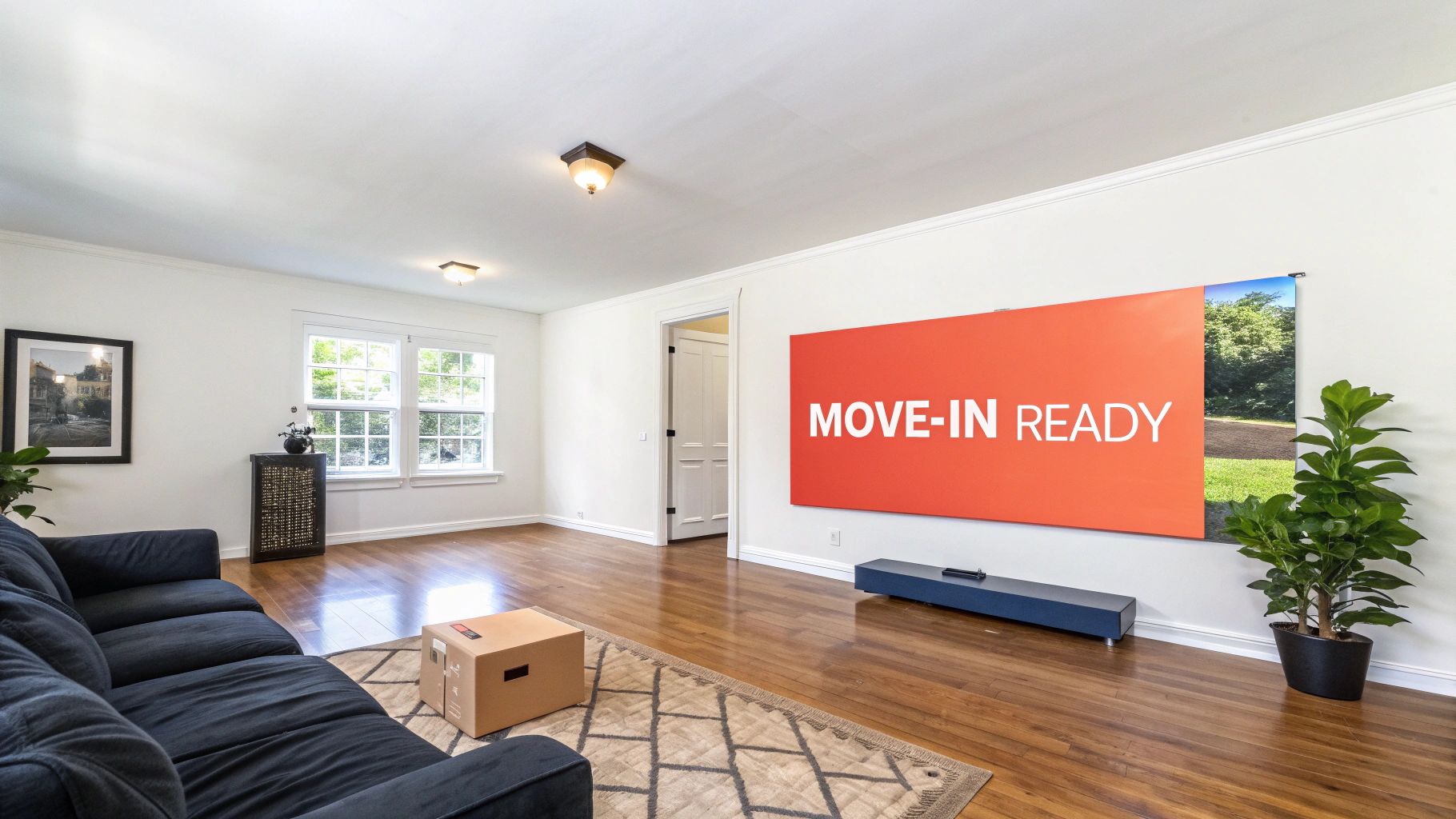
An empty house is a blank canvas, but for many buyers, it's an intimidating one. Vacant rooms often appear smaller than they are and make it difficult for potential buyers to visualize how their own furniture will fit. This "imagination gap" can slow down a sale, as it prevents the crucial emotional connection needed for a buyer to see a house as a future home.
The solution is transforming these empty spaces into inviting, move-in-ready scenes. This is one of the most impactful home staging before and after scenarios, often achieved through virtual staging. Using specialized software, designers digitally add realistic furniture, art, rugs, and decor to high-resolution photos of the empty rooms, showcasing the property's true potential without the cost and logistics of physical staging.
Strategic Analysis & Measurable Outcomes
Virtual staging provides a powerful return on investment, especially for vacant properties. Bank-owned foreclosures, for example, have seen sales cycles shorten by as much as 40% after implementing virtual staging. In competitive new construction markets, virtually staged homes can increase their perceived value by 15-25%, helping them stand out and command higher offers. The "after" images create a compelling online listing that drives more traffic and in-person visits.
Actionable Takeaways for Agents
To maximize the impact of virtually staging a vacant home, follow these best practices:
- Maintain Scale and Proportion: Ensure virtual furniture is scaled correctly to the room's dimensions. A king-sized bed in a small bedroom will be an immediate red flag.
- Use a Neutral, Broad-Appeal Style: Select contemporary, neutral furniture and decor that appeals to the widest possible demographic. Avoid overly specific or polarizing design choices.
- Add Lifestyle Accents: Incorporate elements like plants, artwork, and subtle decor to add warmth and make the space feel lived-in and welcoming.
- Disclose, Disclose, Disclose: Always include a disclaimer in the photo description stating that the image is "virtually staged" to maintain transparency with buyers.
For a deeper dive into the tools and techniques, explore this comprehensive virtual staging guide to master this effective marketing strategy.
2. Cluttered to Minimalist: The Power of Digital Decluttering
Occupied homes often present a staging challenge, as daily life comes with clutter, personal items, and furniture that may not appeal to a broad audience. These elements can distract buyers, making it difficult for them to see the home's features and potential. The "before" photos can feel overwhelming, preventing buyers from connecting with the space.
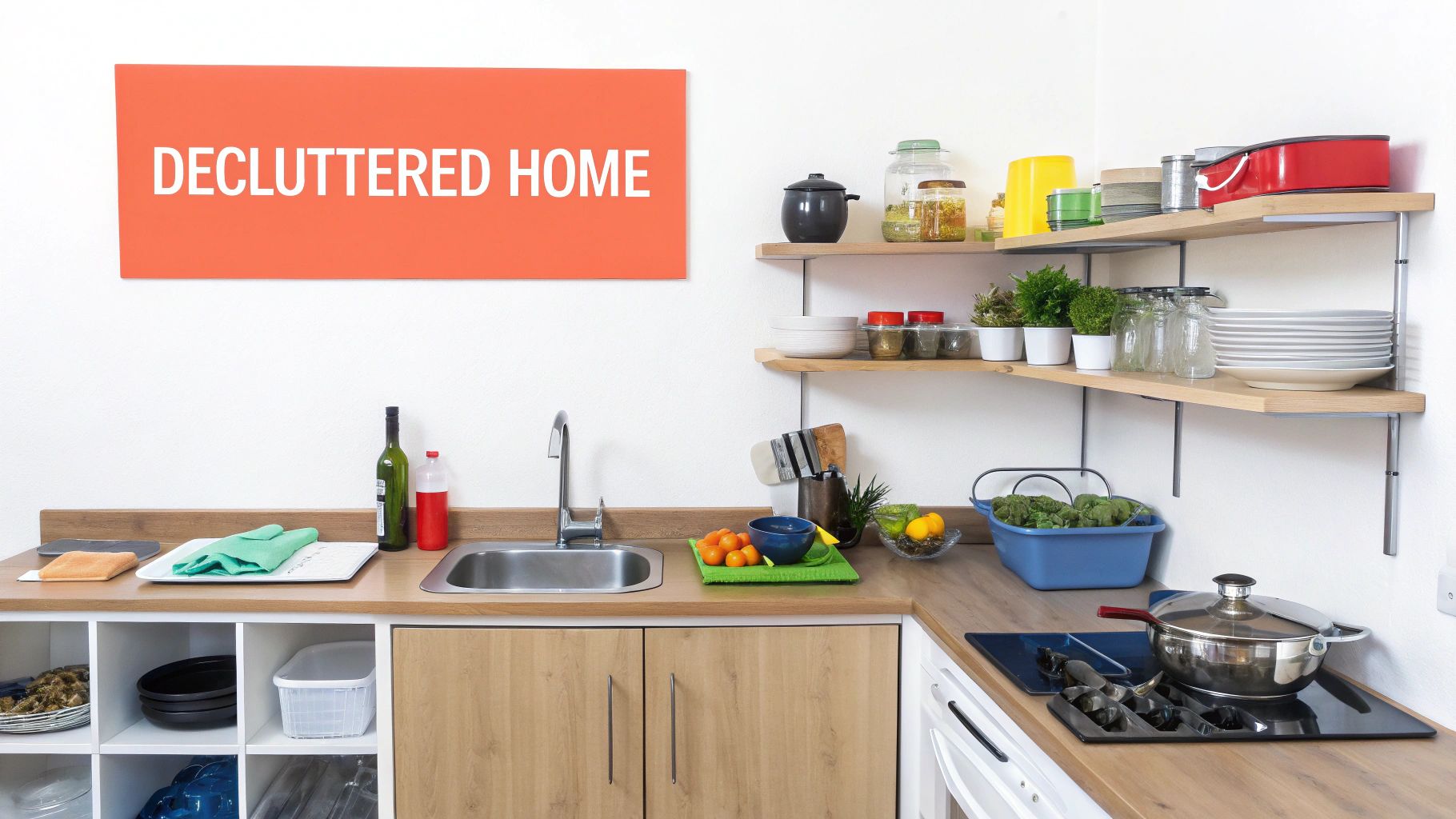
The solution is digital decluttering, a process where AI-powered tools and skilled editors digitally remove unwanted items from property photos. This home staging before and after technique is transformative for occupied homes, especially when physical staging is impractical. It instantly creates a cleaner, more spacious, and depersonalized version of the property, showcasing its best attributes without asking homeowners to completely overhaul their living space.
Strategic Analysis & Measurable Outcomes
Digital decluttering offers a rapid and cost-effective way to improve a property's online appeal. Listings that use professionally edited and decluttered photos have been shown to receive up to 61% more views online than those with amateur photos. This increase in traffic directly correlates to more showing requests. For example, a home with visible pet accessories or a busy home office can be digitally cleared, broadening its appeal and helping it sell faster, sometimes reducing its time on the market by several weeks.
Actionable Takeaways for Agents
To effectively use digital decluttering, agents should focus on targeted, realistic edits:
- Remove Personalization: Digitally erase family photos, religious items, and highly specific decor. This helps buyers envision themselves in the home.
- Clear Key Surfaces: Focus on clearing kitchen countertops, bathroom vanities, and office desks. Removing small appliances, toiletries, and paperwork makes spaces feel larger and more functional.
- Hide Excess Clutter: Digitally remove visible storage overflow, like shoes by the door or items on open shelves. The goal is to suggest ample, organized storage.
- Maintain Authenticity: Avoid removing permanent fixtures or making structural changes. The goal is to declutter, not deceive, ensuring the "after" photos still accurately represent the home's condition.
To find the right tools for the job, you can explore some of the best AI photo editing software available to modern real estate professionals.
3. Dark and Dated to Bright and Modern: Lighting and Color Transformation
Homes with poor natural lighting, dark paint, or outdated fixtures often feel small, uninviting, and stuck in the past. Buyers can struggle to see beyond dreary wood paneling or dim, north-facing rooms, preventing them from connecting with the space. This is a common challenge that significantly impacts a property's perceived value and appeal.
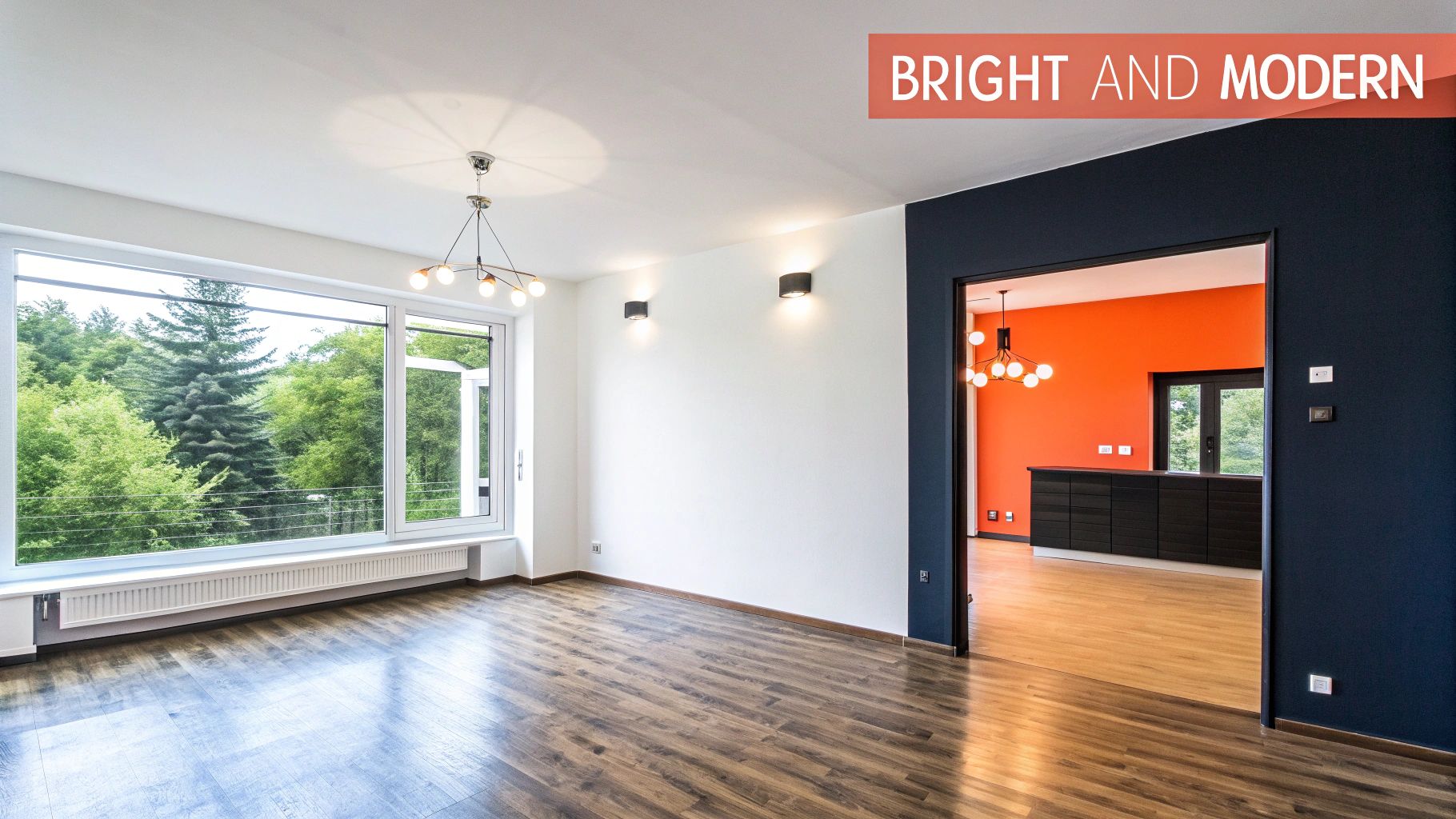
The solution involves a digital facelift that focuses on light and color. Using photo editing and AI-powered tools, these transformations brighten spaces, replace dated wall colors with modern palettes, and even update the appearance of old fixtures. This home staging before after technique is especially powerful for reviving spaces like a 1970s paneled basement or a master bedroom with heavy, light-blocking drapes, turning them into bright, modern retreats.
Strategic Analysis & Measurable Outcomes
Digitally enhancing light and color offers a high-impact, low-cost alternative to physical renovations. Properties with bright, well-lit photos can see up to a 35% increase in online click-through rates. By digitally painting walls a neutral greige or warm white, agents can broaden a home's appeal without the expense and time of hiring a painter. This strategy is particularly effective for listings that suffer from poor photography on dark, overcast days, correcting exposure issues to showcase a home's best features. The goal is to create an "after" image that feels fresh, spacious, and aspirational.
Actionable Takeaways for Agents
To effectively execute a digital lighting and color transformation, focus on creating a realistic and inviting final image:
- Test Modern Palettes: Virtually paint walls with universally appealing colors like soft grays, warm whites, or greige to neutralize the space and make it feel larger.
- Enhance Natural Light: Brighten the overall image exposure and specifically enhance light coming from windows. This highlights architectural details and creates an airy feel.
- Update Fixtures Digitally: Replace dated brass or ornate light fixtures with modern, sleek designs to instantly update the room's aesthetic.
- Ensure Photographic Quality: Start with a high-quality base image. For a deeper understanding of capturing balanced lighting from the start, explore the benefits of HDR photography in real estate.
4. Cramped to Spacious: Open Concept Reimagining
Dated homes with compartmentalized layouts, like a closed-off 1980s kitchen, can be a major turnoff for modern buyers who crave open, airy living spaces. These structural barriers make it difficult for buyers to envision the home's true potential, often leading them to dismiss the property without considering its possibilities. The challenge is to showcase a home's future potential without undertaking costly and time-consuming renovations.
The solution is a high-tech form of virtual staging known as "virtual renovation" or "reimagining." Using advanced software, designers can digitally remove non-load-bearing walls, reconfigure layouts, and stage the newly created open-concept space. This powerful home staging before and after technique helps buyers visualize a home not for what it is, but for what it could become, bridging the gap between a dated layout and a modern dream home.
Strategic Analysis & Measurable Outcomes
Virtual renovations are a strategic tool for properties with "good bones" but outdated floor plans. For listings that have stagnated due to layout objections, presenting a virtually reimagined open-concept design can reignite interest and increase online engagement by over 50%. This approach not only attracts a wider pool of buyers but also helps justify the asking price by clearly demonstrating the property's value-add potential. It shifts the conversation from "the kitchen is too small" to "look at what we could do with this space."
Actionable Takeaways for Agents
To effectively use virtual renovation to showcase an open concept, consider these tips:
- Consult First, Design Second: Before digitally removing any walls, consult with a contractor or architect to confirm which walls are non-load-bearing. Presenting an impossible renovation will damage your credibility.
- Label with Clarity: Always label the images as "Virtually Renovated" or "Vision of Potential." This sets clear expectations and prevents any misrepresentation.
- Show the Flow: Use the reimagined space to demonstrate improved natural light flow and more flexible furniture arrangements, key selling points for open layouts.
- Provide Both Views: Always show the "before" photo alongside the "after" rendering. This contrast is what makes the transformation so compelling and impactful.
5. Neglected to Maintained: Cosmetic Repair and Refinishing Simulation
Properties with visible wear-and-tear like scuffed walls, stained carpets, or cracked tiles immediately signal neglect to potential buyers. These minor cosmetic flaws can create doubt about the home's overall condition, distracting from its best features and leading to lower offers based on perceived repair costs.
The solution is to use digital editing to simulate cosmetic repairs in listing photos. This technique, a key part of many home staging before and after successes, involves digitally correcting minor, non-structural issues. By enhancing photos to show walls without scuffs, floors without stains, and ceilings without old water spots, you present the property in its "best possible version," allowing buyers to focus on the space and layout.
Strategic Analysis & Measurable Outcomes
Digitally repairing cosmetic issues is a cost-effective strategy to prevent a property from being undervalued. A home with visible, though minor, damage might receive offers 5-10% below asking price, as buyers overestimate repair costs. By presenting a clean, maintained "after" photo, agents can preempt these lowball offers and reduce the property's time on the market. This method is particularly effective for as-is sales, where it showcases potential without misrepresenting the actual condition, provided there is full disclosure.
Actionable Takeaways for Agents
To ethically and effectively use cosmetic repair simulation, follow these guidelines:
- Repair Cosmetic Issues Only: Limit digital edits to surface-level fixes like paint scuffs, carpet stains, or minor drywall cracks. Never alter structural elements or conceal significant defects.
- Pair with Full Disclosure: Always clearly state in the listing description that photos have been digitally enhanced to show potential. Transparency is crucial to build trust and avoid legal issues.
- Focus on High-Impact Areas: Prioritize digital repairs in the most visible areas that influence first impressions, such as flooring in the entryway, kitchen countertops, and bathroom tile.
- Use as a Sales Tool: Frame the "before" condition as an opportunity. Provide quotes for the actual repairs, showing buyers how easily and affordably they can achieve the "after" look.
6. Commercial Space Reconfiguration: Layout and Tenant Demonstration
Commercial real estate presents a unique challenge: a single vacant space could serve dozens of different business types, from a medical office to a fitness studio. For prospective tenants, visualizing how a raw, open floor plan can meet their specific operational needs is a major hurdle. This inability to envision the final layout can lead to tenant hesitation and prolonged vacancies.
Virtual reconfiguration solves this problem by digitally transforming an empty commercial space into multiple potential business environments. Using advanced software, marketers can showcase various floor plans, add or remove virtual walls, and furnish the space to demonstrate its suitability for different industries. This approach turns a speculative "what if" into a tangible vision, a powerful home staging before and after strategy for the commercial sector.
Strategic Analysis & Measurable Outcomes
This visualization technique is critical for marketing flexible-use commercial properties. For example, a vacant retail space can be digitally rendered as a restaurant, a co-working office, and a boutique gym, broadening its appeal to a wider range of potential tenants. Marketing materials featuring these multiple configurations have been shown to increase qualified inquiries by up to 50% and reduce the leasing cycle. It demonstrates the property's versatility, helping justify rental rates and attracting higher-quality, long-term tenants who see a clear path to customizing the space.
Actionable Takeaways for Agents
To effectively reconfigure and market a commercial space virtually, focus on practicality and potential:
- Create Industry-Specific Layouts: Develop multiple, distinct concepts tailored to high-demand local industries. Show one layout as an open-plan tech office and another as a series of private medical examination rooms.
- Showcase Utility and Accessibility: Clearly mark the locations of plumbing, electrical hookups, and HVAC systems in your virtual designs. Ensure each configuration demonstrates clear wheelchair accessibility and compliance with commercial codes.
- Base Designs on Reality: Ensure all virtual reconfigurations are realistic and based on the actual square footage, load-bearing walls, and window placements. This builds trust and prevents misleading tenants.
- Highlight a "White Box" Option: Alongside finished concepts, always include a clean, "white box" virtual rendering. This shows the space as a blank slate, appealing to tenants who have their own specific build-out plans.
7. Outdoor to Indoor Flow: Exterior Enhancement and Landscape Integration
The connection between indoor and outdoor living spaces is a powerful selling point, yet it's often completely overlooked in property listings. An unkempt backyard, a bare patio, or a neglected front lawn can create a negative first impression and make it difficult for buyers to see the property's full lifestyle potential. These exterior spaces are extensions of the home's living area, and failing to present them effectively leaves money on the table.
Virtual staging offers a cost-effective solution to this challenge. By digitally adding lush landscaping, stylish outdoor furniture, ambient lighting, and features like fire pits or dining areas, you can transform a drab exterior into a vibrant entertaining hub. This home staging before and after showcase helps buyers visualize hosting summer barbecues or enjoying quiet evenings, creating a strong emotional pull that interior photos alone cannot achieve.
Strategic Analysis & Measurable Outcomes
Showcasing a seamless indoor-outdoor flow can directly impact a property's perceived value and desirability. Properties with well-staged outdoor living areas can sell for up to 10% more than comparable homes with neglected exteriors. Listings that feature attractive outdoor photos often see a higher click-through rate, leading to more property tours. The "after" images demonstrate the home's full potential for entertaining and relaxation, a key factor for many modern buyers.
Actionable Takeaways for Agents
To effectively stage exterior spaces and highlight indoor-outdoor flow, consider these strategies:
- Create a Cohesive Aesthetic: Choose virtual outdoor furniture and decor that complements the style of the home's interior. This reinforces the idea that the outdoor area is a natural extension of the living space.
- Highlight Functional Zones: Digitally create distinct areas for dining, lounging, or recreation. Stage a patio with a dining set and an umbrella, or add a virtual fire pit with comfortable seating to a grassy area.
- Enhance Curb Appeal: Don't forget the front of the house. Virtually add seasonal flowers, tidy up landscaping, or even test out a new, inviting front door color to make a powerful first impression.
- Be Realistic with Landscaping: While you can enhance greenery, ensure the final look is believable and doesn't suggest a level of maintenance that would deter potential buyers. Keep it lush but manageable.
8. Investor's Vision: Before Renovation, After Potential Demonstration
For investment properties, fix-and-flip homes, or properties needing significant work, the "before" state can be a deal-breaker. Buyers struggle to see past dated kitchens, structural issues, or worn-out finishes. This challenge is amplified for investors who need to visualize the return on investment and justify renovation budgets to lenders or partners.
The solution is a powerful home staging before and after presentation that shows both the current reality and the future potential. Using virtual renovation technology, designers can take a photo of a dated or deteriorated space and transform it into a fully renovated, modern version. This side-by-side comparison bridges the imagination gap, demonstrating the property's true value after improvements and helping investors accurately calculate potential profit.
Strategic Analysis & Measurable Outcomes
Virtual renovation is a key tool for marketing properties to investors and flippers. Properties marketed with renovation visuals can attract up to 30% more qualified inquiries from serious investors. This approach helps set a vision for the property, justifying a higher asking price based on its "after-repair value" (ARV). In competitive markets, showing a clear path to profitability can result in quicker sales and multiple-offer scenarios, as it de-risks the investment for the buyer.
Actionable Takeaways for Agents
To effectively showcase renovation potential to investors, agents should:
- Partner for Accuracy: Work with contractors or designers to ensure the virtual renovation is realistic and achievable within a reasonable budget. Fanciful designs can undermine credibility.
- Show the Numbers: Complement the visuals with a basic cost estimate for the proposed renovations and a comparative market analysis (CMA) showing the potential ARV.
- Label Clearly: Always mark images as "Current Condition" and "Renovation Potential" to avoid any misrepresentation and maintain transparency throughout the process.
- Target the Right Audience: Use these visuals in marketing materials specifically aimed at investors, flippers, and developers who understand the language of ROI and property transformation.
Before & After: 8 Home Staging Cases
From 'What Is' to 'What Could Be': Your New Marketing Superpower
The gallery of home staging before after transformations we've explored showcases a fundamental shift in real estate marketing. It’s a move away from documenting a property as it is and toward powerfully illustrating what it could be. Each example, from the vacant commercial space reimagined for a new tenant to the cluttered family home digitally decluttered into a minimalist haven, serves as a masterclass in overcoming buyer objections before they even arise.
The core lesson is strategic visualization. A vacant home feels cold and its potential is hard to grasp. A cluttered room feels small and overwhelming. A dated kitchen suggests expensive, time-consuming renovations. By using virtual staging, digital repairs, and AI-powered restyling, you proactively solve these perceived problems, allowing buyers to connect emotionally with the property's future, not its present-day flaws.
Key Strategic Takeaways from Our Examples
The most successful agents understand that marketing isn’t just about exposure; it’s about crafting a narrative. The home staging before after effect is your most powerful storytelling tool.
- Solve, Don't Just Show: Every staging choice should address a potential buyer concern. Is the living room dark? Focus on virtual lighting and bright decor. Is the layout awkward? Use virtual furniture to demonstrate a functional, inviting flow.
- Speed is a Competitive Advantage: The ability to digitally transform a space in minutes, not weeks, means you can list properties faster, react to market feedback instantly, and stay ahead of the competition. Physical staging has its place, but the speed and flexibility of virtual tools are undeniable assets.
- ROI is Measurable: As demonstrated, the impact of effective staging isn't theoretical. It translates directly to increased online engagement, more showing requests, faster sales, and higher final sale prices. It's an investment in perception that pays concrete dividends.
The difference between a property that sells quickly and one that lingers on the market often comes down to the buyer's ability to envision themselves living there. You are no longer just a facilitator of a transaction; you are the director of a vision. You have the power to turn an empty shell into a dream home and a dated interior into a modern masterpiece. To truly grasp the transformative power of a deep clean and refresh, sometimes you need to see the proof. Check out these stunning before and after pictures to see how even basic improvements can make a huge impact before staging.
Ultimately, mastering the art of the "after" is about more than creating beautiful images. It's about building buyer confidence, maximizing your client's equity, and solidifying your reputation as a forward-thinking, results-driven agent. The tools are here, the strategy is clear, and the potential is limitless.
Ready to create your own incredible home staging before after results in seconds? With Bounti Labs, you can use AI to virtually stage, declutter, restyle, and even visualize renovations for any property photo. Stop marketing listings and start marketing potential by visiting Bounti Labs to transform your first property today.