
Ever wonder what happens before the stagers and photographers work their magic on a listing? Long before a single piece of new furniture arrives, a critical transformation has to take place. This is where the real work begins, turning a lived-in, dated, or cluttered property into a blank canvas ready for the market.
The Unseen Work Behind a Market-Ready Property
This initial phase is more than just hauling away junk. It's a strategic process handled by interior removal specialists—the unsung heroes who turn a liability into a high-potential asset.
Their job isn't just about cleanouts. They're the ones methodically tearing out old kitchen cabinets, pulling up worn-out flooring, and removing dated bathroom vanities. In some cases, they're even taking down non-structural walls to create the open-concept floor plan buyers crave. It's important not to confuse their specialized work with standard moving services; it's a completely different ballgame. For a deeper dive, it's helpful to understand the distinction between their work and broader services like House Clearance Vs Full House Removals.
Creating Value from a Blank Canvas
I've seen firsthand how this service makes a night-and-day difference in all kinds of real estate scenarios.
- Prepping a Fixer-Upper: A good removal team can completely gut a property's interior in a matter of days. This saves flippers and investors weeks of back-breaking labor and leaves them with a clean, safe site for their contractors to get started.
- Clearing an Estate Property: This is a delicate situation. Specialists can sensitively and efficiently clear out a lifetime of accumulated possessions, preparing the home for sale without putting that emotional and physical burden on the family.
- Updating a Commercial Space: When a new tenant is moving into an office or retail space, these crews can quickly remove old partitions, flooring, and fixtures, delivering a vanilla shell ready for a custom build-out.
This strategic clearing process has a direct impact on your bottom line. When a potential buyer walks into a clean, empty space, they aren't distracted by someone else's life. They can actually visualize their own furniture, their own art, and their own future there. It’s a huge psychological advantage that often leads to faster, more competitive offers. You can see just how powerful this effect is in these dramatic before-and-after house staging transformations.
The impact of a professionally cleared interior cannot be overstated. It removes distractions, highlights a property's architectural features, and sets the stage for high-quality marketing that attracts serious buyers.
This isn't just a niche service anymore, either. The demand is booming. The global renovation waste removal market was valued at $3.4 billion and is expected to climb to $5.4 billion by 2032. This growth is fueled by a steady increase in renovation projects, cementing the essential role these specialists play in today's real estate market. You can explore more data on the renovation waste removal market's growth.
How to Scope Your Project and Find the Right Team
The fastest way to blow a budget and completely derail your timeline is to give a vague "clear it out" request. To get accurate quotes from qualified interior removal specialists, you need a precise project brief. This process starts long before you ever pick up the phone.
Your first move should be a detailed walkthrough of the property with the seller. The goal here is to create a comprehensive inventory of what stays and what goes. Don't just list the big-ticket items; you need to think about everything from old window treatments and dated light fixtures to built-in shelving and ancient appliances. A clear plan is your best defense against last-minute chaos and expensive mistakes.
Defining the Scope of Work
Once you have that inventory, you can start building out the actual scope of work. This is where you graduate from a simple "junk removal" job to a strategic pre-listing preparation plan. A detailed scope is absolutely essential for getting apples-to-apples quotes from vendors.
Your project brief needs to answer a few key questions:
- What exactly is being removed? Get specific. Instead of "kitchen," spell it out: "removal of all upper and lower cabinets, laminate countertops, sink, faucet, and vinyl flooring."
- Is any selective demolition needed? Are you taking out a non-load-bearing wall to open up a space? Does that pepto-bismol pink tile in the bathroom need to go? We've put together a handy home renovations checklist that can help make sure you don't miss anything.
- Are there special disposal requirements? Make a note of items like old mattresses, electronics, or appliances containing Freon. These almost always have separate disposal fees and need to be handled properly.
This infographic really captures how this targeted removal process can take a property from dated and cluttered to a market-ready asset.
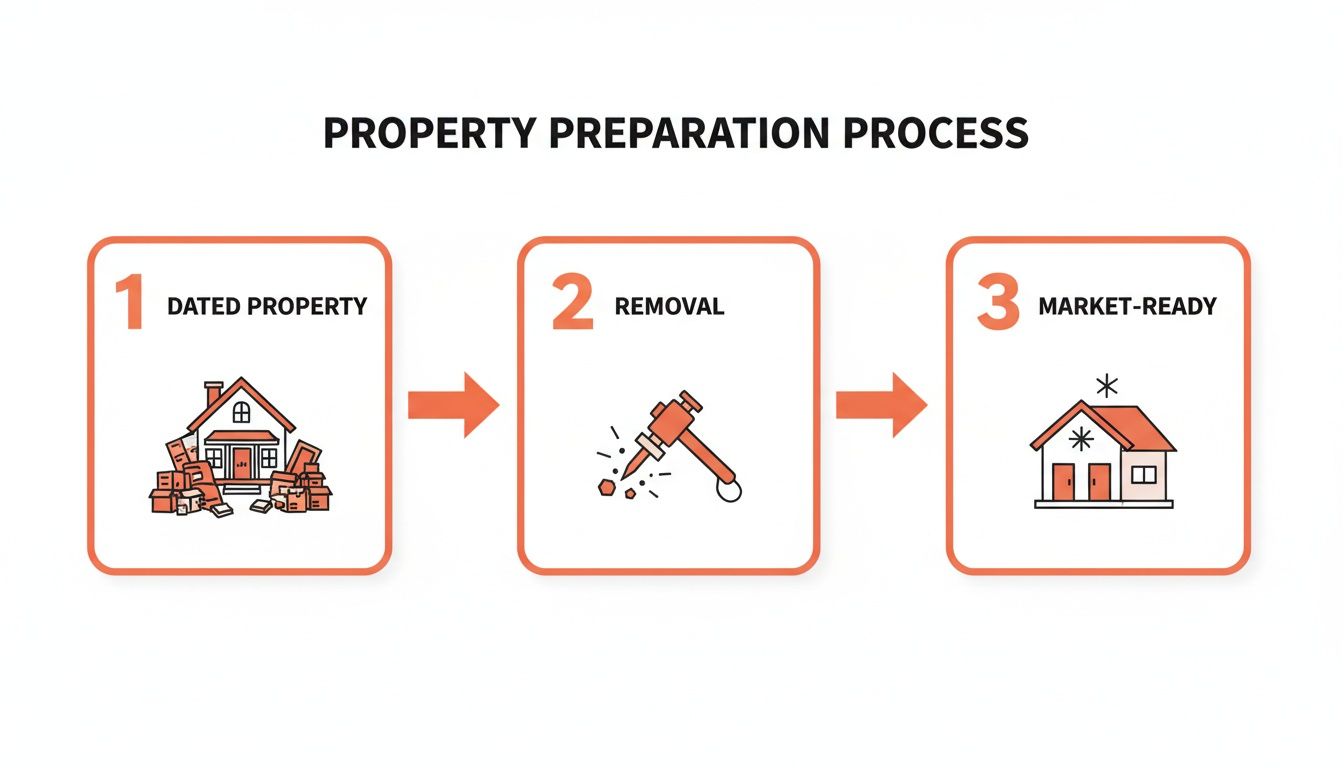
Seeing the journey from cluttered to clear really drives home how critical these specialists are. They create that perfect blank canvas that lets potential buyers truly envision themselves in the space.
Finding and Vetting Your Professional Team
With a solid scope in hand, you're ready to find the right team. This isn't a small niche; demolition and wrecking, which covers these specialized interior removals, pulled in an estimated $11.2 billion in U.S. revenue last year alone.
Finding the right partner requires some legwork. Go beyond a quick Google search and start by asking for referrals from your trusted network—think contractors, fellow agents, and property managers you've worked with. As you start evaluating companies, it’s important to know what to look for in a removal company to ensure they're professional and reliable.
When you make those initial calls, ask direct questions about their experience with projects just like yours. A company that mostly does basic junk hauling might not have the finesse or tools for selective demolition inside a home you're trying to protect.
To make this process a bit easier, I use a simple checklist when I'm interviewing potential companies. It helps me compare them fairly and make sure I haven't missed any crucial details.
Vendor Vetting Checklist for Interior Removal Specialists
Using a structured approach like this turns a potentially overwhelming task into a manageable process. It ensures you’re not just hiring a crew, but a professional partner who will protect your client’s investment and help you get the property sold.
Always verify their credentials before you sign a contract. Request that certificate of insurance showing both general liability and workers' compensation coverage. It's a non-negotiable step that protects you, your client, and your brokerage from huge financial risk if an accident or property damage occurs.
Navigating Costs, Timelines, and Contracts
This is where your expertise as an agent really makes a difference. Breaking down quotes, timelines, and contracts for your clients isn't just about logistics—it's about building trust and heading off any expensive surprises before they happen. When you bring in interior removal specialists, you’ll generally run into a couple of common ways they price their work.
Some crews will give you a flat project fee, which is perfect for bigger, well-defined jobs like a complete kitchen gut. Others quote by the truckload, a popular method for general property clear-outs where you're just trying to get rid of years of accumulated stuff. You absolutely have to get clarity on which model they use and what it covers, as that's going to dictate your client's budget.
Decoding the Quote and Spotting Hidden Costs
A vague quote is a huge red flag. A true professional will hand you an itemized estimate that breaks everything down, so you can see exactly where your client’s money is going. You need to keep a sharp eye out for those little hidden fees that can sneak in and inflate the final bill.
Be on the lookout for common surcharges like:
- Disposal Fees: Landfills and recycling centers charge by weight and material, and those costs get passed on.
- Heavy Item Fees: Expect to pay more for hauling away things like pianos, old hot tubs, or massive sub-zero refrigerators.
- Hazardous Waste Handling: Getting rid of old paint, chemicals, or electronics has to be done properly, and that special handling comes with a premium.
- Stair or Elevator Charges: If the crew has to navigate multiple flights of stairs or a tricky elevator, they'll likely add an extra labor charge.
Always, always ask the vendor to list every potential cost upfront. That kind of transparency is the mark of a reputable company and saves you from having a really awkward conversation with your client down the line.
A detailed, line-item quote isn't just a suggestion; it's your project's roadmap. It prevents scope creep, clarifies expectations, and serves as the foundation for a solid contract that protects everyone involved.
The demand for good removal crews is through the roof. The U.S. home remodeling market is on track to blow past $500 billion in yearly revenue, and these teams are the ones kicking off thousands of those projects. With homeowners investing so much—average spending per project in places like California has shot up by 20% to over $9,565—locking in a reliable crew is more critical than ever. You can dig deeper into these numbers with these U.S. home remodeling forecasts and trends.
Managing Timelines and Client Expectations
Setting realistic expectations is everything. A simple clear-out of a one-bedroom apartment might only take a team a few hours. But a more surgical selective demolition, like taking out a kitchen and two bathrooms, could easily stretch over several days.
Make sure you get a firm timeline with clear start and end dates. I always recommend building in a buffer day or two for the unexpected—you never know when you'll find hidden structural damage or run into materials that are a nightmare to remove. Communicating this timeline clearly to your client helps them plan their life and reinforces that you're on top of the entire process.
The Non-Negotiable Elements of a Solid Contract
Never, ever move forward on a handshake. The signed contract is your single most important piece of protection.
Make sure it includes these key elements:
- A Detailed Scope of Work: This should be a mirror image of the itemized quote, listing every single task to be done. No gray areas.
- Clear Payment Schedule: Spell out the deposit, any progress payments, and the terms for the final payment.
- Proof of Insurance: The contract needs to mention their general liability and workers' compensation policies, and you better have a copy of their insurance certificate in your files.
- Change Order Process: Define exactly how any additions or changes to the original plan will be documented, approved, and billed.
- Completion and Cleanup Clause: Specify the exact condition the property will be left in—for example, "broom swept condition with all project-related debris removed from the site."
A well-written contract gets rid of any ambiguity and gives you a clear path forward if something goes sideways. Taking the time to nail down these details is what separates a smooth, professional project from a stressful mess.
Getting the Property Ready for Removal Day
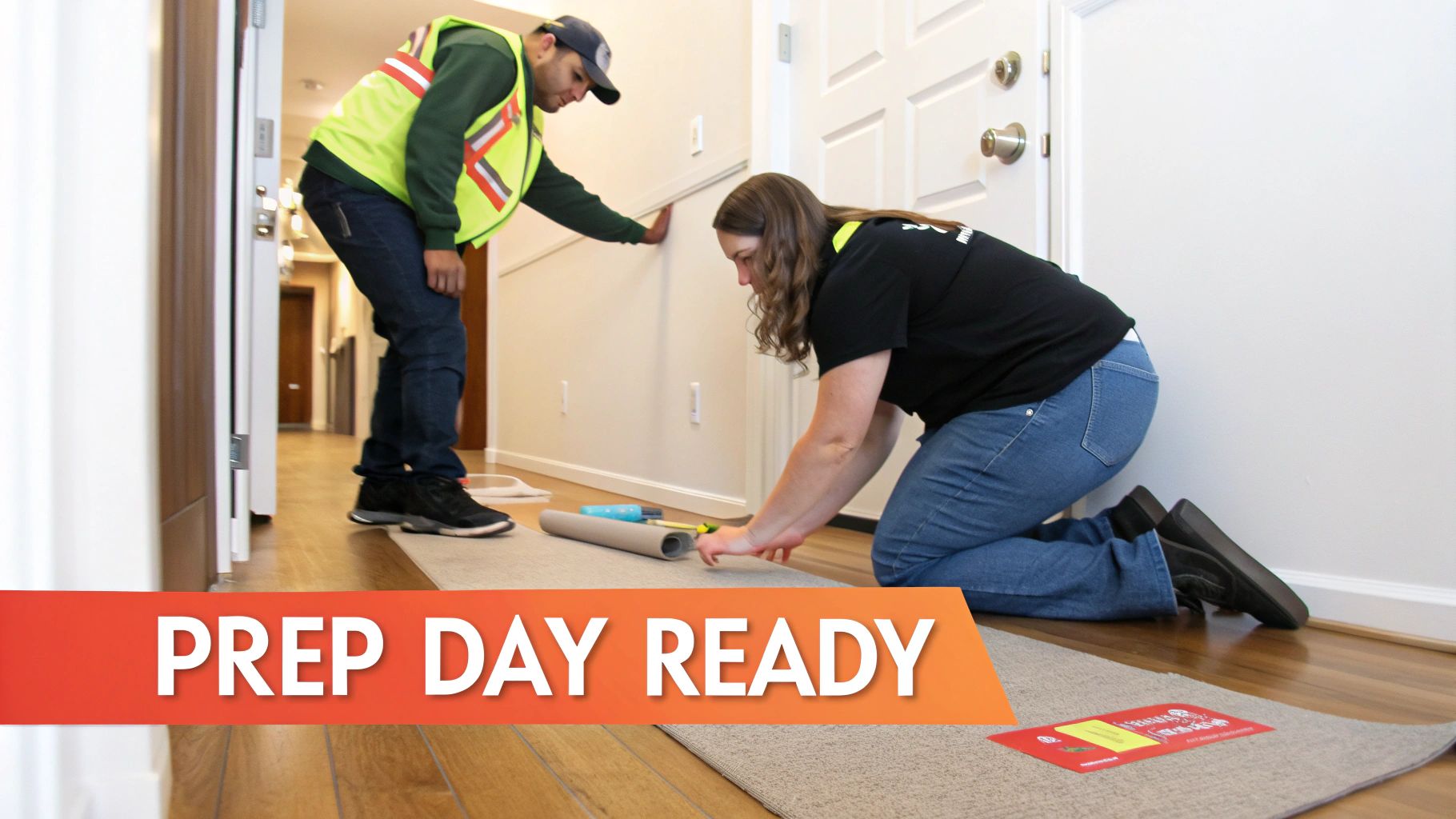
The day the removal crew shows up is where the magic really starts. A little bit of prep work beforehand can be the difference between a project that runs like clockwork and one that’s bogged down by delays and preventable mistakes. It all comes down to solid communication and getting the site ready for action.
Your first job is to leave absolutely no doubt about what stays and what goes. Do a thorough walkthrough and physically mark every single item slated for removal. Bright painter's tape or sticky notes are your best friend here. A big, unmissable "X" on that dated kitchen cabinet or a clear note on the bathroom vanity eliminates any guesswork for the crew.
Just as crucial is marking off the "safe zones." Clearly identify any finishes, fixtures, or areas that need to remain untouched. This is non-negotiable, especially in selective demolition projects where you’re surgically removing specific elements while preserving others.
Setting Up a Safe and Productive Work Area
With everything tagged, the next step is to protect the parts of the property that are staying. You also want to make sure the crew has a safe, clear space to work. Any professional team will come equipped with their own protective gear, but being proactive sets a professional tone and helps the entire day go smoother.
Here are a few things I always do on-site:
- Protect the Floors: If the flooring isn't being torn out, it needs to be covered. Your crew will bring mats, but I’ve found that laying down an extra layer of cardboard or Ram Board in the main walkways is cheap insurance.
- Clear the Pathways: Make sure the crew has a totally clear path from the work areas straight to the exit. Move any leftover furniture, pull up area rugs, and get any stray decor out of the way to prevent trip hazards.
- Secure Fragile Items: Anything staying that's delicate or nearby—like a light fixture in the hallway or art on an adjacent wall—should be taken down or covered up. Dust gets everywhere, and things can get bumped accidentally.
One thing I never, ever skip is the final walkthrough. Before anyone picks up a hammer, walk the site with the crew leader. Point to the items you marked for removal and the areas you’ve protected. This is your last chance to confirm everyone is on the exact same page as the contract you signed.
Last-Minute Checks and Clear Communication
On the day of the job, good communication is everything. Have one single point of contact on-site, whether that’s you, the homeowner, or a project manager. This prevents the crew from getting conflicting directions from different people and gives them one person to go to with questions.
Before the team arrives, also double-check that the utilities are handled. If it's a simple furniture clear-out, no worries. But for a kitchen or bath demo, you absolutely need to shut off the water and electricity to those specific zones to avoid a disaster.
Taking these steps isn't just about protecting the property—it shows the crew you respect their time and skill. A prepped site lets them get straight to work, which helps keep the project on schedule and on budget. It's this kind of foresight that prevents those little hiccups from turning into major headaches that can derail your entire project.
The Digital Alternative for Fast-Paced Marketing
Let's be real: sometimes you just don't have the luxury of time. What if you could get that pristine, "blank slate" look for your listing photos in a matter of hours, not days? While bringing in interior removal specialists is often the gold standard, reality can throw a curveball. Tight timelines, tenant-occupied properties, and sellers on a shoestring budget often demand a faster, more nimble approach for your initial marketing blitz.
This is where a bit of tech-savvy comes in. Modern AI tools give you a powerful workaround, letting you leapfrog the physical removal process for your online presence and gain a massive head start. You can start marketing a property’s full potential almost instantly, drumming up buyer interest while the actual clear-out is still being scheduled.
From Cluttered Video to Clean Photos
The concept is surprisingly straightforward. Forget waiting for a crew to empty a room. All you need to do is take a quick video walkthrough of a cluttered space. From that simple video, AI can generate a whole set of MLS-ready photos showing a perfectly empty—or even beautifully staged—room. It’s a game-changer for those tricky, high-pressure listings.
Think about these common scenarios:
- Tenant-Occupied Homes: You can showcase a clean, vacant unit online without having to ask the current residents to pack up their lives. It's a win-win.
- Estate Sales: Get the home on the market and build interest immediately, even before the family has had a chance to sort through a lifetime of personal belongings.
- Fixer-Uppers: This is a big one. You can show buyers the "after" before a single wall comes down, helping them see past the chaos and fall in love with what the home could be.
Here's a look at how a tool like Bounti can take a simple input and spin it into multiple virtually decluttered and restyled options, ready for your marketing campaign.

The real magic here is the speed and flexibility. You’re not just getting one look; you can create several versions of a room's potential in just a few minutes.
A Strategic Marketing Advantage
To be clear, this digital-first approach doesn't mean you can skip the physical work by interior removal specialists altogether. It's not a replacement; it's a strategic bridge. It allows you to launch your marketing campaigns without delay, capturing that critical early buyer interest with stunning, idealized photos while you coordinate the real-world logistics behind the scenes.
This hybrid strategy—marketing digitally while planning physically—is all about compressing your sales timeline. You attract and engage buyers from day one, building momentum that can lead to faster offers and put your client in a much stronger negotiating position.
For any agent trying to stay ahead in a competitive market, this is a real ace up your sleeve. It provides a smart solution for listings that would otherwise be a nightmare to photograph and market effectively. Knowing when to pull this digital tool out of your toolbox will help you win more listings, navigate challenging property situations like a pro, and ultimately, get better results for your clients.
If you want to dig deeper into this, our guide on the benefits of a virtual staging service is a great next step.
Got Questions? We’ve Got Answers.
Even after years in the business, every property presents its own unique set of challenges. When it comes to hiring an interior removal crew, a few questions always seem to pop up. Let’s clear the air on some of the most common ones I hear from other agents.
Is a Junk Hauler the Same as an Interior Removal Specialist?
It’s easy to get these two confused, but they play very different roles. Think of a junk hauler as the crew you call to clear out old furniture, boxes, and general debris. They take what's loose and haul it away.
An interior removal specialist, on the other hand, is a skilled tradesperson. These are the pros you bring in for selective demolition. They can surgically remove an entire 1970s kitchen, take down a non-load-bearing wall to open up a living space, or rip out old flooring—all with the precision needed to avoid damaging what you want to keep. If you're prepping a home for a real renovation, a specialist is non-negotiable.
What Happens If They Find Something Hazardous?
This is a big one, and you need to have this conversation before you hire anyone. What’s the plan if they uncover asbestos behind a wall or find old lead paint?
A professional team will have a strict protocol: halt work immediately. They should then contact you and provide a recommendation for a certified abatement company. Under no circumstances should you let a non-certified crew try to handle hazardous materials. The legal and health risks are just too high for you, your client, and the workers.
The discovery of hazardous materials is a hard stop, not a negotiation. A reputable specialist will prioritize safety and compliance over speed, protecting your client from future liability and ensuring the job is done right.
How Does This Actually Affect the Sale Price?
Let's be clear: tearing out an old bathroom doesn't magically add $20,000 to the home's value. The value comes from what you do next.
By creating a clean, blank canvas, you set the stage for everything that helps a property sell. It makes professional staging far more effective and leads to incredible marketing photos. Buyers can walk in and see potential, not problems. That emotional connection is what drives interest, generates higher offers, and gets the home sold faster. It’s an investment that pays for itself in the final sale price.
When Is AI Decluttering a Better First Step?
Sometimes, physical removal just isn't an option right away. That's where AI decluttering becomes your secret weapon.
It's the perfect move for a few common scenarios:
- The property is still occupied by tenants.
- Your seller is on a shoestring budget.
- You’re on a tight deadline to get the listing live.
AI lets you showcase the home's true potential in your online marketing, attracting serious buyers who can see past the current clutter. You can then coordinate the physical work later on, once you have an offer in hand.
Ready to create stunning visuals for your listings in minutes, not days? With Bounti, you can instantly declutter, restyle, and stage any property from a single video. See how it works.