Living room staging isn’t just about making a room look nice; it’s about preparing a space to sell. It’s the art of decluttering, arranging furniture, and adding just the right accessories to highlight the room's best features. The goal is simple: create an emotional connection that helps you get a faster sale at a higher price.
Why Living Room Staging Is Your Top Sales Tool
I’ve seen it happen more times than I can count. A perfectly good property sits on the market for months, getting lowball offers or, worse, no offers at all. The living room is functional, sure, but it’s packed with the seller's oversized, personal furniture that makes the whole space feel cramped and dated.
Then comes the staging. We swap out the dark, heavy pieces for lighter, modern furniture. We clear away the personal clutter. Suddenly, the home gets multiple offers within a week and sells for over the asking price. This isn't a fluke; it's the direct result of strategic staging.
The living room is where buyers form their first and most lasting impression. It’s where they picture themselves hosting holidays, relaxing after a long day, or making memories with their family. If they can’t see past your client's clutter, they can't see themselves living there. It’s that simple.
The Psychology of First Impressions
Buying a home is an emotional decision. A well-staged living room tells a story—one of a comfortable, inviting, and desirable lifestyle. It paints a picture that an empty or cluttered room just can't compete with. You want buyers to feel so at home that they're mentally making an offer before they've even seen the rest of the house.
A well-staged living room removes the guesswork for buyers. It demonstrates the room's true potential and helps them mentally move in, transforming a simple viewing into a powerful sales pitch.
The data absolutely backs this up.
The numbers don't lie. Staging the living room first isn't just a good idea; it's what the most successful agents do to get results.
As the full NAR report on home staging shows, a focus on the living room isn't just a trend—it's a core strategy for maximizing a property's appeal and financial return.
The process to get these results is actually pretty straightforward.
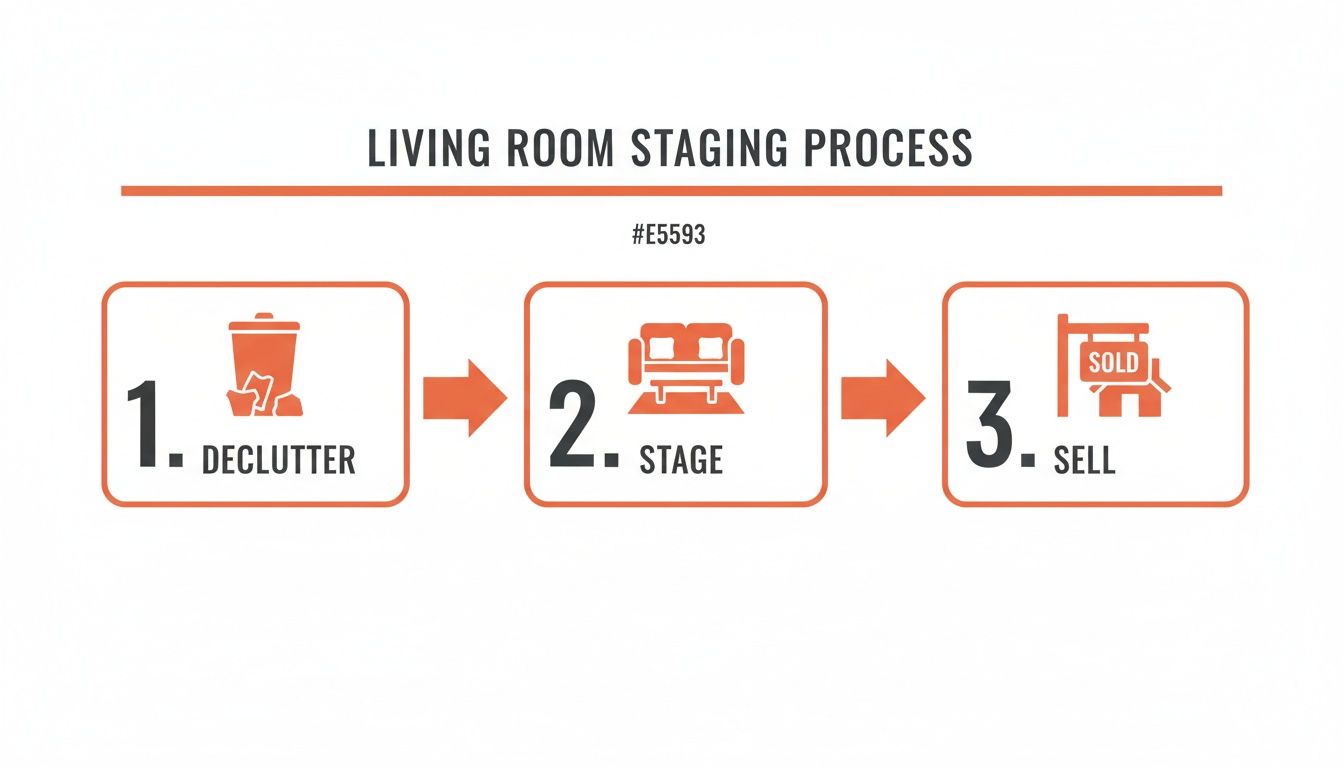
Think of it this way: decluttering prepares the canvas, staging creates the masterpiece, and selling becomes the natural next step. Whether you're doing a full physical stage or using modern tools like AI-powered virtual staging, this simple workflow gives you the flexibility to market any property effectively and gain a serious edge.
Creating the Perfect Canvas for Staging
Before you even think about bringing in staging furniture, the real work begins with the room itself. This isn't just about a quick tidy-up. It's about creating a clean, neutral slate where buyers can actually picture themselves living.
When a potential buyer walks into a cluttered or overly personal living room, their brain immediately gets distracted. They see your life, not their future. Our job is to strip away those distractions so they can focus on what they’re actually buying: the beautiful hardwood floors, the great natural light, or that charming fireplace.
The 50 Percent Rule and Beyond
Here’s a rule of thumb I’ve sworn by for years: the “50% Rule.” You need to remove at least half of the stuff from every single surface—every bookshelf, coffee table, and mantelpiece. It sounds drastic, I know. But the effect is immediate.
The room breathes. It feels bigger, calmer, and more organized. This isn't just for physical staging, either. If you're using a tool like Bounti for AI-powered virtual staging, a cleaner "before" photo gives the AI a much better canvas to work with, leading to a far more convincing "after."
The Deep Clean Checklist
With the clutter gone, it’s time for a top-to-bottom deep clean. And I mean deep. Buyers have an almost supernatural ability to spot dirt and dust, which they often interpret as a sign of a poorly maintained home.
Don't just hit the obvious spots. Focus on the details that most people miss:
- Baseboards and Trim: Get down there and wipe them clean. You’d be shocked how much dust and scuff marks they collect.
- Light Fixtures and Switches: Fingerprints on light switches and dusty ceiling fans are small things, but they add up to a feeling of neglect.
- Windows and Sills: Make them sparkle. Clean windows don't just look good; they make the entire room feel brighter and more welcoming.
- Vents and Returns: A dusty air vent is an instant turn-off for a detail-oriented buyer. It’s a two-minute fix.
A truly clean room has a certain feel to it—it smells fresh, looks crisp, and sends a powerful subconscious message: "This home has been loved and well-cared for."
Small Repairs That Make a Big Difference
Finally, it’s time to play handyman for an hour. Go around the room and fix all those little imperfections that are easy to ignore when you live somewhere but stick out like a sore thumb to a prospective buyer.
Patch the nail holes where old pictures used to hang. Touch up any scuffed paint on the walls or trim. Make sure every single light bulb works and that they all have the same warm, consistent color. Jiggle the door handles and cabinet pulls—if they're loose, tighten them.
These tiny fixes take almost no time but have a huge impact. They eliminate a buyer's mental "to-do list" and present a polished, move-in-ready home. This is how you build a rock-solid foundation for a successful staging.
Designing a Layout That Sells

Now that the space is clean and depersonalized, it's time to arrange the furniture to create an irresistible flow. This is where so many listings get it wrong. A winning layout isn’t about just filling a room; it’s about defining its purpose so a buyer can instantly see themselves living there.
Here's the secret: stop pushing everything against the walls. It’s a classic mistake agents and homeowners make, thinking it makes the room look bigger. What it really does is create a cold, awkward "dance floor" in the middle. Instead, pull furniture away from the walls to create cozy, intentional conversation zones.
Establish a Clear Focal Point
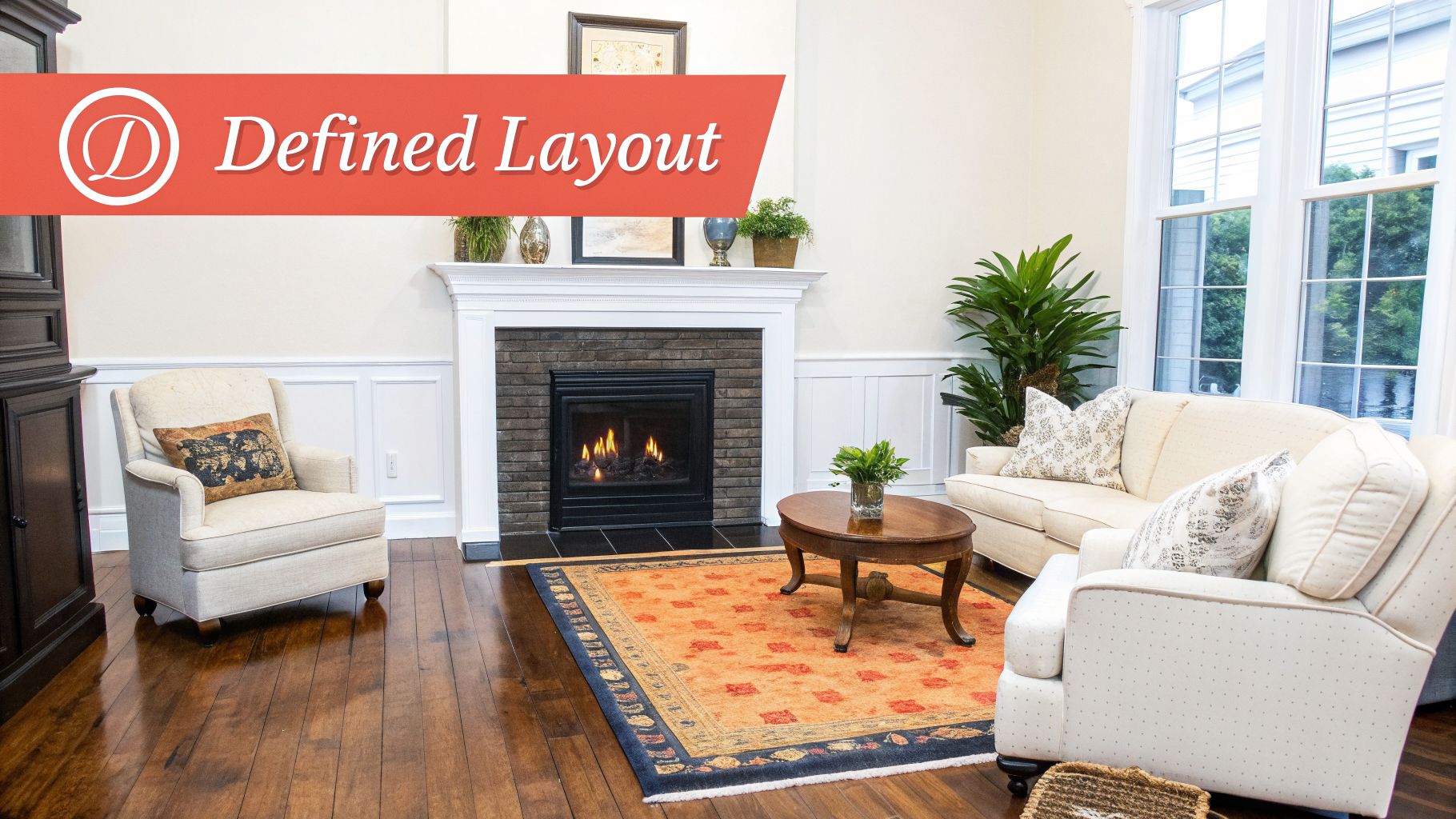
Every memorable living room has a hero—a central feature that immediately draws your eye and anchors the entire space. This is your focal point. Sometimes it's obvious, like a beautiful fireplace or a massive picture window with a great view.
If the room doesn't have a built-in star, you can create one. A large piece of art, a sleek media console, or even a strategically painted accent wall can do the trick. Arrange the main seating to face this point, and you've instantly given the room a sense of order.
The goal is to guide the buyer's eye. A strong focal point gives them a place to land and makes the room feel balanced and thoughtfully designed from the moment they step inside.
Once you’ve locked in your focal point, build the rest of the layout around it. Think in terms of creating small, inviting groups of furniture. A sofa and two armchairs in a U-shape around a coffee table practically beg buyers to imagine themselves relaxing with friends. This is the core principle of designing a living room layout that works.
Solving Common Layout Challenges
Of course, not every living room is a perfect box. You’re going to run into awkward layouts that demand a little more strategy.
- Long, Narrow Rooms: Don't create a "bowling alley" by lining a sofa up on one wall and the TV on the opposite. Break the room into two distinct zones. Think: a main seating area at one end and a small reading nook or desk at the other. Use area rugs to clearly define each space.
- Open-Concept Areas: In an open floor plan, furniture placement is everything. A large area rug is non-negotiable for anchoring the living room section and separating it from the kitchen or dining area. You can also use the back of a sofa to create a visual "wall," which adds a sense of intimacy.
- Awkward Corners: That weird, empty corner? Don't ignore it. Turn it into a feature. A comfy armchair, a small side table, and a floor lamp can instantly transform an overlooked spot into a charming little reading nook.
Mastering these layout tricks lets you turn any living room into a warm, functional space that makes buyers feel like they're already home. It's one of the most critical parts of getting staging right.
Adding Style and Personality to Your Staging
Alright, the furniture is in the right place. Now for the fun part: making the room feel like a home buyers can't wait to live in. This is where we move beyond just arranging furniture and start creating an emotional connection.
The secret from professional stagers? Layering. It’s the art of adding textures and warmth that turn a sterile room into a space that feels both aspirational and deeply comfortable.
Think about soft textures that invite people to touch and relax. A great area rug is your foundation, anchoring the whole seating area. Drape a soft throw blanket over a chair—suddenly, it’s a cozy reading nook. Toss in a few pillows with varied textures like linen, velvet, or a simple knit, and the room instantly feels more sophisticated.
Choosing a Winning Color Palette
When it comes to living room staging, your best friend is a neutral color scheme. You just can't go wrong with warm grays, soft beiges, and creamy off-whites. These colors make a room feel bigger and brighter, giving buyers a clean slate to project their own lives onto.
But neutral doesn't mean boring. Not at all. Bring in subtle pops of color with your accessories. A couple of decorative pillows in a dusty blue, a vase filled with fresh eucalyptus, or a single piece of art can inject life without overpowering the space. Pick a theme and stick with it—a fresh contemporary coastal interior design, for example, gives buyers a clear, cohesive vision they can fall in love with.
The perfect staging color palette is sophisticated enough to feel high-end but neutral enough that it won't clash with a buyer's personal style. It should feel like an invitation, not a statement.
Styling Surfaces Like a Pro
We know clutter is the number one enemy of good staging, but an empty coffee table can feel just as cold and uninviting. The key is to style surfaces with intention, creating small, curated vignettes that add personality without looking messy.
Try the "Rule of Three" by grouping items in odd numbers. A classic coffee table arrangement might be a small stack of beautiful art books, a decorative tray to corral small items, and a single interesting object like a piece of coral or a small sculpture. It just works.
Keep these pro tips in mind for any surface, from bookshelves to side tables:
- Vary Height: Place a tall, slender vase next to a short, wide candle. This creates a much more dynamic and interesting look.
- Mix Materials: Don't be afraid to combine different textures. Wood, metal, glass, and ceramic all play well together and add visual depth.
- Leave Breathing Room: Less is almost always more. White space is a design element in itself, so resist the urge to fill every inch.
These exact same principles apply when you're using digital tools for virtual staging. The best AI staging isn't just about dropping furniture into a photo; it’s about choosing the right digital pillows, rugs, and accessories to create a look that feels authentic and real. You can see what we mean by checking out some of our favorite house staging before and after transformations.
Using AI Virtual Staging to Win More Listings
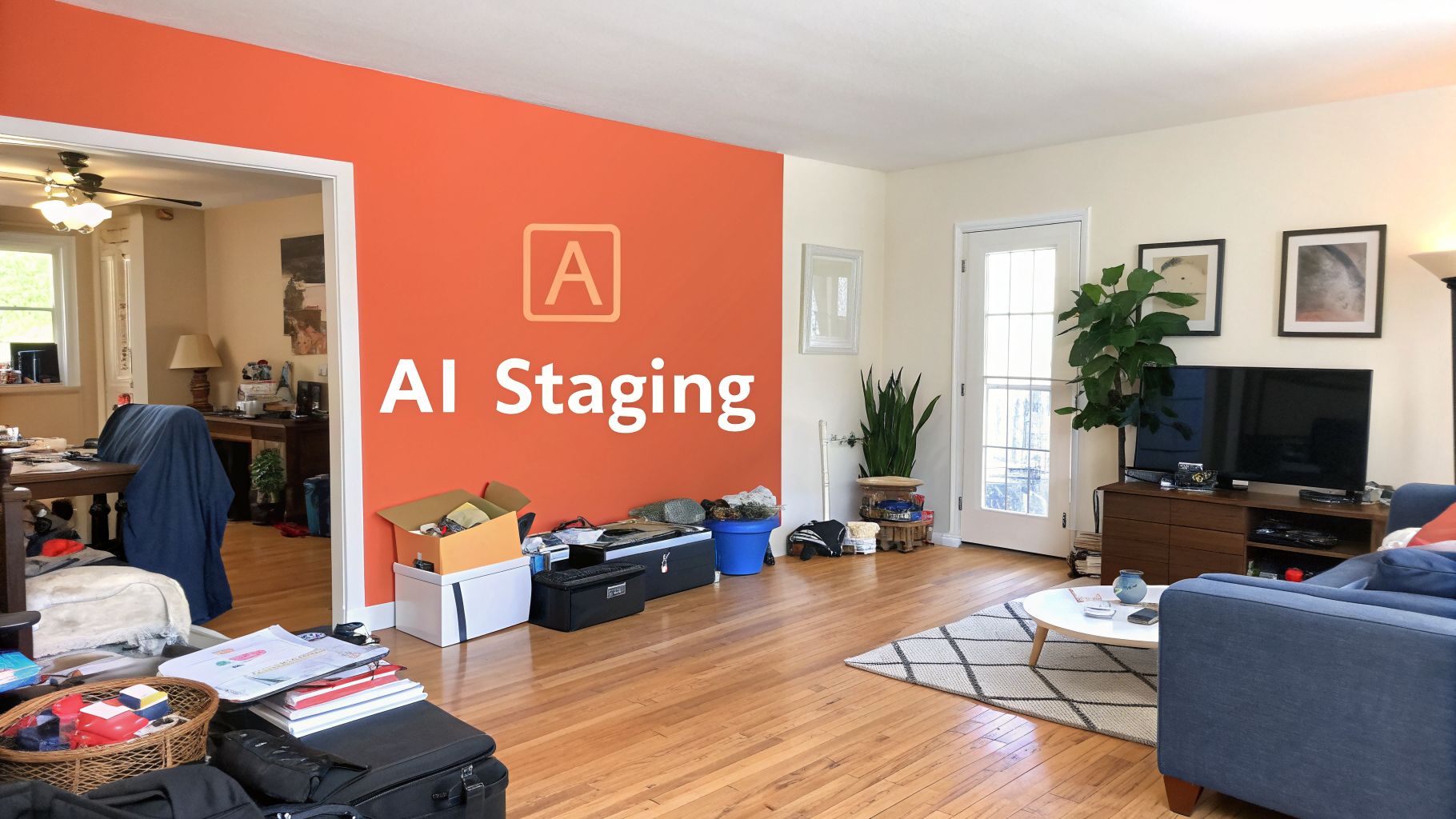
Let's be honest: physical staging is great, but it has some serious drawbacks. What happens when your new listing is packed to the gills with the tenant's personal belongings, and you need marketing photos... yesterday? This is where the sharpest agents are finding their edge with AI.
Instead of spending weeks and thousands of dollars coordinating physical staging, you can now take a simple video of a property and get incredible results almost instantly. AI tools can digitally erase clutter, furnish an empty room with trendy furniture, and even perform virtual renovations like adding new floors or a fresh coat of paint. For speed and efficiency, it's a total game-changer.
The Power of Instant Transformation
Think about that cluttered, tenant-occupied house again. Getting it ready for a traditional photoshoot is a logistical nightmare—scheduling movers, renting furniture, booking a photographer. It’s a process that can easily eat up weeks of your time. With an AI tool like Bounti, you just film a quick video on your phone and can start generating design options in minutes.
The flexibility here is huge. You can instantly create multiple versions of the same living room to see what clicks. Maybe one version is minimalist, another is modern farmhouse, and a third is more traditional. You can do it all from the same video, without lifting a single box.
The real magic of AI virtual staging is how it completely sidesteps the physical limitations of a property. It lets you market the potential of a home, not just its current, messy reality.
This speed and adaptability give you a much stronger hand when you're pitching to sellers and negotiating with buyers.
A Clear Return on Investment
Staging isn’t just about making things look pretty; it's a proven way to make your clients more money. According to the Real Estate Staging Association (RESA), staged homes sell for 109% of their list price—that's a 9% premium—and are off the market in just 9 days on average. For living rooms specifically, buyers rank staging as a 9.2/10 in priority, and a smart investment here consistently boosts the final sale price.
Here's a quick peek at how simple this is inside Bounti. You can apply different styles to a room with just a click.
The dashboard makes professional-grade staging easy for any agent, even if you don't have a background in design. It handles the heavy lifting so you can focus on your clients and closing deals. If this is new territory for you, our complete virtual staging guide is a great place to dig deeper into the tech.
Physical vs. AI Staging: The Bottom Line
So, how do the two approaches really stack up for a typical living room project? Let's break it down.
While physical staging will always have its place for in-person viewings, the speed, cost savings, and creative freedom of AI are undeniable. It gives you the power to show every single property—from a luxury estate to a fixer-upper—in its absolute best light, helping you attract more buyers and win more listings.
Capturing Your Staged Room for Maximum Impact
You can do everything right with the physical staging, but if the listing photos fall flat, all that work was for nothing. Your photos are the new curb appeal, the first impression that gets buyers to even consider a showing. The secret ingredient? It's all about the light.
Start by flooding the room with as much natural light as possible. Get those windows sparkling clean and pull back any heavy, dated drapes. I often recommend swapping them for simple sheer curtains for staging—they soften the light beautifully without blocking it, creating that bright, airy feel buyers consistently fall for.
Layering Light for a Perfect Photo
Natural light is your foundation, but to get that warm, magazine-quality glow, you need to layer your lighting. A professional-looking photo avoids harsh shadows and creates a sense of depth by using three distinct types of light.
- Ambient: This is your room's main light source, usually a ceiling fixture. Turn it on.
- Task: Think of lamps with a purpose, like a floor lamp next to a cozy reading chair. Turn those on, too.
- Accent: These are the smaller lights that draw attention to specific features, like a picture light over a piece of art.
One pro tip: make sure every single bulb in the room matches. You’re aiming for a warm white temperature, somewhere between 2700K and 3000K. This creates a consistent, welcoming vibe that looks incredible on camera.
Great lighting makes a room feel alive and welcoming. It's the difference between a flat, uninviting snapshot and a professional photo that makes buyers feel an immediate emotional connection.
You don't need a thousand-dollar camera, either. Your smartphone is more than capable of taking stunning shots. The key is how you use it. Always shoot from the corners of the room to make the space feel bigger and more inviting.
If you can, time your shoot for the "golden hour"—that magical first hour after sunrise or the last hour before sunset. The natural light is softer, warmer, and more flattering. And once you have the shots, a little post-production can make a huge difference. You can explore some of the best AI photo editing software to make your final images truly pop and grab attention online.
Your Top Living Room Staging Questions, Answered
Even with the best game plan, a few questions always come up in the middle of a living room staging project. Let’s tackle the most common ones we hear from agents on the ground.
How Much Does Professional Living Room Staging Typically Cost?
If you're hiring a professional stager for physical staging, the costs can vary wildly. You might pay a few hundred dollars for a consultation, but renting furniture and having it installed can easily run you $1,200-$2,500 for the initial setup.
This is where AI virtual staging really shines, offering a powerful alternative without the logistics and high overhead of physical furniture.
Is It Better to Stage a Vacant or Occupied Living Room?
Honestly, both need it. A vacant living room often feels sterile and confusingly small, leaving buyers struggling to picture their own lives—and furniture—in the space. Staging provides that crucial context and warmth.
On the flip side, an occupied room is usually too personalized. The goal here is to help buyers see it as their future home, not the seller's current one.
Virtual staging is a game-changer for occupied homes. AI tools can digitally erase existing clutter and furniture, then replace it with an ideal layout. You get to showcase the home’s maximum potential without a single moving truck.
What Is the Biggest Mistake to Avoid in Living Room Staging?
The number one mistake we see? Over-staging. This usually means cramming in furniture that's way too big for the room.
Agents and sellers often think pushing bulky sofas against the walls creates more space, but it does the exact opposite. It kills the flow and makes the room feel cramped and awkward. The goal isn't just to fill a room with nice things; it's to create a balanced, inviting layout that highlights the room’s best features. Always, always prioritize flow over more furniture.
Ready to transform your listings with stunning, instant staging? With Bounti, you can declutter, restyle, and generate MLS-ready photos from a single video. See how it works at https://www.bounti.ai.