The best real estate ads aren't just pretty pictures and a price tag. They're carefully engineered campaigns built to grab the attention of qualified buyers and sellers, showcasing a property’s potential across the specific digital and print channels where those people spend their time. It's a mix of compelling visuals, sharp copy, and smart targeting that actually generates leads in a ridiculously competitive market.
Building The Strategic Foundation For Your Ads
Jumping straight into ad design without a strategy is like building a house without a blueprint. Sure, you might end up with four walls and a roof, but it won't be efficient, it won't be effective, and you'll almost certainly waste a ton of money.
The difference between an ad that just burns cash and one that consistently brings in qualified leads? It all starts with this foundational work. This planning phase makes sure every dollar you spend is aimed squarely at the right audience with a message that hits home.
Define Your Campaign Objectives
Before you even think about writing copy or picking photos, you need to know exactly what you're trying to accomplish. A fuzzy goal like "get more leads" isn't going to cut it. Your objective is the lens through which you'll make every other decision, from the platform you use to the call-to-action you write.
You need to get specific. Are you trying to:
- Sell a specific listing—fast? Your ad will need to scream urgency, highlight unique features, and use direct CTAs like "Schedule a Private Tour."
- Boost open house attendance? The creative has one job: get people there. It should highlight the date, time, and give a compelling reason to show up, like "First Look: Be the first to see it this Saturday."
- Capture seller leads in a particular neighborhood? This isn't about one house; it's about your expertise. The campaign should offer something valuable, like a free home valuation or a hyper-local market report.
- Build your personal brand as the go-to local expert? These ads are less about a transaction and more about trust. You might share market insights, community news, or tips for homeowners.
Think of your objective as your campaign's North Star. If a piece of creative, a targeting choice, or a budget decision doesn't directly serve that one primary goal, it's a distraction. Stay focused.
Create Your Ideal Buyer Persona
Once you know your "what," you have to define your "who." A buyer persona is more than just a list of demographics—it’s a sketch of your ideal client that feels like a real person.
Picture the young professional couple hunting for their first home. They want to be close to downtown, value walkability over a big yard, and love modern, low-maintenance design. They’re scrolling Instagram on their couch at night and hitting up local coffee shops on the weekend. The ad you create for that sleek downtown condo needs to reflect their lifestyle in its visuals and language.
Now, contrast that with a growing family looking to upgrade into a top-tier school district. Their checklist is completely different: space, safety, a good backyard, and a sense of community. They’re more likely to be doing deep research on Google or asking for recommendations in neighborhood Facebook groups. An ad for a four-bedroom home in the suburbs needs a totally different tone, focus, and even platform. For a closer look at the tools we use for this kind of targeting, check out our breakdown of a modern real estate marketing stack.
Analyze Your Competitors
Finally, do some recon. See what other agents in your market are doing with their ads. The goal isn't to copy them, but to find where they're zigging so you can zag.
- Are all their ads dripping with luxury and staged glamour shots? Maybe there's a huge opportunity for ads that feel more authentic, warm, and down-to-earth.
- Are they all using the same tired phrases ("Location, location, location!") and basic photos? You can immediately stand out with a compelling video walkthrough or copy that tells a story about the home's lifestyle.
By seeing their strategy, you can spot the gaps in the market. This is how you position your real estate ads to get noticed where everyone else is just creating noise. This prep work isn't just administrative—it's the strategic core of every ad campaign that actually works.
Creating Visuals That Command Attention
In a world of endless scrolling, your ad's visuals are everything. You have just a few seconds to stop a potential buyer cold and make them pay attention. Let's be clear: high-quality visuals aren't a nice-to-have anymore. They are the engine of modern real estate marketing, directly fueling more interest, faster sales, and a stronger brand.
The difference between a listing that sits and one that sells often boils down to its presentation. This isn't just about snapping a few pictures; it's about telling a visual story. It means mastering the light, composing the perfect shot, and creating a flow that makes a buyer feel like they're walking through the home themselves.
The Power Of Professional Photography
Your property's main photo is the single most important part of your ad. It's what earns the click. Period. The best real estate photos all nail a few key things.
- Exceptional Lighting: They feel bright, airy, and full of natural light. Dark, grainy photos are an instant dealbreaker for buyers.
- Strategic Composition: Every shot is framed with purpose, highlighting a room's best assets and creating a sense of space and flow.
- A Narrative Arc: The photos are ordered logically, guiding the viewer from the curb, through the living areas and kitchen, to the bedrooms, and finally out to the backyard.
This isn't just about aesthetics; it has a real impact. Homes with professional photos sell 32% faster than those marketed with amateur shots. With almost every buyer starting their search online, that first visual impression is what gets them off the couch and through the front door.
AI Is Changing The Visual Game
Beyond the camera, artificial intelligence has become an agent's secret weapon. Tools like Bounti can take a simple video walkthrough and spin up a whole suite of marketing materials, from polished, MLS-ready photos to persuasive property descriptions. This kind of tech puts high-end marketing within reach for everyone.
AI-powered virtual staging is one of the biggest game-changers. Forget spending thousands on physical furniture rentals. Now you can digitally furnish an empty room to show buyers its true potential, helping them bridge that "imagination gap" and picture their own lives there. You can even use AI for digital renovations, showing clients what a kitchen could look like with new countertops or a different paint color. Our guide to the best AI photo editing software dives deeper into these incredible tools.
Video And Immersive Tours
If photos earn the click, video earns the engagement. Video gives buyers a sense of depth and dimension that static images just can't replicate.
Listings that incorporate 3D tours or video walkthroughs receive significantly more views and inquiries. Why? Because they offer a level of transparency and immersion that builds instant trust and helps pre-qualify buyers before they even schedule a showing.
The chart below shows how your goals, buyer profile, and what your competitors are doing should directly inform your visual strategy.
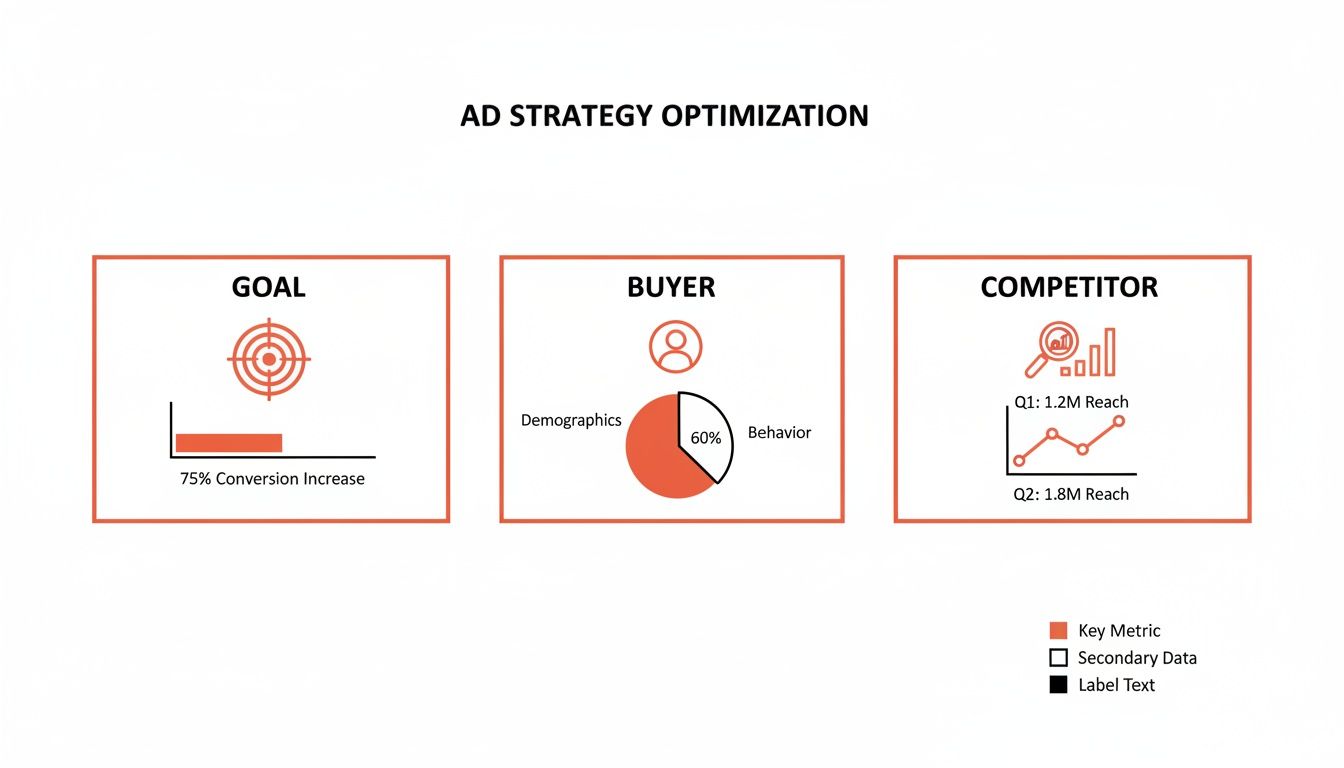
This just drives the point home: your choice of images and video needs to be a direct reflection of your campaign objectives and the specific people you're trying to reach.
The type of visual you use has a direct and measurable effect on how buyers interact with your listings.
How Visuals Impact Buyer Engagement
These numbers tell a clear story—a smart visual strategy is a smart business strategy.
Your video plan doesn't have to be limited to a single, formal tour. Try mixing in these dynamic formats to keep your real estate ads fresh:
- Short Social Media Clips: Think 15-30 second, vertical videos perfect for Instagram Reels or Facebook Stories. Highlight a single killer feature—the waterfall kitchen island, the cozy fireplace, or that incredible backyard view.
- Drone Footage: For properties with acreage, a prime location, or stunning architecture, aerial shots provide a jaw-dropping perspective that makes your listing unforgettable. Choosing the best drone for real estate videos is a key decision here.
- Agent-Led Walkthroughs: A personal tour adds a human element. It’s a chance for your expertise and passion to shine, building a real connection with potential buyers.
Ultimately, investing in a diverse set of high-quality visuals is one of the smartest moves you can make. It’s not an expense; it’s a direct investment in a faster sale, a higher price, and a reputation that brings in your next client.
Writing Ad Copy That Connects And Converts
Your visuals got the click. Great. Now your words have to do the heavy lifting.
The best real estate ads don't just list facts; they sell a lifestyle. They help a potential buyer see themselves brewing coffee in the kitchen, hosting a BBQ in the backyard, and living their life in that home. This is where you move from just describing a property to actually telling its story.

From Features To Benefits
Look, any agent can state the obvious: "granite countertops" or "a fenced backyard." But top performers know how to translate those features into what they actually mean for the buyer. It’s the classic move from selling the steak to selling the sizzle.
- Benefit: "Imagine hosting friends around this massive granite island, where spills wipe away in a second, leaving more time for making memories."
- Benefit: "Finally, a secure backyard where the kids and the dog can run wild while you enjoy your morning coffee on the patio in total privacy."
- Benefit: "Start every day feeling organized. This spacious walk-in closet has room for everything, making your morning routine feel calm and effortless."
When you do this, you're building an emotional connection before they’ve even set foot inside.
Crafting Headlines That Stop The Scroll
In a chaotic social feed or a packed search results page, your headline is everything. It's your one shot to grab their attention. It has to be punchy, impactful, and smart about the platform it's on.
- For Facebook/Instagram (Visual-First): Go for emotion and aspiration. Think "Your Weekend Escape Awaits Just Outside The City" or "The Modern Farmhouse You’ve Been Dreaming Of."
- For Google Ads (Intent-Driven): Be direct and get to the point. Something like "4-Bed, 3-Bath Home in Northwood School District" or "Luxury Downtown Condo | Tour Today."
It all comes down to meeting the user where they are. Social scrollers are browsing; searchers are on a mission. Speak their language.
Structuring Your Description For Readability
Nobody wants to read a wall of text, especially not on their phone, where over 68% of home searches now happen. You have to make your ad copy easy to scan.
Use short sentences. One-line paragraphs. Bullet points. Emojis. Anything to break up the text. This makes your copy feel way less intimidating and helps the key selling points jump off the screen.
Think about the flow. Hook them with a great opening line, list your top 3-5 features (framed as benefits, of course), and then tell them exactly what to do next. And if you really want to dial in your messaging, brushing up on the fundamentals of copywriting for social media is always a good idea.
The Anatomy Of A Powerful Call To Action
Your call to action (CTA) might be the most important part of the entire ad. Don't blow it with something vague and passive like "Learn More."
Be direct. Be clear. Use action-oriented language that gives them a compelling reason to click right now.
Examples of Strong CTAs:
- "Schedule Your Private Tour Today" - This feels urgent and exclusive.
- "See All 24 Photos & The 3D Tour Now" - This offers instant, specific value.
- "Download the Full Property Brochure" - A perfect lead magnet for a landing page.
- "Get Open House Directions" - It’s a simple, low-friction next step for a motivated buyer.
When you pair that evocative, benefit-driven storytelling with a sharp and compelling CTA, your ad copy stops being just a description. It becomes a tool that turns casual scrollers into genuinely interested buyers.
Choosing The Right Platforms For Your Listings
Let's be honest. You can have the most stunning visuals and killer copy in the world, but if you're showing them to the wrong people, it's a total waste of time and money. Putting the perfect ad on the wrong platform is like setting up a beautiful open house sign in the middle of a desert.
The real trick is to meet your ideal buyers where they already spend their time. This isn't about being everywhere at once; it's about being in the right places with an ad that feels like it belongs there. A smart approach makes your message feel like a discovery, not an interruption.

Facebook And Instagram: The Visual Storytelling Hubs
When it comes to real estate, Meta’s platforms are absolute powerhouses. Why? Because they’re built for visual storytelling and let you get incredibly specific with who sees your ads. This is where you build campaigns around those gorgeous hero shots and short, snappy videos that sell a lifestyle, not just a house.
Think of Facebook and Instagram as your digital open house. You can target people based on demographics, what they're interested in (like Fixer Upper or luxury car brands), recent life events ("newly married" is a goldmine), and even down to the exact zip codes you want to reach.
Best Formats for Facebook & Instagram:
- Carousel Ads: These are perfect for telling a story. You can guide a potential buyer from the front door to the back patio in a single, interactive ad. It’s the next best thing to an in-person walkthrough.
- Video Stories & Reels: Short, vertical video is king. A quick 15-second tour of that amazing new kitchen or a clip of you highlighting the neighborhood park can stop the scroll instantly.
- Single Image Ads: Got one jaw-dropping photo? That perfect twilight shot? Sometimes, one stunning image is all you need to make an impact.
If you want to go deeper on this, we've got a whole playbook on real estate social media marketing. These platforms are incredible for getting in front of passive buyers—the ones who weren't even looking until your listing made them stop and dream.
Google Ads: Capturing Active Buyer Intent
While social media is for discovery, Google is where people go when they're on a mission. They’re typing in "homes for sale in [Your Neighborhood]" or "4 bedroom house near [Top School District]." This is as high-intent as it gets, and your ad needs to be the first thing they see.
With Google Ads, you’re not interrupting their cat videos; you’re giving them the answer they're actively searching for. That’s why these leads are often so qualified—they’re already halfway down the buying path.
A winning Google Ads strategy is all about keywords. Don’t just bid on "homes for sale." Get specific. "Waterfront property lake norman nc" will attract serious, niche buyers and cost you a lot less per click.
YouTube: The Video Powerhouse
For truly immersive experiences, nothing beats YouTube. This is your stage for those cinematic, 2-3 minute property tours that make a luxury listing feel like a movie premiere. When photos just don't do a place justice, video is the answer.
Think about it. We’ve all been there, scrolling Zillow late at night. What grabs you? It's the video tours. The numbers don't lie: listings with video get a staggering 403% more inquiries. In a world where 82% of all online traffic is video, you can't afford to ignore it. Buyers expect to see the home, not just read about it.
When To Use Niche Platforms
Meta and Google are the heavy hitters, but don't sleep on the specialty channels.
- LinkedIn: Your go-to for luxury residential or high-end commercial properties. The ability to target by job title, industry, or company size is unmatched for reaching affluent professionals and key decision-makers.
- Pinterest: This is where people go to dream and plan. It's a visual search engine for home inspiration, making it a fantastic and often overlooked spot to catch buyers in the early, aspirational phase of their journey.
Ultimately, the best strategy isn't about picking just one platform. It's about creating a smart mix, using the unique strengths of each channel to connect with different buyers at every stage of their journey.
How To Manage Your Budget And Measure Success
Alright, you've built the perfect ad. Hitting "publish" feels like the finish line, but it's really just the beginning. Now comes the part where you turn that ad spend from a hopeful expense into a predictable, lead-generating machine.
Forget the old "set it and forget it" approach. Smart digital advertising is all about watching, testing, and tweaking. By getting comfortable with a few key numbers, you can confidently manage your budget, drive down costs, and pull in more qualified leads month after month.
Setting Your Ad Budget
Figuring out how much to spend can feel like guesswork, but it doesn't have to be. Your budget should flow directly from the goal you set in the first place. Are you trying to get your name out there, or are you focused on selling a specific multi-million dollar listing? Your answer changes everything.
For a specific listing campaign, a good rule of thumb is to set aside 5-10% of your projected commission for marketing. If you're running a broader lead-gen campaign, it’s smarter to start small and test the waters. Think $15-$25 per day on a platform like Facebook before you decide to pour more fuel on the fire.
The real goal isn't just spending money; it's buying leads at a price that makes sense. That boils down to two critical numbers:
- Cost Per Click (CPC): This is what you pay every time someone clicks your ad. It's a quick gut check on how well you're grabbing attention.
- Cost Per Lead (CPL): This is your total ad spend divided by the number of leads you actually got. This is the metric that really matters to your bank account.
A cheap CPC is great, but if those clicks don't convert into actual people you can talk to, it's just a vanity metric. Your focus should always be on getting your CPL as low as possible.
The Power Of A/B Testing
Never, ever assume you know what will work best. A/B testing—or split testing—is just running two slightly different versions of an ad against each other to see which one performs better. It is, without a doubt, the single best way to improve your results over time.
For real estate ads, you can test just about anything. I recommend starting with the big movers—the elements that are most likely to make a real difference.
A/B Testing Ideas for Real Estate Ads:
- Main Image: Try a jaw-dropping twilight exterior shot vs. a warm, bright photo of that killer new kitchen.
- Headline: Pit an emotional, lifestyle-driven headline ("Your Private Backyard Oasis Awaits") against a direct, feature-driven one ("Updated 4-Bed Home with Pool").
- Call to Action: Test a low-friction CTA like "See All 25 Photos Now" against a higher-intent CTA like "Schedule a Private Tour."
Let the data tell you what's working. Once you have a clear winner that lowers your CPL or boosts clicks, make it the new "control" ad and start testing something else against it. This constant cycle of improvement is what the top producers do.
Key Metrics To Track And Understand
When you open your ad platform's dashboard, the sheer amount of data can be paralyzing. To keep your sanity, ignore most of it and laser-focus on the handful of Key Performance Indicators (KPIs) that actually measure the health of your real estate ads.
Don't just glance at the data; learn to read the story it's telling you. A high click-through rate but a terrible conversion rate isn't a failure—it's a clue. It tells you the ad is compelling, but the landing page is weak. Now you know exactly what to fix.
Here are the only KPIs you really need to live and die by:
By tracking these numbers consistently, you move from guessing to knowing. You'll see exactly what's working, what's a waste of money, and how to adjust your strategy to make sure every dollar you spend moves your business forward.
Common Questions About Real Estate Ads
Even with a killer strategy, jumping into paid ads can feel like a minefield. You've got questions. I get it. Getting straight answers is the only way to move forward without blowing your budget on stuff that doesn't work.
Let’s tackle the most common questions agents have when they’re ready to hit "launch."
How Much Should I Spend On An Ad Campaign?
This is the big one, but there's no magic number. Your budget should be tied directly to your goal.
A solid rule of thumb for a new listing is to earmark 5-10% of your projected commission for the marketing budget. This instantly reframes the ad spend as what it really is: an investment in getting the deal done.
For broader campaigns, like generating leads in a specific zip code or just building your brand, you don't need to go big right away. Start small and test the waters. A daily budget of $15-$25 on a platform like Facebook is plenty to see what's working. Once you find an ad that’s pulling in clicks and leads, that's when you confidently pour more fuel on the fire.
What Is The Biggest Mistake Agents Make?
Easy. Using terrible photos.
In a sea of perfectly curated digital content, your main image is everything. A dark, blurry, or crooked photo gets scrolled past 100% of the time. It doesn't matter how brilliant your copy is or how dialed-in your targeting is. Bad photo = wasted money.
The other cardinal sin is a weak or nonexistent call to action (CTA). You have to explicitly tell people what to do next. Don't leave them guessing.
A killer ad with a lousy CTA is like a brilliant sales pitch with no contract to sign. Always give a clear, direct command like "Schedule Your Private Tour Today" or "Download the Full Property Brochure Now."
Can I Really Use AI For My Ad Copy?
Absolutely, and you probably should. AI writing tools are phenomenal for blasting through writer's block and spitting out a solid first draft of your property descriptions. They’re great for exploring different angles and saving you a ton of time.
But—and this is a big but—it’s not a one-click solution.
The best approach is to let AI do the heavy lifting, then you come in with the finishing touch. Always, always review, edit, and inject your own expertise into the text.
- Weave in your unique knowledge of the neighborhood.
- Make sure it sounds like you, not a robot.
- Double-check that every claim is accurate and complies with Fair Housing laws.
Treat AI like a really fast, talented assistant. It gets the ball rolling, but you're the one who guides it across the finish line.
Do I Need To Worry About Legal Disclosures?
Yes. This part is non-negotiable. Real estate advertising is heavily regulated, and staying compliant protects your license, your reputation, and your bank account. The specifics can vary by state and local MLS, but a few rules are universal.
- Firm Name Display: Your brokerage's full licensed name has to be clear and obvious on every ad. Just slapping your logo on it usually isn't enough.
- Truth in Advertising: You are on the hook for every claim you make. Describing a home as "like new" when you know it has foundation issues is a massive violation. You can't plead ignorance.
- Copyright: Only use photos, videos, and music that you either own outright or have explicit, written permission to use. Pulling a pretty neighborhood shot from Google Images is a quick way to get a very expensive letter from a lawyer.
When in doubt, run it by your managing broker. It's a five-minute conversation that can save you from a five-figure headache.
Ready to create stunning, MLS-ready visuals for your next ad campaign in minutes? Bounti Labs is the AI assistant that turns a simple property video into a full suite of marketing materials, from professional photos and compelling descriptions to AI-powered virtual staging and renovations. See how Bounti can help you win more listings and close more deals.