Staging a living room isn't just about placing furniture. It's the art of creating a feeling, an atmosphere that lets potential buyers instantly picture their own lives unfolding within those walls.
This is where you help them visualize themselves living there, and it’s why staging the living room delivers the highest impact. It can lead to faster sales, better offers, and a smoother transaction for everyone involved.
Why the Living Room Sways Buyers More Than Any Other Space
If a home has an emotional center, it's the living room. This is where buyers mentally rehearse future holidays, family game nights, and cozy evenings. It's where they decide if a house feels like a home.
A well-staged living room forges an immediate, powerful connection that an empty or cluttered space just can't compete with. You’re not just selling a property; you're selling a vision.
When buyers walk into a space that feels intentional, warm, and inviting, they stop seeing minor imperfections and start seeing potential. Master this one room, and you set the tone for the entire showing, making it much easier for them to fall in love with the place.
The Numbers Behind That First Impression
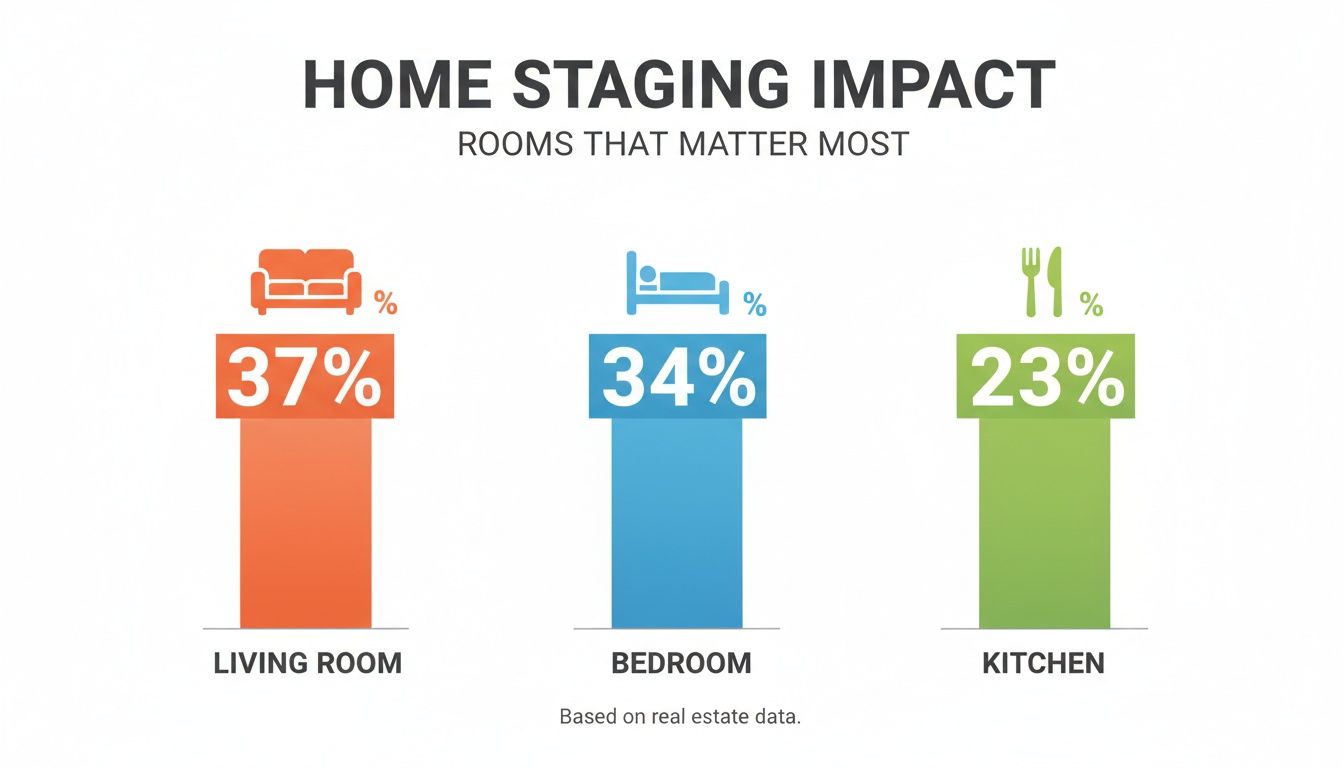
The data backs this up. Year after year, reports show the living room holds the most sway over a buyer’s decision. A landmark report from the National Association of Realtors (NAR) confirms this, with 37% of buyers' agents saying the living room is the most critical space for buyers.
That figure puts it ahead of both the primary bedroom (34%) and the kitchen (23%), proving that smart agents are right to pour their staging energy here first.
The breakdown is pretty clear:
This isn’t just a nice-to-have; it's a strategic move that aligns directly with buyer psychology.
A beautifully staged living room does more than showcase a property; it sells a lifestyle. It allows buyers to emotionally "move in" the moment they walk through the door, which is often the tipping point that leads to an offer.
To see just how powerful these changes can be, check out our gallery of https://bounti.ai/blog/staging/house-staging-before-and-after transformations.
And if you want a complete playbook for getting the entire property market-ready, this guide on how to stage a house to sell it quickly offers a fantastic checklist to follow.
Preparing the Canvas for Staging
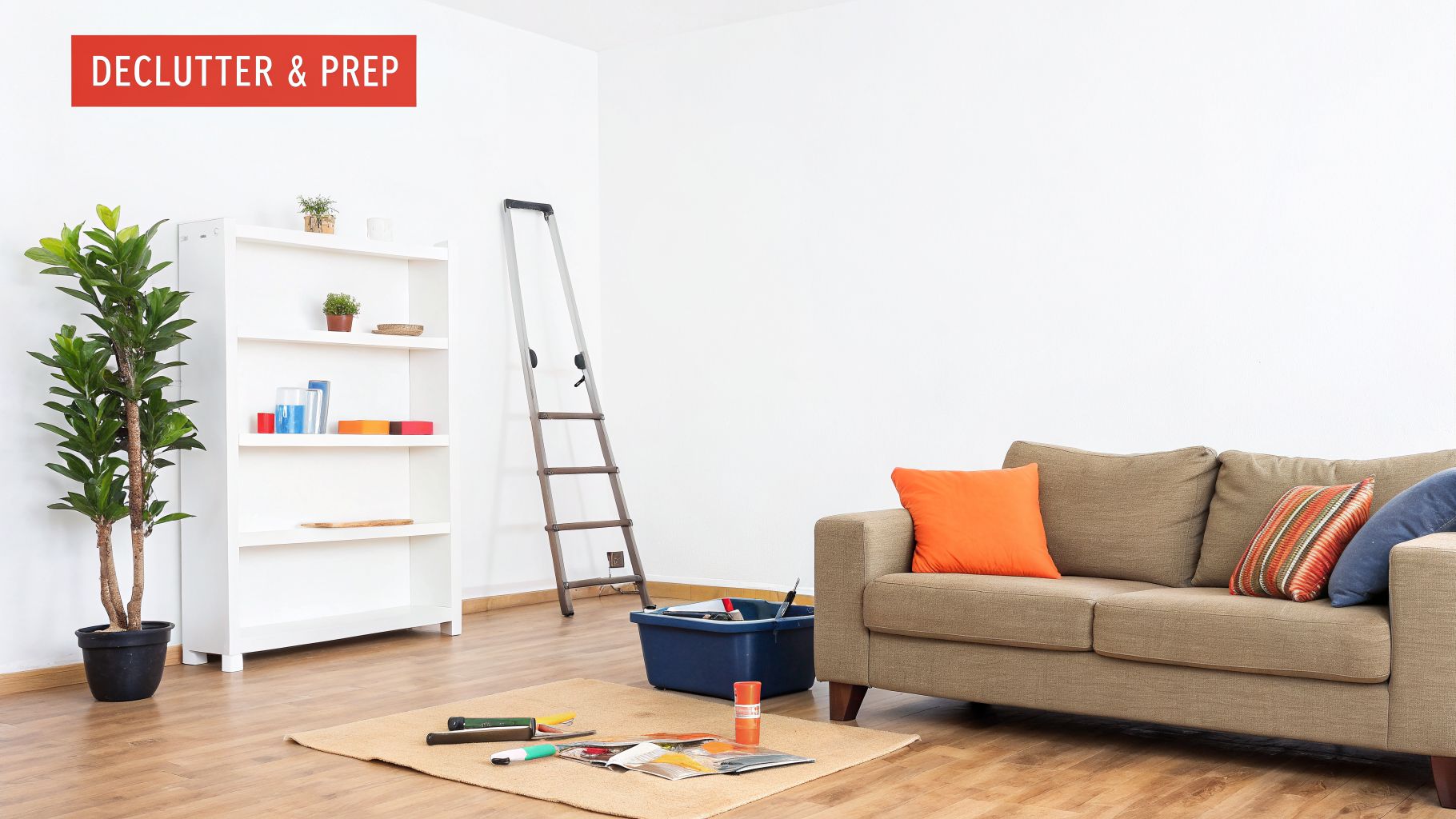
Before you even think about bringing in staging furniture, you’ve got to handle the prep work. This is the foundation of great staging—creating a clean, neutral canvas that lets buyers see the home's potential, not the seller's life story. The first, and most important, job is to clear the clutter.
Think of it as giving the room space to breathe. Your job is to guide sellers in editing their belongings to show off the space, not their stuff. We're not aiming for a sterile, empty box, but removing distractions that make a living room feel small and chaotic is non-negotiable.
Declutter with the 50 Percent Rule
Here’s a simple but incredibly effective guideline I give my clients: the "50% rule." Advise them to remove at least half of the items from every flat surface—bookshelves, coffee tables, mantels, you name it. If a bookshelf is packed with 20 books and a dozen knick-knacks, the goal is to get it down to 10 books and a few choice items, arranged with intention.
This one move does two things instantly:
- It creates negative space: That’s the empty area around objects. It's what makes a room feel open, airy, and a whole lot bigger than it is.
- It highlights key features: With less stuff competing for attention, the room’s best assets—like a beautiful fireplace or cool built-in shelving—finally get the spotlight.
Decluttering isn’t just tidying up; it's strategic depersonalization. Buyers can’t picture their future in a space when they’re staring at someone else's family photos and vacation souvenirs.
Depersonalize to Universalize the Appeal
Depersonalization flows right from decluttering. This can be a tricky conversation, so I always frame it as a marketing strategy. We're not erasing their memories; we're preparing the product for the widest possible audience. The goal is to create a welcoming vibe where any buyer can mentally "move in."
This means it's time to pack up the personal stuff:
- Family photos and portraits.
- Religious or political items.
- Trophies, collections, and memorabilia.
- Kids' artwork from the walls.
By neutralizing the space, you transform it from "your client's home" into "a potential new home" for a buyer. Once a room is properly prepped, you have a solid foundation for staging. If you want to take it a step further, check out some general living room makeover ideas for a more holistic refresh.
Focus on High-Impact Minor Repairs
Finally, it’s time to sweat the small stuff. Tiny imperfections might seem minor on their own, but together, they scream "neglect" to a sharp-eyed buyer. A house that feels well-maintained gives people confidence. Do a walkthrough and create a quick punch list of high-impact fixes.
We're talking about touching up scuffed paint, fixing that wobbly doorknob, tightening loose light fixtures, and making sure every single light bulb works and matches in color. These small details add up to a polished, move-in-ready feel that buyers notice. Plus, once these fixes are done, your listing photos will look infinitely better, especially if you use the best AI photo editing software to give them that final professional polish.
Crafting a Winning Furniture Layout
I see it all the time: living room furniture pushed up against the walls like it's a middle school dance. It might seem like you’re creating more open space, but what you’re really creating is a cold, cavernous room that feels more like a doctor's waiting area than a cozy home.
The pro move? "Float" your furniture. Pull that sofa and those chairs away from the walls and arrange them into conversational groups. This one simple change instantly creates a welcoming zone that pulls buyers into the heart of the room. It also defines natural walkways, making the whole space feel bigger, smarter, and more intentional.

Identify and Amplify the Focal Point
Every great living room has a star of the show. Your first job is to figure out what it is and then arrange the furniture to celebrate it. This gives the room an anchor and tells buyers exactly where to look.
What are you working with?
- A beautiful fireplace?
- A huge picture window with a great view?
- Cool architectural details like built-in bookshelves?
Once you’ve found it, orient your main seating toward it. If you have a fireplace, the sofa should face it or sit perpendicular to it. This creates a cozy, intuitive layout that makes the room's best feature absolutely impossible to miss.
"A winning layout doesn't just fill a room; it tells a story. By creating intentional conversation zones and highlighting the focal point, you're guiding the buyer's eye and helping them emotionally connect with how they could live in the space."
Selecting the Right Scale and Style
When you're renting furniture, scale is everything. A massive sectional will absolutely devour a small living room, while a few delicate pieces will look lost and lonely in a huge, open-concept space. You're looking for furniture that complements the room’s proportions, not fights with them.
In smaller rooms, go for pieces with clean lines and visible legs, like a mid-century modern sofa or armchair. Letting light and air flow underneath creates an illusion of more space.
For larger rooms, you can go bigger with your anchor pieces, but you must define the conversation area with a generously sized rug. The rug needs to be large enough for at least the front legs of your main furniture pieces to sit on it. This is non-negotiable—it’s what pulls the whole grouping together and makes it feel cohesive.
Remember, the goal isn't to show off the furniture. It's to show off the space. The furniture is just the tool you use to do it.
Styling with Light Color and Decor
Okay, the furniture is in place. Now for the fun part—the layers that make a living room feel truly inviting. This is where we stop just arranging furniture and start creating a vibe. It's the light, color, and final decor touches that buyers remember long after they’ve left the open house.
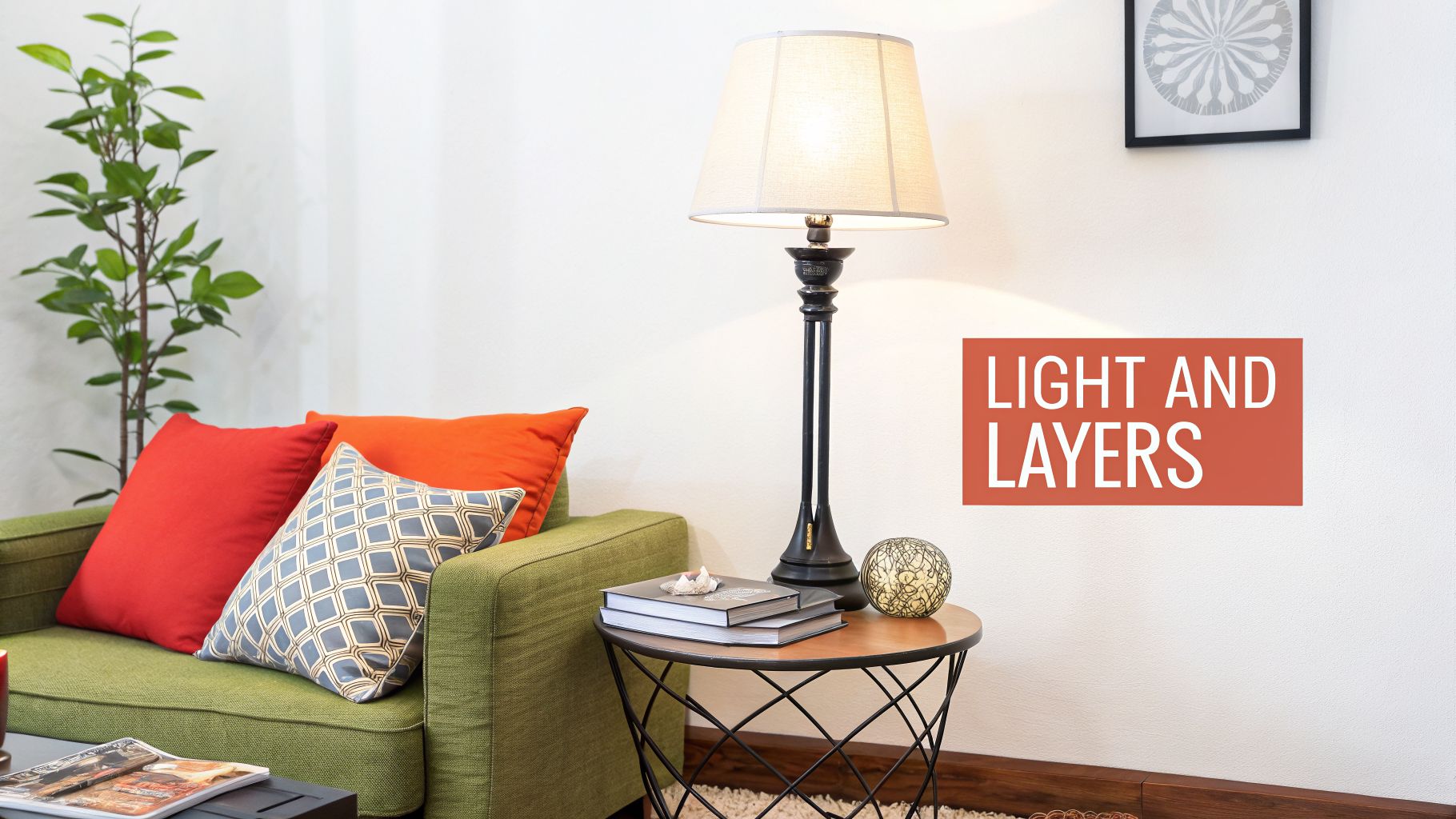
Think of lighting as your secret weapon. A single, harsh overhead light can kill the mood instantly, making even a beautiful room feel like a cafeteria. The trick is to layer different light sources to create depth and warmth. This ensures the space looks incredible in photos and feels just as good in person, no matter the time of day.
Layering Light for Maximum Impact
A well-staged living room needs a balanced mix of light. Each type has a job to do.
- Ambient Light: This is your main light source—think chandeliers or recessed lighting. Make sure all your bulbs are a warm white (around 2700K-3000K) and pop them on a dimmer if you can.
- Task Light: These are practical lights for specific activities, like a sleek floor lamp next to an armchair. They don’t just illuminate; they suggest a lifestyle. This is a "reading spot."
- Accent Light: Use smaller lamps on side tables and consoles. Their job is to add a warm glow to dark corners or highlight a great piece of art.
This three-part strategy banishes shadows and makes the entire room feel bigger, brighter, and way more appealing.
Using Color to Create an Emotional Connection
When in doubt, start with a neutral backdrop. Walls painted in soft grays, warm beiges, or creamy off-whites are your best friend. They create a calm, serene canvas that appeals to almost everyone and makes it dead simple for buyers to picture their own stuff in the room.
But neutral doesn't mean you have to be boring. The real magic comes from adding strategic pops of color with your accessories. This is how you inject personality without scaring anyone off.
Think about weaving in color with:
- Throw pillows and cozy blankets
- A single piece of vibrant, abstract art
- A colorful vase on the coffee table or a decorative tray on the ottoman
These little touches bring a room to life and give the eye something interesting to focus on. Best of all, they're cheap and easy to change out. It’s a low-risk, high-reward staging move.
The secret to great styling is in the details—the accessories, art, and lighting. Buyers are more likely to remember the fantastic lamps or the gorgeous throw pillows than the specific sofa you used.
Styling Surfaces with the Rule of Threes
Nothing screams "cluttered" faster than surfaces covered in random stuff. To style coffee tables, mantels, and consoles like a seasoned pro, just remember the "Rule of Threes." It's a classic design principle for a reason: items grouped in odd numbers, especially threes, just look better.
Create little vignettes by grouping three objects of different heights, shapes, and textures. For example, a coffee table could hold a short stack of books, a small plant, and a cool decorative object. This simple formula makes every surface look intentionally styled, not just messy.
Bringing in Virtual Staging for Modern Listings
Let's be real: physical staging is fantastic, but it's not always in the cards. Budgets get tight, timelines shrink, and sometimes the logistics of hauling furniture into a vacant property just don’t make sense. This is where savvy agents have a secret weapon.
AI-powered virtual staging gives you a fast, affordable, and incredibly flexible way to get the job done. You can take a single video or a handful of photos of an empty, dated, or even cluttered living room and turn it into a showstopper. No expensive furniture rentals, no movers, just a digital transformation that showcases a property's true potential.
The Power of Multiple Perspectives
One of the biggest wins with virtual staging is the freedom to appeal to different buyers without moving a single pillow. What if half your potential buyers are young professionals dreaming of a minimalist vibe, while the other half are families craving a cozy, traditional feel? With virtual tools, you can give them both what they want.
Imagine sending out an email blast with links to two versions of the same living room:
- Version A: A sleek, contemporary design with sharp lines and a cool, neutral palette.
- Version B: A warm, transitional look filled with comfy furniture and inviting textures.
This kind of targeted marketing helps a much wider range of buyers picture themselves in the home, which directly translates to more inquiries and more showings. You're not just selling one look; you're selling possibility. For a deeper look at these tactics, check out our complete virtual staging guide.
Virtual staging isn't just about dropping furniture into a photo. It's about solving problems before a buyer even voices them. That awkwardly shaped living room? The one with the dated flooring? You can instantly reframe the narrative to highlight its best features and minimize any hang-ups.
Turning Digital Appeal into Real-World Results
Whether you stage a home physically or virtually, the only thing that really matters is the outcome at the closing table. And the data doesn't lie: a beautifully presented home consistently fetches higher offers and sells faster.
Just look at the numbers. Recent industry benchmarks from the Real Estate Staging Association show that staged homes hit an incredible 109% average sale-to-list ratio and go under contract in just nine days. This isn't just for luxury listings, either. Properties in the $750k–$1.49M range often sell for 9-10% over asking when key rooms like the living room get the right attention.
It all proves the same point. The goal of staging—any staging—is to build a powerful visual story. It's about helping buyers see the value, igniting their imagination, and giving them every reason to write a strong, competitive offer—fast.
Common Living Room Staging Questions
Even if you’ve been in the game for years, staging the living room can bring up a lot of questions. Clients get nervous about the cost, every property has its own quirks, and budgets are always a factor. Let’s tackle the most common questions head-on so you can guide your sellers with total confidence.
The first conversation is usually about money. It’s easy for a seller to see staging as just another line item on a long list of expenses. Our job is to reframe that thinking. This isn't a cost; it's one of the highest-yield investments they can make in the selling process.
The numbers don't lie. Investing just $1,200 to stage a living room can boost the final sale price by an incredible $6,800. With a buyer priority score of 9.2/10, the living room is the single most important space to get right. For a deeper dive into the data, check out the staging statistics over at DDH Home.
Should I Stage a Vacant Living Room?
Yes. One hundred percent, yes. An empty living room is a dead end for a buyer's imagination.
Without furniture, buyers can't grasp the room's true scale. They second-guess everything. Will my sectional fit here? Where would the TV go? Is this room too small? It’s a space filled with questions instead of answers.
Staging provides the answers. It transforms a cold, empty box into a warm, functional space that tells a story. This is even more critical for the online listing, where photos of vacant rooms almost always look smaller and less inviting than they are in person.
How Much Does It Cost to Stage a Living Room?
The price tag can swing wildly depending on where you are, the size of the room, and how much work is needed. The good news? You don't need a Hollywood budget to make a huge difference.
Here's a quick look at the options:
- Professional Physical Staging: For a full-service job—design, furniture rental, delivery, and setup—you can expect to pay between $1,500 and $3,000+ for the initial 30-60 day period.
- DIY or Partial Staging: If the homeowner’s furniture is usable, you might just need to bring in the finishing touches. A few hundred dollars on new pillows, modern art, and some fresh decor can go a long way.
- Virtual Staging: This is your most budget-friendly play by a long shot. It’s a perfect solution for vacant properties or for showing buyers what's possible with an awkward layout.
A rookie mistake is trying to fill every square inch of the room. Great staging is about creating a feeling, not just filling space. Focus on a killer focal point—like a cozy seating area or a beautifully styled fireplace—and let the room breathe.
Physical vs. Virtual Staging: Which Is Better?
This isn't an either/or debate. It’s about picking the right tool for the right situation. Each one has its place.
Physical Staging is king for the in-person tour. Nothing beats letting buyers walk into a home and feel the space. They can touch the fabrics, see the scale of the furniture in real life, and build that crucial emotional connection. If the budget is there, it’s the gold standard.
Virtual Staging is all about flexibility and bang for your buck. It’s a game-changer for:
- Vacant Homes: Instantly show a property’s potential online without the cost and hassle of renting furniture.
- Awkward Layouts: Demonstrate a clever furniture arrangement that solves a problem for the buyer.
- Appealing to More Tastes: You can showcase the same room in multiple styles—modern, traditional, eclectic—to cast a wider net.
Honestly, the smartest strategy is often a hybrid one. Physically stage the main living room to wow them on the tour, and then use virtual staging for the secondary bedrooms or basement to keep costs down while still delivering a powerful online presentation.
Ready to transform any living room in minutes? With Bounti, you can declutter, restyle, or fully stage any space with just a single video, creating stunning visuals that attract more buyers and close deals faster. See how it works at https://www.bounti.ai.