
In a crowded market, how do you make your listing jump out? Virtual interior design is the secret weapon top agents are using to turn empty, dated, or just plain awkward spaces into homes that buyers can't wait to see in person.
It’s all about using technology to digitally furnish and decorate photos of a property. Think of it as a digital makeover that shows off a home's true potential, all without the cost, time, and hassle of hauling in actual furniture.
Why Virtual Interior Design Is Your New Competitive Edge
Let's get real for a moment. Empty room photos just don't cut it anymore. Today's buyers are scrolling through hundreds of listings on their phones, and they aren't just looking for a house—they're looking for a home. A place they can picture their life unfolding.
This is exactly where virtual interior design gives you an almost unfair advantage. It helps buyers connect emotionally with a property before they’ve even walked through the door.
Instead of waiting weeks and shelling out thousands for physical staging, you can get the same "wow" effect in a matter of hours, sometimes even minutes. Thanks to new AI tools, this process is faster and more accessible than ever. This isn't just some passing fad; it's a genuine shift in how we market and sell real estate.
The Shift in Buyer Expectations
The home search starts online. Period. An empty room is a scroll-stopper, and not in a good way. It's a missed opportunity to grab a buyer's attention. Virtual design gives you the power to make that first impression count by showing how a space lives.
This tech is also a fantastic problem-solver. It preemptively answers all those little questions that can make a buyer hesitate:
- "Is that bedroom big enough for our king bed?" Let's show them! We can virtually stage it with a king bed, nightstands, and a dresser to prove it fits beautifully.
- "That 80s kitchen is a deal-breaker." What if you could show them a mockup of that same kitchen with modern cabinets, quartz countertops, and new appliances? Suddenly, it’s a vision, not a project.
- "What on earth would I do with this weird little bonus room?" We can stage it as the perfect home office, a quiet reading nook, or a kids' play area.
By turning potential objections into exciting possibilities, you attract more engaged and serious buyers. To see a full breakdown of the pros and cons, it's worth comparing traditional versus virtual staging.
The real game-changer here is the flexibility. For the same empty living room, you can create two versions—one Mid-Century Modern and one Coastal Farmhouse—to see what resonates most with your target demographic. Try doing that with physical furniture.
A Market You Cannot Ignore
The numbers here don't lie. The virtual interior design market was already valued at $5.07 billion, and it's on track to hit a massive $14.99 billion by 2035. This explosion is fueled by one simple fact: buyers demand better, more immersive online experiences.
This is about more than just making listings look good; it's about staying relevant and meeting your clients where they are. And right now, they're online. You can learn more about this in our guide on why AI virtual staging is a game-changer for real estate.
Adopting these tools isn't just about keeping up—it's about getting ahead. You’ll create listings that not only get noticed but get remembered, helping you sell homes faster and for top dollar.
Your Virtual Staging Workflow From Shoot To Showcase
Making virtual interior design a real, repeatable part of your business is where the magic happens. It's how you turn a raw, empty, or cluttered space into a polished, market-ready asset that gets clicks and offers. The best part? Modern AI tools have shrunk what used to take days of back-and-forth into just a few minutes of work.
It all starts with something you already have in your pocket: your smartphone.
Capturing The Raw Material
Forget about the hassle and expense of scheduling a professional photographer for this first step. All you really need is a quick, steady video walkthrough of the room. This simple video gives the AI everything it needs to know about the space—its dimensions, lighting, and unique features.
To get the best results, just follow a few simple guidelines:
- Walk Slowly and Smoothly: Move through the room at a steady, even pace. This prevents motion blur and helps the software build an accurate 3D model.
- Maintain a Consistent Height: Keep your phone at about chest level. This gives the software a natural, eye-level perspective to work from.
- Capture Every Angle: Slowly pan to get everything—floor to ceiling, all four corners. Don't forget to include doorways and windows, as they're crucial reference points for scale.
Honestly, a one or two-minute video is more than enough for a typical room. This part of the process is built for speed, letting you get a property into the marketing pipeline almost as soon as you've signed the listing agreement.
The Automated Processing Phase
Once you upload that video to an AI platform like Bounti, you can sit back and relax. This is the hands-off part where the system does all the heavy lifting. The software meticulously analyzes your video, frame by frame, to construct a detailed digital twin of the space.
This isn't just a flat picture; it's a smart digital file that truly understands the room's layout and geometry. From that one short video, the platform generates several key assets for you at once:
- High-Resolution Still Photos: It finds the clearest, most compelling frames and instantly enhances them into MLS-ready images.
- Accurate Floor Plans: The AI calculates the room's dimensions and spits out a professional floor plan with measurements—a must-have for any serious listing.
- Compelling Property Descriptions: It even uses visual cues from the video to write descriptive marketing copy that highlights the home’s best features.
This level of automation is what makes the new wave of virtual design so powerful. You're no longer juggling a photographer, a floor plan company, and a copywriter. You get it all from one simple input.
The diagram below shows just how much more efficient this is compared to the old way of doing things.
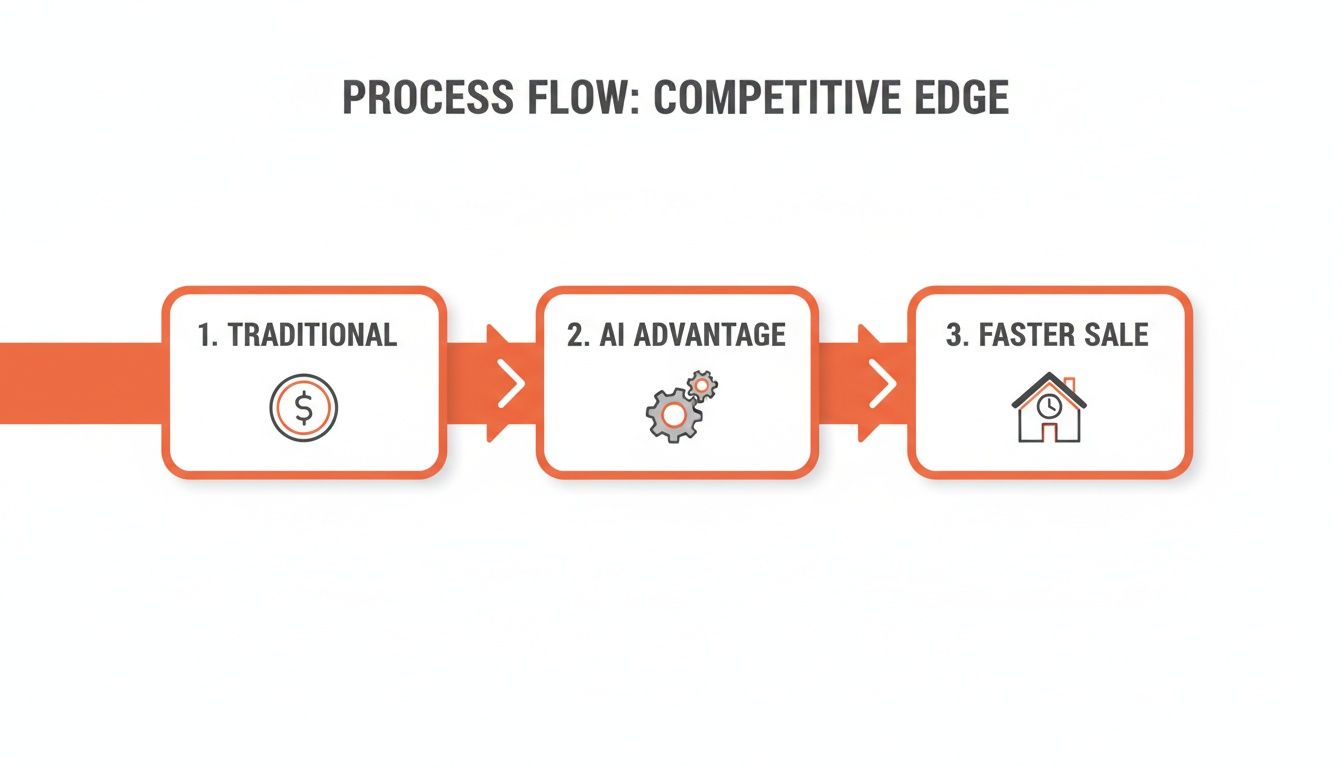
It’s clear how AI compresses the timeline, replacing slow, expensive manual steps with instant, automated results that lead to a faster sale.
The Creative And Editing Phase
With the digital assets in hand, you get to play the part of the creative director. This is where you solve real-world listing problems and show buyers what's possible. The market for this technology is exploding—interior design software was valued at $5,373.8 million and is projected to hit $9,656.6 million by 2030. You can explore the full research on interior design software trends to see the growth for yourself. For you, that growth means access to incredibly powerful tools that can declutter a messy room or restyle it in a modern aesthetic in just a few seconds.
Let's look at a few ways you can use these tools to tackle common listing challenges.
Virtual Staging Use Cases And Their Impact
Different properties have different needs. Sometimes you need to remove clutter, and other times you need to build a vision from scratch. The table below breaks down the primary applications of virtual interior design and when to use them.
Each of these use cases gives you a powerful tool to overcome objections and help buyers connect emotionally with a property, long before they ever step inside.
The key takeaway is control and speed. You can generate multiple design options for the same room in minutes, A/B test them in your marketing, and give buyers a vision they can fall in love with.
Publishing And Showcasing Your Work
The final step is getting your stunning visuals in front of potential buyers. Your polished images are ready to be deployed across all your marketing channels.
First, and most importantly, make sure every virtually enhanced image is clearly disclosed on the MLS. Using a simple watermark or note like "Virtually Staged" is essential for transparency and building trust.
From there, put these assets to work everywhere. Create eye-catching before-and-after carousels for your social media feeds. Feature them in your email newsletters and digital ad campaigns to drive more traffic to your listing. And don't forget to include them in your listing presentations—it's the perfect way to show sellers the advanced marketing you offer and prove why you're the right agent for the job.
Creating Visuals That Actually Sell Homes
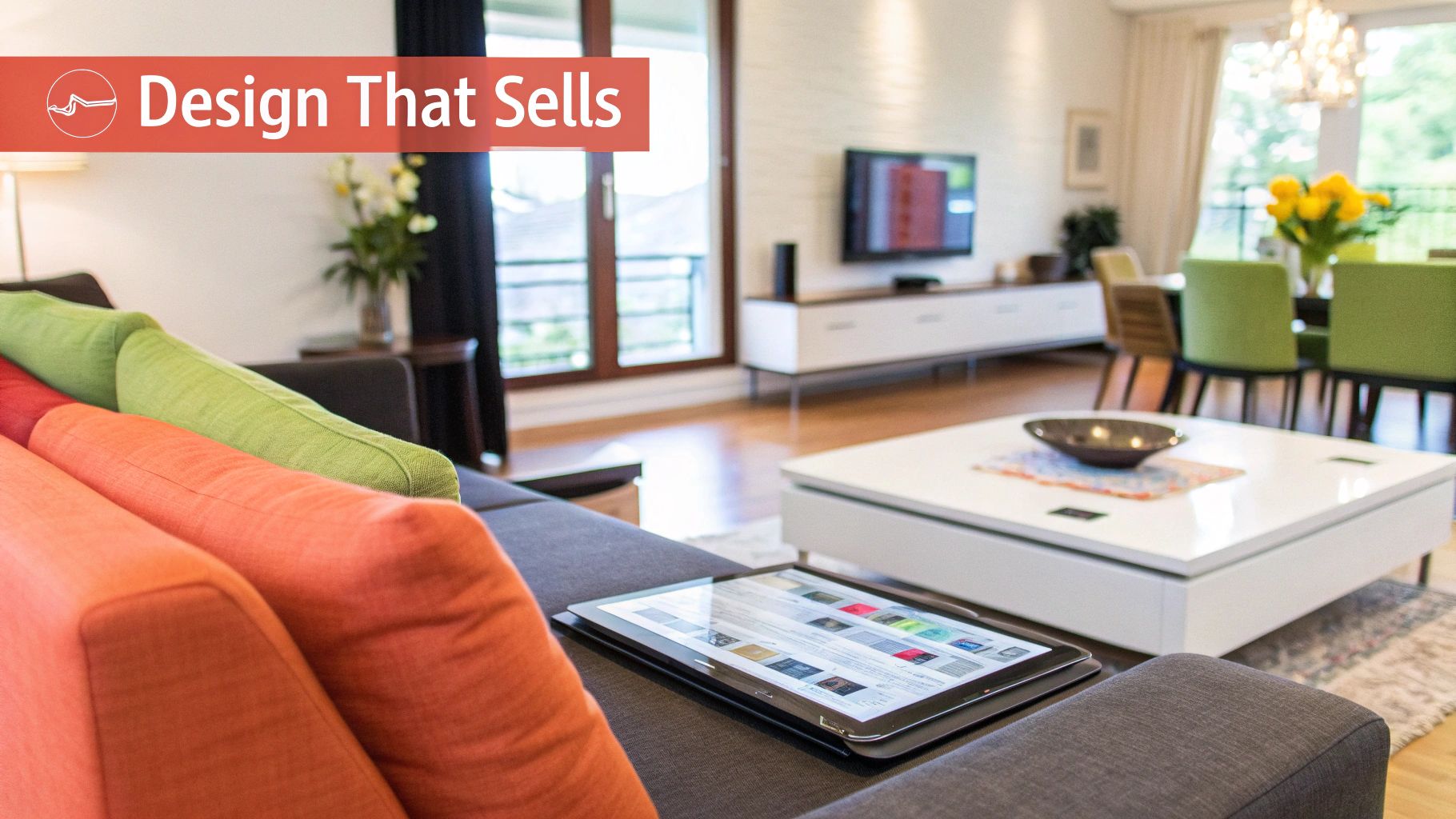
Having powerful virtual design tools is a great start, but it's your creative eye that will turn a decent visual into one that truly sells. The real goal is to forge an immediate, emotional connection between a buyer and a space. You're not just filling a room; you're telling a story with furniture, color, and light that helps buyers see their future unfolding within those walls.
This means we have to move beyond just dropping generic sofas into empty rooms. It takes a thoughtful approach, one that considers the property's unique character and the kind of person you're trying to attract. A sleek, minimalist design might be perfect for a downtown condo, but it would feel completely out of place in a cozy suburban colonial.
The Art of Composition and Style
Your first rule of thumb should be to respect the home's architecture. The virtual staging needs to complement the home’s inherent style, not fight against it. Think about it: a historic craftsman home just sings when paired with warm woods, earthy tones, and comfortable, classic furniture. A brand-new build, on the other hand, is a blank canvas just waiting for a trendy, modern aesthetic.
Think about the story each room is meant to tell.
- Living Rooms: I always aim for conversational layouts. Arrange sofas and chairs to encourage interaction, making the space feel social and welcoming from the moment someone sees the photo.
- Bedrooms: The goal here is "sanctuary." Use soft textures, calming colors, and symmetrical layouts to create a sense of peace and restfulness.
- Bonus Rooms: This is where you showcase pure possibility. Stage that awkward extra room as a productive home office, a fun playroom, or a quiet reading nook to spark a buyer’s imagination.
The furniture you choose is your primary storytelling tool. Don’t just pick items you like; select pieces that define a lifestyle. A big, comfy sectional immediately suggests family movie nights, while a sophisticated bar cart subtly hints at elegant entertaining.
Working with Color and Light
Color has a massive psychological impact and can instantly set the mood of a room. There's a reason neutral palettes—your grays, beiges, and whites—are so popular. They create a clean, bright, and spacious feeling that lets buyers easily project their own tastes onto the space.
But "neutral" doesn't have to mean "boring." You can use accent colors strategically to add personality and draw the eye to key features. A pop of navy blue in throw pillows or a single bold piece of art can bring an entire neutral room to life.
The goal of virtual staging isn’t to show off your personal taste. It’s to create a universally appealing canvas that helps the widest range of potential buyers envision themselves living in the home.
Lighting is every bit as important as color. Good virtual lighting should look completely natural, mimicking how sunlight would actually fall in the room. Pay close attention to the shadows; realistic, soft shadows are the secret sauce of high-quality virtual staging. They give furniture weight and make it look like it belongs, helping you avoid that cheap "cut-and-pasted" look.
If you want to get a better handle on the tech that powers these visuals, it's worth learning how 3D visualization improves property insights. It really helps to understand what makes these designs so convincing.
Mastering the Technical Details
Beyond the creative decisions, a few technical details are non-negotiable if you want professional-grade images. Getting these right ensures your visuals look amazing everywhere, from the MLS to your Instagram feed.
Key Technical Checks:
- Resolution is Everything: Always, always export your final images at the highest resolution possible. A crisp photo looks professional; a pixelated one screams amateur. Double-check the specific image requirements for your local MLS to stay compliant.
- Keep it Consistent: The design style should feel consistent from room to room. A cohesive aesthetic creates a smooth visual journey as buyers click through your online gallery, making the whole property feel intentional and thoughtfully designed.
- Get the Scale Right: Make sure the virtual furniture is scaled correctly to the room's actual dimensions. Dropping a massive sofa into a tiny room is just as misleading as using miniature furniture to make it seem larger. Honesty builds trust.
When you blend this kind of artistic vision with technical precision, you create visuals that do more than just fill empty space—they create desire. Honing these skills will not only make your listings more attractive but will also cement your reputation as a forward-thinking, market-savvy agent. To get your final images picture-perfect, check out our guide on the best https://www.bounti.ai/real-estate-blog/real-estate-photo-editing-software.
Move Beyond Staging To Win More Listings
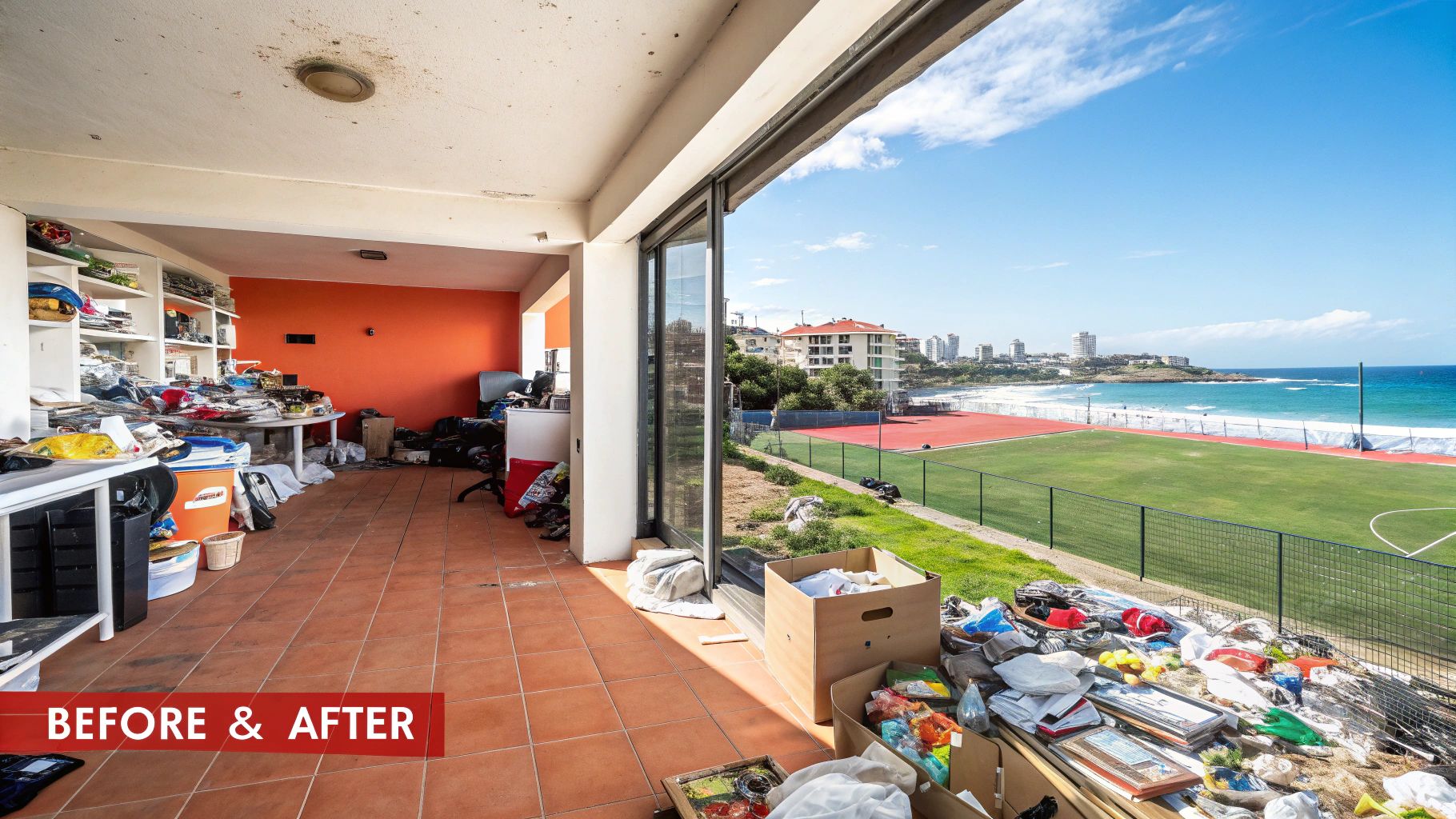
Simply dropping furniture into an empty room is just table stakes now. If you really want to stand out and win more business, you need to see virtual interior design as a problem-solving machine. It’s your secret weapon for showing clients and buyers what could be—handling objections before they’re even spoken.
This is how you shift from simply marketing a property to actively creating value for your clients. By revealing a home's hidden potential, you're no longer just an agent; you're a trusted advisor. These next-level applications are exactly what you need to impress sellers and get deals done faster.
Virtual Decluttering For Occupied Homes
Let's be honest: one of the biggest headaches we face is a lived-in home. Sellers often can't—or won't—depersonalize their space. That leaves you trying to market a property with photos full of family portraits, countertop clutter, and personal items that completely distract buyers.
Virtual decluttering is the perfect fix. In a few clicks, you can digitally erase all the "stuff"—the mail on the counter, the kids' toys in the living room, the crowded bookshelves—and reveal the clean, spacious home underneath. It shows sellers the immediate impact of tidying up without anyone having to lift a finger.
The real power move here is to use these decluttered images in your listing presentation. Show sellers a "before" of their current space next to an "after" of the clean, digitally-staged version. It’s an instant demonstration of your marketing savvy and proves you have a concrete plan to get them top dollar.
Instantly Modernize With Virtual Restyling
Dated decor can kill a deal on the spot. That floral 1980s sofa or the heavy, dark wood furniture from the '90s can make a fantastic property feel old and tired, especially to younger buyers.
Virtual restyling gives you the power to perform an instant design refresh. Swap out that old furniture for something sleek and modern, replace dated light fixtures, or even "paint" a new color on an accent wall. It’s like a home facelift without the cost, mess, or time.
This approach is incredibly effective for estate sales or homes that haven't been touched in decades. It helps buyers look right past the current owner's taste and see the home's strong bones and modern potential.
Showcasing Potential With Virtual Renovation
For many buyers, "fixer-upper" is a scary phrase. Most people just can't see past a cramped, closed-off kitchen or an awkward floor plan. This is where virtual renovation becomes your most valuable tool.
You can show buyers exactly what a property could become.
- Create an open-concept layout: Digitally "knock down" that non-structural wall between the kitchen and living room to show how airy and connected the space could feel.
- Visualize a dream kitchen: Transform a dated kitchen with new cabinets, a modern island, and beautiful finishes.
- Imagine a primary suite: Show how two small, adjoining rooms could be combined into a luxurious primary bedroom with a walk-in closet and en-suite bath.
These visuals don't just solve a problem; they turn a daunting project into an exciting opportunity. You’re no longer selling a house—you’re selling a future dream home, and that’s a much more powerful story to tell.
This isn't just a niche trick; it's where the entire interior design market is heading. Valued at $145.96 billion, this market is expected to surge to $214.35 billion by 2034, driven heavily by these visualization tools. For agents, the payoff is clear: these visuals are proven to speed up sales by 20-30% by helping buyers see a property's full potential from day one. To get the full story, you can discover more insights about the interior design market's growth.
Winning Commercial Real Estate Deals
These tools aren't just for residential, either. In the commercial world, virtual interior design is essential for helping prospective tenants see how a blank canvas can meet their specific business needs.
Think about that empty office or retail space. Your ability to show different layouts can be the single factor that closes the deal.
- For Office Tenants: Create multiple configurations on the fly. Show an open-plan layout for a tech startup, a traditional setup with private offices for a law firm, or a hybrid model with collaborative zones.
- For Retail Clients: You can demonstrate how a space could function as a boutique, a coffee shop, or a small gallery, helping them truly envision their brand in that location.
This kind of visual aid takes the guesswork out of the equation, helping tenants make confident decisions much faster. It positions you as an invaluable partner in their search. By mastering these advanced strategies, you're not just keeping up—you're providing solutions that win listings and close more deals.
How To Market Your Virtually Staged Properties
Once you have those beautiful, virtually designed images, the real work begins. Creating them is one thing, but getting them in front of the right buyers is how you actually move a property.
The good news is that these digital images are incredibly flexible. You can use them across all your marketing channels to turn those stunning visuals into real-world interest, showings, and ultimately, offers.
Nailing The MLS Description
Your first stop should always be the Multiple Listing Service (MLS). It's the official source of truth for your listing, so you need to be both compelling and completely transparent.
Don’t just upload the staged photos and call it a day. You have to tell the story behind them. Weaving in a quick note about the virtual interior design builds trust and sets the right expectations before anyone steps through the front door. Most real estate boards require this kind of disclosure anyway, so it's a non-negotiable step.
Here’s a simple script I’ve seen work well. Feel free to tweak it to match your voice:
"Welcome to this beautifully maintained home—a perfect blank canvas awaiting its next owner. To help you envision the incredible potential of this space, select photos have been virtually staged with stylish furniture and decor. Come see for yourself how your future could unfold in this wonderful property!"
This little blurb frames the staging as a helpful tool for the buyer, which is exactly what it is. It’s all about helping them see the possibilities.
Making A Splash On Social Media
Social media was practically built for the kind of dramatic before-and-after content that virtual staging delivers. Think Instagram carousels, Facebook albums, and even TikTok videos. These formats let you tell a powerful transformation story in a single, highly shareable post.
The goal is always to start a conversation. Ask your followers questions, invite them to comment, and always focus on what’s possible with the space.
Sample Captions For Social Media
Here are a few plug-and-play captions you can adapt for your social media posts to showcase your virtually staged properties.
Remember to always tag the location and any collaborators, like your photographer or the virtual staging company you used.
Beyond The Basics
Don’t just stop with the MLS and a few social posts. These visuals are gold for your entire marketing funnel.
- Email Newsletters: Drop them into your next email blast to re-engage your sphere of influence. A stunning "transformed" listing is great content.
- Digital Ads: A side-by-side before-and-after graphic is an absolute attention-grabber. It can significantly improve your click-through rates on Facebook and Google Ads, getting you more leads for your money.
- Listing Presentations: This is your proof. Showing potential sellers these images demonstrates you offer a modern, effective marketing package that gets results.
For a deeper dive into amplifying your online presence, check out our complete guide on digital marketing strategies for real estate agents.
Proving The Value Of Your Virtual Design Strategy
So, you’ve created these incredible, virtually designed images. They look amazing, but how can you be sure they're actually making a difference? It's one thing to feel like it's working, but it's another to prove it with cold, hard data. Tracking the right numbers is how you'll gain the confidence to double down on this strategy and show clients exactly why your approach works.
The proof is right there in your listing's performance data. The simplest way to see the impact is to compare your virtually staged properties against your listings that weren't.
Key Metrics To Watch
Here are the big three KPIs you should be laser-focused on:
- Days on Market (DOM): This is the ultimate bottom line. Are your virtually enhanced homes selling faster? A consistently lower DOM is one of the strongest indicators that your visuals are doing their job and helping buyers make a decision.
- Online Engagement: Dive into the analytics on your MLS, Zillow, or wherever you syndicate your listings. A noticeable jump in views, saves, and tour requests is a clear sign that your images are stopping the scroll and grabbing buyer attention.
- Offer-to-List Price Ratio: Take a look at the offers you're getting. Are they closer to the asking price, or maybe even above it? When buyers can clearly see a home's potential, they tend to come in with stronger, more confident offers.
Calculating Your Return On Investment
This is where it gets really compelling. The ROI on virtual interior design is incredibly straightforward.
Traditional staging is a significant expense. You're looking at furniture rentals, movers, and a designer's time, which can easily run from $2,000 to $7,000+ for a single home. That cost comes directly out of your client's pocket.
AI-powered virtual staging, on the other hand, is a game-changer for your budget. Most tools run on a low-cost subscription or a small per-property fee, often totaling less than a couple of hundred bucks for an entire listing.
Think about it this way: if a $150 investment in virtual staging helps a $500,000 property sell for just 1% more, that’s a $5,000 gain for your client. And that's not even counting the money saved on mortgage payments, taxes, and insurance from selling the home weeks or months faster.
When you track these metrics, you're not just guessing anymore. You’re building a powerful, undeniable case for your marketing strategy. You'll have the concrete data to show sellers how you get them better results, cementing your reputation as a savvy, modern agent who knows how to get the deal done.
Common Questions About Virtual Interior Design
Whenever you bring a new tool into your real estate business, you're bound to have some questions. When it comes to virtual interior design, I find the same three concerns pop up again and again: ethics, cost, and speed. Let's tackle these head-on so you can feel confident using this technology to its full potential.
The big one is always, "Is this misleading buyers?" The answer is a hard no—as long as you're transparent about it. The entire point isn't to trick someone; it's to help them see what a space could be.
Think of it as showing them the blueprint for their future home. The industry standard is simple: clearly label any modified image as "Virtually Staged" or "Artist's Rendering." This disclaimer, whether it's a small watermark or a note in the caption, is non-negotiable for MLS listings and all your marketing. It keeps everything above board and manages expectations perfectly.
Cost Versus Traditional Staging
Next up is the budget. How does virtual staging really stack up against bringing in actual furniture?
Honestly, it’s not even a fair fight. The savings are massive. Physical staging is a serious line item—you’re often looking at thousands of dollars for furniture rental, movers, and a designer's time. With AI-powered virtual interior design, you can cut that expense by over 90%.
Most of these services run on a simple per-image fee or an incredibly affordable subscription. This completely changes the game. Suddenly, you can stage every single property in your portfolio, not just the luxury listings, for less than it costs to physically stage one home.
The real win here isn't just saving money upfront. It's being able to give every listing that polished, professional look that helps it sell faster.
Understanding The Turnaround Time
Finally, "How fast can I get my photos back?" In a market where every hour counts, this is a make-or-break question.
This is where modern AI tools have completely changed the conversation. Not long ago, you'd send your photos off to a traditional virtual staging company and wait. The turnaround was typically 24 to 72 hours.
Today's AI platforms have made that process almost instant. You can upload a photo or even a quick video walkthrough and get back beautifully decluttered and staged images in a matter of minutes. This speed is a huge competitive advantage, dramatically cutting your time-to-market and getting your listing in front of buyers before anyone else.
Transform your listings in minutes with Bounti Labs, the AI assistant that generates stunning visuals from a single video. Get started today at bounti.ai.