
An ai bathroom remodel is simply a digital facelift. You're using artificial intelligence to show what a new bathroom could look like—without ever picking up a sledgehammer. For agents, this is a game-changer. It's how you take a dated, tired bathroom and instantly reveal its hidden potential to buyers.
Why an AI Bathroom Remodel Is Your New Secret Weapon
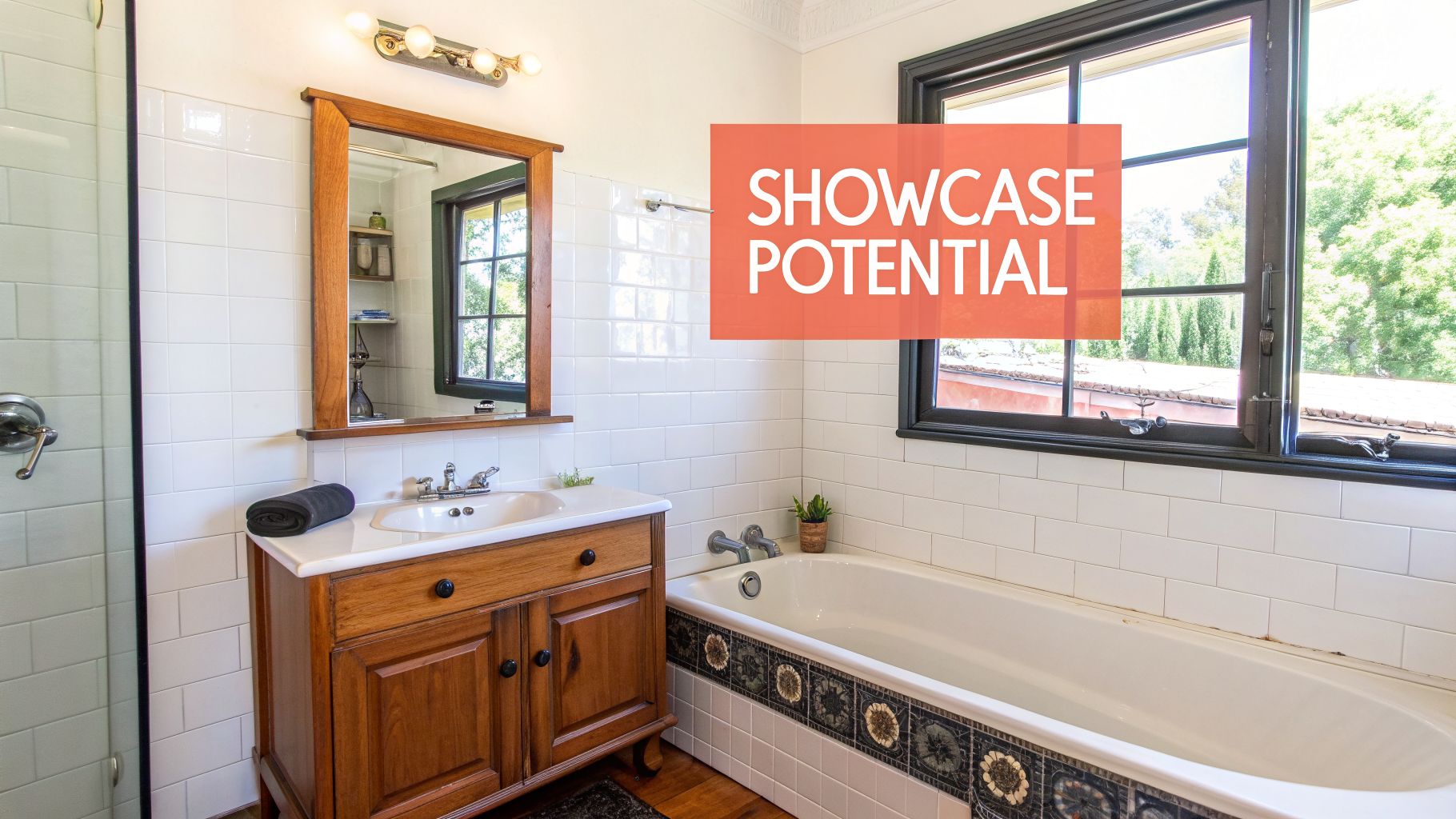
In a tight market, potential is everything. We’ve all been there: a buyer walks into a property, sees a bathroom with 30-year-old tile, and immediately gets turned off. Instead of asking them to "imagine the possibilities," an AI remodel lets you show them exactly what’s possible.
You get to turn a listing's biggest weakness into a powerful selling point. All without the time, cost, and chaos of a real-life renovation. You can spin up multiple design options in minutes, helping sellers see the untapped value in their home and giving buyers a professional, inspiring vision.
The High ROI of Bathroom Upgrades
Here’s why this matters so much. Bathroom projects are consistently one of the most popular home improvements. The National Association of Home Builders even reported that bathroom remodeling was the most common project for homeowners in 2025.
For you, the agent, this is a golden opportunity. Even mid-range bathroom remodels with practical upgrades can see a return on investment of up to 73%. It's a smart financial move for homeowners.
When you use AI to illustrate these valuable updates, you're not just selling four walls and a roof. You're selling a vision of a future lifestyle that feels both aspirational and achievable.
By showing buyers the "after" before they even see the "before," you shift the entire conversation. It’s no longer about "this needs work." It's about "look what this could be." That's how you justify a higher price and get buyers excited enough to write an offer.
AI Versus Physical Remodels
Let's get practical. For a listing agent, the difference between an AI remodel and a physical one is night and day. A physical renovation means juggling contractors, weathering unexpected delays, and fronting a serious amount of cash. It’s a high-stress gamble that can derail your listing timeline by weeks, if not months.
An AI remodel? It's fast, cheap, and has zero risk.
I've put together a quick table to show just how different the return on your effort is.
Agent ROI Physical Remodel vs AI Remodel
The contrast is stark. A physical remodel eats your time and your client's money. An AI approach saves both, while giving you more powerful marketing assets.
AI helps you sidestep the entire messy process, from brainstorming designs to navigating local codes—much like you'd find in a good guide to bathroom renovation planning, design ideas, and costs. With a tool like Bounti, you can create stunning visuals that make your listings stand out. You’re not just showing a space; you’re selling a dream.
Capturing the Perfect 'Before' Shot for AI
The final quality of your ai bathroom remodel comes down to one simple thing: the quality of the photos and video you feed the machine. Garbage in, garbage out, as they say. This first step is, without a doubt, the most important part of the whole process.
And good news: your smartphone is all you need. Forget the bulky DSLRs and professional camera gear. The real magic is in how you use it.
Before you hit record, do a quick prep of the space. Yes, the AI can declutter, but a tidy starting point always helps. Flip on every light, open the blinds for as much natural light as possible, and give your phone's lens a quick wipe. You’d be surprised how much a simple smudge can ruin a shot.
Video Versus Photos: What’s Better?
You can use still photos, but a smooth, single video walkthrough is almost always the better choice. Why? Because a video gives the AI a complete picture of the room’s layout—how the vanity sits next to the toilet, where the shower is located, and the overall flow of the space. A few static photos just can't capture that spatial context.
By capturing a video, you're helping the AI build a much more accurate 3D model in its "mind." This translates directly to:
- Better Proportions: The new vanities and tubs will actually fit the space correctly.
- Accurate Lighting: The AI gets how light and shadow work in that specific room, making the final render look real.
- Cohesive Layout: Renovations will make sense with the existing plumbing and walls, which is key for a believable result.
Think of it like this: photos are just puzzle pieces. A video is the picture on the box that shows you how it all fits together.
Essential Camera Angles and Techniques
You don't need to be a professional videographer to nail this. Just follow a slow, deliberate path through the bathroom, making sure you capture every surface—walls, floor, and even the ceiling—from a few different angles.
Start from just outside the doorway to capture the entrance and the view someone gets when they first walk in. As you move into the room, hold your phone with both hands and tuck your elbows into your sides. This is a simple trick to keep the shot steady and avoid that shaky, unprofessional look.
Once you're inside, hit these key shots:
- The Wide Shot: Get into a corner and pan slowly across the entire room. This establishes the overall layout.
- The Vanity View: Stand right in front of the vanity and mirror. Tilt your phone up and down to get the sink, countertop, and the lights above.
- The Shower and Tub: Get a clear, head-on shot of the shower or tub. If it’s a combo unit, make sure you capture the whole thing.
- The Floor: Don’t forget to aim the camera down to get a good look at the flooring, especially in the corners.
Pro Tip: Slow down. The biggest mistake people make is rushing the walkthrough. A smooth, 30-60 second video that methodically scans the room is way more effective for an AI than a quick, jerky 10-second clip.
Taking a few extra moments here pays off massively in the quality of your marketing assets. It's the difference between an obviously fake render and a stunning visual that helps clients see the true potential of a space.
Your AI Decluttering and Staging Workflow
A seller's personal clutter can be a buyer's worst enemy. It only takes one half-used bottle of shampoo, a crowded countertop, or a tired-looking bathmat to kill a buyer's ability to see themselves in the space. So, before you can show off a stunning ai bathroom remodel, you first need a clean canvas. This is exactly where AI-powered decluttering and staging come into play.
Your first move is digital decluttering. Think of it as a magic eraser for everything that screams "someone else lives here." With a tool like Bounti, you can instantly get rid of all the visual noise from your source photo or video.
This isn't just about deleting a toothbrush holder. It’s about creating a neutral, aspirational space that gives a buyer's imagination room to run wild.
From Cluttered to Clean in Seconds
The AI decluttering process is refreshingly simple. Once you've uploaded your source image, you just select the decluttering feature. The AI gets to work, identifying all those personal items and removing them while intelligently rebuilding the background.
So what gets the boot?
- Personal toiletries like shampoo bottles, soap bars, and lotions.
- Towels on racks or, even worse, on the floor.
- Toothbrushes, razors, and other grooming tools.
- Bathmats, shower caddies, and wastebaskets.
The whole point is to produce an image of a pristine, completely impersonal bathroom. This blank slate is the critical foundation for the next, more creative phase: AI staging.
A clean, decluttered "before" shot does more than just prepare the image for staging; it makes the final AI renovation look significantly more realistic. When the AI doesn't have to guess what's behind a towel or a collection of bottles, it can rebuild the space with greater accuracy and believability.
The Art of Strategic AI Staging
With the clutter gone, it’s time to stage. This is your chance to add back a few carefully chosen items that boost the room's appeal and help forge an emotional connection with buyers. It's a crucial step before diving into a full AI bathroom remodel, as it helps establish the right mood.
This infographic breaks down the capture process that powers both decluttering and staging. Get this part right, and the AI has everything it needs.
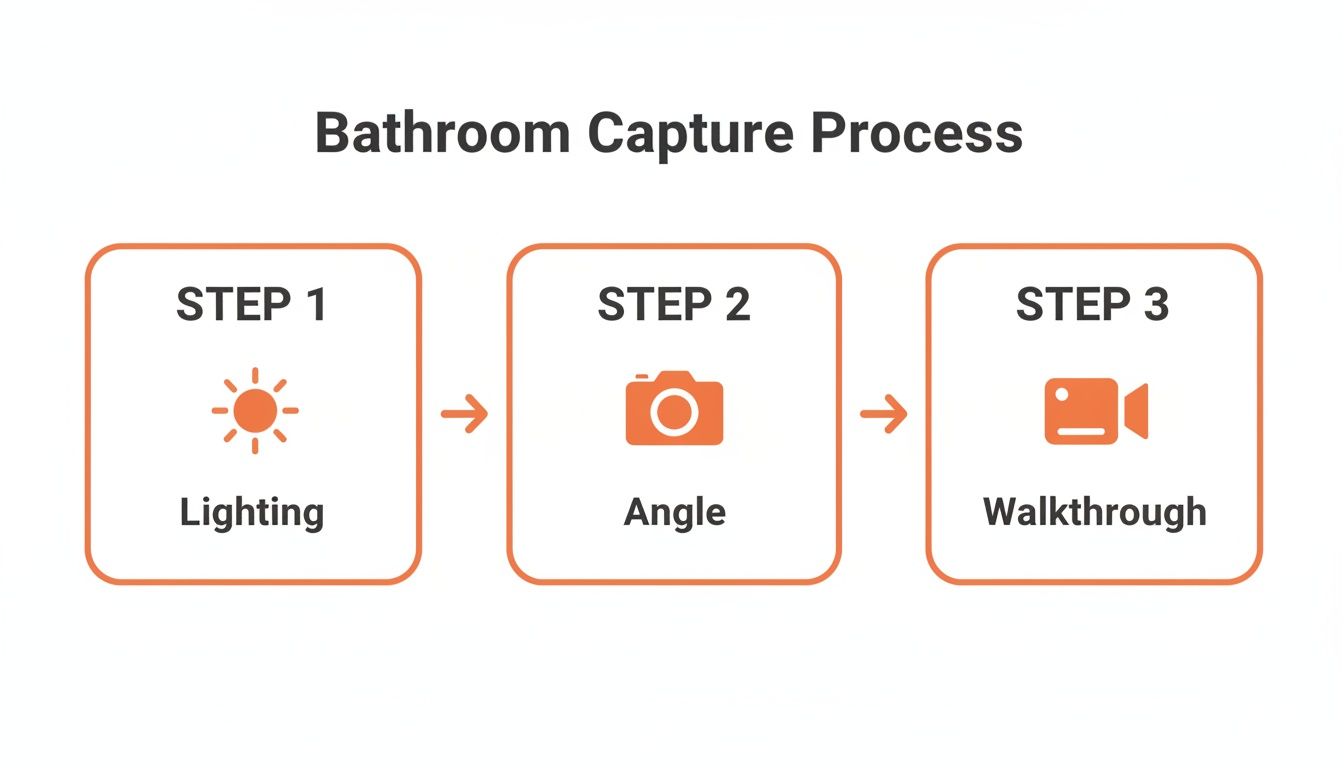
As the graphic shows, a great result starts with mastering lighting, angles, and movement. This gives the AI the best possible data to work with.
Unlike physical staging, which is expensive and time-consuming, virtual staging offers total creative freedom. You can cycle through different looks in seconds to find what works best. If you want to go deeper on this, check out our complete virtual staging guide.
Staging with a Buyer-Focused Mindset
Effective AI staging isn't about randomly dropping in decorative objects. It's about telling a story and selling a lifestyle. The goal is to make the bathroom feel less like a utility room and more like a personal spa—a tranquil escape.
From my experience, these are the staging elements that always get a great reaction from buyers:
- Lush Greenery: A small potted orchid on the vanity or some hanging eucalyptus in the shower adds an instant touch of life and luxury.
- Neatly Rolled Towels: A stack of crisp, white rolled towels on a shelf or by the tub signals a hotel-like level of care.
- Elegant Dispensers: Ditch the branded plastic for a matching set of stylish soap and lotion dispensers. It's a small change with a big impact.
- A New Shower Curtain: Swap out the old, sad liner for a clean, modern fabric curtain. It immediately softens the whole room.
Each of these small additions builds toward a powerful overall impression. You’re no longer just showing a clean bathroom; you’re presenting a vision of a peaceful, organized life that a buyer can step right into. This curated approach sets the stage perfectly for the final, most impactful step: the AI bathroom remodel itself.
Designing the Virtual Remodel with Buyer Trends
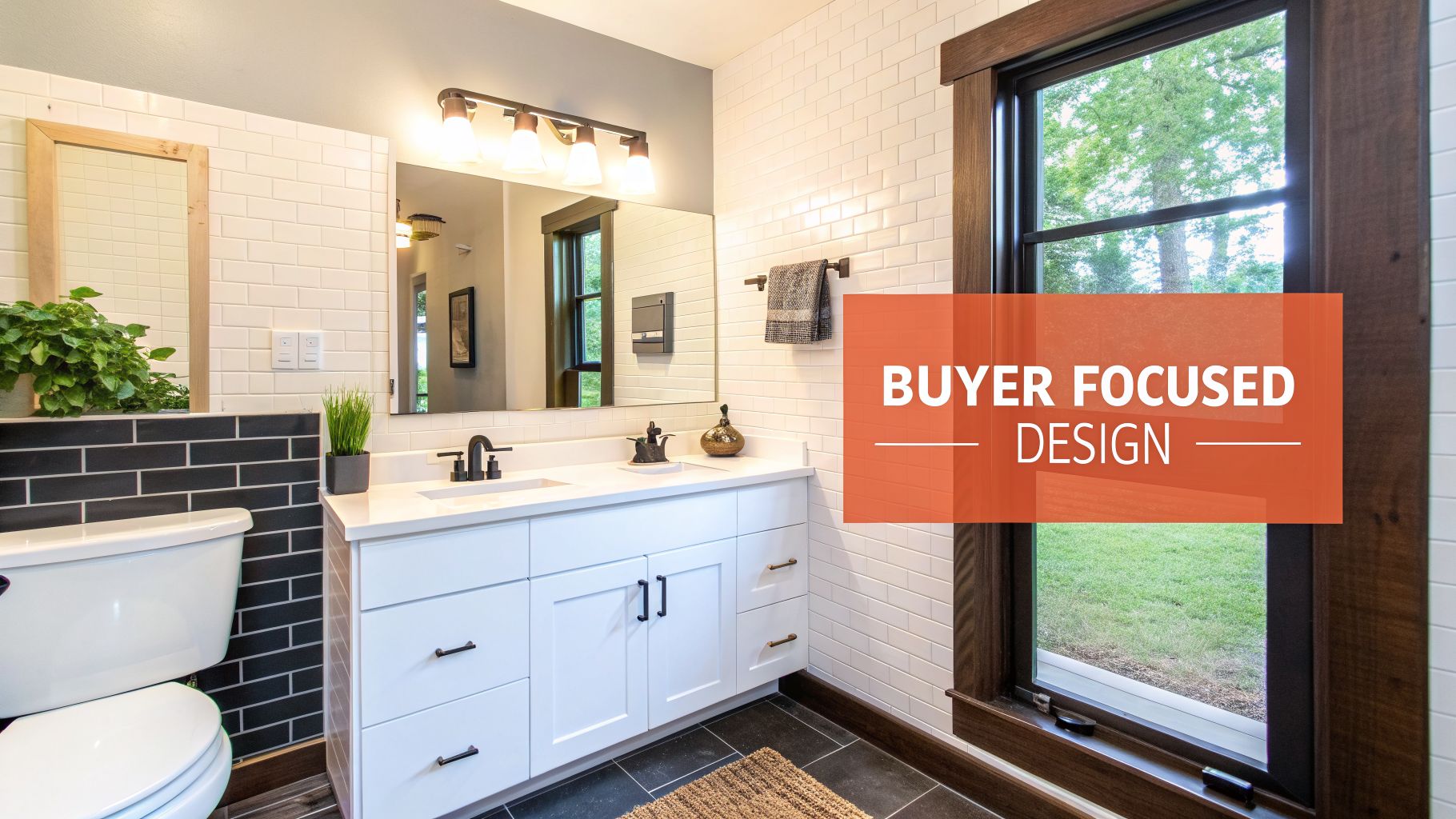
Okay, now for the fun part. With the clutter digitally wiped clean, you're ready to execute the ai bathroom remodel. This is where you get to turn that dated "before" into a stunning "after" that speaks directly to what today’s buyers actually want.
This isn’t about chasing some fleeting design fad you saw on TikTok. It’s about making smart, strategic choices grounded in real buyer preferences. What we're seeing now is a huge shift toward function and easy living, not overly ornate designs that are a pain to maintain.
Aligning Your AI Design with Market Demands
The whole point of a virtual remodel is to show a future that buyers can actually afford and see themselves living in. Going wild with extravagant designs might look cool, but it can also feel unrealistic and just scare off practical buyers. The goal is to present an upgrade that feels both beautiful and totally achievable.
Recent data shows a clear trend: homeowners want low-maintenance materials and functional layouts that scream comfort. For agents, this is gold. When you apply an AI restyle, you should be mirroring these trends. Think waterproof acrylic showers, fingerprint-resistant matte faucets, and durable luxury vinyl plank flooring.
These kinds of practical, mid-range upgrades don't just look good; they offer a fantastic return. While ultra-luxury bathroom features might only get back about 40% of their cost, practical updates can deliver a return of up to 73%.
Choosing and Applying Popular Design Styles
The great thing about modern AI tools is that you don't need a degree in interior design to apply different aesthetics. Most platforms, including Bounti, give you a menu of pre-set styles or let you use simple text prompts to tell the AI what you want.
Here are a few popular themes I see working well with buyers again and again:
- Modern Farmhouse: Think shiplap (used sparingly!), a simple wood vanity, and matte black fixtures. It’s a look that feels clean, rustic, and welcoming.
- Minimalist Spa: This one is all about creating a sense of calm. Use a neutral color palette—light grays, whites, beiges—and consider a freestanding tub and natural textures like stone or wood.
- Scandinavian: Focus on light woods, clean lines, and uncluttered surfaces. It's bright, airy, and functional, which is perfect for making smaller bathrooms feel much larger.
- Transitional: This is a safe and incredibly appealing middle ground. It blends classic elements (like subway tile) with modern touches (like a contemporary vanity).
With a single click or a quick description like, "A minimalist spa bathroom with a floating wood vanity, large-format grey tiles, and a glass-enclosed shower," the AI can generate a complete visual overhaul. It will intelligently replace old tile, swap the vanity, update fixtures, and even repaint the walls.
My Personal Tip: Don't just generate one version. I always create two or three different styles for the same bathroom. A Modern Farmhouse look might click with one type of buyer, while a sleek Minimalist Spa design could grab another. That kind of versatility is a massive advantage you just can't get with physical staging.
From a Single Design Session to a Full Marketing Toolkit
This is where the real power of an AI bathroom remodel clicks into place. From one quick design session, you can create a whole suite of marketing assets ready for your listing. It's all about working smarter, not just harder.
Of course, AI is an amazing assistant for visualizing the final look, but good planning is still everything. You can't build a great design on a bad foundation, so it's always wise to plan your bathroom renovation with both aesthetics and function in mind. Then, you let AI bring that plan to life.
Here’s a quick look at what you can create from your virtual remodel:
- High-Resolution "After" Photos: This is your bread and butter. Generate multiple angles of the redesigned bathroom for your MLS listing. Just make sure they are clearly marked as "Virtually Renovated."
- Before-and-After Sliders: This is social media gold. Create compelling side-by-side images or short videos that dramatically showcase the transformation. It’s an engaging format that literally stops the scroll.
- Multiple Layout Options: If the room has potential, you can even ask the AI to generate different layouts. For example, show one version with a double vanity and another with a single vanity and extra storage. This helps buyers immediately see the space's flexibility.
The software you choose definitely impacts the quality of these assets. If you're looking to get the absolute most out of your virtual edits, exploring the best AI photo editing software will give you even more granular control over the final images.
At the end of the day, you’re turning a problem area into a portfolio of possibilities, giving both your seller and potential buyers something tangible and exciting to work with.
How to Present and Price AI Visuals to Clients
This isn't about a tech gimmick. It’s about framing these visuals as a strategic marketing asset that builds trust, sparks imagination, and gets deals done.
When you're at the listing presentation, this is your ace in the hole. You’re not just selling their home as it is; you’re selling its full potential. Use the visuals to guide the pricing conversation.
Try saying something like, "Based on the current condition, the comps suggest a price around X. But by showing buyers this vision of what's possible, we can confidently list at Y, because we're taking the guesswork out of their decision." It immediately positions you as a modern, marketing-savvy agent who invests in getting them the best price.
Talking to Buyers and Their Agents
For buyers, the conversation shifts to inspiration. The absolute worst thing you can do is try to pass off an AI render as the real deal. Transparency is everything.
When a buyer's agent or a prospect sees the virtually remodeled photo, get ahead of it. Be direct.
A simple script like this works wonders: "Here's the bathroom as it is today, and here's a visualization of what it could look like with a modern update. It’s a great way to see the room's amazing potential." This builds instant credibility. You're not hiding a dated bathroom; you're showcasing an opportunity. It's also the perfect opening to discuss renovation loans or how they might factor an upgrade into their offer.
Key Takeaway: Always lead with transparency. The goal of an AI bathroom remodel is to inspire, not deceive. Clearly labeling your images and being upfront in conversations protects your reputation and helps buyers make informed decisions.
This approach taps directly into a massive trend. The home improvement market is booming, with residential remodeling activity projected to grow by 3% in 2026 and spending expected to hit a record $524 billion, according to NAHB.org. Buyers are actively looking for properties they can make their own, and you're giving them the blueprint.
How to Price Your AI Services
So, should you charge for this? It really depends on your business model. Do you use it as a powerful value-add to win the listing, or do you bill it as a separate marketing expense? I’ve seen agents succeed with a few different approaches.
- Included in Commission: Many top agents simply absorb the small cost of AI visualization. It becomes a killer differentiator in their listing presentation, helping them stand out from the competition.
- A La Carte Service: You can offer it as an optional add-on. For example, charging a flat fee of $150-$300 for a package that includes decluttering, virtual staging, and a full AI bathroom remodel with a couple of design options.
- Tiered Marketing Packages: This is a popular one. Create "Good," "Better," and "Best" tiers for your listing services. Your premium package could include AI remodels for the kitchen and bathroom, a before-and-after video for social media, and other high-impact assets.
Don't Forget Disclosure and MLS Compliance
This part is non-negotiable. Every MLS has rules about digitally altered photos, and you have to play by them. The universal requirement is clear, conspicuous disclosure. Don't risk your license over a photo.
Never, ever upload a virtually remodeled image to the MLS without making it obvious that it has been altered.
Here are the best practices to follow every single time:
- Watermark It: Add a simple text overlay on the image itself. "Virtually Renovated," "Virtually Staged," or "Artist's Rendering" all work perfectly.
- Use the Caption: The image description field in your MLS is your friend. State clearly that the image is a visualization of potential improvements.
- Order Matters: Always, always place the "after" image immediately following the "before" image in your photo gallery. This gives instant context and prevents any hint of confusion.
Follow these simple rules, and you can confidently use the power of an AI bathroom remodel to elevate your marketing, justify your pricing strategy, and help clients see the incredible potential in any property.
Common Questions About AI Bathroom Remodels
Whenever a new tool enters the real estate world, it’s smart to be skeptical. And when it comes to something as visual and client-facing as an ai bathroom remodel, the questions are completely valid.
Let's walk through some of the most common concerns I hear from other agents. Getting these answers straight will help you use this technology with confidence and position it perfectly for your clients.
Is Using an AI Bathroom Remodel Deceptive?
This is always the first question, and it's the most important one. The answer is a hard no—as long as you are completely transparent. You're not trying to trick anyone into thinking a renovated bathroom already exists. The goal is inspiration, not deception.
The best practice is simple: always label AI-generated images. A clear watermark like "Virtually Renovated" or "Artist's Rendering" does the job. It's the exact same principle as the architectural renderings used to sell new construction. No one looks at a rendering and thinks the building is already standing; they understand it's a preview of what's possible.
The point of an AI remodel is to start a positive conversation. It’s about shifting the buyer’s focus from the cost and headache of a dated bathroom to the exciting possibilities, helping them see what the property could be.
How Much Technical Skill Do I Need?
Honestly, if you can upload a photo to Instagram or send a video from your phone, you've got this. The latest generation of real estate AI tools are built for agents, not software engineers.
The process is almost always dead simple:
- Take a quick video of the bathroom on your phone.
- Upload the file to an AI platform like Bounti.
- Pick a design style from a menu or type a simple description.
You don't need to be a design expert or a tech wizard. A prompt as simple as, "Modern spa bathroom with a freestanding tub and light wood vanity," is more than enough for the AI to work its magic. The software does all the heavy lifting, giving you a professional result in minutes. You just point, click, and get the credit.
How Should I Use These Images in My Listing?
Creating the visuals is only half the battle. How you use them is what actually gets results. Don't just toss them into the MLS and hope for the best.
Here’s a playbook that works:
- On the MLS: Always pair the 'before' and 'after' shots. The virtually renovated photo should come immediately after the original and be clearly watermarked. This tells a powerful story.
- On Social Media: Before-and-after sliders, carousels, and video reels are gold. They are designed to stop the scroll on platforms like Instagram and Facebook, highlighting the dramatic change.
- In Print Materials: Put the 'after' shot on your property flyers. It makes your marketing pop and gives you a fantastic talking point during conversations.
- During Showings: Have the images pulled up on a tablet during open houses. Walking a potential buyer through the vision while they are physically in the space can be a game-changer.
This approach turns a potential negative (a dated bathroom) into an engaging, interactive part of the showing.
Can AI Estimate the Actual Remodel Cost?
Right now, most AI visualization tools are focused on the 'what'—the design concept—not the 'how much.' While some are starting to explore cost estimation, you’ll still need a local contractor to give you a real-world quote for the physical job.
But here’s the key: the AI-generated image is an incredible tool to hand that contractor. It’s the difference between a vague conversation and giving them a precise visual brief. A clear picture helps them nail down the scope, materials, and finish level, which means they can give you a faster, more accurate quote. It bridges the gap between vision and reality for your client, adding a ton of value to your service.
Ready to stop telling buyers to "imagine the possibilities" and start showing them? With Bounti, you can create stunning AI-powered decluttering, staging, and full bathroom remodels in minutes. Transform your listings and show every property’s true potential. Learn more and get started at Bounti.ai.