Not long ago, using drones in real estate felt like a high-tech novelty. Today, it’s a non-negotiable part of a winning marketing strategy. It's the difference between showing a potential buyer a single, cropped photo of the Mona Lisa and giving them a private tour of the entire Louvre.
This aerial view isn’t just about pretty pictures; it’s about giving agents a real, tangible advantage that turns a flat, forgettable listing into a story that sells.
Why Drones in Real Estate Are No Longer Optional

Think about trying to sell a beautiful home on a large, wooded lot with only ground-level photos. You can show the front door. You can show the kitchen. You might even get a glimpse of the backyard from a window. But what are you missing?
Everything that makes the property truly special. The way the house is perfectly situated on the acre. The beautiful stone patio out back. Its actual distance from the nearby park or the end of the quiet cul-de-sac.
This is the problem that drones solve in a single flight. They capture the full context of a property—the whole story—that standard photos just can't tell. It's like the difference between a movie poster and the full-length trailer. One gives you a static image; the other makes you feel something and tells you what the experience is all about.
The Power of a Sky-High Perspective
This shift from a "nice-to-have" gadget to an essential tool is changing how properties are bought and sold. Aerial footage gives buyers a complete, honest picture of what they’re getting, long before they ever step foot on the property.
- Showcasing the Full Property: A top-down view instantly communicates the entire layout of the lot, the scale of the backyard, the location of a pool, and the property lines. No more guessing.
- Highlighting Location, Location, Location: Aerial shots frame the home within its environment. You can finally show buyers its prime position near the waterfront, its walking distance to the local school, or its connection to nearby hiking trails.
- Creating an Emotional Hook: A cinematic drone shot, sweeping up over a line of trees to reveal a stunning home at sunset, creates a powerful "wow" moment. It grabs attention and, more importantly, holds it.
This ability to provide context and build a narrative is what sets top agents apart. You’re not just selling a structure; you’re selling a lifestyle and a vision.
Immediate Impact of Drone Footage on Property Listings
The table below breaks down exactly how drone footage elevates a standard listing, creating clear advantages for any agent who uses it.
By turning a simple listing into an immersive experience, drone footage helps buyers see themselves living in the home. That’s why it’s become such an indispensable tool for today’s market leaders.
Using drones transforms a property listing from a simple advertisement into an immersive experience. It allows buyers to see not just the home, but the life they could live there, making it an indispensable tool for today's top-performing agents.
The market data backs this up. The global real estate drone services market is expected to surge from USD 0.67 billion in 2026 to USD 1.29 billion by 2030. This explosive growth is a direct response to fierce competition and the undeniable demand for more engaging, comprehensive listings. If you want to not just compete but win in 2026 and beyond, the aerial advantage is no longer a choice—it’s a necessity. You can explore a deeper dive into these market projections and trends to see where the industry is headed.
Choosing the Right Drone for Your Real Estate Business
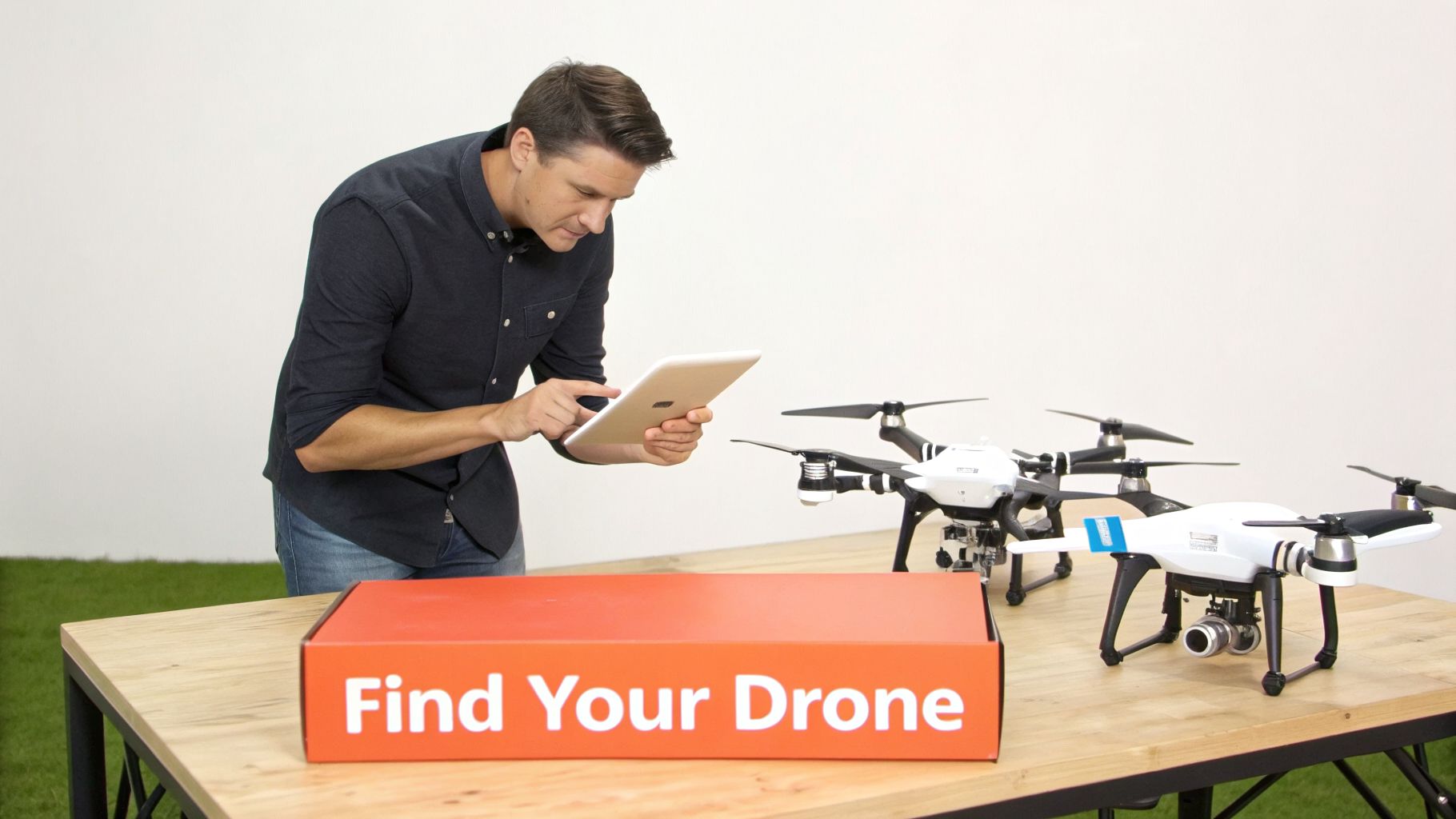
Jumping into the world of drones in real estate feels a lot like walking into a camera store for the first time—the tech specs and acronyms can be overwhelming. But here's the secret: you don't need the most expensive, top-of-the-line model to get incredible results.
Think of it like buying a car for your business. You're not looking for a flashy sports car; you need a reliable workhorse. The goal is to find a drone that balances great image quality, stable flight, and ease of use, all without destroying your budget.
Key Drone Features That Matter for Real Estate
Before you start comparing models, let's cut through the noise and focus on the features that directly impact your listing photos and videos. These are the non-negotiables.
- Camera Quality: This is your number one priority. You need a drone that shoots sharp, high-resolution stills (20MP is a great baseline) and smooth, professional-looking video. Today, 4K video resolution is the standard. Anything less will look dated.
- Gimbal Stabilization: A 3-axis gimbal is absolutely essential. This is the component that keeps the camera perfectly level and smooth, even when the drone is getting knocked around by the wind. Without it, you get shaky, amateur footage that screams "I did this myself."
- Flight Time: More flight time means less time swapping batteries. Look for a drone that gives you at least 25-30 minutes in the air. Pro tip: always buy extra batteries. It's far better to spend a few seconds swapping them out than to have to pack up and leave a shoot unfinished.
- Intelligent Flight Modes: These automated flight patterns are a massive time-saver and your secret weapon for cinematic shots. Modes like "Orbit," which flies a perfect circle around the property, or "Waypoint," which follows a path you create, let you capture complex shots with just a tap.
Nailing these four features is what separates a professional tool from a hobbyist toy. Focus on these, and you'll make a smart purchase.
Finding the Right Drone for Your Budget
Real estate drones generally fall into three tiers. Knowing where your business and budget fit will keep you from overspending.
1. Prosumer Drones ($900 - $2,500)
This is the sweet spot for the vast majority of agents. Models in the DJI Air and Mavic series are the workhorses of the industry for a reason. They blend high-end camera performance, solid flight stability, and smart obstacle avoidance. They deliver professional 4K video and crisp photos that are more than enough for almost any residential listing.
2. Professional Drones ($2,500+)
If you're exclusively listing high-end luxury homes, massive commercial properties, or unique architectural designs, stepping up to a professional drone might make sense. These models often have larger camera sensors for better low-light shots and sometimes even interchangeable lenses. They’re built for demanding jobs and produce cinema-quality footage, but the cost is only justifiable if you're operating in a top-tier market.
3. Beginner Drones (Under $500)
Let's be clear: these are not for client work. The camera quality just isn't there. However, a cheap drone is an excellent training tool. Getting comfortable with the controls and flight mechanics on a less expensive model is a smart way to build confidence before you fly a $1,500 machine over a client's million-dollar home.
The global drone market is on track to hit USD 163.60 billion by 2030. This growth is fueled by a huge jump in commercial drone shipments, which means advanced features like LiDAR and onboard AI will become more common and affordable for real estate pros. You can read more about these drone market trends and see what’s coming next.
How to Fly Legally and Safely
For most agents dipping their toes into drones in real estate, the biggest fear isn’t a crash. It’s breaking a rule they didn’t even know existed. The legal side can look intimidating from the outside, but it’s a lot more straightforward than you think.
Think of it this way: if you’re going to use a drone for any business purpose—and yes, that absolutely includes marketing a property—you're operating commercially. That means you need a Part 107 license, which is the Federal Aviation Administration's (FAA) official name for a Remote Pilot Certificate. Flying for work without it is illegal and can land you in hot water with some hefty fines.
Getting your Part 107 is a one-time process that shows you know how to operate safely and legally. It's a stamp of professionalism that protects you, your clients, and your brokerage from liability.
Earning Your Part 107 License
Getting certified is a totally manageable process. You don't need a pilot's background or to be an aviation geek. The point is to prove you know the rules of the sky.
- Meet the Basic Requirements: You have to be at least 16 years old, be able to read, write, and understand English, and be physically and mentally fit to fly.
- Pass the Knowledge Test: This is the main event. You'll need to pass the FAA's "Unmanned Aircraft General – Small (UAG)" exam at an approved testing center. It covers things like airspace rules, weather, and what to do in an emergency.
- Register Your Drone: Any drone weighing over 250 grams (0.55 lbs) needs to be registered with the FAA. For commercial flights under Part 107, you have to register every drone, no matter its weight.
Once you pass the test and finish the paperwork, you’ll get your certificate. It's good for two years, and renewing is now as simple as taking a free online course.
The FAA Part 107 knowledge test costs around $175. It’s not nothing, but consider it a critical investment in your business. It's your ticket to legally using one of the most powerful marketing tools in real estate today.
Essential Rules of the Sky
With your license in hand, flying legally is all about following a few core rules. These are the basic rules of the road for the sky.
- Keep it in Sight (VLOS): You must always be able to see your drone with your own eyes—no binoculars. This is non-negotiable and ensures you can dodge other aircraft and obstacles.
- Stay Below 400 Feet: Your drone has to stay at or below 400 feet from the ground. The only exception is if you're flying near a taller structure, in which case you can fly within 400 feet of it.
- Know Your Airspace: Before you even think about taking off, use an FAA-approved app like B4UFLY to check for restrictions. You can't fly near airports, military bases, or national parks without special permission.
- Fly in Daylight: Flights are generally limited to daylight hours. You can fly during "civil twilight" (30 minutes before sunrise and after sunset), but only if your drone has the proper anti-collision lights.
On-the-Ground Safety and Professionalism
Flying legally is one thing, but acting like a pro on the ground is what truly sets you apart. These habits protect everyone involved: you, your clients, and the public.
A huge piece of this puzzle is respecting privacy. The FAA owns the sky, but state and local laws own privacy on the ground. Never fly low over neighboring properties or capture footage of people without their explicit consent. This ethical line is just as important as any FAA rule. As tech evolves, it’s also smart to stay current on how new regulations, like those governing AI in real estate photos, affect your marketing.
Finally, always, always run through a pre-flight checklist. This simple habit prevents most of the common, avoidable accidents. Before every single flight, confirm:
- The weather is good (stay grounded in high winds or rain).
- Your drone and controller batteries are fully charged.
- The propellers are secure and free of damage.
- Your flight path is clear of obvious obstacles like power lines and trees.
Mastering the Essential Shots That Sell Properties
Owning a drone is one thing. Creating visuals that actually sell a property? That's a different game entirely. This is your playbook for capturing the kind of footage that stops a buyer mid-scroll and makes them see themselves living in that home. The leap from simple aerial photos to telling a real story is what separates an average listing from an unforgettable one.
Think of it like a film director planning a scene. A smart agent plans every flight. You need a shot list. These aren't just fancy maneuvers for show; they're designed to answer a buyer's unspoken questions, build an emotional connection, and highlight the property's true value.
The Foundational Shots Every Agent Needs
Before you get too creative, there are a few workhorse shots that belong in every drone shoot. These are the backbone of your visual marketing, giving buyers the context they need to feel confident.
- The Straight-On Elevation Shot: This is your money shot. Fly up to about 20-30 feet and shoot straight at the house. It delivers a clean, flattering view—like a ground-level photo but without the awkward upward angle. It’s perfect for the main MLS photo.
- The 45-Degree Angle Shot: Move a bit higher and off to one corner. This shot captures the front and side of the home at the same time, showing off its depth and giving a real sense of its scale on the lot.
- The Top-Down or "Nadir" View: Fly directly over the property and point the camera straight down at a 90-degree angle. This shot is a visual site map. It clearly lays out property lines, the size of the yard, the pool's location, and even the roof's condition. It answers a dozen questions in a single glance.
These three shots give you a fantastic overview. They’re non-negotiable. But to really pull a buyer in, you need to add some cinematic movement to the mix.
A National Association of Realtors study found that 83% of home sellers would rather list with an agent who uses drones. This isn't just about cool tech. Sellers know that an agent who invests in high-quality marketing is serious about getting the best price for their home.
Cinematic Maneuvers That Create the "Wow" Factor
Once your essential photos are in the bag, it's time to capture the video that will make people remember your listing. These shots are what turn a simple property tour into a story.
1. The Reveal Shot
This might just be the most powerful shot in real estate video. You start the drone low, maybe behind a row of trees or a small hill. Then, you slowly ascend to "reveal" the home in a dramatic, sweeping motion. It builds anticipation and delivers a stunning payoff when the property finally comes into full view.
2. The Orbit Shot
Here, the drone flies a smooth, perfect circle around the property while keeping the house centered in the frame. It’s the single best way to showcase a home from every angle in one fluid movement. It's fantastic for properties with unique architecture, gorgeous landscaping, or 360-degree views.
3. The Fly-Through
A fly-through isn't for every home, but for those with open-air breezeways, pergolas, or interesting garden paths, it's incredibly effective. The drone moves slowly along a path, making the viewer feel like they're walking through the space themselves. It's a great way to sell the potential of outdoor living areas.
4. The Fly-Away
This is your closing shot. Start close to the front door, then slowly fly backward and upward. You gradually reveal the entire property, then the lot, and finally, the home's place in the wider neighborhood. It’s the perfect way to leave a lasting impression of the home and its surroundings.
Two pro tips to make these shots sing: First, fly slowly and smoothly. Cinematic video is about grace, not speed. Second, try to shoot during the "golden hour"—that first hour after sunrise or the last hour before sunset. The soft, warm light makes any property look incredible. If you want to go deeper on getting that perfect lighting and exposure, understanding the principles of HDR photography for real estate is a great next step to creating perfectly balanced images every time.
Integrating Drone Footage into Your Marketing Workflow
Aerial video is a powerful ingredient, but its magic is wasted if it’s just a one-off asset. The savviest agents know that drone footage isn't a single video; it’s a content goldmine you can tap into for your entire marketing campaign.
Think of it like a chef with a prime cut of steak. They don't just cook one dish. They create a tasting menu. A single property flight—kicking off with a dramatic drone reveal, gliding through the interior with a gimbal, and finishing with one last aerial shot—gives you all the raw material you need. This isn't just about efficiency; it's about creating a cohesive, high-end listing package that justifies the investment.
From that one shoot, you can pull stunning MLS photos, create short, scroll-stopping clips for social media, and even feed an AI the context it needs to write compelling property descriptions.
From Flight to Full Campaign
This approach turns a single task—shooting the property—into a content engine that works for you. The trick is to capture everything in one go and then slice and dice it. For instance, that 30-second orbit shot of the backyard oasis? That’s your next Instagram Reel. It's a GIF for your email blast. It's the hero shot on your landing page.
It all starts with a simple, repeatable shot list that tells a story, moving from a dramatic reveal to a practical overview.
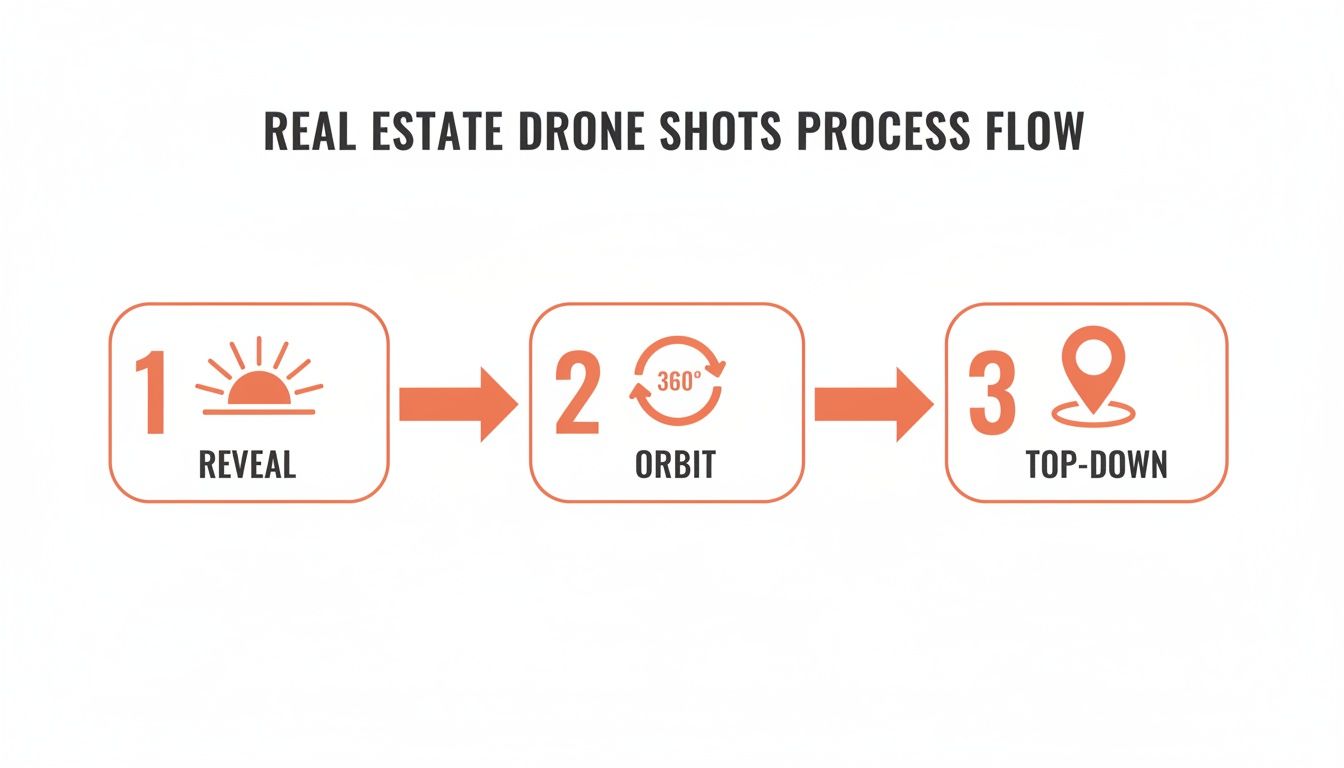
This workflow is all about narrative. You start with the emotional hook (the "Reveal"), give buyers the full context (the "Orbit"), and then provide the practical, map-like perspective (the "Top-Down").
When you think about your marketing needs before the flight, every second of footage has a job to do. That’s how you save a massive amount of time and money down the line.
"A single, well-planned video shoot should yield all the visual assets you need for a two-week marketing push. The goal isn't just to create a video; it's to create a campaign-in-a-box that works for you across every platform."
Expanding Your Visual Toolkit
Once you have your drone footage, the real fun begins. Now you can layer these powerful aerial views with other marketing materials to paint an even richer picture for buyers. Think about seamlessly blending an exterior drone shot with an interior walkthrough—guiding a buyer from the curb to the kitchen without a single jarring cut.
Modern tools can put this entire process on cruise control. Platforms like Bounti, for example, can take your raw property video and automatically generate MLS-ready photos, social media clips, and detailed descriptions. If you want to see how this works in practice, you can learn more about Bounti's video marketing autopilot features.
And don’t stop with just video. For vacant or unfurnished homes, high-quality 3D architecture renders can digitally stage rooms and help buyers see the home's true potential. When you combine those beautifully staged interiors with real-world drone footage of the exterior and lot, you’re giving buyers a complete vision of what their life could look like.
Hiring a Pro vs. Doing It Yourself
So, you’re sold on the power of drones in real estate. The next big question is a strategic one: do you hire a professional for each listing or bite the bullet and build an in-house program?
There’s no single right answer here. This is a business decision, plain and simple, and it comes down to your listing volume, your market, and your budget. Your choice will directly shape your costs, time commitment, and the final look of your marketing.
The Case for Hiring a Professional
Hiring a professional drone pilot is the fastest way to get top-tier results. You’re paying for immediate access to expertise and high-end equipment, completely skipping the steep learning curve.
You get a licensed, insured expert who already knows how to capture those sweeping cinematic shots, navigate tricky lighting, and handle complex airspace rules. You pay on a per-project basis, typically between $150 and $350 for a solid package of aerial photos and video clips. While it’s a line item on every listing, it completely erases the upfront costs of gear, training, and insurance.
Hiring a professional pilot is like having a specialist on call. You get guaranteed quality, full legal compliance, and zero liability, letting you focus on what you do best—selling the property.
This path makes perfect sense for agents with a manageable number of listings or those in luxury markets where anything less than flawless is a non-starter. It's predictable, professional, and provides serious peace of mind.
The DIY In-House Program
Going the DIY route is a long-term play. Be prepared for significant upfront costs: a quality prosumer drone can run $900 - $2,500, getting your Part 107 certification will cost another $300 - $500 in training and exam fees, and you'll need annual liability insurance for $500 - $800.
Once you’ve made that initial investment, however, your per-listing cost plummets. This is a huge deal for U.S. agents, since North America is the top market for drone services. In fact, the U.S. market is projected to explode from USD 8.45 billion in 2025 to USD 202.79 billion by 2034, with real estate as a primary driver. You can discover more about this explosive growth and see why agents are at the heart of this shift.
Just remember, to get a real return, your footage must be integrated into your broader real estate brand marketing strategies.
Calculating Your Break-Even Point
Deciding which path to take is all about finding your break-even point—the number of listings where bringing drone operations in-house starts saving you money.
This table breaks down the core differences between hiring out and building your own program.
Hiring a Drone Pilot vs. DIY In-House Program
Let’s do some quick math. If you average 10 listings per year and pay a pro $250 per shoot, you’re spending $2,500 annually. In that case, investing a similar amount into a DIY setup pays for itself in the first year.
For high-volume agents and teams, the numbers almost always point toward building an in-house program. It offers unmatched flexibility and, over time, becomes the clear financial winner.
Common Questions About Using Drones in Real Estate
So, you’re thinking about adding drones in real estate to your marketing. It’s a smart move. But as soon as you start, a bunch of practical questions pop up.
We put together this quick guide to answer the most common ones we hear from agents. Think of it as the cheat sheet you need before your first flight.
Do I Need a License for Every Flight?
Yes. Full stop.
If you’re flying a drone to market a property—which is 100% a commercial use—the person at the controls must have a Part 107 license from the FAA. This isn't a friendly suggestion; it’s the law, and flying without it can lead to some serious fines.
A Part 107 license is your "driver's license for the sky." Flying commercially without one isn't just unprofessional, it’s illegal and puts your entire business on the line.
What Happens If the Weather Is Bad?
Bad weather is a fact of life in this business. It's why seasoned drone pilots live by the forecast and always book a backup weather day with their clients.
If you're flying yourself, never—and we mean never—fly in high winds, rain, or even fog. It's dangerous, you risk trashing your drone, and the footage will be shaky and unusable. Nothing screams "amateur" like wobbly video.
Can I Fly Over a Neighboring Property?
This one is tricky. While the FAA technically governs the airspace, that doesn't give you a free pass to buzz a neighbor's backyard. Doing so is a fast track to privacy complaints, angry phone calls, and potential legal headaches.
The best practice is simple: be a good neighbor. Keep the drone within your client's property lines whenever possible. If you need to show the surrounding area, gain altitude. A high-level shot gives context without making anyone feel like you're peeking in their windows.
How Much Does a Good Drone Cost?
You don't need a Hollywood-level budget to get incredible results. A great "prosumer" drone capable of capturing beautiful, crisp marketing assets will typically run you between $900 and $2,000.
For most agents, this price range is the sweet spot. You get a professional-grade camera, solid flight stability, and smart features that make your job easier, all without having to take out a second mortgage.
Ready to transform your property videos into a complete marketing campaign automatically? With a single video, Bounti Labs generates stunning photos, compelling descriptions, and social media clips, letting you showcase every listing at its absolute best. See how Bounti can help you win more listings and close deals faster at https://www.bounti.ai.