A listing can look great online and still stall.
Most agents have seen it. The photos are clean. The kitchen pops. The living room gets good light. The ad copy is solid. Buyers click through, save the property, maybe even share it. Then the inquiry volume stays weak, and the showing calendar never fills the way it should.
That gap usually has a simple cause. Buyers like the home, but they cannot understand it.
Photos sell surfaces. They do not explain flow, room relationships, wall lengths, furniture fit, or whether a renovation idea is realistic. Buyers start asking the same questions you hear every week. Does the dining table fit there? Is that second bedroom usable? Can we open this wall? Is the primary suite separated from the kids’ rooms? They hesitate because they still cannot place themselves in the space.
That is where floor plans for realtors have changed from a nice extra into core listing infrastructure. A good floor plan closes the gap between visual interest and real intent. An excellent one does more than explain the home. It becomes the base layer for staging, redesign concepts, renovation previews, leasing layouts, and AI-generated marketing assets that help buyers see both the property and its upside.
The Listing That Should Be Flying Off the Market
A few listings always stick in memory.
One is the polished, well-prepped home that should move quickly but somehow does not. The photos do their job. The curb appeal is there. The kitchen looks updated. The primary bath is sharp. Buyers clearly notice it because the listing gets attention. But the showing activity feels thin compared with the response the property should be getting.
The usual instinct is to blame price, timing, copy, or platform reach. Sometimes one of those is the problem. Often it is not. The issue is that the buyer can admire the home without understanding how they would live in it.
That happens a lot with split-levels, narrow townhomes, converted older properties, condos with angled walls, and homes where one room photographs bigger than it functions. Buyers scroll through beautiful images but cannot answer practical questions. Where does the sofa go? Does the breakfast area work for daily meals? Is there a natural office nook? Can the kids’ bedrooms fit real furniture? They keep scrolling because uncertainty is expensive.
A floor plan solves that in seconds.
It turns a gallery into a layout. It shows circulation, proportions, adjacency, and possibility. It helps serious buyers self-qualify before they book a tour. It also helps the right buyers recognize value that weak photography alone can hide, especially in homes with unusual flow or renovation potential.
That is why the best agents no longer treat floor plans as a final add-on. They build the whole marketing package around them. Once the layout is clear, every other asset gets stronger. Photos make more sense. virtual staging becomes more believable. Renovation concepts feel grounded instead of speculative. Buyers stop asking whether the home works and start deciding whether they want it.
More Than a Map Why Floor Plans Are Non-Negotiable
A floor plan is not just a drawing of walls and doors. For buyers, it is a decision tool.
When someone studies a listing, they are trying to reduce uncertainty. They want to know whether the home fits their routines, not just whether it looks attractive in wide-angle photos. That is why floor plans for realtors matter so much. They translate visual appeal into spatial clarity.
According to the National Association of Realtors, 52% of prospective buyers consider floor plans a key factor in their decision-making process, and more recent 2024 NAR data says 95% of buyers deem them important (captur3d.io). That is no longer an optional marketing detail. It is a baseline expectation.

Buyers use floor plans to answer real-life questions
Good listing photos create attraction. Floor plans create confidence.
Buyers use them to work through issues that photos usually cannot settle:
- Furniture fit: They want to know whether the sectional, king bed, or dining table will work.
- Daily flow: They assess how the kitchen connects to living areas, bedrooms, and outdoor access.
- Privacy: They check whether bedrooms are grouped together or separated.
- Future changes: They start evaluating whether a wall can come down or a room can change use.
If you need a plain-language refresher on what a floor plan is, that definition is useful because it frames the document the way buyers use it, as a guide to layout and livability rather than a technical drawing alone.
Photos attract attention. Plans hold it
Listings without floor plans leave buyers doing mental reconstruction. That rarely goes well.
A hallway appears in one image, a bedroom in another, a kitchen from two angles, and a great room from the corner. The buyer has to assemble the home in their head. Some can. Many will not bother. They move on to the listing that gives them a cleaner answer.
NAR’s data matters because it reflects what working agents already see in practice. Buyers want fewer surprises before they schedule a showing. The clearer the listing feels, the more confident they are in taking the next step.
Practical takeaway: If your listing presentation still treats floor plans as an upsell or luxury add-on, you are framing a core decision asset as a bonus feature.
Floor plans also change seller conversations
Here, agents gain advantage.
When you explain floor plans well, sellers stop viewing them as a cosmetic extra and start seeing them as part of the sales strategy. They understand why some listings with strong photos still underperform. They also understand why your process is more complete than the agent who only promises professional photography and a social media reel.
For listing agents, that matters in two ways:
- You look more consultative. You are speaking to buyer behavior, not just marketing buzz.
- You create a stronger package. The floor plan becomes the foundation for everything that comes later, including 3D views, staged layouts, and renovation concepts.
That second point marks a significant shift. Floor plans are no longer the last page of the brochure. They are the structural layer that supports modern visual marketing.
Choosing Your Floor Plan Creation Method
Agents have three practical paths. They can create a plan themselves, hire a professional measurement service, or use newer AI-driven workflows that generate plans from captured property media.
None is perfect for every listing. The right choice depends on risk tolerance, turnaround pressure, property complexity, and what you need the plan to do after it is created.
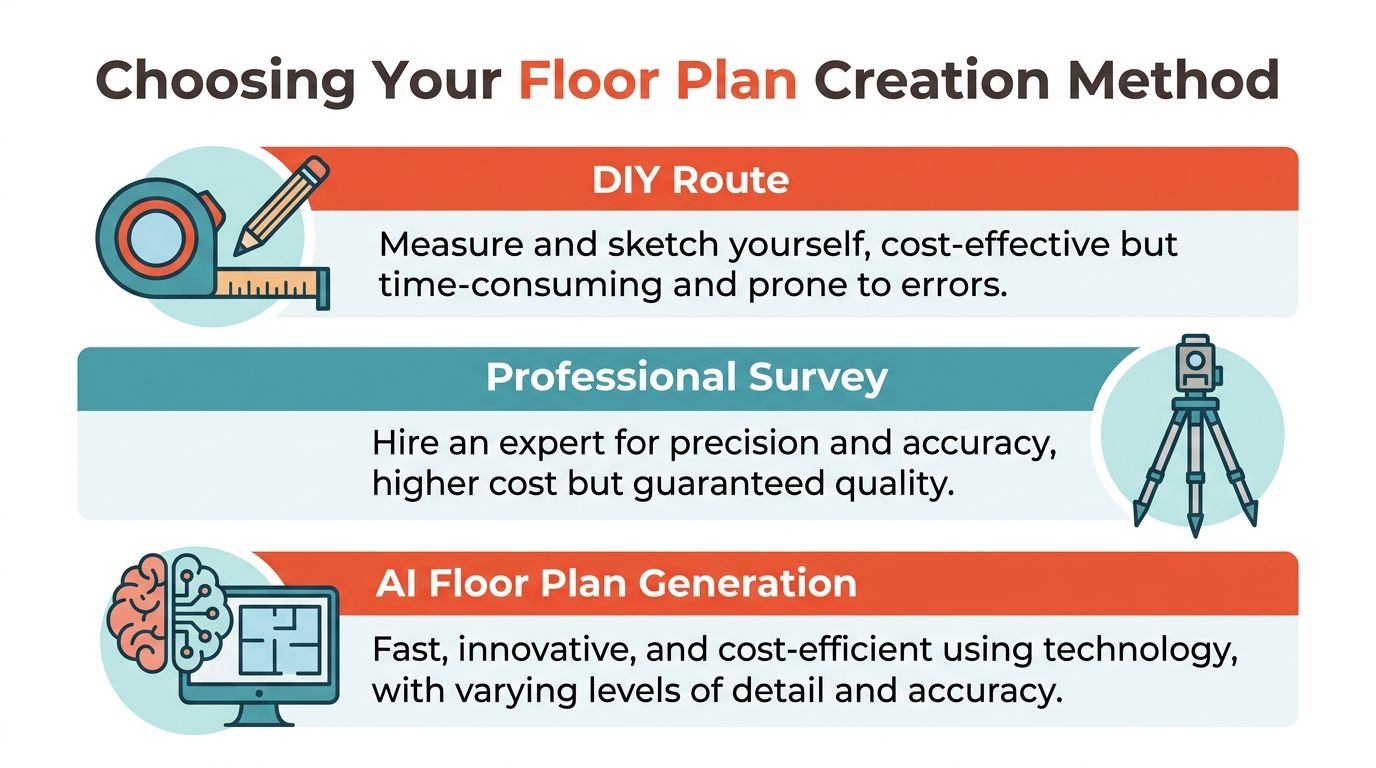
The DIY route
DIY works best when speed and budget matter more than polish.
This usually means smartphone scanning apps, manual measuring, or sketch-to-software tools. For straightforward rentals, basic resales, or internal planning, this can be enough. You get a usable visual, and you avoid the scheduling lag of a third-party vendor.
The trade-off is obvious. Accuracy depends on your measuring discipline, the tool’s quality, and how careful you are with odd corners, bump-outs, ceiling changes, and non-standard walls. If you rush the process, the plan can create more confusion than clarity.
DIY usually works when:
- The layout is simple: Rectangular rooms and predictable flow reduce mistakes.
- The use case is light: You mainly need a visual aid, not appraisal-sensitive documentation.
- You control quality: You have a repeatable process and review the output before publishing.
What does not work is treating DIY as “close enough” on properties where dimensions and gross living area may become a financing, appraisal, or disclosure issue.
Professional measurement services
Professional services make the most sense when the floor plan must hold up under scrutiny.
According to HomeJab, professional services can deliver up to 98% accuracy and MLS-ready plans in 24 hours, while meeting Fannie Mae and Freddie Mac standards for remote appraisals that require floor plans from disinterested third parties for gross living area verification (homejab.com). That changes the conversation from marketing convenience to transaction protection.
If you work higher-value listings, remote buyers, complex properties, or any deal where appraisal timing matters, this route is often the safest one. You pay more, but you reduce risk.
Tip: If there is any chance the plan could influence appraisal review, square footage discussions, or buyer objections, hire the pro before the listing goes live, not after a problem appears.
Professional services are especially useful for:
- Custom homes: More corners, levels, and specialty spaces create more room for error.
- Older properties: Additions and remodels often make old drawings unreliable.
- Commercial and leasing work: Tenants and investors care about layout precision and usable area.
The downside is less flexibility. You have to coordinate schedules, wait for delivery, and sometimes make revisions through another party rather than changing the file yourself.
AI-powered generation
AI-powered floor plan generation is the fastest-evolving option.
The big appeal is workflow compression. Instead of ordering separate assets from separate vendors, agents can capture property media once and generate multiple marketing outputs from that same source material. For busy teams, that is a meaningful operational shift.
This route sits between DIY and professional drafting. It can be much faster than traditional ordering and much more scalable than manual sketching. But the results still depend on the quality of capture, the complexity of the property, and whether the output is being used for marketing only or for a more compliance-sensitive purpose.
AI generation works well when you want:
- Speed: You need to launch fast and keep production moving.
- Asset reuse: The same captured material supports plans, visuals, and listing content.
- Creative expansion: You want the floor plan to feed into staging, redesign, and renovation visuals.
What does not work is assuming every AI-generated plan should be treated as legally or appraisal equivalent to a professionally measured plan. In many cases, it is excellent for marketing. That is not the same as universal compliance for every downstream use.
Floor Plan Creation Methods Compared
| Method | Typical Cost | Turnaround Time | Accuracy | Effort Level |
|---|---|---|---|---|
| DIY Route | Lower cost, varies by app or in-house process | Fast if you do it immediately | Varies by tool and execution | High agent effort |
| Professional Service | Higher cost than DIY | Can be delivered in 24 hours by providers such as HomeJab | Up to 98% accuracy from professional services | Low agent effort after scheduling |
| AI Floor Plan Generation | Varies by platform and workflow | Fast, often tied to the speed of media upload and processing | Varies by platform and property complexity | Moderate effort |
A simple selection rule
If the plan is mainly for marketing and the property is simple, DIY can be fine.
If the plan needs to be highly defensible, order a professional service.
If the plan is part of a bigger content engine and you want faster production across many listings, AI-powered workflows deserve serious attention.
That last category is where floor plans for realtors are changing fastest. The plan is no longer just a deliverable. It is becoming the source file for an entire listing package.
The Future is Instant AI Floor Plan Generation
The most important shift is not that agents can get floor plans faster. It is that the floor plan is becoming the core layer behind everything else buyers now expect to see.
Modern AI platforms do not stop at layout generation. They can turn one property capture into a bundle of marketing assets. That means the floor plan starts functioning less like a single file and more like a visual operating system for the listing.
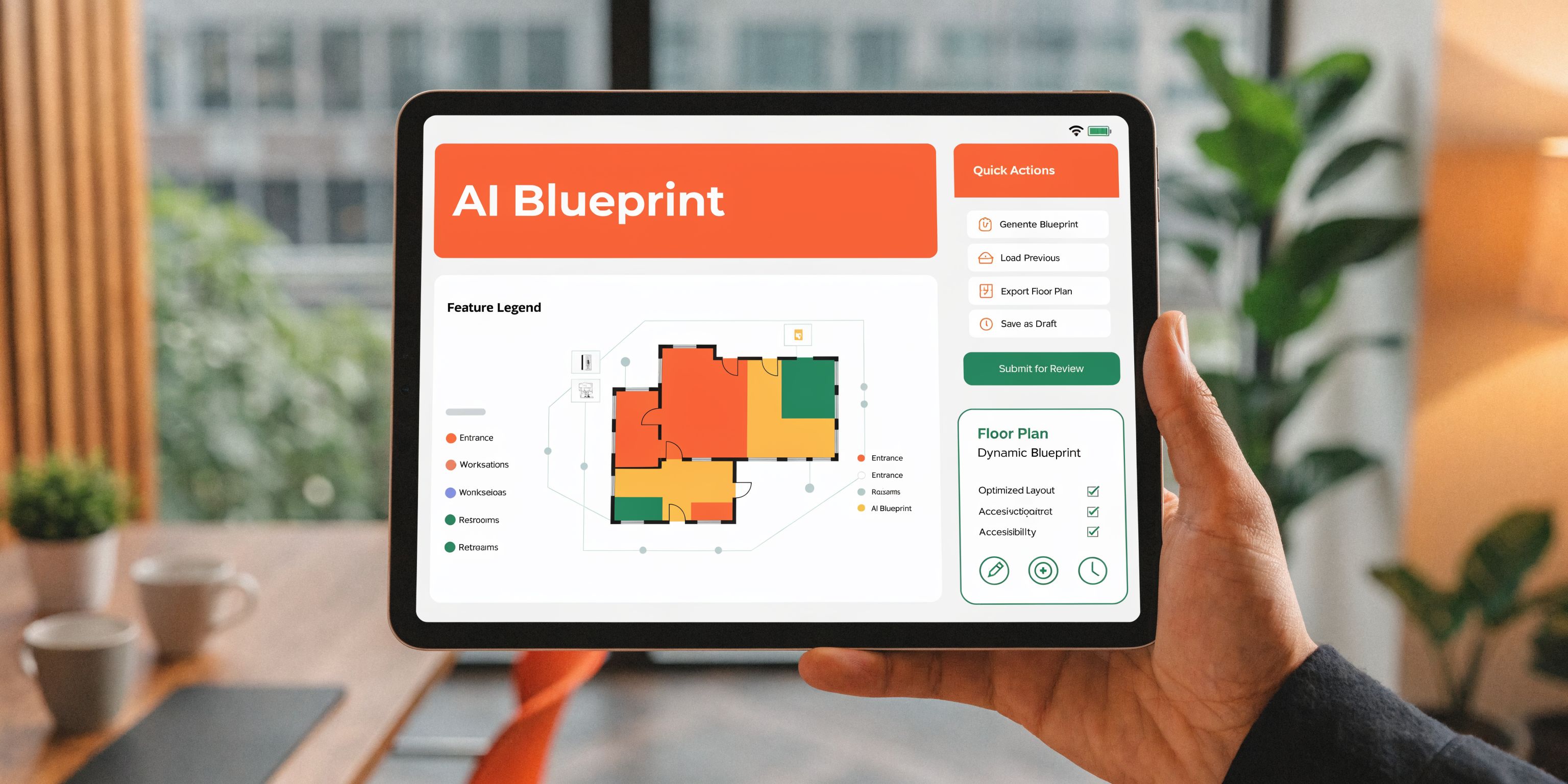
According to Pedra, an emerging trend is the integration of AI-powered floor plans with virtual staging and renovations, and some modern platforms can generate MLS-ready floor plans and other marketing assets from a single video walkthrough (pedra.ai). That matters because it changes how agents package potential.
The floor plan becomes the base layer for transformation
A static plan tells buyers what exists. An AI-enhanced workflow can also show what could exist.
That difference is huge on listings with friction. Think vacant homes, dated interiors, awkward bonus rooms, tired offices, or commercial spaces where users need help imagining alternate layouts. Once the system understands the structure of the space, it can support staged rooms, decluttered views, design restyling, and renovation concepts that still relate back to the layout.
Agents have wanted this for years. The old process was slow and fragmented. Order photos from one vendor. Order a floor plan from another. Send selected images to a staging company. Wait. Request revisions. Hope the style is right. Pay again if the concept changes.
AI compresses that chain.
What this changes in practice
The advantage is not just speed. It is decision support.
When the layout is clear, your marketing gets more persuasive because every enhancement has context. A staged living room lands better when the buyer can see the room dimensions and adjacent spaces. A renovation concept becomes more credible when it aligns with the floor plan instead of floating as a disconnected mood image.
That is also why agents are paying more attention to AI photo workflows beyond just floor plans. If you want a good overview of how these tools are evolving, this guide to https://bounti.ai/blog/photography/best-ai-photo-editing-software is useful for understanding the broader editing stack around listing visuals.
A short example helps. A buyer may like the idea of turning a formal dining room into a home office or opening a dated kitchen to the family room. Standard photos can hint at that. A floor-plan-led AI workflow can show the current layout, a staged version of current use, and a restyled concept for the future use. That shortens the imagination gap.
The workflow is easier to grasp when you see it in motion.
Key takeaway: The primary value of AI floor plan generation is not replacing one vendor. It is replacing a fragmented production process with one capture that can support many outputs.
Where agents should stay cautious
This is not a license to become careless.
If the property has unusual geometry, heavy additions, or compliance-sensitive measurement needs, agents still need judgment. AI can accelerate production, but it does not remove responsibility for checking whether the output matches the property. The smartest use is to combine speed with review.
That is especially true when you move from visualization into representation. Buyers respond well when a listing helps them imagine possibilities. They lose trust fast when the visuals feel detached from the space.
The best agents use AI floor plan generation for what it does best. Fast creation, cleaner presentation, stronger imagination, and a much more efficient path from walkthrough to market-ready listing.
From File to First Impression Presenting Your Floor Plan
A strong floor plan can still underperform if you present it poorly.
Agents lose value here all the time. They bury the plan at the end of the gallery, upload a low-resolution file, crop off dimensions, or use a version that makes the property feel more confusing than it really is. The floor plan should reduce friction the moment a buyer lands on the listing.
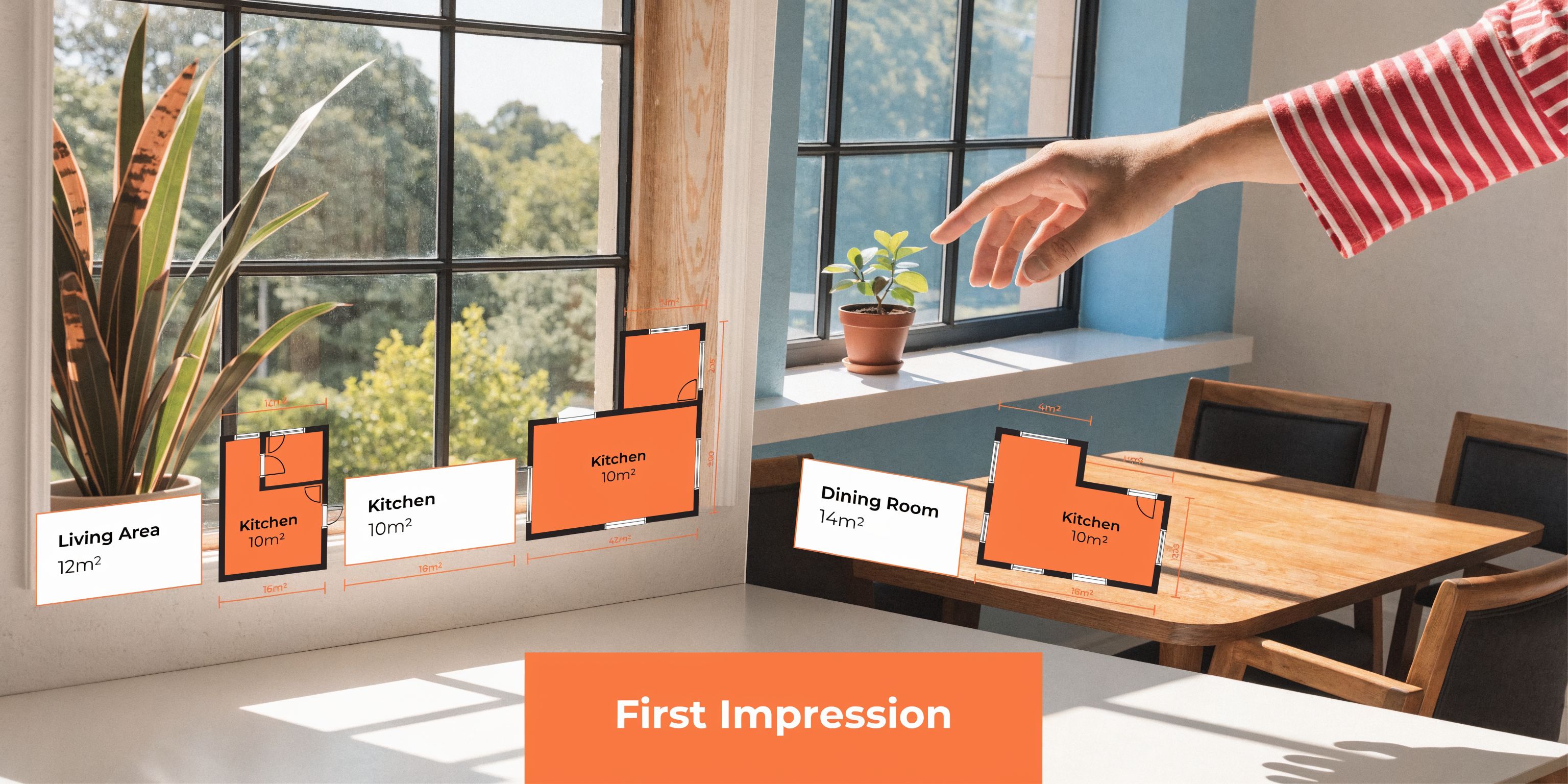
According to Remark Visions, 3D and interactive floor plans can significantly boost engagement, and listings with floor plans receive 40-50% more inquiries, with 3D helping buyers reduce guesswork and convert with more confidence (remarkvisions.com). That only happens when the plan is easy to find and easy to understand.
Put it where buyers will see it
Do not treat the floor plan as supporting paperwork.
For most listings, it belongs near the front of the gallery, after the hero shots and before the buyer gets lost in a long stream of room photos. On a property website, give it its own section instead of hiding it in downloadable attachments. On social media, pull cropped views that answer one question at a time, such as bedroom separation, open-concept flow, or office options.
The best use cases are simple:
- MLS gallery placement: Add it early, not last.
- Property websites: Use zoomable or interactive versions when possible.
- Buyer presentations: Include the plan when discussing furniture, renovations, or room-use strategy.
- Leasing and commercial marketing: Pair it with alternate layout concepts.
Match the format to the property
Not every property needs the same type of plan.
A simple starter home may only need a clear 2D layout. A luxury condo with unusual lines might benefit from a 3D or interactive version that explains room relationships better. A vacant listing often gets more value from a staged plan than an empty one because buyers struggle to judge scale in blank rooms.
If you are comparing tools, directories such as the Getfloorplan AI tool can help you quickly review options for floor-plan generation and presentation before you commit to a workflow.
Tip: Use 2D when clarity is the priority. Use 3D when the property has unusual flow, hard-to-read room relationships, or design elements that photos alone do not explain well.
Add context and protect yourself
Presentation is not just about aesthetics. It is also about trust.
If the plan is measured, say so. If dimensions are approximate, say that too. If the property has non-standard areas, angled walls, or additions, make sure the plan reflects them clearly rather than smoothing them over. Buyers forgive complexity. They do not forgive ambiguity that feels avoidable.
A practical checklist helps:
- Keep labels readable: Room names, entry points, and dimensions should be legible on mobile.
- Show orientation clearly: Buyers should understand how main spaces connect.
- Use consistent branding: Your plan should look like part of the listing package, not a random attachment.
- Include appropriate disclaimers: Especially if the plan is for marketing visualization and not architectural reliance.
- Connect it to the rest of the package: If you are using staged photos, renovation concepts, or a digital brochure, keep the floor plan visually aligned.
For agents building a more complete listing workflow, tools that package visuals together can help keep the experience consistent across channels. One example is https://bounti.ai/solutions/listing-kit, which shows how floor plans fit into a broader listing presentation instead of sitting alone as a PDF.
The floor plan should never feel like an afterthought. When it is presented well, it gives every other asset a structure buyers can trust.
Real Results How Floor Plans Impact Sales
The payoff shows up before the offer deadline.
You see it in the quality of inquiries, in how buyers talk during showings, and in how few basic layout questions come up once the listing is live. Buyers arrive more prepared because they already understand the home. That changes the tone of the showing from orientation to evaluation.
The broader market data supports what agents see in the field. Listings featuring floor plans can spend 50% less time on the market, and Rightmove reports a 52% increase in click-through rates when floor plans are included (virtuance.com). That does not mean every listing follows the same pattern, but it does show a strong relationship between clearer layout communication and faster sales activity.
Where the impact shows up first
The first result is usually lead quality.
A buyer who has seen the layout already knows whether the second bedroom is near the primary, whether the dining room is separate, and whether the office nook is real or just copywriting. That filters out casual curiosity and brings in people who can picture their life in the property.
The second result is momentum. When buyers understand the space before they walk in, they waste less time recalibrating. They can focus on condition, light, finishes, and fit. That shortens the path to a serious decision.
A practical pattern agents recognize
Consider two common scenarios.
A condo has excellent photos but an odd layout. Without a floor plan, buyers worry about furniture placement and room usability. Add a clear plan and the listing suddenly makes sense. The questions become more specific and more purchase-oriented.
A starter home has smaller rooms than the photos suggest. Without a floor plan, some buyers show up and immediately feel disappointed. With the plan in the listing, the wrong buyers self-select out before booking, while the right buyers arrive with realistic expectations and a better chance of converting.
What works: Use the floor plan to qualify interest before the tour.
What does not: Rely on photography alone to explain flow, adjacency, and scale.
The biggest gains often come from reducing uncertainty, not from adding flash. Agents who understand that use floor plans for realtors as a sales tool, not a decorative attachment. That is why the impact is so often felt in both speed and seriousness of buyer response.
Frequently Asked Questions About Floor Plans
Should I use 2D or 3D floor plans
Use 2D when the main job is clarity.
Use 3D when the property has unusual room relationships, empty rooms that need scale, or features that buyers struggle to understand from standard photos. The best choice depends on what the listing needs explained, not on which format sounds more impressive.
Can I use old builder blueprints
Only with caution.
Old plans often miss later changes, additions, enclosure work, or altered room uses. They may also create copyright or accuracy issues if reused casually. If the property has changed, a dated plan can mislead buyers even when the file looks professional.
How should I handle angled walls or irregular layouts
Show them accurately and do not try to “clean them up” visually.
Irregular geometry is exactly where a floor plan helps most. Buyers need to see awkward corners, bay windows, diagonal walls, and pinch points before they visit. If a room is harder to furnish, the plan should make that plain. Then your photos, staging, or alternate layout suggestions can address how to use the space well.
Are AI-generated floor plans enough for every listing
No.
They can be excellent for marketing, especially when paired with staging or renovation visuals. But some listings call for a professionally measured plan, particularly when appraisal standards, gross living area verification, or risk-sensitive representation matters. Match the method to the transaction, not just the marketing timeline.
Where should the floor plan appear in my marketing
Near the front of the MLS gallery, on the property site, and anywhere buyers compare function across listings.
It is also useful in buyer consults, open house materials, and agent-to-agent marketing when the layout is one of the property’s strongest selling points.
Your Next Step to a Better Listing
The old model treated a floor plan as an accessory. That model is done.
Today, floor plans for realtors do three jobs at once. They help buyers understand the home. They help agents qualify interest earlier. They give the rest of the marketing package a structural base, especially when you want to layer in staging, decluttering, or renovation visuals.
That is the significant opportunity. You are not adding one more task to your listing checklist. You are upgrading the way the entire listing gets built and presented. A clearer layout leads to better buyer understanding. Better understanding leads to better inquiries. Better inquiries save time for everyone involved.
Start with one listing.
Pick the property in your pipeline where buyers will most need help understanding flow, furniture fit, or future potential. Build the floor plan into the launch instead of adding it later. Then compare the conversations you get. They tend to become more specific, more serious, and more useful.
If you want to modernize the full workflow around floor plans, visuals, and listing content, spend time with tools built for agents rather than generic design software. A good place to start is https://bounti.ai/real-estate-agents.
Bounti Labs helps agents turn a single video walkthrough into a faster, stronger listing package. If you want floor plans, MLS-ready visuals, decluttered images, virtual staging, restyling, and renovation concepts without juggling multiple vendors, explore Bounti Labs.