A home staging professional does one thing: they get a property ready to sell for the most money in the least amount of time. This isn't just about making things look pretty. It's a calculated mix of design, psychology, and marketing to forge an emotional connection that makes a buyer feel like they're already home.
What a Home Staging Professional Really Does
It’s easy to confuse a stager with an interior decorator, but their jobs are fundamentally different. A decorator designs for the seller's personal taste. A stager is a property storyteller, crafting a narrative for the target buyer. They are marketing specialists who use furniture, color, and flow as their tools to sell a vision.
Their process is methodical. The first step is to depersonalize the space by packing away family photos, quirky art, and anything that screams "this is someone else's house." This creates a clean, neutral canvas that allows potential buyers to mentally move in without getting hung up on the current owner’s life. The difference is night and day—you can see just how powerful this is by looking at a few house staging before and after transformations.
The Art of Strategic Placement
A great stager’s most underrated skill is their command of a room's flow and function. They know exactly how to place furniture to make a space feel bigger, brighter, and more intuitive. This goes way beyond pushing a sofa against a wall. We're talking about creating clear pathways, defining functional zones, and drawing the eye to a home's best architectural features.
Take a common problem like arranging furniture in a small bedroom. A pro knows how to use smaller-scale furniture, clever layouts, and visual tricks to make a cramped room feel surprisingly spacious and usable.
Staging a home is creating a suggestion of a kind of life—a life that can breathe easy because everything in it has a purpose and a place. When you take away the accumulated clutter, you are returned to a clarity about what you love and what you need to live.
At its core, a home stager's work boils down to three key marketing activities:
- Strategic Decluttering: This isn't just tidying up. It's removing anything non-essential to create a feeling of clean, open possibility.
- Furniture & Art Placement: Every piece is arranged to improve the home’s perceived layout and highlight its best assets, like a great view or high ceilings.
- Lifestyle Merchandising: This is where the magic happens. Small, curated touches—like a coffee bar setup or a spa-like bathroom display—sell a desirable lifestyle, not just four walls and a roof.
This table breaks down exactly where a professional stager provides tangible value in the selling process.
The Core Value of a Home Staging Professional
Ultimately, a stager's job is to remove any friction that might prevent a buyer from falling in love with the property, making the agent's job of closing the deal that much easier.
Understanding the Financial Return of Staging
It’s easy to look at home staging as just another line item on a long list of pre-sale expenses. But that’s a rookie mistake. A professional stager isn’t an expense; they’re an investment—one designed to deliver a serious return by influencing both the final sale price and how quickly you get there.
Think of it this way: the ROI on staging really comes from two places. First, there’s the direct hit to the offer price. A perfectly staged home lets buyers feel themselves living there, creating an emotional pull that often makes them see higher value and, you guessed it, offer more money.
Then there's the other side of the coin: cutting down your carrying costs. Every single month a house sits on the market, you’re bleeding money on the mortgage, taxes, insurance, and utilities. Staging helps you sell faster, stopping that financial drain and putting thousands back in your pocket.
Quantifying the Staging Advantage
Don't just take our word for it. The numbers are pretty loud and clear on this one. On average, professionally staged homes can pull in offers up to 9% above asking price.
According to the National Association of Realtors' 2025 Profile of Home Staging, 34% of buyers' agents confirmed that staging bumps up a home’s perceived value by as much as 10%. With a typical investment hovering around $3,780, that can translate to gains of over $58,000. The ROI isn't just good; it's often massive.
So, what are these stagers actually doing to drive these results? It's a methodical process, not just fluffing pillows.
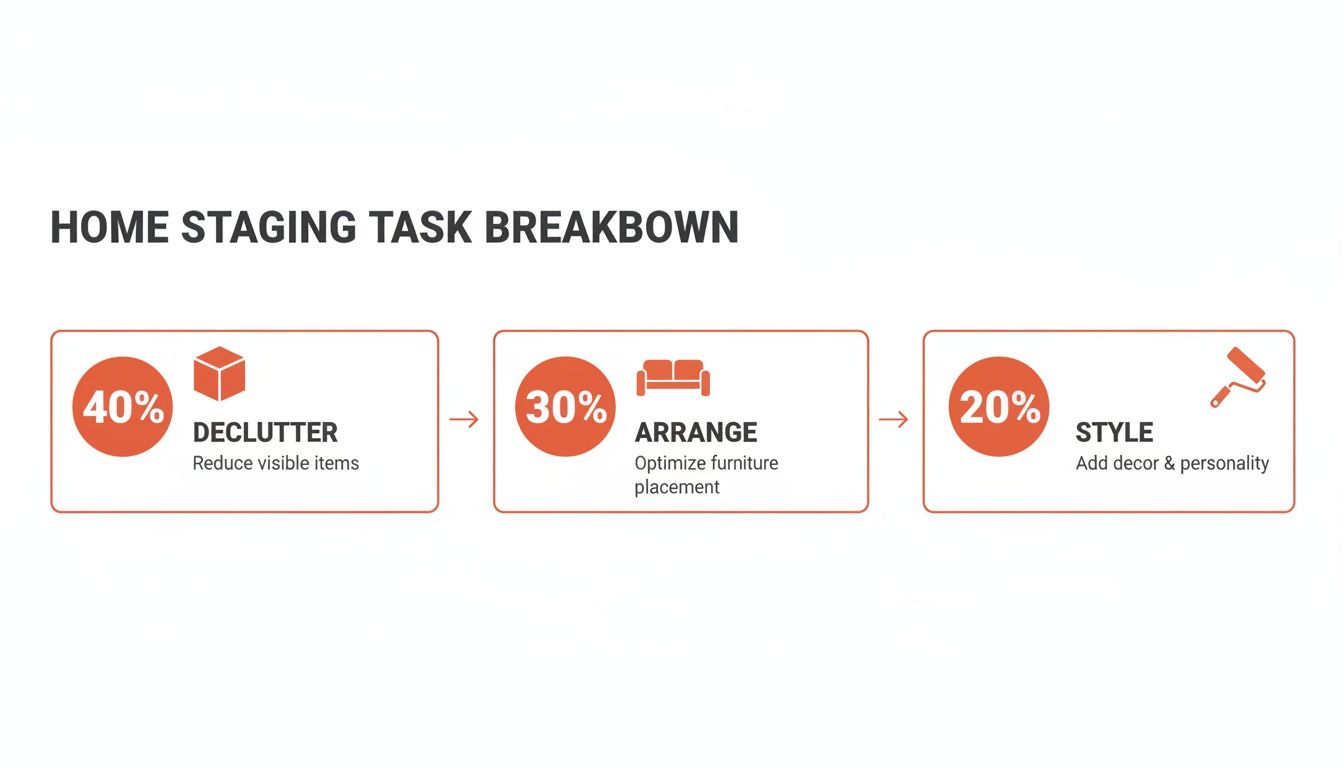
As you can see, it’s a focused combination of decluttering, strategic furniture arrangement, and then adding the final styling that turns a property into a product ready for market.
Boosting Value Inside and Out
This idea of investing in presentation to drive up value isn't just an indoor sport. It’s the same logic behind curb appeal. Just as staging makes a living room feel aspirational, studies show that professional landscaping increases a home's value by creating a powerful first impression before buyers even step inside. A unified strategy for the interior and exterior is what really sets a listing apart.
A staged home removes buyer uncertainty. Instead of seeing empty rooms and questioning how their furniture will fit, buyers see a clear, functional, and appealing lifestyle they can step right into. This confidence is what drives faster, higher offers.
When you hire a home staging professional, you aren't just decorating. You're actively shaping buyer perception to get the best possible outcome. The data proves it's one of the smartest pre-sale moves a seller can make.
Knowing When to Hire a Stager for Maximum Impact
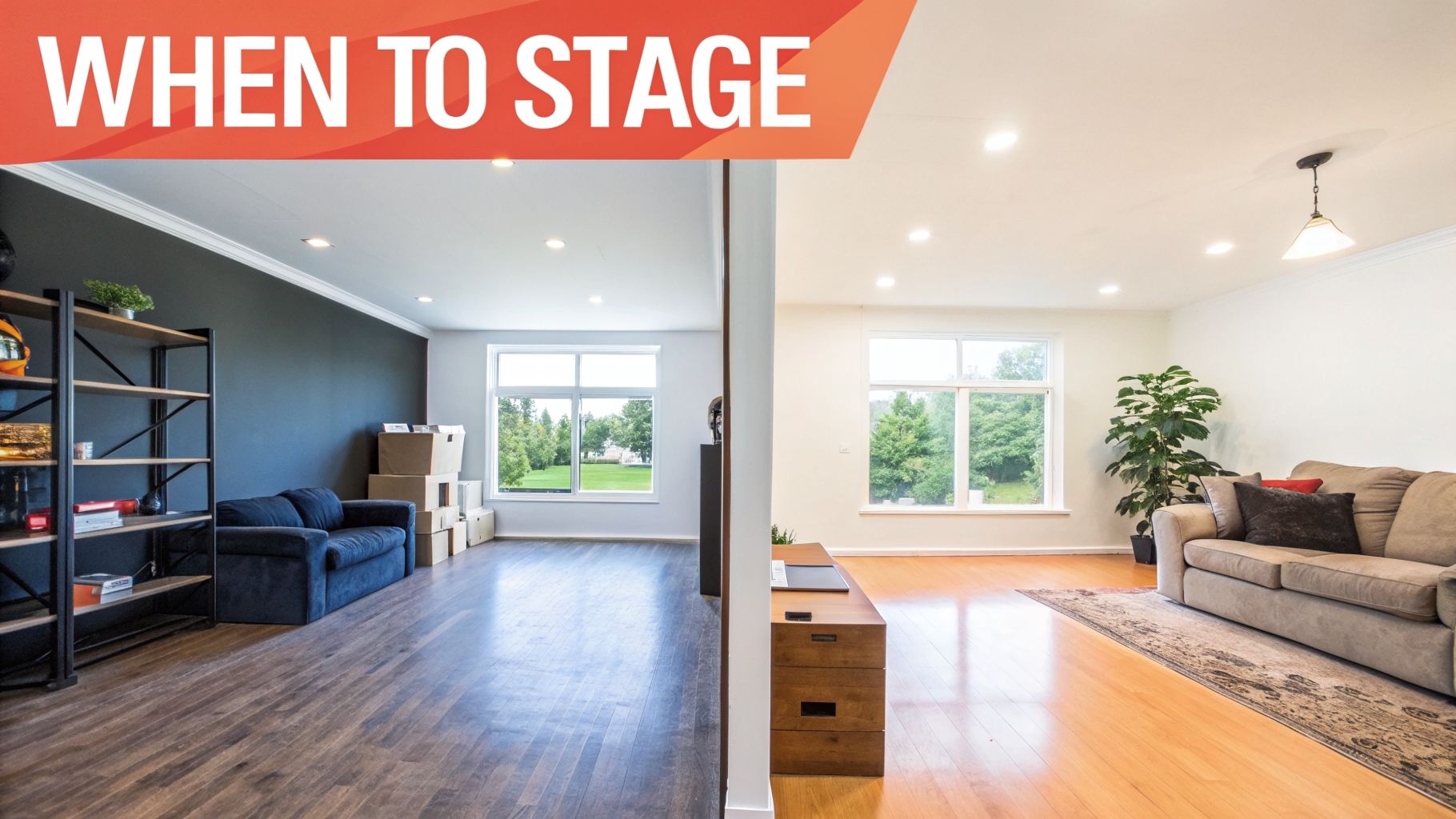
Deciding to bring in a stager isn't just about what the market is doing—it’s about the story a specific property is (or isn't) telling. While you could argue that almost any home benefits from staging, some listings absolutely need it to get sold quickly and for top dollar.
Knowing how to spot these "problem properties" is the key to deciding when to call in a home staging professional.
The timing matters, too. In a slow buyer's market, staging is your best weapon for standing out. A perfectly presented home can create a sense of urgency out of thin air. And in a hot seller's market? Staging is the fuel that can ignite a bidding war, presenting a turnkey fantasy that buyers will fight for.
Key Property Types That Demand Staging
Some homes just don't click with buyers on their own. They lack imagination, leaving money on the table because buyers can't see the potential. If you're listing a property that fits one of these descriptions, think of professional staging as a non-negotiable part of your marketing plan.
The Vacant Home: Empty rooms feel cold and sterile. Worse, they look smaller than they actually are. Buyers can’t figure out the scale, often wrongly assuming their king-size bed or sectional sofa won't fit. A stager doesn't just fill the space; they define it, adding warmth and showing buyers exactly how to live there.
The Awkward Layout: Got a weird nook under the stairs? A long, bowling-alley living room? A "bonus" room with no obvious purpose? These layouts just confuse buyers. A good stager is a problem-solver, turning a funky layout into a charming feature by giving every square foot a clear, functional purpose.
The Dated Property: That house with the honey oak cabinets from 1989 and dark, scuffed-up walls? It's a tough sell. Buyers don't see "good bones"—they see a huge, expensive renovation project. Staging helps them look past the tired finishes by using modern furniture, fresh paint, and smart decor to hint at the home's true potential.
A stager’s real job is to neutralize a space. They depersonalize it, creating a beautiful blank canvas that lets the largest possible number of buyers imagine their own lives and dreams unfolding there. That's the emotional connection that closes deals.
At the end of the day, any home with cluttered rooms, overly personal decor, or a confusing floor plan creates friction for buyers. Hiring a stager removes that friction, making it dead simple for buyers to fall in love and write a strong offer.
How to Choose the Right Staging Partner
Think of your stager as a strategic partner, not just another vendor you hire. You’re looking for someone whose vision, inventory, and process click perfectly with your property and its target buyer. Get this partnership right, and you're on the fast track to top-dollar offers.
Your first move should always be a deep dive into their portfolio. Don't just scroll through looking for "pretty" rooms. Analyze their style. Does their aesthetic actually fit the home's architecture, whether it's a sleek modern condo or a classic family home? A great home staging professional is a chameleon; they'll have a portfolio that proves they can nail the look for properties just like yours.
Vetting Your Potential Partner
Once you've got a shortlist based on their past work, it's time to start the real interview. A true pro will be an open book—organized, transparent, and, most importantly, insured.
A professional stager’s real value is in their ability to see the property through a buyer’s eyes. They aren’t just filling a space; they are solving a problem and selling a solution.
Before you go any further, you need to check a few basic business credentials. These are the non-negotiables that protect you, your client, and the property itself.
- Certifications: Ask if they have training from recognized groups like the Real Estate Staging Association (RESA) or the International Association of Home Staging Professionals (IAHSP). It's not a legal requirement, but it shows they're serious about their craft.
- Insurance: This is a deal-breaker. They absolutely must have liability insurance. This covers any potential dings, scratches, or worse to the property or their own inventory during the staging process.
- Inventory Quality: Get nosy about their warehouse. What's the quality of their furniture and accessories? You need to know they have a solid supply of modern, high-end pieces that will make the home shine, not look like a dated rental.
Essential Questions to Ask
The interview is where you find out if they can work seamlessly with you to build a cohesive marketing story for the listing. A strong staging partner won't just take orders; they'll collaborate.
Here are the key questions every agent needs to ask a potential home staging professional:
- What's your process for coming up with a staging plan? Do they do a walkthrough first? How do they dial in on the target buyer?
- How does your pricing work? Is it a flat fee? A monthly rental? A mix? Find out what's included in the initial consultation.
- What’s your typical timeline from consult to install? You need this info to schedule your photographer, set the listing date, and plan your open houses.
- How do you handle working with the agent and the seller? The right partner will want your input on the ideal buyer and the home’s key selling points. It's a team sport.
Traditional vs. AI-Powered Virtual Staging
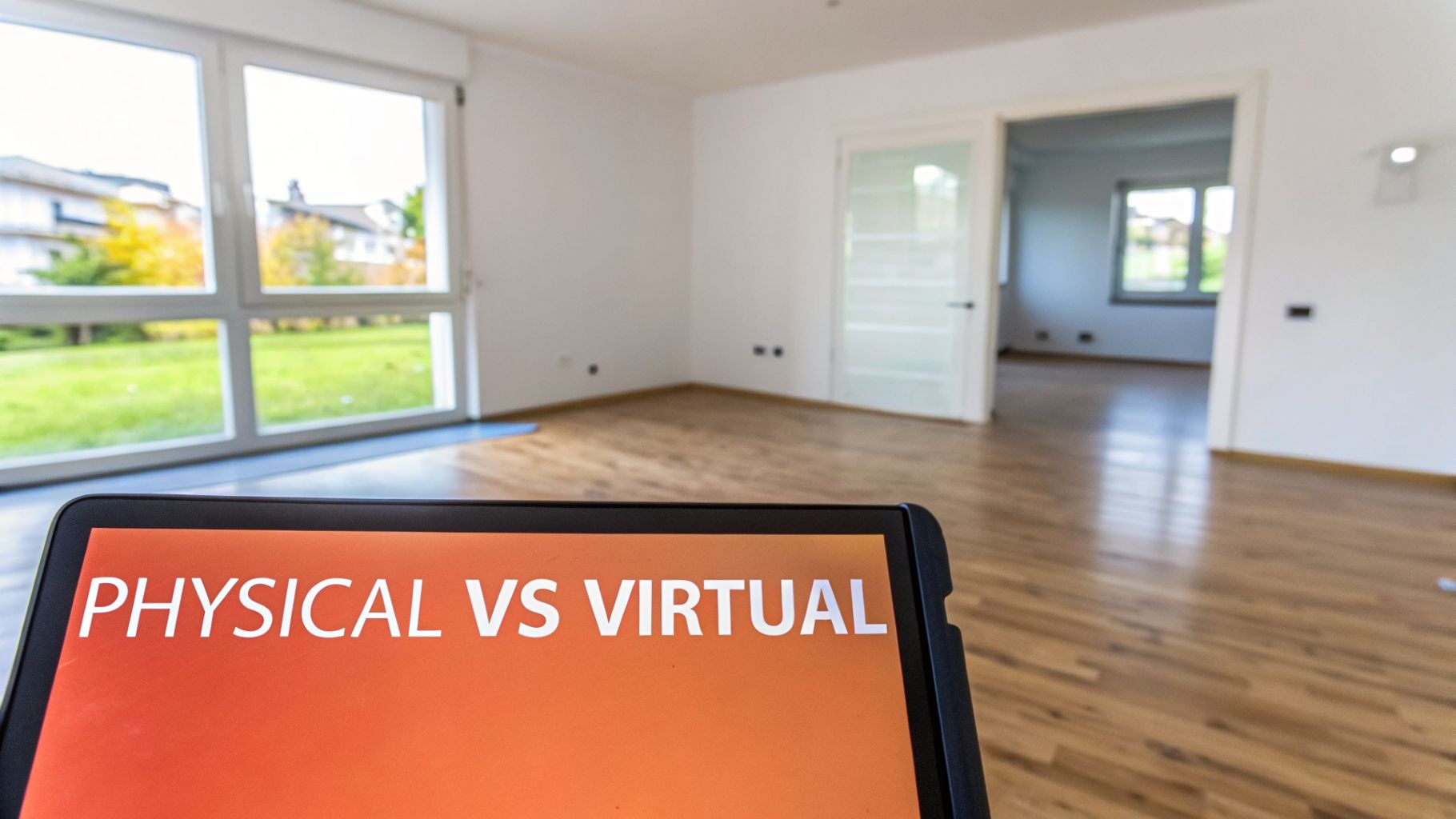
Not long ago, home staging meant one thing: hiring a home staging professional to physically furnish a property. Think of it like building a movie set—you rent the furniture, hire the movers, and spend days getting every pillow just right. The in-person result can be powerful, but it's also incredibly expensive, slow, and locked into a single look.
But now, there's another path. AI-powered virtual staging is less like building a set and more like using world-class CGI. Instead of hauling a sofa up three flights of stairs, you can transform an empty room with a few clicks, showcasing a home's full potential to buyers at a tiny fraction of the cost and time.
The Process and Timeline Showdown
Traditional staging is a serious time commitment. You're looking at a multi-week process that includes an initial consultation, picking furniture from a warehouse, booking movers, and dedicating at least a full day to installation. Want to swap that mid-century modern vibe for coastal grandmother? You have to start the whole expensive process all over again.
AI-powered virtual staging, on the other hand, operates in minutes, not weeks. Tools like Bounti can take a video of a property and instantly generate multiple, professionally styled versions of the same room. You can declutter, restyle, or even show a full renovation without ever lifting a paintbrush, which lets you cast a much wider net for different buyer tastes online.
Virtual staging allows you to market not just what a home is, but what it could be. This flexibility is a massive advantage in online listings where first impressions are everything.
This speed gives agents incredible agility. You can run a marketing campaign with a "boho chic" style one day and a "minimalist" look the next, all from the same set of photos. To get a deeper look into the technology, check out our guide on how virtual staging works.
Comparing the Core Differences
So, how do the two methods really stack up? Let's break it down by what matters most to you and your sellers: cost, speed, and flexibility. The differences are pretty stark and show exactly why virtual tools are becoming essential for any agent who takes their online marketing seriously.
Traditional Staging vs. AI-Powered Virtual Staging
Here’s a head-to-head comparison to make the choice clear.
At the end of the day, physical staging still has its place for creating that emotional connection during an in-person showing. But with 97% of buyers starting their home search online, AI-powered virtual staging gives you unbeatable speed, cost-effectiveness, and versatility where it counts most.
Using a Hybrid Strategy for the Best Results
The whole “traditional vs. virtual staging” debate? It’s a false choice. The smartest agents aren't picking sides—they’re building a hybrid strategy that gets the best of both.
Think of it as a one-two punch for marketing a property. Since 97% of buyers start their search online, your digital first impression has to be flawless. But the deal is closed when they walk through the door and feel something. A hybrid approach nails both of these critical moments.
Maximizing Impact and Budget
Here’s the core of a hybrid strategy: put your physical staging dollars where they matter most. This means working with a home staging professional to furnish the rooms that actually sell the house.
We’re talking about the high-impact zones:
- The Living Room: Where buyers need to picture themselves relaxing and hosting friends.
- The Primary Bedroom: The personal retreat where they’ll start and end their days.
- The Kitchen/Dining Area: The heart of the home, where family life unfolds.
Physically staging these key rooms creates an immediate emotional spark during a showing. It gives buyers a tangible feel for the home's scale, flow, and potential lifestyle in a way an empty space never could.
A hybrid approach gives you the best of both worlds. It leverages the emotional power of physical staging for in-person viewings while using the scalability of virtual staging to perfect the all-important online first impression.
Meanwhile, you use virtual staging to fill in all the other gaps for your online listing. This is where you let AI tools shine. Stage the secondary bedrooms, the empty basement, a potential home office, or that bare patio.
You can even show off different design styles or visualize renovation potential, casting a much wider net for online browsers. It's all about making sure you can perfect your listing images with the best AI photo editing software so every photo, virtual or not, looks incredible.
This way, no matter where a buyer first sees your listing—scrolling on their phone or walking in for a tour—they get a complete, compelling vision of what their life could look like.
Common Questions About Home Staging
Even when the benefits are clear, the practical side of hiring a home stager can bring up a lot of questions for agents and sellers. Let's get them answered now so you can handle any objection before it even comes up.
Here’s a quick guide to the most common concerns.
How Much Does a Home Staging Professional Typically Cost?
The price tag for professional staging can swing pretty widely depending on your market and what the property needs.
An initial consultation will usually set you back $200 to $600. If you're staging a vacant home, you're looking at a monthly furniture rental fee—think $500 to $1,000 per room—plus a one-time fee for the design and setup.
For an occupied home where the stager works with the owner's existing furniture, the cost is often a flat fee for a few hours of their time. It might feel like a big check to write, but when you see the impact on the final sale price, the ROI almost always makes it a no-brainer.
Does the Seller or the Agent Pay for Staging?
This one’s always up for negotiation and really depends on the local market. Most of the time, the seller pays. It's a direct investment in their own bottom line, after all.
But in a hot market where listings are scarce, a savvy agent might offer to cover the initial consultation or even split the full cost. It's a powerful way to stand out from the competition and win a high-value listing.
Think of staging not as an expense, but as a strategic marketing tool. It’s an investment in presenting the property in its best light to achieve the highest possible return for the seller.
When Should I Use Virtual Staging Instead of Physical Staging?
Virtual staging is an absolute game-changer for your online marketing, where most buyers are forming their first impression. It's perfect for vacant homes, showing off a room's potential after a renovation, or even displaying a few different design styles without breaking the bank.
But for in-person showings? A hybrid approach usually wins. Physically stage the most important rooms—the living room and primary bedroom—to create that crucial emotional connection when buyers walk through the door. Then, use virtual staging to show the full potential of every other space online. It's the best of both worlds.
Ready to create stunning visuals for any property in minutes, not weeks? Bounti is your AI assistant for decluttering, restyling, and virtually staging homes instantly from a single video. See how it works.