In a competitive real estate market, first impressions are everything. For sellers, this means transforming a lived-in house into a buyer's dream home, a process known as staging. Effective staging is not just about making a home look nice; it is a strategic marketing tool that can significantly reduce time on market and increase a property's final sale price.
This guide provides 10 actionable home staging tips for sellers, designed for agents to implement quickly and efficiently. We move beyond generic advice to offer a prioritized, checklist-style plan covering everything from maximizing curb appeal to using modern AI technology for instant virtual staging. By mastering these techniques, you can help your clients create an irresistible product that captures buyer attention from the first photo to the final walkthrough.
This article will help you:
- Prioritize staging efforts for the highest impact.
- Implement changes with practical, step-by-step guidance.
- Understand when to use digital tools to save time and money.
By the end, you will have a clear framework to help sellers prepare their homes for a faster, more profitable sale, ensuring you close deals with confidence.
1. Declutter and Depersonalize Spaces
One of the most impactful home staging tips for sellers is to create a clean, impersonal canvas. The goal is to remove personal items, excess furniture, and general clutter, allowing potential buyers to mentally place their own belongings in the home. A decluttered space not only appears larger and cleaner but also photographs significantly better, which is critical for attracting online interest.
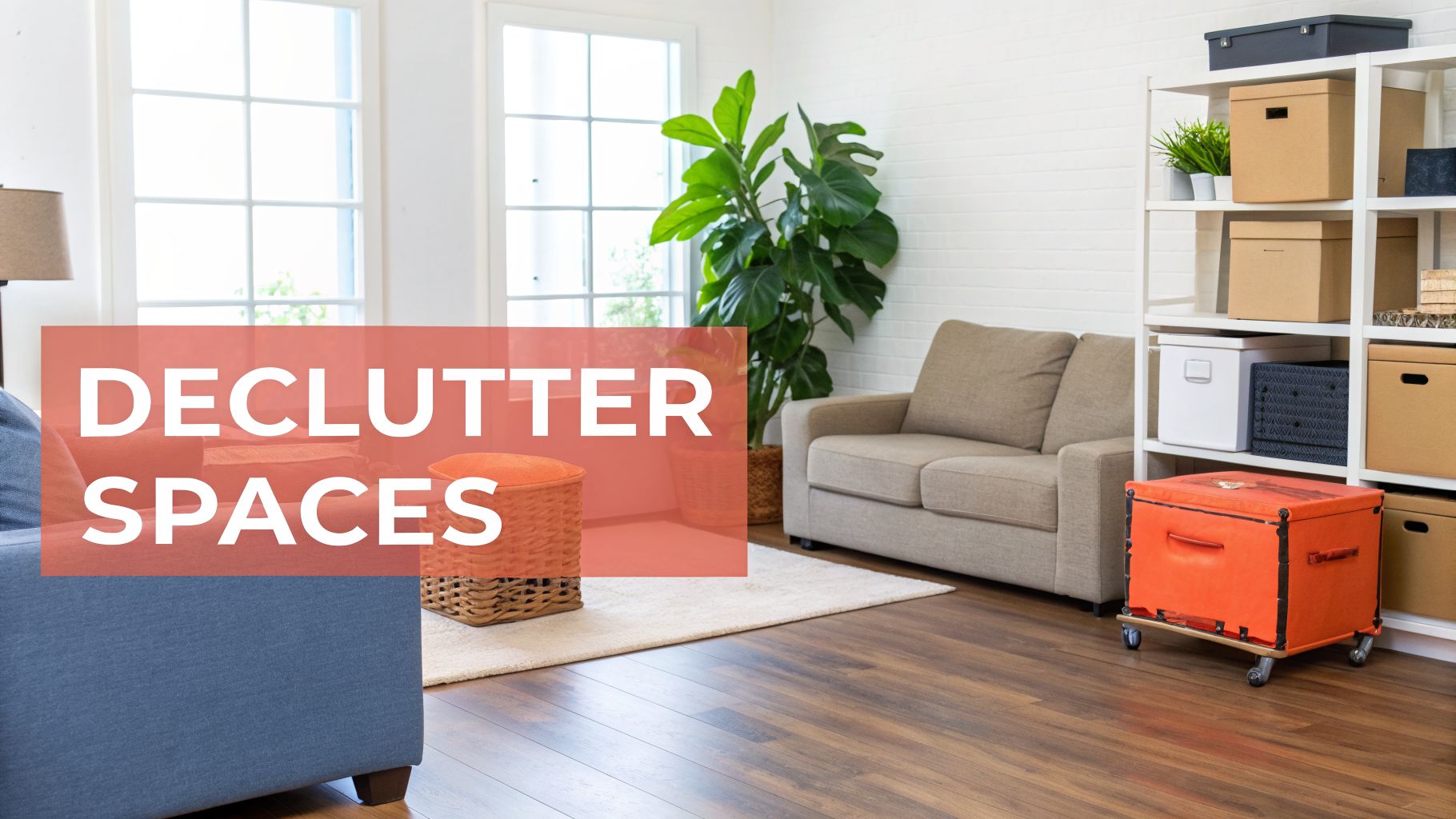
Successful staging often involves dramatic edits. For instance, an agent might remove a wall of 40+ family photos and replace them with three neutral art pieces. Similarly, a crowded master bedroom with five pieces of furniture can be transformed by leaving only a bed, two nightstands, and a small reading chair, instantly making the room feel more spacious and serene.
Implementation Guide
- Depersonalize Surfaces: Remove family photos, children’s artwork, and personal collections. The objective is to make the home anonymous so buyers can connect with the property, not the current owners.
- Clear the Counters: In kitchens and bathrooms, clear all countertops of daily-use items. Leave only a few intentional decorative objects, like a small plant or a bowl of fresh fruit.
- Edit Furniture: Evaluate each room and remove any furniture that obstructs pathways or makes the space feel cramped. To streamline the decluttering process before listing your home, an essential junk removal moving guide can provide valuable strategies.
Agent Insight: Before physically removing items, use AI-powered editing tools to generate a "decluttered" version of your listing photos. This preview helps sellers visualize the final look and can be used to test different layouts. Some of the best AI photo editing software can even add or remove virtual furniture for A/B testing photo appeal.
2. Enhance Curb Appeal and Exterior First Impressions
The exterior of a home is the very first thing a potential buyer sees, setting the tone for their entire visit. A welcoming and well-maintained facade creates an immediate positive impression that can significantly influence a buyer's decision-making process. Investing in curb appeal encourages buyers to step inside and shows that the property has been cared for, making it one of the most effective home staging tips for sellers.

Small changes can make a substantial difference. For example, painting a tired front door a fresh, classic color like navy or sage green can instantly update the home's look. Similarly, power washing a grimy driveway and walkways removes years of stains and brightens the entire property, while adding uplighting can highlight attractive architectural details during evening viewings.
Implementation Guide
- Focus on the Path: Pay special attention to the "sight line" from the curb to the front door. Ensure this path is clear, clean, and inviting. When preparing your home for sale, a critical first step is focusing on the exterior; learning how to achieve this can be done by enhancing your home's curb appeal with professional techniques.
- Add Greenery and Color: Place potted plants with seasonal flowers on the porch to add life and color. Replace any overgrown or dead landscaping with neatly trimmed shrubs and fresh mulch for a polished appearance.
- Update Hardware: Ensure the house numbers, mailbox, and light fixtures are clean and cohesive. Mismatched or dated hardware can be easily replaced for a quick, modern update.
Agent Insight: Before committing to a new paint color for the front door or shutters, use AI restyling tools to test different shades digitally. Upload a photo of the home's exterior and apply various colors to see which one best complements the property, saving time and preventing costly mistakes.
3. Optimize Lighting Throughout the Home
A well-lit home feels larger, more inviting, and more transparent, directly impacting a buyer's perception of the space. One of the most effective home staging tips for sellers is to optimize both natural and artificial light. Proper lighting not only dramatically improves listing photos but also creates a warm, welcoming atmosphere during in-person showings, helping buyers feel more at home.
Strategic lighting can completely change a room's mood. For instance, a living room that previously relied on a single harsh overhead fixture can be transformed by adding table lamps in corners and a floor lamp by a reading chair. Similarly, replacing cool-toned fluorescent bulbs in a kitchen with warm white LEDs can instantly make the space feel cozier and more modern, highlighting countertops and cabinetry in a flattering way.
Implementation Guide
- Maximize Natural Light: Clean all windows, inside and out, to allow maximum sunlight to penetrate. Replace heavy, dark drapes with sheer curtains that filter light while maintaining privacy.
- Layer Artificial Lighting: Combine ambient (ceiling fixtures), task (under-cabinet, reading lamps), and accent lighting (picture lights). This creates depth and allows you to highlight the home's best features.
- Standardize Bulb Color: Replace mismatched or cool-toned bulbs with consistent warm white (2700K-3000K) LEDs. This ensures a cohesive, inviting glow throughout the entire house and prevents rooms from looking sterile or dated.
Agent Insight: For homes with architectural character or significant artwork, consider adding uplighting behind plants or installing affordable, battery-operated picture lights. These small additions create sophisticated focal points and add a layer of perceived value with minimal investment.
4. Neutralize Color Palettes and Create Cohesion
A crucial home staging tip for sellers is to neutralize the color scheme to create broad appeal and a seamless flow between rooms. Bold or taste-specific wall colors can be distracting and prevent buyers from envisioning the home as their own. A neutral palette acts as a blank canvas, making spaces feel larger, brighter, and more sophisticated while allowing the home's architectural features to stand out.
This strategy involves more than just painting everything white. A successful transformation might mean repainting a dated peach living room in a warm greige like Benjamin Moore's "Accessible Beige" or swapping a bold, patterned sofa for a neutral one accessorized with colorful pillows. Using a consistent accent color, such as navy or charcoal, throughout an open-concept space can unify the different zones and create a cohesive, designer-curated feel.
Implementation Guide
- Select a Cohesive Palette: Choose two to three base neutral colors (e.g., a warm white, a soft gray, a taupe) and use them consistently across adjoining rooms to create visual continuity.
- Add Interest with Texture: Prevent neutral rooms from feeling flat by incorporating various textures. Woven baskets, chunky knit throws, linen curtains, and wood-toned furniture add depth and warmth.
- Introduce Removable Color: Use pillows, artwork, area rugs, and plants to introduce pops of color. These items are easily swappable and allow you to add personality without committing to permanent fixtures.
- Test Paint Samples: Always test paint swatches on the wall and observe them in morning, afternoon, and evening light to ensure the color works well in the space throughout the day.
Agent Insight: For sellers on a tight budget or timeline, virtual painting tools are a game-changer. An agent can use an app like the Sherwin-Williams ColorSnap® Visualizer to show clients how a new paint color will transform a room. These digitally altered photos can then be used in online listings (with proper disclosure) to demonstrate the home's potential.
5. Stage Key Rooms: Kitchen, Master Bedroom, Bathrooms and Laundry
Certain rooms disproportionately influence a buyer's decision, making them essential focal points for your staging efforts. The kitchen, master bedroom, bathrooms, and even the laundry area are high-traffic, functional spaces where buyers imagine their daily lives. Staging these key rooms to feel clean, functional, and inviting can generate a high return on investment and minimize buyer concerns about a home's condition.
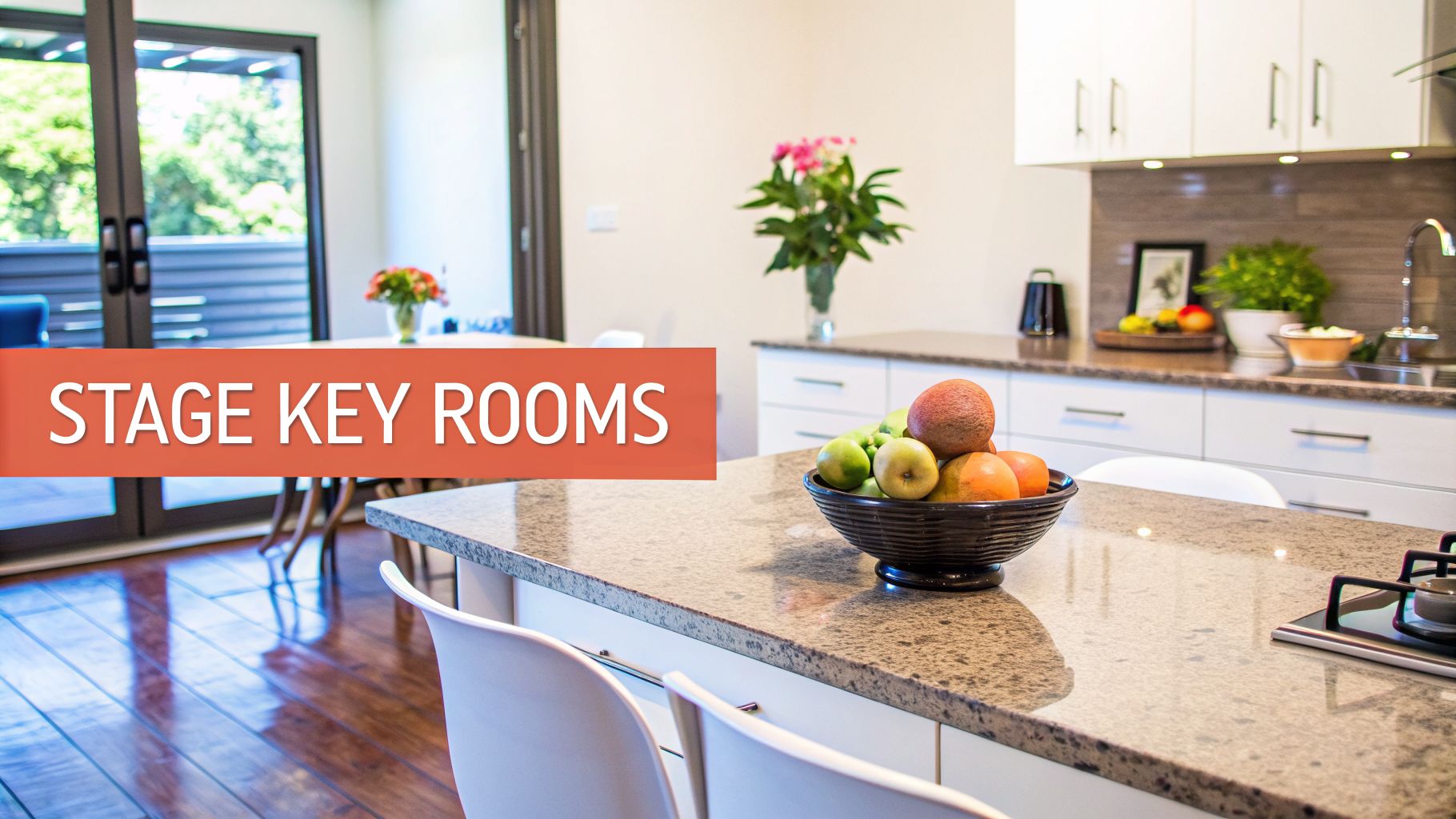
This targeted approach, popularized by staging pioneers and HGTV shows, focuses on creating an emotional connection in the spaces that matter most. For example, a master bathroom can be elevated from purely functional to a spa-like retreat with coordinated neutral towels, a jar of bath salts, and spotless mirrors. Similarly, an organized laundry room with matching containers shows buyers that every part of the home is well-maintained.
Implementation Guide
- Focus the Kitchen: Deep clean all appliances inside and out, clear countertops of everything but a few intentional items like a coffee maker or a bowl of fresh fruit, and remove all magnets from the refrigerator. Organize the pantry to showcase its storage capacity.
- Create a Serene Master Bedroom: Make the bed with quality neutral bedding and four to six pillows for a plush, hotel-like feel. Add layered lighting with bedside lamps and include a small seating area, such as a bench at the foot of the bed.
- Refresh Bathrooms and Laundry: Invest in new, matching towel sets for a cohesive look. Update light fixtures or install warmer bulbs to create a soft, inviting glow. Use coordinated baskets or containers to organize supplies, reinforcing a sense of order. For more visual inspiration, review compelling house staging before and after examples to see the dramatic effect.
6. Create Strategic Focal Points and Architectural Emphasis
Directing a buyer's eye to a room's best features is a powerful home staging tip for sellers. By emphasizing attractive architectural elements like fireplaces, built-in shelving, or large windows, you create a visual hierarchy that highlights the property's strengths. In spaces lacking a natural standout feature, you can create one using art, furniture arrangement, and strategic lighting to give the room purpose and appeal.
This technique guides the buyer's experience and can make a room feel more intentional and well-designed. For example, arranging seating to face a beautifully staged mantel turns a simple fireplace into a cozy, inviting centerpiece. In a bedroom without architectural interest, hanging a substantial piece of artwork above the bed immediately establishes an anchor point, making the room feel more cohesive and memorable in photos.
Implementation Guide
- Identify the Hero Feature: In each room, determine the single best feature, whether it's a window with a view, a fireplace, or built-in bookshelves. Orient your staging around this element.
- Arrange Furniture Strategically: Position your main furniture pieces to naturally draw attention toward the focal point. For instance, have the sofa and chairs face the fireplace or the primary window.
- Use Mirrors to Amplify: Place a large mirror opposite a window or an attractive feature like a chandelier. This not only creates a secondary focal point but also reflects light, making the space feel larger and brighter.
- Style Built-ins and Mantels: Use the 'rule of three' to group decorative objects on shelves and mantels. Combine items of varying heights and textures, but keep the styling minimal to avoid a cluttered look.
Agent Insight: In rooms that feel bland or boxy, create an artificial focal point to add character. A large, impactful piece of abstract art or a stylish accent chair paired with a reading lamp can serve this purpose effectively. This draws the eye, adds a pop of color, and gives an otherwise plain room a sense of curated design.
7. Deploy Strategic Use of Mirrors and Reflective Surfaces
Mirrors are a home stager's secret weapon for manipulating perceptions of space and light. By strategically placing mirrors and other reflective surfaces, you can make rooms feel significantly larger, brighter, and more open. This technique is especially effective in smaller rooms, narrow hallways, or basements where natural light is limited. The goal is to multiply light sources and create an illusion of depth, adding a layer of visual interest that captivates buyers.
This tactic goes beyond just hanging a mirror on a wall. For example, placing a four to six-foot floor mirror opposite a living room window will not only reflect the natural light but also bring the outdoor scenery inside, expanding the room's visual boundaries. Similarly, a large decorative mirror hung above a dresser in a master bedroom can amplify both natural and artificial light, making the space feel more inviting and serene.
Implementation Guide
- Position for Reflection: Place mirrors where they can reflect light sources, attractive views, or key architectural details. Avoid positioning them opposite cluttered areas, closets, or blank walls, as this will only amplify emptiness or disorder.
- Go Big for Impact: Small mirrors have minimal effect. Opt for oversized mirrors, at least three to four feet in height or width, to make a substantial visual statement and maximize light reflection. A tall, leaning mirror in an entryway can also create the illusion of higher ceilings.
- Choose Complementary Frames: The mirror's frame should align with the home's neutral, staged aesthetic. Simple wood, metallic, or minimalist black frames are versatile choices that complement most decor styles without distracting buyers.
- Maintain a Spotless Surface: Ensure every mirror is perfectly clean and free of smudges or dust just before a showing. A dirty mirror can detract from the intended effect and suggest a lack of maintenance.
8. Style with Greenery, Plants, and Fresh Elements
Incorporating plants and fresh greenery is a powerful home staging tip for sellers that breathes life and vitality into a property. Strategic placement of foliage softens hard lines, adds a pop of natural color, and creates an inviting atmosphere. This signals to buyers that the home is well-cared-for and can significantly improve its perceived quality and appeal.

The impact comes from thoughtful arrangement. For instance, placing a large fiddle-leaf fig in an empty living room corner adds height and fills the space without adding bulk. A grouping of three potted plants with varying heights by the front door creates a welcoming entrance. In the kitchen, a few small pots of fresh herbs on a windowsill can make the space feel fresh and ready for cooking.
Implementation Guide
- Choose Low-Maintenance Plants: Opt for hardy plants that look great with minimal effort, such as snake plants, pothos, or monstera. This ensures they remain healthy throughout the listing period.
- Arrange in Odd Numbers: For visual balance, group plants in clusters of three or five. This technique creates a more natural and appealing composition than symmetrical pairings.
- Use Neutral Pots: Select pots in neutral tones like terracotta, white, or gray. The goal is for the greenery to stand out, not the container.
- Frame Key Areas: Position plants to naturally frame doorways, windows, or architectural features. This draws the buyer's eye and highlights the home's best attributes.
9. Arrange Furniture for Open Flow and Spaciousness
How furniture is arranged dictates the flow and perceived size of a room. One of the most effective home staging tips for sellers is to arrange furniture to create clear sightlines, open pathways, and functional conversation areas. This strategic placement makes a home feel larger, more inviting, and professionally designed, directly addressing a common source of buyer dissatisfaction: layouts that feel cramped or illogical.
A simple adjustment can dramatically alter a room's appeal. For example, instead of pushing a sofa against a wall, floating it two or three feet away and angling accent chairs inward creates an intimate conversation group. This simple change opens up the room's perimeter, making it feel more expansive. Similarly, removing an oversized ottoman or extra end tables can clear a direct pathway from the entryway to a main living space, improving the home's overall circulation.
Implementation Guide
- Create "Floating" Arrangements: Pull furniture away from the walls. This creates a sense of airiness and depth. A sofa with a console table behind it can define a living area in an open-concept space without blocking the view.
- Establish Clear Pathways: Ensure there is at least two to three feet of open space around major furniture pieces. Buyers should be able to walk from room to room without having to sidestep furniture. All doorways and archways must be completely unobstructed.
- Define Zones and Conversation Groups: In larger rooms, use furniture to create distinct zones. A small seating area with two chairs and a small table can form a reading nook, while a larger sofa-and-chair grouping can anchor the main living space.
Agent Insight: Before committing to a physical layout, use a room planning app to create a digital floor plan. Drag-and-drop furniture to test different arrangements for optimal flow and spacing. This allows you to find the best configuration without the heavy lifting and share the plan with sellers for approval.
10. Utilize Technology and Virtual Staging for Maximum Impact
AI-powered virtual staging and digital visualization offer a powerful, cost-effective alternative to traditional staging. This technology allows agents and sellers to preview design changes instantly without any physical work, making it perfect for testing different layouts, reducing staging costs, and creating compelling digital marketing materials. It's a key strategy among modern home staging tips for sellers.
This approach enables remarkable flexibility. For example, an agent can use AI to instantly test five different furniture arrangements in a living room to see which one performs best online. A seller who is hesitant to paint can be shown a virtual rendering of their kitchen with neutral colors, convincing them of the ROI. Marketing teams can even generate 20+ design variations of the same space for targeted social media campaigns.
Implementation Guide
- Combine Physical and Virtual: For maximum effect, physically stage high-impact areas like the living room and kitchen. Use virtual staging for secondary bedrooms, vacant basements, or outdoor areas to save on budget.
- Create Before-and-Afters: Show potential buyers the true potential of a space. Present an image of the vacant room alongside a virtually staged version in your listing photos and marketing materials.
- Test Multiple Designs: Don't settle for one look. Generate multiple design options to appeal to different buyer demographics, such as a modern minimalist setup versus a cozy, traditional one. This A/B testing can reveal what resonates most with your target audience.
Agent Insight: Use virtual staging to justify staging investments to clients. A complete virtual staging guide can provide data-backed evidence of its effectiveness, helping sellers understand how a small digital investment can lead to a faster sale at a higher price point.
10-Point Home Staging Comparison
| Strategy | Implementation Complexity 🔄 | Resource Requirements ⚡ | Expected Outcomes ⭐📊 | Ideal Use Cases 💡 | Key Advantages ⭐ |
|---|---|---|---|---|---|
| Declutter and Depersonalize Spaces | Low–Moderate — quick actions, ongoing upkeep | Low — boxes, temporary storage, minimal labor | ⭐ Improves perceived size and cleanliness; faster offers | Pre-showing prep; quick wins before photos/showings | Fast, low-cost impact; digital previews possible |
| Enhance Curb Appeal and Exterior First Impressions | Moderate — seasonal and surface work | Medium — painting, landscaping, lighting | ⭐📊 Raises perceived value; better listing photos; ~$1–3 ROI | Homes with strong street presence; initial impressions matter | Strong emotional pull; high photo impact |
| Optimize Lighting Throughout the Home | Low–Moderate — bulbs, fixtures, cleaning | Low — bulbs, lamps, minor fixtures | ⭐ Improves photos, perceived space and warmth | Dark homes; improve photography and evening showings | Low-cost, immediate visual improvement |
| Neutralize Color Palettes and Create Cohesion | Moderate–High — painting and coordination | Medium — paint, time, possible labor | ⭐ Broadens buyer appeal; modernizes and unifies flow | Dated palettes or inconsistent transitions | Creates neutral canvas; improves photo consistency |
| Stage Key Rooms: Kitchen, Master Bedroom, Bathrooms and Laundry | Moderate–High — deep cleaning, staging rentals | Medium–High — cleaning, rentals, accessories | ⭐📊 High ROI; reduces buyer hesitation (kitchen ROI notable) | High-impact listings; homes judged on core rooms | Disproportionate influence on offers and perception |
| Create Strategic Focal Points and Architectural Emphasis | Moderate — design knowledge and styling | Low–Medium — art, lighting, furniture tweaks | ⭐ Highlights strengths; improves visual flow and photos | Homes with architectural features or bland rooms | Directs attention to positives; adds sophistication |
| Deploy Strategic Use of Mirrors and Reflective Surfaces | Low–Moderate — placement and installation | Low–Medium — mirrors, mounting hardware | ⭐📊 Makes spaces feel ~20–30% larger; amplifies light | Small rooms, basements, low-light areas | Cost-effective way to enlarge and brighten spaces |
| Style with Greenery, Plants, and Fresh Elements | Low — placement and routine care | Low — plants, pots, maintenance | ⭐ Adds life and perceived care; subtle color boost | Neutral interiors, entryways, kitchens | Low cost, high visual warmth; signals upkeep |
| Arrange Furniture for Open Flow and Spaciousness | Moderate — layout planning and removal | Medium — labor, possible rentals | ⭐ Improves traffic flow, perceived size, tour pacing | Cluttered or poorly arranged homes; open-concept spaces | Makes rooms feel professionally designed; highlights dimensions |
| Utilize Technology and Virtual Staging for Maximum Impact | Low–Moderate — depends on platform skill | Low physical cost — requires quality photos/video + software | ⭐📊 Unlimited design variations; faster decisions; strong digital marketing | Vacant homes, remote sellers, A/B testing and social content | Scalable, cost-effective, instant visualizations and iterations |
Staging as Your Unfair Advantage
Navigating the complexities of home staging can feel overwhelming, but as this guide has demonstrated, it's a methodical process that pays significant dividends. The collection of home staging tips for sellers we’ve explored is more than a simple checklist; it's a strategic framework for maximizing a property's market value. By moving beyond basic tidying and embracing a comprehensive approach, you position yourself as a true marketing advisor to your clients, not just a sales agent.
The core principle is simple: every adjustment, from decluttering and depersonalizing to enhancing curb appeal, is about helping buyers emotionally connect with a space. You are crafting a compelling story where they are the main character. When you optimize the flow of a room with smart furniture placement, bounce light around with strategically placed mirrors, and neutralize colors to create a calm, cohesive backdrop, you are removing distractions and highlighting potential. This allows buyers to see the house not just as it is, but as it could be for them.
Your Actionable Staging Playbook
To put these concepts into practice, consider this your immediate action plan for every new listing:
- Conduct a Staging Audit: Walk through the property with this list in mind. Identify the top three priorities that will deliver the biggest impact for the lowest cost and effort. Is it a deep declutter, a weekend paint job, or a serious curb appeal refresh?
- Focus on Key Impact Zones: Concentrate your initial efforts on the areas that carry the most weight in a buyer's decision: the entryway, the kitchen, the primary bedroom and bathroom, and the main living area. A flawless kitchen can often make up for a less-than-perfect spare bedroom.
- Integrate Digital Solutions Early: Determine where technology can save time and money. Instead of physically removing a client's bulky heirloom furniture for a single photoshoot, use a service for digital decluttering. For vacant or awkwardly furnished rooms, AI-powered virtual staging offers a fast, affordable, and highly effective alternative to expensive rental furniture.
Mastering these home staging tips for sellers is your key to creating a distinct competitive advantage. It demonstrates to clients that you are committed to securing the best possible outcome for them, justifying your commission and building a reputation for excellence. Each successfully staged and sold home becomes a powerful case study, fueling referrals and solidifying your status as a top-performing agent in your market. The goal is not just to sell a house, but to orchestrate a sale that is faster, more profitable, and less stressful for everyone involved.
Ready to apply these staging strategies with speed and precision? Bounti Labs offers AI-powered virtual staging and item removal, allowing you to showcase every property at its absolute best in your MLS photos and marketing materials. Transform your listings in hours, not weeks, by visiting Bounti Labs to see how it works.