If there's one room that can make or break a sale, it's the living room. Forget the curb appeal for a second. The living room is your property's digital handshake, the first impression that determines whether a buyer keeps scrolling or clicks to see more.
We're not just talking about making a space look nice. We're talking about crafting an experience that connects with buyers on an emotional level, letting them instantly picture their life unfolding within those walls.
Why the Living Room Is Your Strongest Sales Asset
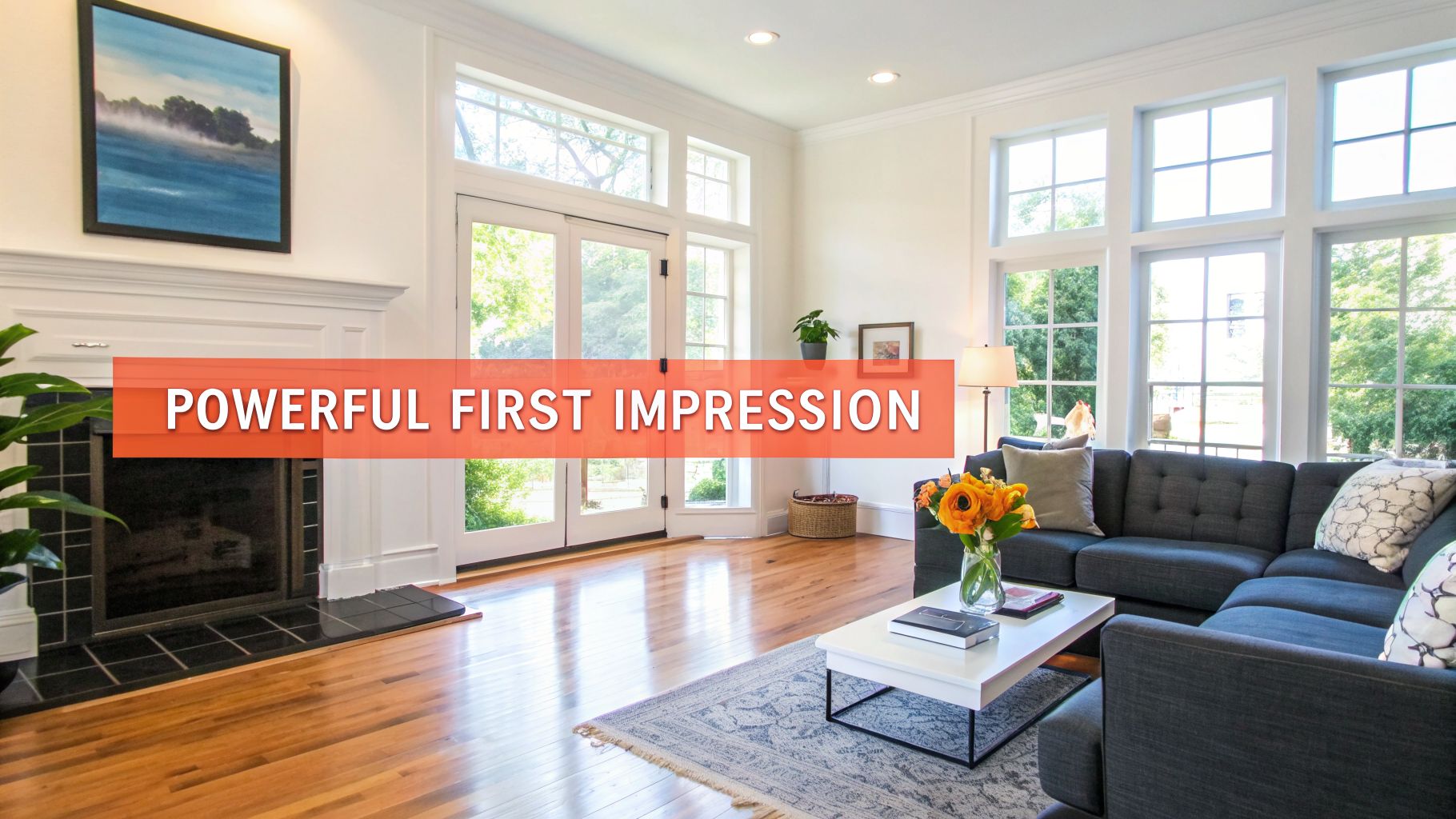
Buyers make snap judgments online. An empty, cluttered, or awkwardly furnished living room is a scroll-stopper—and not in a good way. It sends a message of confusion, making a buyer question the home's potential before they've even seen the second photo. A beautifully staged living room, on the other hand, pulls them in.
This isn’t just a hunch; it’s a core sales strategy backed by hard numbers. Well-staged homes consistently sell faster, with some data showing they move up to 73% quicker than their non-staged competition. For your sellers, that means fewer days on market, lower carrying costs, and a much cleaner path to the closing table.
The Psychology of "I Could Live Here"
Staging isn't about decorating. It's about selling a lifestyle. Buyers aren't just looking for a certain number of bedrooms and baths; they're looking for a feeling. Staging helps you sell that feeling.
Here's how a perfectly presented living room works its magic on a buyer's brain:
- It Solves the Space Puzzle: An empty room often feels smaller and more awkward than it really is. Staging shows off the scale, proves a king-sized sofa will fit, and gives the room a clear purpose.
- It Builds an Emotional Bridge: When a buyer can immediately visualize themselves kicking back on the couch or hosting game night, they start to form an attachment. That connection is what turns a "house" into a "home" in their mind.
- It Puts a Spotlight on Features: The right furniture arrangement can guide the eye straight to that gorgeous fireplace, the soaring ceilings, or the stunning view from the window—assets that might otherwise get lost.
The real goal is to make the space feel both aspirational and completely achievable. You want a buyer to walk through the door and think, "My life would be better here." That feeling is what drives higher offers.
How It Fuels Your Listing's Performance
Long before the first open house, your staging is already working for you. In today's market, your online listing is your first showing.
Those stunning photos of a staged living room are your best marketing weapon. They stop the scroll on Zillow, boost click-throughs on Redfin, and get your phone ringing. More online engagement always translates into more tour requests.
Think of it as a powerful chain reaction:
- Scroll-stopping photos grab a buyer's attention.
- Higher engagement means more people see the full listing.
- Compelling visuals make buyers feel they have to see it in person.
- An unforgettable showing leads to faster, more competitive offers.
Staging isn't just an expense to be tacked on at the end. It's one of the most critical marketing investments you can make. By mastering this one space, you set the tone for the entire sale and give your listing the best possible chance to shine.
Building the Foundation for a Flawless Stage
Before you start picking out furniture or debating color palettes, let’s talk about the real first step. The prep work is what separates a "lived-in" room from a "must-have" home, and it’s where the magic of staging truly begins.
This isn't just about tidying up. It's a strategic reset. The goal is to create a clean, inviting canvas that lets buyers see themselves—and their future—in the space.
First things first: a deep, professional-level clean. I’m not talking about a quick pass with the vacuum. Every surface needs to sparkle. Think baseboards, window sills, light fixtures, and ceiling fan blades.
If a potential buyer spots smudges on the windows or dust bunnies in the corner, their mind immediately starts to question the home's overall maintenance. A spotless room builds subconscious trust and lets them focus on the great features, not the small flaws.
Strategic Decluttering and Depersonalization
With the room sparkling, it's time to declutter. This can be the toughest part for sellers because it requires detaching emotionally from the home. You’re not just removing "stuff"; you're removing your personal story so a new one can begin.
A staged living room has to feel like a beautiful, blank slate.
That means packing away anything that screams "you":
- Family photos: Buyers need to imagine their own family on the mantel, not yours.
- Collections and memorabilia: That impressive snow globe collection or wall of travel souvenirs, while lovely, can be a major distraction.
- Piles of books and magazines: A few well-placed art books are great. Shelves overflowing with paperbacks just look chaotic.
- Personal paperwork: Mail, bills, and calendars make a space feel transient and disorganized.
This isn't about hiding things in a closet. It’s about creating an undeniable feeling of space. A room with intentionally clear surfaces and half-empty bookshelves feels bigger and more open. The difference is incredible, as you can see in these house staging before and after examples.
A good rule of thumb is to remove at least 50% of the items from the room. That includes small furniture, decorative objects, and all personal effects. It might feel a little bare to you, but to a buyer, it feels spacious and full of potential.
Making High-Impact Cosmetic Repairs
Once the clutter is gone, every little scuff and imperfection suddenly becomes obvious. Now’s the time to tackle the small cosmetic fixes that deliver a huge visual return. A few hours of work can make the room feel brand new.
Do a quick scan of the room for these common offenders:
- Patch and paint any nail holes left behind by artwork.
- Touch up scuff marks on the walls and baseboards.
- Make sure every light bulb works and that they all have the same warm, consistent color temperature.
- Get rid of any lingering odors with a deep carpet cleaning, not by masking them with air fresheners.
These small updates send a powerful message: this home has been well-cared-for. Getting this foundation right is a critical part of the process, and you can learn more about the fundamentals with this guide on how to design a living room. This groundwork is what makes the final result—whether staged physically or virtually—so compelling.
Mastering Furniture Layout to Create Effortless Flow
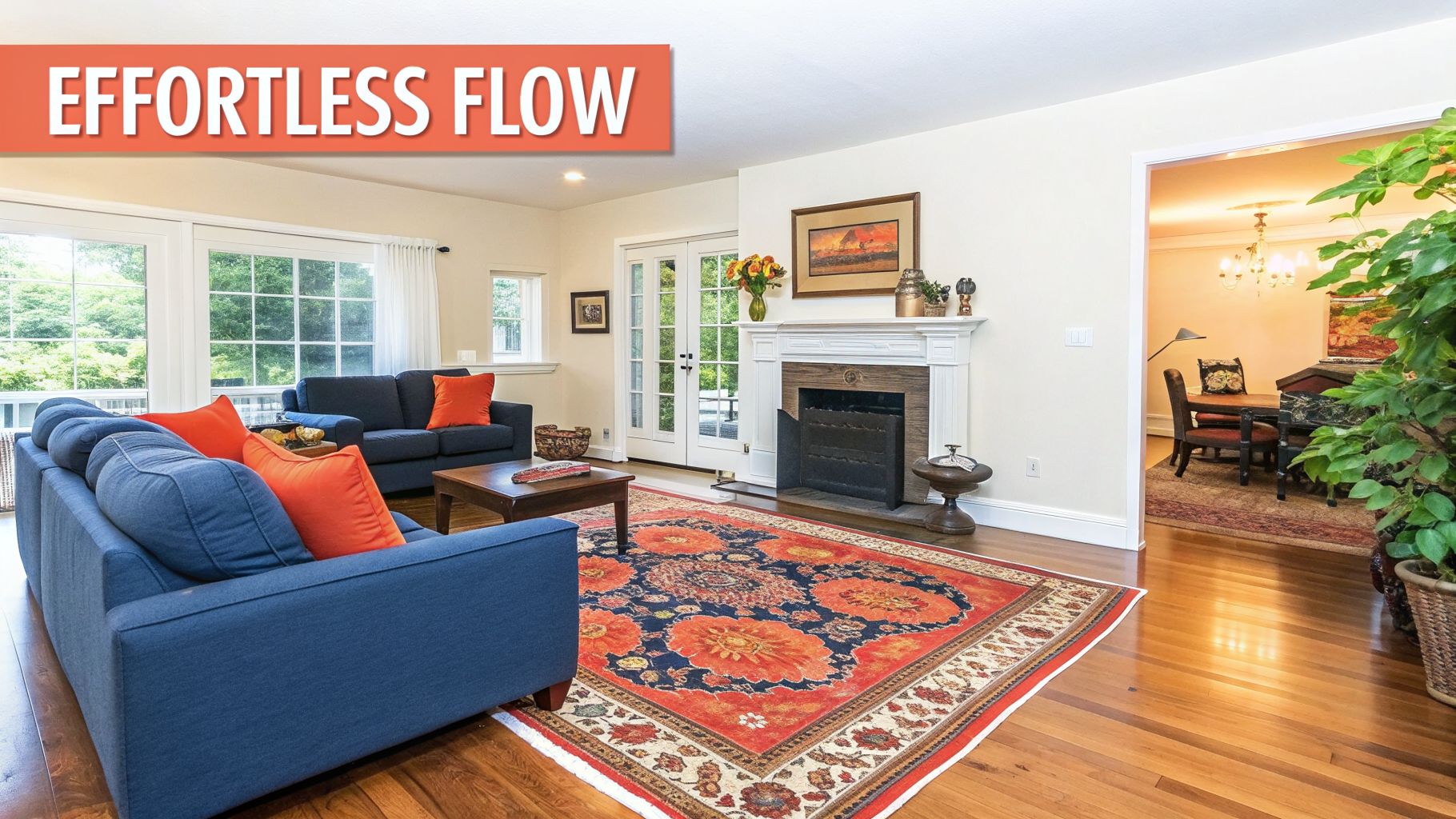
Alright, the room is clean and clear. Now for the fun part. This is where we stop thinking about cleaning and start thinking like designers, transforming an empty or awkward room into a compelling staged living room. The secret isn't just filling the space—it's arranging furniture to tell a story of easy, sophisticated living.
Staging often requires you to forget how someone actually lives in a home. Your goal isn't day-to-day practicality. It's to maximize the feeling of space and create an intuitive flow that pulls buyers from one feature to the next.
The first rule we teach is simple: pull furniture off the walls. Shoving a sofa against the wall is an amateur move that screams "I'm trying to make the room look bigger," but it has the opposite effect. It makes a room feel static and small. By "floating" your furniture, you create breathing room and inviting conversational areas.
Create Conversational Zones and Clear Pathways
A great staged living room feels welcoming the second you step inside. You can nail this by creating a primary conversational area—think a sofa and two chairs, or a stylish sectional, all oriented to encourage interaction.
The pieces should be close enough for people to talk without shouting, but with enough space for comfortable movement. A good rule of thumb is to place the coffee table about 14-18 inches from the sofa. It’s close enough to be useful, but not a knee-capper.
Just as crucial are the pathways. You need to create invisible lanes for foot traffic that are at least 30-36 inches wide. Anything less creates an "obstacle course" effect that makes a room feel cramped and stressful. I always walk through the space from every doorway to make sure the path to the next room, a window, or an exit is completely clear.
Think of your furniture arrangement as a gentle guide. It should naturally lead a buyer's eyes—and their feet—to the home's best features, like a beautiful fireplace, a set of French doors, or an expansive window with a view.
Over the years, we've seen the same layout mistakes trip up countless listings. Pushing furniture against walls or blocking natural light are common culprits that can make a great space feel small and unwelcoming.
Here’s a quick look at some frequent errors and how to fix them professionally.
| Common Staging Mistake | The Impact on Buyers | Professional Solution |
|---|---|---|
| Pushing all furniture against the walls. | Makes the room feel smaller and static. Creates a "dance hall" void in the middle. | "Float" the main seating group to create an intimate conversational zone away from the walls. |
| Using a rug that's too small. | Makes the furniture look disconnected and the room feel undersized and choppy. | Choose a rug large enough for at least the front legs of all main furniture pieces to rest on it. |
| Blocking natural traffic paths. | Creates an "obstacle course" that makes the room feel cramped and poorly designed. | Ensure pathways are at least 30-36 inches wide. Walk the room from all entry points to test the flow. |
| Ignoring or obscuring the focal point. | Confuses the buyer's eye and diminishes the impact of the room's best architectural feature. | Arrange furniture to honor the focal point (e.g., face the fireplace) instead of competing with it. |
Getting these basic principles right is more than half the battle. When buyers can move through a space without friction, they can start to picture themselves living there.
Use Furniture to Showcase a Focal Point
Every great room has a star of the show. It could be a fireplace, a cool built-in, a massive window, or a piece of statement art. Your furniture layout must anoint this feature as the focal point, not fight it for attention.
Got a stunning fireplace?
- Arrange your main seating group to face it. It's a no-brainer.
- Don't stick a big, tall armoire on an adjacent wall. It creates visual competition.
- Keep the mantel decor simple. Let the fireplace do the talking.
If the money shot is a big window with a view, don't put the back of a sofa to it. Instead, orient the furniture to embrace it. Maybe two comfy chairs flank the window, creating a perfect little spot to read or enjoy a morning coffee. You’re not just selling rooms; you’re selling the moments buyers can have in them.
Anchor the Room with Rugs and Get the Scale Right
An area rug is probably the most powerful tool in your staging toolkit. It’s the visual anchor that pulls a floating furniture arrangement together and defines the space. The most common mistake we see? A tiny rug that looks like a postage stamp in the middle of the room. It makes everything feel cheap and disjointed.
As a rule, the front legs of all your main furniture pieces should be on the rug. This ties the whole grouping together. In a big, luxe space, getting all four legs of every piece on the rug creates an even grander feel.
Finally, let's talk about scale. A huge, overstuffed sectional will absolutely devour a small living room. On the flip side, dainty furniture looks comically lost in a large, open-concept area. Choose pieces that are proportional to the room itself and to each other. The goal is harmony and balance—a space that just feels right.
Styling With Color, Light, and Accessories
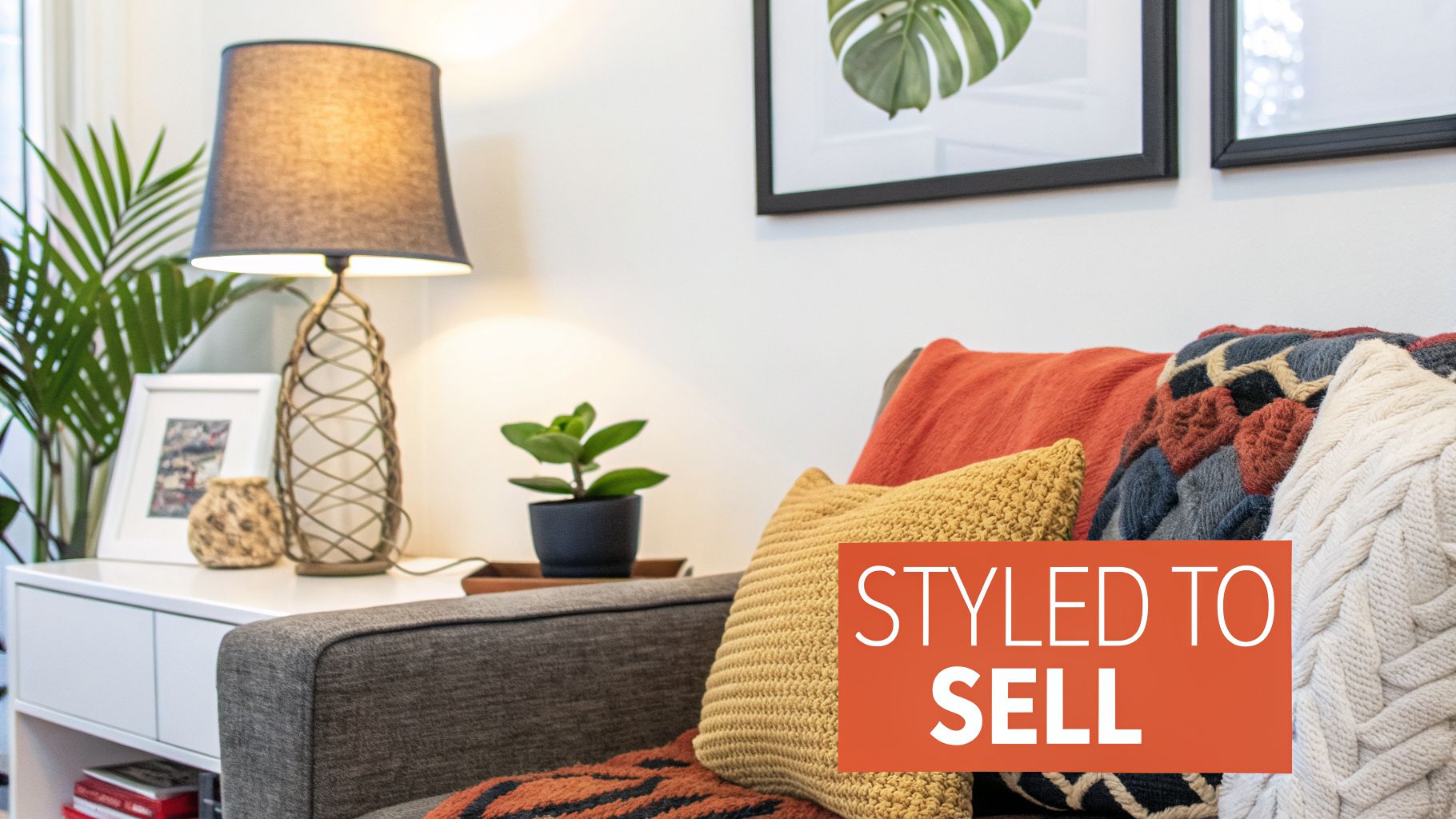
So, the furniture is perfectly placed and the room has flow. Now for the fun part. This is where we add the layers that transform a well-arranged room into a space buyers fall in love with. It's the magic of color, light, and just the right accessories.
The goal isn't to create a sterile showroom. It’s to hint at a lifestyle. This final polish is what makes your staged living room memorable and gets buyers to see themselves living there.
The Psychology of a Neutral Palette
When you're staging, your color choices need to speak to everyone. A homeowner’s favorite bold accent wall is a stager's red flag. Your job is to create a serene backdrop that lets buyers mentally move their own stuff in. That’s the power of a neutral palette.
Think warm grays, soft beiges, and creamy whites. These shades are calming, make spaces feel larger, and don't force a style on anyone. But neutral doesn't mean boring. Far from it.
The secret is injecting personality through strategic accent colors. A "pop of color" is a classic for a reason—it works. Use on-trend but timeless shades like deep blues, muted greens, or even a sophisticated blush in your styling pieces.
- Throw Pillows: A few good pillows can introduce color and, just as importantly, texture. Mix patterns and solids in the same color family to keep it looking cohesive.
- Art: One large, compelling piece of abstract art can tie the whole room together without being too personal or distracting.
- Throws: A casually draped throw blanket adds a layer of comfort and another hit of your accent color.
This approach keeps the room feeling bright and airy while adding just enough visual interest to feel complete and professionally styled.
Layering Light for Warmth and Dimension
Lighting is probably the most underrated part of staging, but it has a massive impact on how a room feels—both in person and in photos. A single, harsh overhead light makes a room feel cold and casts unflattering shadows. Don't do it.
Pros layer lighting to create warmth, depth, and ambiance. You need to hit all three types of lighting for a perfectly staged living room:
- Ambient Lighting: This is your room’s main light source, usually a ceiling fixture or recessed lights. Make sure the bulbs are a warm white (around 2700K-3000K) for that inviting glow.
- Task Lighting: Think floor lamps next to a reading chair or table lamps on end tables. They add function and create cozy, intimate little corners within the bigger room.
- Accent Lighting: Use this to highlight the good stuff, like a spotlight on a great piece of art or uplighting for a tall plant. It adds a touch of drama and sophistication.
By combining these three, you create a rich, layered space that feels instantly welcoming. And always, always turn all the lights on for photos and showings. It makes a world of difference.
The ultimate goal is to make every corner of the room feel special. By creating small, well-lit vignettes, you encourage buyers' eyes to travel around the room, taking in all the details and appreciating the full scope of the space.
The Stager's Toolkit of Accessories
Accessories bring a staged living room to life. But the cardinal rule is less is more. You are not decorating. You are strategically placing objects that add texture, life, and a sense of scale. A few high-impact items are always better than a bunch of clutter.
Here’s my go-to list for accessories that always work:
- Greenery: A fiddle-leaf fig in a corner or a succulent on the coffee table brings life into the room. High-quality faux plants are your best friend here—no watering required.
- Books: A small, curated stack of hardcover design or art books looks smart and sophisticated on a coffee table or shelf.
- Trays: Use a tray on an ottoman or coffee table to group smaller items. It’s an instant organizer that creates a tidy, intentional focal point.
- Varied Textures: Mix your materials. Think a woven basket, a smooth ceramic vase, and a cool metal object. This creates visual interest and makes the room feel more tactile and real.
When you style with this kind of intention, you're building an atmosphere. It’s these final details that get buyers to connect emotionally and turn a casual looker into someone who makes an offer.
Gaining a Digital Edge with Virtual Staging
We all know physical staging works. It's also expensive, a logistical nightmare, and a huge time suck. But what if you could get the same "wow" factor without the headaches, for a fraction of the cost?
This is where virtual staging comes in. Modern AI tools go way beyond simple photo tweaks. They can take a photo of an empty, dated, or even cluttered living room and digitally create a gorgeous, move-in-ready space. The process is shockingly simple, often needing just a few photos from your phone.
Instead of renting truckloads of furniture and blocking out days for setup, you can generate a picture-perfect staged living room in minutes. It directly solves the biggest pains of traditional staging and, frankly, has become a non-negotiable for the modern agent.
From Vacant to Vibrant in Minutes
You know the feeling. You walk into a vacant listing with great bones, but the empty space just feels cold. Buyers can't picture their lives there. Worse, the rooms often look smaller and less appealing in photos.
This is where a tool like Bounti changes the game. You can take that empty room and instantly add a stylish sectional, a modern coffee table, a cozy area rug, and tasteful art that fits the home's character. A few clicks turn a liability into a hero shot.
The AI takes a simple photo and populates it with virtual furnishings, creating an entirely new look that shows off the home's true potential.
The transformation is immediate. That questionable photo of an empty room becomes your single best marketing asset. In a fast-moving market, that speed and efficiency are everything.
Overcoming Traditional Staging Hurdles
Let's be honest about traditional staging. It's a massive investment, often running into the thousands for just a couple of key rooms. Virtual staging, on the other hand, delivers an incredible ROI by sidestepping the usual roadblocks.
The old way is plagued with problems:
- Sky-High Costs: Physical furniture rentals, delivery fees, and a stager's time add up. You're easily looking at $3,000 to $6,000+ for a standard project.
- Logistical Headaches: Coordinating movers, stagers, and photographers is a full-time job that can delay your launch by days or even weeks.
- Zero Flexibility: Once the furniture is in, you're stuck with that one look. If a buyer isn't into mid-century modern, too bad.
Virtual staging nukes these issues. For a low, predictable cost, you can stage an entire house digitally. No movers, no rentals, just fast, high-quality results.
For agents ready to go deeper, our complete virtual staging guide offers more advanced strategies. This is about having the power to present every single listing in its best light, no matter the budget or timeline.
Catering to Diverse Buyer Tastes
Here’s where virtual staging gets really powerful. You can showcase multiple design styles for the same room. The buyer for a downtown loft wants to see an industrial-chic vibe, while the family looking at a suburban colonial is dreaming of modern farmhouse.
With physical staging, you get one shot. With virtual staging, you can have it all.
This gives you incredible marketing flexibility. You can:
- Create a Scandinavian look with light woods and clean, neutral textiles.
- Render a Mid-Century Modern version with iconic furniture shapes and warm woods.
- Produce a more Traditional style with classic silhouettes for a timeless feel.
Use these different versions on the MLS, in social media campaigns, or in a lookbook at the open house. You're no longer marketing to one ideal buyer; you're showing multiple buyers how the home fits their specific lifestyle. For those who want to master the technical side, understanding the right software for architectural rendering is key to creating photorealistic results.
This multi-style approach is a massive competitive advantage that's practically impossible—and certainly not cost-effective—to do with physical furniture.
Your Living Room Staging Questions, Answered
Even the most seasoned agents have questions when it comes to staging a living room. Let's get straight to the answers for the most common ones we hear.
What's the Single Most Important Element in a Staged Living Room?
Flow. It's all about flow.
If buyers can’t immediately see how to walk through a room and where to sit down, you’ve lost them. An inviting furniture layout that establishes clear flow is the one thing that will make or break your staging. Forget the perfect throw pillows for a second—if the sofa blocks the main walkway, no amount of pretty decor can save the listing photo.
A great layout defines conversational areas and creates unobstructed paths. This is what helps buyers mentally place their own furniture in the space, making it feel bigger and more functional than it might actually be. Always, always prioritize flow first.
Can I Use Virtual Staging if the Room Is Full of Old Furniture?
Absolutely. In fact, this is one of the best use cases for AI-powered virtual staging. Instead of the headache and cost of hiring movers and paying for a storage unit, you can digitally remove the existing items from your photos.
Think of it as virtual decluttering. Once you have that clean slate, you can add stylish, modern, and perfectly scaled virtual furniture. You get to transform a seller’s dated or cluttered living room into your number one marketing asset without anyone lifting a finger. It's a game-changer for occupied homes.
How Do I Pick the Right Staging Style for a Property?
The right staging style does two things at once: it honors the home's architecture and speaks directly to your target buyer. A minimalist vibe might be perfect for a sleek downtown condo, while a "modern farmhouse" or "transitional" look will resonate more in a suburban family home.
Not sure what's in vogue? Go look at the model homes for new construction in your area. That’s your cheat sheet for what local buyers find most appealing right now.
Virtual staging makes this even easier. You can create a couple of different looks for the same room—one modern, one more traditional—and instantly double the number of buyers who can see themselves living there.
The National Association of Realtors reports that staged homes can fetch a serious premium, with some agents seeing returns of 5% to 23% over the asking price.
Virtual staging just makes that ROI even better by slashing the upfront cost while delivering maximum visual punch. Better visuals are also the key to making any post-production work shine. Check out our guide on the best AI photo editing software to see how great images become the foundation for all your marketing.
This simple workflow shows just how fast you can turn a basic video into a standout listing with the right tools.
It's a straight shot from capturing the space (Video), to enhancing it with AI (Transform), and getting it in front of buyers (Showcase).
How Much Decor Is Too Much?
It's a classic staging mistake: a room so over-accessorized it just looks cluttered. The goal is to be intentional, not to fill every surface. When in doubt, edit ruthlessly.
Here are a few rules of thumb I stick to:
- Surfaces: Your coffee table needs one curated grouping. A tray holding a book, a small plant, and a single decorative object is perfect. The rest of the surface should be empty space.
- Shelves: Never, ever fill your shelves completely. Leave at least 30% of the space empty. It creates a sense of breathing room. Group the items you do use in threes or fives of varying heights.
- Art: One large, compelling piece of art is almost always better than a gallery wall of small, personal pictures. It creates a powerful focal point without adding visual noise.
Remember, you're suggesting a lifestyle, not documenting a life. If you're on the fence about an item, take it away. You probably don't need it.
With Bounti, you can transform any space, instantly. All it takes is a single video walkthrough to get stunning marketing materials, including a virtually staged living room that will stop buyers in their tracks. Leave the cost and complexity of traditional staging behind and start creating beautiful listings today. Learn more at https://www.bounti.ai.