
Staging isn't just about making a house look nice. It's a core marketing strategy that primes a property for a faster sale and, more importantly, a higher offer price. You're not just selling four walls and a roof; you're selling a lifestyle.
The True Impact of Staging a Home in Today's Market
If you still think staging is about fluffing a few pillows and putting out fresh flowers, it’s time to catch up. In this market, professional staging is what separates listings that sell from listings that sit.
It all comes down to helping buyers see themselves in the space. An empty room feels cold and confusing—buyers can’t judge its size or imagine where their own furniture will fit. A cluttered home is just as bad, creating an instant mental roadblock that kills any emotional connection.
Staging isn't about decorating; it’s about marketing. The goal is to create an environment that buyers aspire to—one that feels both welcoming and valuable from the moment they see that first photo online.
The Numbers Don't Lie
The data is undeniable. Staged homes consistently outperform their unstaged competition, selling a staggering 73% faster, according to the Real Estate Staging Association (RESA). That’s a drop from an average of 90 days on market to just 24.
Think about what that speed means for your business. In Q3 2025, RESA clocked the average DOM for staged homes at a mere 19 days. By Q2, it was down to an incredible 9 days. In a fast-moving market, that kind of velocity frees up your inventory and accelerates your commissions.
This data is your best tool for convincing sellers. It reframes staging from a "nice-to-have" expense into a must-do investment with a proven ROI. For an even deeper dive, check out these smart home staging tips that get results.
Staging Impact At-a-Glance (2026 Market Data)
To make the case even clearer for you and your clients, we've boiled down the performance data into a simple comparison. The difference is stark.
These numbers tell a powerful story. Staging doesn't just make a property look better; it fundamentally changes its performance in the market, driving faster sales at higher prices.
Physical vs. Virtual Staging: A Modern Choice
As an agent today, you have two primary tools for staging a property: the traditional physical approach and the modern AI-powered virtual one.
- Traditional Staging: This involves renting and placing physical furniture in a home. It's incredibly powerful for in-person tours but comes with serious logistical hurdles and a high price tag.
- AI Virtual Staging: This uses technology to digitally add stylish furniture and decor to photos of empty or dated rooms. It’s a game-changer—fast, affordable, and perfect for grabbing attention online where 97% of buyers start their search.
Tools like Bounti are leveling the playing field, making high-end staging accessible for every single listing. With AI, you can declutter a messy room, furnish an empty one, and completely restyle a space in just a few minutes—all without booking a single moving truck.
See for yourself how powerful this can be in our collection of house staging before and after examples. It’s about giving every property the best possible first impression.
Preparing the Canvas for Staging Success

Here’s the thing: you can have the most beautiful staging in the world, but it will completely fall flat if the house underneath is cluttered and dirty. Before you move a single piece of furniture or even think about virtual restyling, you have to nail the prep work.
This is where you, the agent, guide your clients through the non-negotiables: Declutter, Deep Clean, and Depersonalize. Getting this foundation right is what allows the staging—and your listing photos—to truly shine and get buyers to emotionally connect with the property.
Just remember, this part can be tough for sellers. You're not just telling them to pack a few boxes; you're asking them to start letting go of their home. Frame the conversation with empathy, explaining that the goal is to help a new family see their own future in those rooms.
The Art of Decluttering for Maximum Impact
Clutter is the absolute enemy of a good sale. It eats up precious square footage and screams “not enough space” to any buyer who walks through the door. The goal here is simple: create a sense of calm and abundance. That starts by removing at least 50% of the stuff in every single room.
A great rule of thumb to give clients is the "closet half-empty" rule. Every closet, pantry, and cabinet should be no more than half full. When a buyer peeks inside and sees organized, empty space, their brain immediately thinks, "Wow, this home has more than enough storage for all my things."
This goes for surfaces, too. Kitchen counters need to be almost entirely clear—maybe leave out a high-end coffee maker or a bowl of fresh lemons. The same principle applies to bathroom vanities, bookshelves, and nightstands. Less is always more.
The Deep Clean Discerning Buyers Expect
With the clutter gone, it’s time for a top-to-bottom deep clean. And I don’t mean a quick weekend tidy-up. Today's buyers have an eagle eye for detail, and a sparkling home sends a powerful subconscious message that it's been well-maintained.
Give your sellers a checklist of the spots that everyone forgets but every buyer notices:
- Light Fixtures & Ceiling Fans: Cobwebs and dust up high are an instant turn-off.
- Baseboards & Crown Molding: Wiping these down makes the whole room feel brighter.
- Air Vents & Grilles: Clean vents suggest a healthy, well-kept HVAC system.
- Window Tracks & Sills: Grime here looks neglected and blocks natural light.
- Inside Appliances: A spotless oven and microwave show real attention to detail.
This level of clean is non-negotiable. If your sellers feel overwhelmed, recommending a professional cleaning service is one of the smartest investments they can make. It pays for itself in the first impression.
The goal of a deep clean is to make the home feel as new as possible. Buyers shouldn't see any evidence of the previous owners' daily life—only the home's potential.
Depersonalizing to Help Buyers Mentally Move In
This is often the hardest part for sellers, but it’s psychologically critical. When a buyer walks into a home filled with family photos, kids' drawings, and personal collections, they feel like an intruder. It puts up a wall and prevents them from ever imagining their own life there.
You have to be gentle but firm. It’s not about erasing their family's history; it’s about packaging the house as a product. The personal items need to be packed away so the property can transform from a private home into a desirable asset.
This means putting away:
- Family photos on walls, shelves, and desks
- Refrigerator magnets and children’s artwork
- Trophies, diplomas, and very personal awards
- Niche collections (think figurines, sports memorabilia, etc.)
By creating this neutral, clean, and spacious canvas, you give every staging element—whether it's physical furniture or a virtual staging tool—the best possible chance to connect with buyers and drive them to write an offer.
A Room-by-Room Guide to Physical Staging
Once the prep work is done, it's time for the fun part: the hands-on staging that brings a home to life. This is where you strategically place furniture, lighting, and decor to forge a real emotional connection with buyers. We're going to zero in on the rooms that get the most scrutiny: the entryway, living room, kitchen, and the primary bedroom.
Your job isn't to just fill up space. It's to tell a story—one about comfort, possibility, and a lifestyle that buyers want for themselves. From the moment they step through the door to their last look at the main suite, every single detail should work together to make them feel like they've already found their home.
Creating an Unforgettable First Impression
The entryway sets the expectation for the entire showing. If it’s dark, cramped, or cluttered, buyers get a bad feeling before they’ve even made it to the living room.
Your only mission here is to create an immediate sense of arrival and space.
- Slim Down the Furniture: A narrow console table is perfect if you have the room. Ditch anything bulky that blocks the natural flow of traffic.
- Add a Mirror: A well-placed mirror is a classic trick for a reason. It bounces light around and makes any small space feel instantly bigger.
- Light It Up: Make sure this area is bright. If there's no overhead fixture, a simple, stylish lamp on the console table does the trick.
- Keep Decor Minimal: A small tray for keys, a single vase with some fresh greenery, and a clean doormat are all you need to signal "welcome home."
This clean, simple approach makes the entry feel open and organized, guiding visitors right into the heart of the home. It’s a tiny space that has a huge impact on a buyer’s first impression.
Designing the Heart of the Home: The Living Room
The living room is where buyers mentally place their own lives—relaxing after work, entertaining friends, and making memories. The layout needs to scream "conversation and connection," not just point all the furniture at a TV.
Pull the sofa and chairs away from the walls. This simple move, called "floating" the furniture, creates clear pathways and makes the room feel larger and more thoughtfully designed. Then, anchor the main seating area with a properly sized area rug—the front legs of your sofa and main chairs should all be on it.
Today’s buyers are looking for light and airy. Lean into 2026 trends like nuanced neutrals—think warm greys, soft beiges, and muted greens—to create a backdrop that feels both sophisticated and calming.
The numbers don't lie. Data from 2025 shows that 85% of real estate agents agree that staged homes sell up to 73% faster than unstaged ones. With an average ROI of 2,334% on a typical staging investment, it’s a no-brainer. These are the compelling home staging statistics you should be sharing with every seller.
Staging a Kitchen for Maximum Appeal
We’ve all heard it: kitchens sell houses. Staging this space is less about adding furniture and more about showcasing its best features—cleanliness, functionality, and potential. Your top priority is to show off every square inch of counter space.
Clear off everything except one or two high-end appliances, like a sleek coffee maker. A bowl of fresh lemons or green apples adds a perfect pop of color, making the kitchen feel bright and ready for its new owner.
Think about these small but powerful touches:
- A cookbook on a stand, open to a page with a beautiful photo. It subtly plants the idea of future meals.
- A crisp, new tea towel hanging neatly from the oven handle.
- A small potted herb on the windowsill adds a touch of life and freshness.
The goal is to present a kitchen that feels like both a beautiful workspace and the social hub of the home. These details help buyers make a personal connection. And to make sure those details shine online, see how HDR photography for real estate can make your listing photos truly pop.
Crafting a Serene Primary Bedroom Retreat
The primary bedroom needs to feel like a private, luxurious escape. This isn't just a room for sleeping; it's a sanctuary. The bed is the star of the show, so your job is to make it look absolutely irresistible.
Layering is everything. Start with crisp, white or neutral bedding. Add a textured throw blanket across the foot of the bed and an assortment of decorative pillows in different sizes and shapes. This creates that plush, hotel-like vibe that screams comfort and relaxation.
Flank the bed with two matching nightstands and lamps to create a sense of symmetry and calm. If the room is tight on space, floating shelves can work just as well. For art, stick to impersonal abstract pieces that add class without being too personal. Biophilic design—incorporating natural elements like plants or wood tones—is also a huge win with buyers looking to create a peaceful haven.
Leveraging AI for Instant Virtual Staging
Physical staging creates that "wow" moment when buyers walk through the door, but let's be honest—it’s a headache. The costs, the scheduling, the sheer logistics of it all can be a huge drain on time and resources. This is exactly where AI is changing the game for agents, offering a faster, smarter alternative.
Instead of waiting weeks to coordinate furniture rentals and movers, you can now generate incredible marketing assets in minutes. That’s a serious competitive edge. Imagine walking through a cluttered, outdated, or even totally vacant property and being able to show sellers its full potential almost instantly. That’s the new reality of staging a home.
The Modern Agent's AI Workflow
The whole process is surprisingly simple. Tools like Bounti are built for agents on the go. You just take a quick video with your phone, and the platform does the heavy lifting, turning that raw footage into a full suite of marketing materials.
We’ve all been there: the seller’s tenant is still in the house, and their stuff is everywhere. In the past, that meant a costly clean-out and a delay in getting photos taken. Now, you can use AI to:
- Instantly declutter the space, making personal items and unwanted furniture vanish.
- Virtually furnish an empty room with stylish, on-trend furniture that grabs buyer attention.
- Completely restyle a dated kitchen or bathroom to showcase what’s possible.
This infographic breaks down the core idea for staging the most important rooms in a house.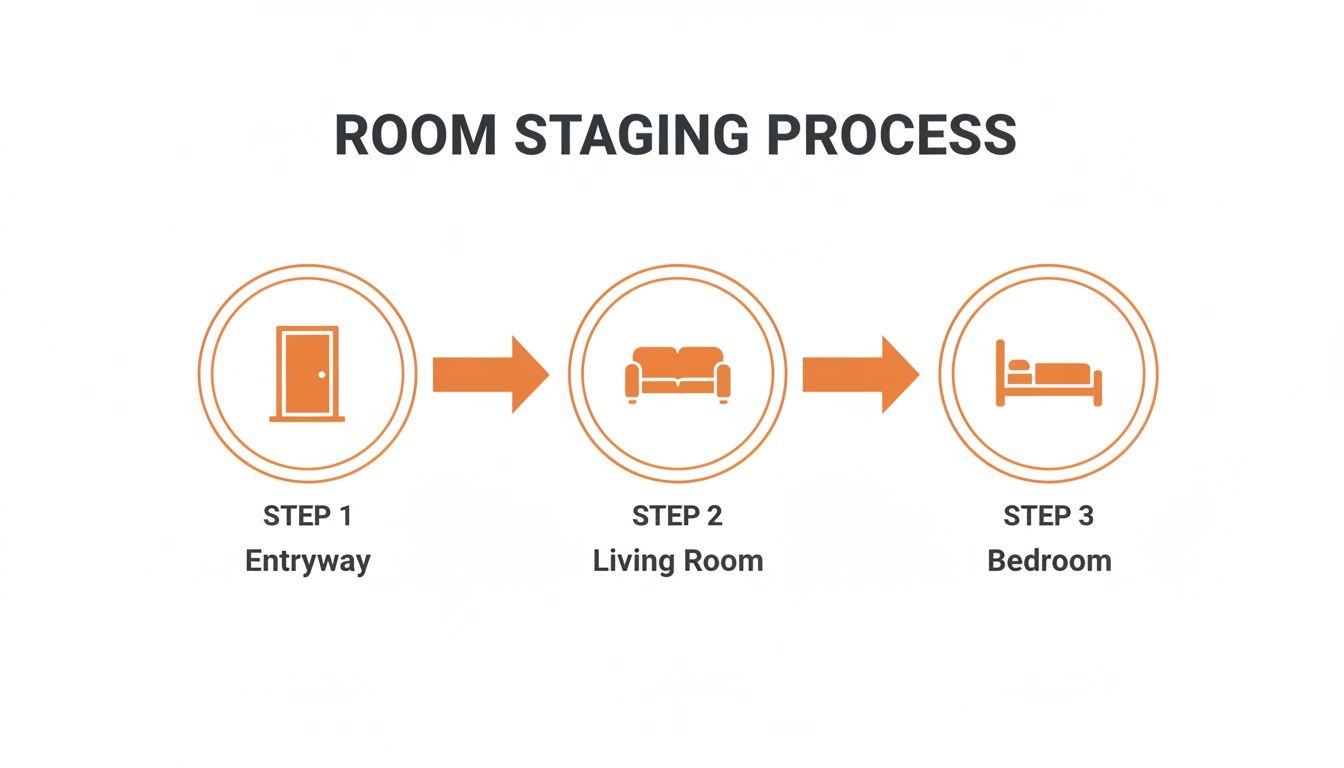
AI can do all of this digitally in a fraction of the time, saving you and your clients a ton of money and stress. It means you can start marketing a property’s potential from day one, no matter what it looks like in person.
From Raw Video to MLS-Ready Photos
Let's walk through a common scenario. You’re at a vacant new construction listing. The rooms are clean but feel cold and empty, making it hard for most buyers to picture themselves living there.
You just pull out your phone and take a quick video walkthrough. Upload it to an AI tool, and the system automatically extracts high-resolution photos. From there, you can apply different design styles with a click—think Modern Farmhouse, Mid-Century Modern, or Scandinavian—to instantly fill those empty rooms with beautiful, aspirational decor.
What once took a professional stager, a moving crew, and several days can now be done from your laptop in under an hour. The result? A complete set of polished, MLS-ready photos that create an immediate emotional connection with buyers.
For a deeper look at the nuts and bolts, our complete virtual staging guide breaks down the entire process.
Case Study Before and After with AI
The proof is always in the visuals. This example from Bounti shows just how powerful this transformation can be. The "before" shot is a perfectly fine but uninspiring empty living room.
In the "after" version, the AI has added a cozy sofa, coffee table, rug, art, and lighting. It’s no longer just four walls; it’s a home. The key is that the AI doesn't just drop in random furniture—it understands scale, lighting, and style to create a scene that looks and feels completely real.
Of course, image quality is everything. To make sure your final images look sharp and professional, it helps to know how to upscale real estate photos with AI. This ensures your marketing materials always have that premium finish.
Ultimately, this technology lets you show buyers multiple possibilities for a single space without any physical effort or extra cost. That spare room can become a home office, a nursery, or a home gym with just a few clicks. It’s a powerful way to help buyers overcome objections and see themselves in the home—and that’s what staging is all about.
Building Your Staging Timeline and Budget
Let's be honest: a successful home sale hinges on smart planning. Having a clear timeline and a realistic budget for staging isn't just a "nice-to-have"—it's what separates a chaotic, stressful launch from a smooth, profitable one.
Great planning is how you coordinate all the moving parts, from decluttering and repairs to that final, show-stopping photoshoot. It’s about being a strategic partner for your client, not just an agent who puts a sign in the yard.
Charting the Course: A 2-Week Launch Timeline
Speed is everything in this market, but rushing the prep work is a recipe for disaster. A two-week timeline is the sweet spot. It's aggressive enough to get the property on the market quickly but realistic enough to ensure no detail gets missed.
Here’s a battle-tested framework you can adapt for your next listing:
Week 1: The Heavy Lifting
- Days 1-3: Deep Declutter & Depersonalize. This is where you coach your sellers to get ruthless. The goal is to box up personal photos, keepsakes, and at least 50% of the clutter. You need to create a blank canvas.
- Days 4-5: Minor Repairs & A Fresh Coat of Paint. Tackle all those little things that buyers notice: scuffed walls, a leaky faucet, or dated light fixtures. A fresh coat of neutral paint still delivers the highest ROI, hands down.
- Days 6-7: Professional Deep Clean. Once the repairs are done, get the pros in. We're talking baseboards, window tracks, and making every single surface sparkle.
Week 2: Staging and Go-Live
- Days 8-9: Staging Implementation. This is the fun part. Either the physical furniture arrives and gets arranged, or you hop on a tool like Bounti to generate your virtually staged photos in minutes.
- Days 10-11: Photos & Video. Your photographer comes in to capture the beautifully staged spaces. These are the core assets for your entire marketing campaign.
- Days 12-13: Finalize Marketing Materials. Time to write that killer property description and build the online listings and social media posts using your incredible new photos.
- Day 14: GO LIVE! Push the button. The listing is officially active on the MLS and all your marketing channels are firing.
The Financials: Physical vs. AI Virtual Staging
The budget conversation is where you can really prove your value. Staging costs vary wildly, and it's your job to clearly lay out the options and their expected returns for your client.
Physical staging is a serious investment. A professional stager’s initial consultation alone can run $300 to $600. From there, renting furniture and styling just a few key rooms can cost anywhere from $2,500 to $8,000+ for the first month or two. While the sticker shock is real, the return can be massive, often securing offers tens of thousands of dollars over asking.
The most beautiful homes are curated slowly over time, but in real estate, we don't have that luxury. A structured timeline and a well-allocated budget are your secret weapons for creating that curated feel in just two weeks.
On the other hand, AI virtual staging completely changes the math. Instead of paying thousands per property, platforms like Bounti use a subscription model. This means you can stage an unlimited number of listings for one low monthly fee, turning empty or cluttered photos into magazine-worthy shots almost instantly.
The table below breaks down the key differences.
Staging Investment and ROI Comparison
Looking at the numbers side-by-side makes the choice much clearer. For agents who want to deliver a premium look on every single listing, the cost and time savings of AI are impossible to ignore.
Ultimately, deciding between physical and virtual staging will depend on the specific property, your client's budget, and your local market dynamics. But with the speed and accessibility of modern AI tools, you can now give every listing—not just the luxury ones—the professional staging treatment it deserves.
Answering Your Top Home Staging Questions
Even when the data is crystal clear, sellers will always have questions—and doubts—about staging. Your job is to have clear, confident answers ready to go. This isn't just about handling objections; it's about showing you've been here before and you know what it takes to get their home sold.
When you can anticipate their concerns, you can steer the conversation, build trust, and keep everyone focused on the goal: a faster sale for more money.
Is It Better to Stage a Vacant House or Leave It?
A vacant house is a blank canvas, but for most buyers, that's a bad thing. It feels cold, sterile, and makes it nearly impossible for them to imagine their own life—and their own furniture—in the space. An empty room is just four walls; a staged room tells a story.
There’s a reason 77% of buyer's agents say staging helps their clients visualize a property as their future home. For vacant listings, AI virtual staging is your secret weapon. You can show a fully-furnished, aspirational home online where the search begins, without the headache and cost of physical furniture. It turns an empty shell into a must-see property.
What Are the Most Important Rooms to Stage?
When the budget or timeline is tight, you have to play the hits. Focus your efforts on the rooms that have the biggest emotional pull and the most influence on a buyer’s decision. The pros consistently rank them in this order:
- The Living Room: This is where buyers get their first real impression of the home's lifestyle. It sets the tone for everything else they're about to see.
- The Primary Bedroom: This needs to feel like a private retreat, a sanctuary. Help buyers see themselves unwinding here after a long day.
- The Kitchen: People don't just cook in the kitchen anymore; it's the command center of the home. Showcasing its potential is non-negotiable.
Zeroing in on these three areas is the fastest way to make an impact and deliver the highest return on your client's investment.
Staging a home is a marathon, not a race. The most beautiful homes are curated slowly over time, but in real estate, you have to create that feeling quickly. Focus on the high-impact rooms first to make the best use of your client's time and money.
What Is the Real Cost of Staging and the Expected ROI?
This is the bottom-line question every seller has. Physical staging can run anywhere from $2,500 to $8,000+, which usually covers a design consult and monthly furniture rentals for the key rooms. It's a real investment, but the return is undeniable. For example, 2025 RESA data shows that an investment of around $4,000 can generate returns over 3,000% by sparking bidding wars and securing offers well over ask.
On the other hand, AI virtual staging completely changes the math. A tool like Bounti runs on a simple subscription, giving you unlimited staging for a flat monthly cost. This makes professional-grade staging a no-brainer for every single listing, not just the luxury properties. The ROI is massive because the upfront cost is so small.
Is a Deep Clean and Decluttering Enough?
No. Cleaning and decluttering are the price of entry—they’re the absolute bare minimum. Think of it like this: cleaning makes a home presentable, but staging is what makes it desirable.
Staging is pure marketing. It's about using furniture, color, and decor to highlight a home's best features, create an emotional connection, and make buyers feel like they belong. A clean home is great, but a staged home is what gets noticed, sells up to 73% faster, and commands a higher price. It’s what separates your listing from all the others on the market.
Ready to transform your listings from raw video into marketing masterpieces? With Bounti, you can instantly declutter, restyle, and virtually stage any property, creating stunning visuals that capture buyer attention and drive offers. See how it works at Bounti.ai.