U.S. farm agritourism revenue more than tripled between 2002 and 2017, reaching nearly $950 million in 2017, according to the AgSouth Farm Credit agritourism presentation. That one figure changes how agents should look at bed and breakfast farmhouses.
These properties aren't just charming rural homes with a breakfast room. They're hybrid assets that sit at the intersection of hospitality, land use, and lifestyle real estate. They attract a buyer who thinks about guest experience, land utility, visual branding, and operating margin all at once.
A lot of agents still treat farmhouse inns like quirky one-offs. That's a mistake. The better framing is this: bed and breakfast farmhouses are a niche property type with real demand, real operational constraints, and real upside for agents who know how to evaluate, position, and market them properly.
The Hidden Boom in Farmhouse Hospitality
The demand shift is bigger than most residential agents realize. Agritourism has moved from side income to a meaningful business category, and overnight stays are a major reason why. The same AgSouth material notes that rural Airbnb farm rentals in North Carolina surged 74% year over year by 2019, reinforcing that travelers will pay for rural stays that feel specific, local, and independent rather than standardized.
That matters because bed and breakfast farmhouses deliver exactly what generic lodging can't. They combine lodging, surroundings, and story. A guest doesn't just book a room. They book a porch, a pasture view, a homemade breakfast, a restored staircase, and often some form of farm-adjacent experience.
Why agents should care
The buyer pool has changed. Some buyers want an owner-occupied hospitality business. Others want a second-home asset with income potential. Some investors want a small-format lodging play that doesn't compete head-on with flagged hotels.
What separates strong agents in this niche is the ability to recognize value before the listing copy catches up. A dated farmhouse with outbuildings, usable acreage, and a workable guest layout may have more commercial potential than a prettier rural home with no operational logic.
Practical rule: Stop asking whether the property is “cute enough” for a B&B. Ask whether it can operate cleanly, photograph well, and host guests without constant friction.
What works and what doesn't
A few patterns show up consistently in this category:
- Works well: Farmhouses with clear guest circulation, a distinct sense of place, and outdoor areas that feel intentional.
- Usually struggles: Rural homes that rely only on charm but have awkward room layouts, no parking plan, or no credible path to compliance.
- Often overlooked: Properties that need cosmetic help but already have the bones for hospitality use.
The opportunity is real, but it isn't passive. These deals reward agents who can speak both residential and operating-business language.
Defining the Modern Bed and Breakfast Farmhouse
A modern bed and breakfast farmhouse has three value pillars. It's akin to a three-legged stool. If one leg is weak, the whole business wobbles.

The land
The land creates the setting and, in many cases, the reason the guest books. Open views, gardens, small orchards, trails, ponds, barns, event lawns, and agricultural activity all expand the property's identity. A farmhouse on land feels different from a farmhouse on a small lot, even when the square footage is similar.
For agents, this means acreage isn't just excess. It can be part of the revenue story if it supports guest uses, outdoor gathering areas, or farm-adjacent experiences.
The building
The house itself has to function as hospitality product, not just as a residence. Bedroom count matters, but layout matters more. Guests need privacy, circulation has to make sense, and common areas should feel welcoming without forcing everyone into the owner's living pattern.
Many properties fail this test. A beautiful old farmhouse can still be a poor hospitality asset if every guest must cross private family space to reach breakfast or if bathrooms are badly distributed.
The experience
The third pillar is the least visible on a tax record and often the most valuable in marketing. A bed and breakfast farmhouse sells an experience that chain lodging can't copy well. That's why this category has held meaningful share in real tourism markets. In South Africa's accommodation industry from September 2004 to January 2005, the “other accommodation” category, which explicitly included bed and breakfast enterprises and lodges, accounted for 34.0% of all available stay units and sold 429,900 stay unit nights monthly, according to Statistics South Africa's accommodation survey.
That doesn't mean every farmhouse becomes a viable inn. It does mean the market has long shown capacity for independent, non-hotel stays when the product is positioned correctly.
A quick screening framework
When I evaluate these properties for listing strategy, I don't ask one broad question. I ask several narrower ones.
| Pillar | Strong signal | Warning sign |
|---|---|---|
| Land | Outdoor space supports guest use | Acreage exists but has no usable guest function |
| Building | Rooms and common spaces can separate owner and guest activity | Layout depends on compromise and constant workarounds |
| Experience | Property has a memorable identity tied to place | Listing depends on generic “country charm” language |
A farmhouse becomes a B&B asset when the land, structure, and guest story reinforce each other.
Essential Features That Command Premium Prices
Not every attractive farmhouse deserves premium pricing. The properties that command stronger interest usually do two jobs at once. They delight guests, and they reduce operational friction for the owner.
Guest magnets
Some features earn attention immediately because buyers can picture the booking appeal without much explanation.
- Private or well-positioned bathrooms: Guests want autonomy. If a room arrangement creates awkward hallway traffic or shared-bath uncertainty, that friction shows up in reviews and repeat demand.
- Distinctive outdoor spaces: Covered porches, firepit areas, garden seating, and long-view patios help sell the stay before anyone sees the breakfast menu.
- Room independence: A private entrance, a ground-floor suite, or a detached guest area broadens the target market and can support different pricing tiers.
- Architectural character: Original beams, stonework, old wood floors, and restored millwork work best when they're preserved intentionally rather than left to read as deferred maintenance.
Operational essentials
The less glamorous features often matter more once the property is running.
A durable flooring package will outperform precious finishes in a muddy, high-turnover environment. Laundry workflow matters. Parking matters. Storage matters. A host who can't restock linens, food, and cleaning supplies without visible clutter will feel operational strain quickly.
Field note: Buyers often overvalue “charm” and undervalue circulation, storage, and cleanability. Operators do the opposite after the first busy season.
Features that are nice, but not decisive
Some upgrades help marketing but shouldn't distract from the core economics:
- Statement kitchens: They help visually, but the kitchen only adds real value if it supports breakfast service efficiently.
- Decor-heavy themed rooms: They can date fast. Broad appeal beats novelty if the property may change hands.
- Oversized owner quarters: Useful in some cases, but they can also consume space that would serve guests better.
How to spot value on a walkthrough
When touring bed and breakfast farmhouses, agents should think like both a guest and an operator.
Ask questions such as:
- Can a guest arrive late and settle in without disrupting the household?
- Is there a place for breakfast service that feels intentional?
- Do the outdoor photos sell themselves?
- Can the property support a polished visual identity without a full gut renovation?
If the answer to the last question is “not yet,” visual planning matters. Reviewing examples of house staging before and after transformations is useful because it shows how much perceived value can shift when buyers see layout clarity and design direction instead of visual noise.
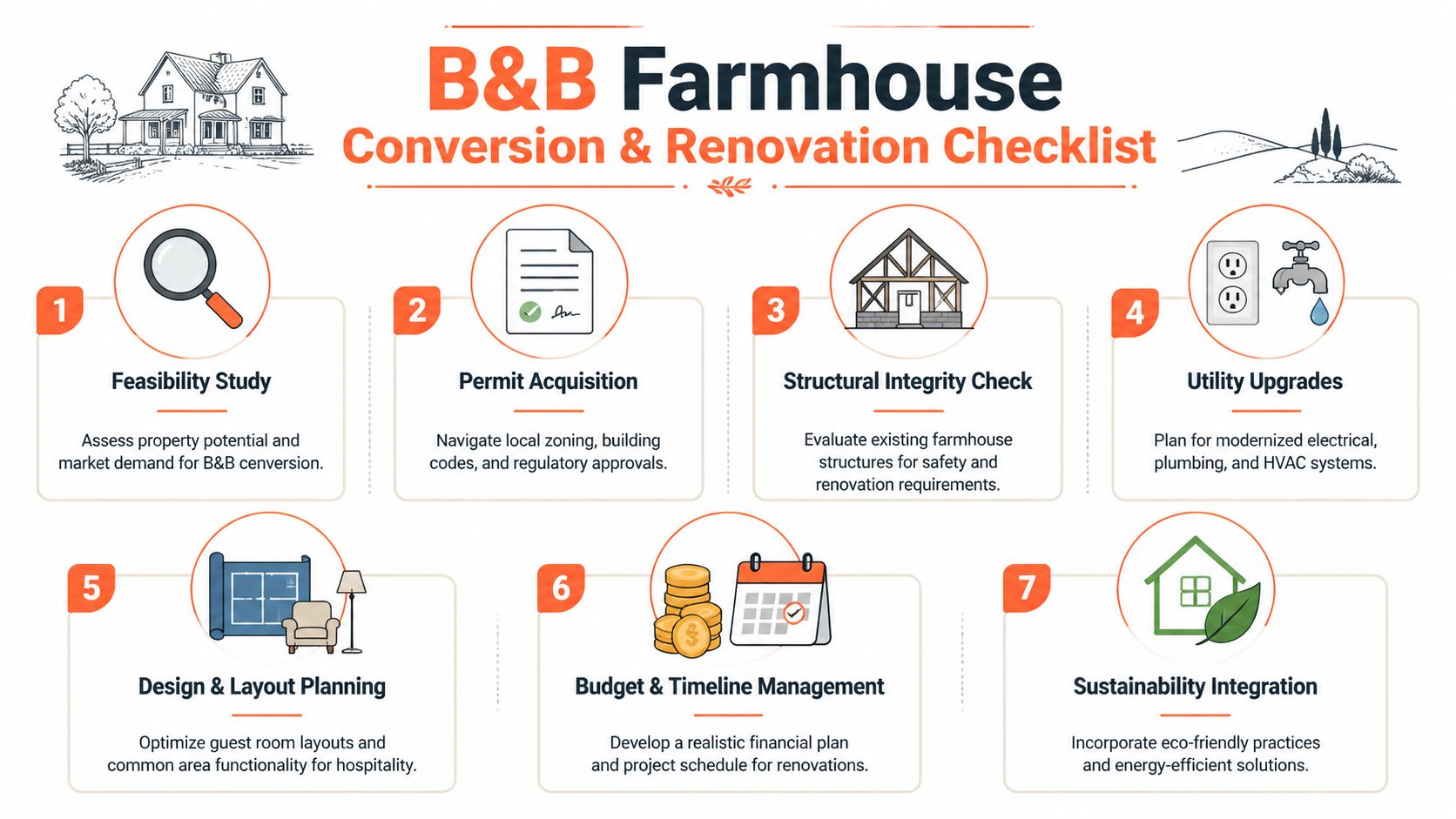
Guiding Clients Through Conversion and Renovation
Converting a farmhouse into a workable hospitality property is where enthusiasm often meets reality. This is the point where an agent stops being a tour guide and starts being an advisor.
Start with constraints, not finishes
Many buyers begin with mood boards. The smarter place to start is capacity, code, and use. The UC Agriculture and Natural Resources farm stay fact sheet highlights that farmhouse B&Bs face strict infrastructure standards. Septic systems must support peak occupancy, operations are typically capped at 5 guest rooms, and guest rooms must meet standards such as 9 square meters minimum for a single room and heating capable of maintaining 20°C.
Those details affect valuation immediately. A farmhouse that looks ready for six guest rooms may only support fewer once septic load, room dimensions, and building compliance are reviewed.
Preserve the soul, upgrade the engine
The best conversions don't sterilize the farmhouse. They keep the details that create memory while replacing the systems that create complaints.
Keep and restore:
- Original millwork and trim
- Authentic flooring where it's stable and safe
- Porches, fireplaces, stair rails, and built-ins
- Barn doors, stone walls, and period details that can be integrated cleanly
Upgrade without hesitation:
- Electrical service
- Plumbing and water systems
- HVAC and insulation
- Windows and weather control where comfort is an issue
- Septic capacity and drainage
A buyer can fall in love with beadboard and wide-plank floors. Guests remember whether they slept comfortably, had hot water, and felt warm in winter.
Renovation decisions that deserve hard numbers
Agents don't need to be contractors, but they should help clients avoid fuzzy budgeting. For early scenario planning, tools like PropLab for estimating rehab costs can help buyers sketch realistic scopes before they overcommit to a romantic conversion concept.
The key is to separate three buckets of spend:
| Spend type | Why it matters |
|---|---|
| Compliance work | This is non-negotiable. It determines whether the property can operate legally and safely. |
| Guest-facing upgrades | These shape reviews, photography, and perceived nightly value. |
| Optional brand enhancements | Nice additions, but they shouldn't come before systems and code. |
Common mistakes in farmhouse conversions
A few mistakes show up repeatedly:
- Overbuilding the design package: Too much money goes into finishes before infrastructure is settled.
- Ignoring owner workflow: The property looks good on paper but creates constant staff and host friction.
- Assuming residential improvements equal hospitality readiness: They don't.
- Skipping local use analysis: Zoning, parking, food service rules, and event restrictions can reshape the whole plan.
Renovation ROI in this niche doesn't come from making the farmhouse look expensive. It comes from making it workable, comfortable, and easy to market.
Visualizing Potential with AI Staging and Photography
Rustic properties are easy to admire in person and surprisingly hard to market online. That's the central problem.
A farmhouse with dated linens, dark wood, mismatched furniture, and crowded family decor may feel warm during a showing. In listing photos, it often looks tired. Empty rooms aren't better. They flatten scale, hide purpose, and make buyers work too hard.

The opportunity gap is larger than many agents think. A 2026 industry report cited by Shady Oaks Farm B&B states that rural short-term rentals using virtual tours saw a 40% increase in booking rates, while 65% of rural properties underperform due to outdated visuals and only 12% use AI tools for staging or restyling.
Empty-room marketing doesn't do this category justice
Traditional listing advice says to clean up, shoot wide, and let the room speak for itself. That approach fails with many bed and breakfast farmhouses because these properties sell atmosphere and use case, not just dimensions.
A buyer needs to see:
- how a guest room could feel after light modernization
- how a breakfast area can read as hospitality space instead of a family dining room
- how a cluttered porch or barn can become a premium amenity
- how a dated suite can support a higher-end farmhouse aesthetic without erasing its character
AI staging works best when it clarifies, not fantasizes
The mistake some agents make with virtual visuals is going too far. If a farmhouse still needs infrastructure work, don't present a luxury fantasy that has no relationship to the actual asset. Use AI restyling to tighten the story, reduce clutter, modernize furnishings, and demonstrate feasible renovation direction.
That means showing plausible outcomes:
- softened paint palettes
- cleaner furniture plans
- upgraded but believable lighting
- refined bedding and textiles
- better room purpose definition
If your photography workflow needs work before editing ever starts, it's worth reviewing practical photography tips for STR managers. The basics still matter. Clean sightlines, natural light management, and lens discipline make every downstream visual tool more effective.
A good reference point for agents exploring this workflow is AI photo editing software for real estate marketing, especially when you're deciding whether a property needs simple enhancement, full virtual staging, or concept-level renovation visuals.
Here's a useful example of how visual storytelling changes perception:
What to visualize first
Don't try to transform the whole property at once. Start with the rooms that shape the listing's first impression.
Primary exterior approach
The driveway arrival, porch, and front elevation set the tone.Best guest bedroom
This is often the image that helps buyers understand pricing potential.Breakfast or gathering area
It turns “house” into “hospitality business.”One problem room
Show its potential. An awkward den, dated suite, or cluttered loft often holds hidden value.
Good visuals don't hide problems. They help buyers understand what the property could become with disciplined improvements.
Pricing Strategies for a Niche Market
If you price bed and breakfast farmhouses like standard rural homes, you'll miss the mark in one direction or the other. These properties need a hybrid valuation lens.
The reason is straightforward. Buyers aren't purchasing only bedrooms, acreage, and finishes. They're evaluating an income-producing use, a hospitality concept, a land-based experience, and in some cases an owner-operator lifestyle business.
Why standard comps fall short
Traditional residential comps still matter. They anchor the replacement and local resale logic. But they don't fully capture a property's ability to generate revenue through lodging, events, farm-based experiences, or premium positioning.
That's where broader market context helps. The Mordor Intelligence bed and breakfast accommodation market report projects the global B&B market will reach $38.7 billion by 2034. It also states that the rural segment represents 42.98% of the market in 2025 and is expanding at a 7.25% CAGR through 2031.
For agents, that supports a clear argument: rural hospitality assets shouldn't be treated as fringe inventory. They're part of a growth segment.
A practical pricing framework
Use three layers of analysis rather than one.
| Valuation layer | What to examine |
|---|---|
| Residential baseline | Local farmhouse and rural residential comps, condition, acreage, and replacement logic |
| Business potential | Room layout, guest capacity, operational readiness, and marketability as lodging |
| Brand premium | Character, setting, design coherence, and distinctiveness in visual marketing |
This framework helps in both directions. It prevents sellers from overpricing a romantic project with no operational discipline, and it prevents buyers from undervaluing a well-positioned property with real hospitality logic.
What supports a pricing premium
Premium pricing is easier to defend when the property has a credible path to performance. That usually includes strong visual identity, cleaner compliance profile, guest-friendly layout, and visible differentiation from nearby rural housing stock.
A few examples of premium-supporting factors include:
- A farmhouse that already reads as hospitality product
- Outdoor spaces with clear guest use
- A finished or easily finishable room mix
- Brandable architecture and memorable arrival experience
- Minimal disconnect between current condition and marketed concept
What weakens pricing power
Agents should also be candid about the drag factors.
- Ambiguous zoning or use restrictions
- Heavy infrastructure unknowns
- A layout that forces major reconfiguration
- Deferred maintenance that overwhelms the story
- No visual distinction from ordinary rural homes
The strongest pricing narrative in this niche is never “it's unique.” It's “this property is rare, usable, and positioned inside a growing rural accommodation segment.”
That difference matters in seller conversations. “Unique” can sound subjective. “Usable and defensible” sounds like strategy.
Crafting a Winning Listing and Marketing Plan
A strong listing for bed and breakfast farmhouses doesn't read like a standard residential brochure. If the copy sounds like every other rural home, the right buyer may never realize the property's operating potential.
Sell the experience, not just the specs
Start with the property's core promise. Is it a vineyard-adjacent retreat, a working-farm guest experience, a restored heritage inn, or a modernized country escape? That positioning should shape the entire listing.
Avoid generic lines such as “charming farmhouse with endless possibilities.” Buyers have seen that phrase too many times. Write toward use and identity instead:
- owner-occupied inn opportunity
- guest-ready farmhouse retreat
- agritourism conversion candidate
- boutique rural hospitality asset
Those phrases do more than sound polished. They help attract buyers who think in operating models, not just floor plans.
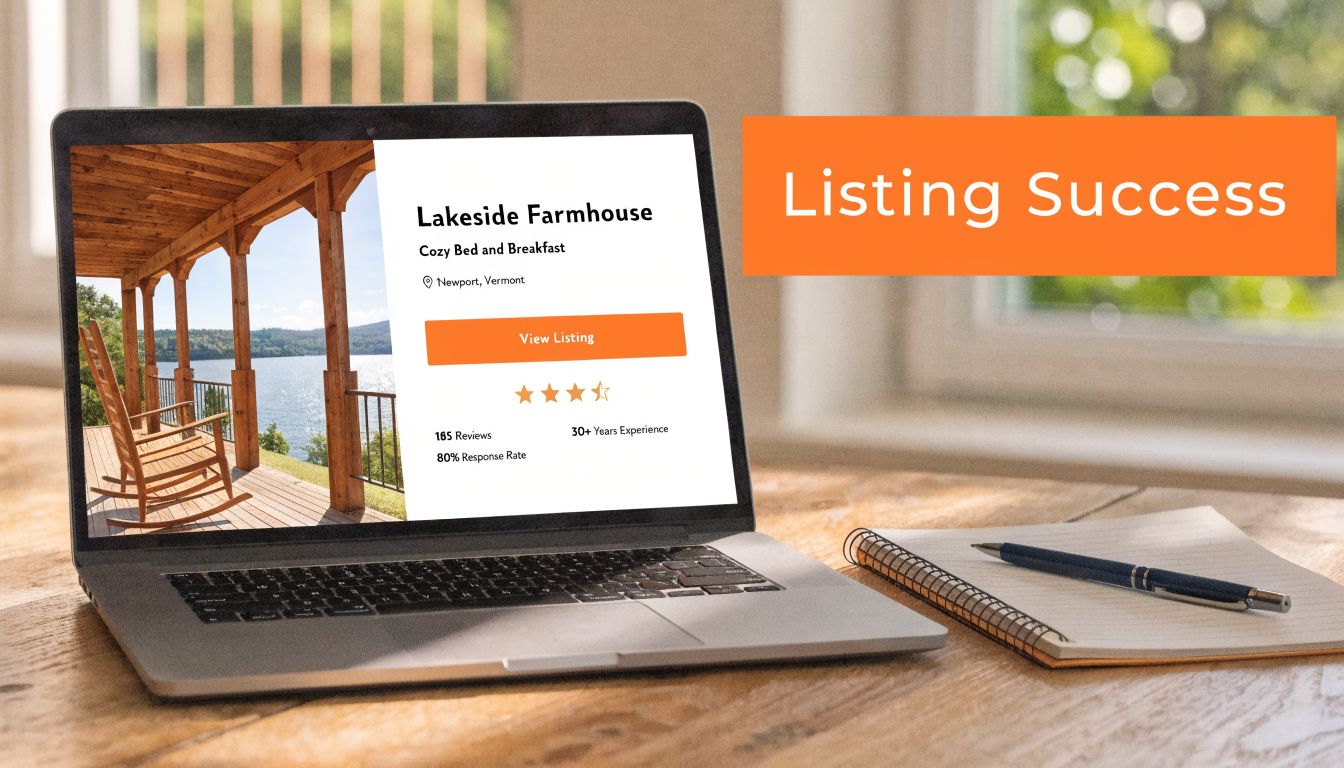
Build a channel mix that matches the asset
MLS exposure is necessary, but it isn't enough for this category. A good plan uses several channels with different jobs.
- MLS and brokerage site: Establish the factual baseline and reach local buyers.
- Email campaigns: Target investors, relocation buyers, hospitality operators, and sphere contacts who understand lifestyle assets.
- Social campaigns: Use visual storytelling to show arrival, guest rooms, porch life, and outdoor amenity potential.
- Digital brochures: Package the property more like a business opportunity than a simple home flyer.
- Hospitality and investor networks: Reach buyers who may never search standard residential portals first.
If your team needs better systems for writing and distributing niche property stories, it helps to find powerful content marketing solutions that support campaign consistency across email, landing pages, and social.
Use visuals as campaign assets, not listing attachments
Most agents underuse the imagery once the listing goes live. For farmhouses, that's leaving money on the table.
Turn the best visuals into:
- ad creative for second-home and lifestyle audiences
- carousel posts that tell a before-and-after renovation story
- investor-facing PDF decks
- retargeting assets for interested buyers
- presentation material for price-reduction conversations if needed
A polished real estate listing kit for visual marketing is especially helpful when you need one coherent package instead of scattered photos, rough notes, and disconnected ad assets.
Listing copy that converts better
The best copy in this niche usually follows a simple order:
- lead with setting and use case
- establish the architectural and experiential hook
- clarify guest or owner-operator potential
- note meaningful upgrades or conversion logic
- close with who the property is for
Buyers don't need a fantasy novel. They need enough specificity to see how the property fits their business plan, lifestyle, or portfolio.
That means every sentence should earn its place. Replace filler adjectives with details that support positioning.
Frequently Asked Questions for Agents
How should agents talk about insurance on a farmhouse B&B property?
Start by acknowledging that this usually isn't standard homeowners coverage. A bed and breakfast farmhouse often mixes residential occupancy, guest lodging, food service, farm exposures, and sometimes event use. Encourage buyers and sellers to involve an insurance professional early, before they assume a conventional policy framework will carry over.
Your job isn't to quote coverage. It's to flag risk categories and make sure the client asks better questions.
What if the property has a small farm component?
Treat the farm activity as part of the use analysis, not just a charming side note. Guests interacting with animals, produce, orchards, trails, ponds, or outbuildings can create appeal, but they also affect operations, safety, and disclosure. Agents should ask how the owner uses the land now and whether that use aligns with the future lodging concept.
A property can be picturesque and still be a poor fit for guest access if the daily farm workflow conflicts with hospitality.
How much should accessibility shape the marketing plan?
More than most agents assume. Accessibility isn't only a compliance conversation. It's also a market positioning opportunity.
The accessibility market discussion at Antietam Overlook cites World Health Organization and related data showing 16% of the global population lives with a significant disability, while accessibility inquiries on Airbnb rose 28% year over year. It also notes that under 5% of listings on platforms like Vrbo list compliant accessibility features.
That gap matters. If a farmhouse has a ground-floor guest room, low-threshold entry, wider circulation, or a bathroom that can be upgraded cleanly, that should shape both renovation planning and buyer targeting.
What accessibility features are most worth discussing with clients?
Focus first on practical, high-impact features rather than broad claims.
- Ground-floor sleeping options: This widens usability immediately.
- Step-free or lower-barrier entry paths: Often easier to implement than owners expect.
- Bathroom adaptability: Shower access, turning space, and fixture placement can materially change who the property serves.
- Door and hallway width: Important in both renovations and visual planning.
- Parking-to-entry flow: Buyers often overlook this, but guests won't.
Don't market a property as compliant unless the client has verified that standard with the right professionals. But do help them understand that accessibility can expand demand and differentiate the asset.
A farmhouse that's easier to access is often easier to sell, easier to operate, and more resilient as guest expectations evolve.
Should agents mention zoning and permits in the listing?
Yes, but carefully. If approvals are in place, say so precisely. If they are not, don't imply entitlement. In this niche, overstating use rights can derail a deal late.
The cleaner approach is to market the property's characteristics and documented status. Then discuss conversion pathways privately with serious buyers and their advisors.
What type of buyer usually responds best to these listings?
There isn't one profile. Common candidates include:
- owner-operators leaving corporate roles for hospitality
- second-home buyers who want selective income use
- local entrepreneurs expanding an event or lodging business
- investors looking for differentiated rural accommodation assets
The best marketing doesn't chase everyone. It speaks clearly to the buyer who can execute.
If you market bed and breakfast farmhouses, visuals can make or break the deal. Bounti Labs helps agents turn a simple walkthrough into MLS-ready photos, property descriptions, decluttered images, virtual staging, and renovation concepts, so buyers can see the potential before they visit.