Sustainability is no longer a niche buyer preference. As noted earlier in the article, renewable energy adoption has scaled sharply over the past decade, and that broader shift now affects how listings are judged, marketed, and compared.
For agents, that changes the definition of sustainability features. The opportunity is not limited to solar panels, insulation, or efficient appliances. It also sits inside the marketing workflow itself. Every unnecessary staging delivery, printed brochure run, repeat site visit, and manual document chase adds cost, time, and waste that clients increasingly notice.
The stronger approach is operational. Agents who build a lower-waste marketing process can cut production drag, reduce avoidable trips, and create a cleaner client experience without sacrificing presentation quality. In practice, that means using tools such as AI photo editing software for listing marketing, digital asset generation, virtual tours, paperless transaction systems, and tighter showing coordination.
That process matters because buyers and sellers usually respond to sustainability when it feels practical. A qualitative sustainability study found that adoption improves when solutions are simple, affordable, and easy to integrate into daily life. Real estate marketing follows the same pattern. If your sustainability story creates extra friction, it will not hold. If it saves time, reduces waste, and still helps the home compete, clients will see the value quickly.
1. AI-Powered Virtual Staging and Decluttering
Every physical staging decision carries a cost in time, transport, vendor coordination, and discarded materials. AI staging changes the sustainability equation by reducing how often agents need to solve presentation problems with furniture deliveries, repeat visits, or last-minute cleanup crews.
Bounti supports that workflow through virtual staging and decluttering from a property walkthrough or existing stills. The practical benefit is not just visual polish. It is a lower-waste marketing process that helps listings get to market faster.
Vacant homes are the clearest fit. So are dated interiors, inherited properties, rentals between tenants, and seller-occupied homes where full prep is unrealistic. In those cases, digital decluttering often does more than save money. It removes a common delay in the listing timeline.
The strongest use case is operational flexibility. Agents can test different room looks for different buyer segments, refresh creatives without bringing vendors back out, and keep the home on-message across portals, email, and social. SleekPost's guide to content repurposing is useful here because staged visuals perform better when they are treated as reusable campaign assets rather than one-off edits.
A disciplined AI staging workflow usually gives you:
- Faster listing prep: Clean up visual distractions without waiting on physical staging logistics.
- Lower revision waste: Swap styles digitally instead of paying for another install.
- Stronger audience fit: Match design choices to likely buyers instead of defaulting to one generic setup.
- More testable creatives: Run alternate hero images and room concepts across channels.
Use the edits to clarify the home, not to cover problems. If the room is small, keep the scale honest. If finishes are worn, disclose that. Clear labeling matters, especially when buyers will later walk into an empty space and compare it against the staged version.
That trade-off is real. Virtual staging can widen interest at the top of the funnel, but overdone edits can weaken trust during showings. The agents who get the best results set limits early, keep proportions accurate, and pair AI staging with a consistent editing standard. For teams building that process, this roundup of AI photo editing software for listing marketing is a useful starting point.
2. Digital-First Marketing Materials Generation
Agents waste time and budget every time a listing gets rebuilt from scratch across channels. The bigger cost is process waste. Extra drafts, duplicate data entry, stale print pieces, and rushed updates all add labor without improving the buyer experience.
A digital-first system fixes that at the workflow level. Start with one clean source asset set, then generate the materials each channel needs from that same capture. In practice, that means a single walkthrough or content session can support listing copy, MLS-ready visuals, email creative, and social assets without sending the team back through the same production loop.
Bounti fits this use case because it turns one property capture into multiple marketing outputs. That matters less as a tech feature than as an operating standard. The sustainable advantage is fewer repeated tasks, fewer handoff errors, and faster launch cycles.
Build once, adapt many times
Success isn't just about using less paper. It is reducing avoidable production. When agents treat the first capture as the master asset, they cut reshoots, shorten review cycles, and keep messaging aligned across every buyer touchpoint.
That approach still has limits. High-end listings, design-forward homes, and properties with difficult lighting often need a photographer, a videographer, or both. Digital-first production works best for the broad middle of the market where speed, consistency, and cost control matter more than custom creative treatment.
Strong teams usually standardize around a few habits:
- One source of truth: Pull captions, property details, and visual selections from the same approved asset set.
- Channel-specific outputs: Adjust format and copy length by platform without rewriting the whole story.
- Fewer obsolete materials: Update digital assets quickly instead of reprinting brochures after every price, feature, or positioning change.
- Cleaner team coordination: Give admins, marketers, and agents one shared production path instead of several disconnected ones.
SleekPost's guide to content repurposing is useful if your team captures good material but struggles to turn it into a full campaign. That is where sustainability becomes a marketing advantage. Less waste is part of it. The bigger gain is a repeatable system that gets listings live faster and keeps your brand consistent without adding more manual work.
3. Energy-Efficient Virtual Property Tours
A large share of early showings never had a realistic chance of turning into an offer. That is the waste virtual touring can remove from your marketing workflow.
Used well, virtual tours cut low-intent travel, reduce repeated seller prep, and help buyers qualify themselves before anyone coordinates calendars. That makes sustainability a process decision, not just a property feature. Agents save drive time and production time, and buyers get a faster screening path.
Use virtual access to qualify demand before wheels start turning
The operating model is straightforward. Give buyers a strong digital preview first, then reserve in-person access for people who have already cleared the basic fit test on layout, condition, and room flow.
UPS made the same core idea famous with route optimization. The lesson for agents is practical, not theoretical. Better sequencing reduces waste. In our business, that waste usually shows up as car trips, duplicated showing prep, and blocks of time lost to buyers who were never close to serious.
A good tour does more than show rooms. It answers the questions that usually force an unnecessary visit. Can two people work from home here? Is the kitchen connected to the living area? Does the primary suite feel private or tacked on? If the video handles those issues clearly, your showing calendar improves fast.
Bounti can support that workflow by helping teams turn one capture session into multiple marketing assets without rebuilding the listing package from scratch. That matters because virtual touring only saves time if the asset creation process stays efficient too.
The most sustainable showing process removes the avoidable trip before it hits the calendar.
There are trade-offs. Some buyers still need to stand in the space before they can make a decision. Luxury homes, unusual floor plans, and properties with poor natural light often need better camera work and tighter shot planning to avoid misleading previews. A weak tour can create more friction, not less.
The fix is operational discipline. Use tours early in the funnel, script them around buyer decision points, and review watch behavior with your team so you know where prospects drop off. If your listing strategy also includes pre-sale upgrade decisions, tools used for AI renovation value analysis for real estate agents can help connect what buyers see in a virtual walkthrough to what changes are worth making before launch.
4. Sustainable Property Renovation Visualization
A lot of renovation waste starts before a contractor ever shows up. It starts when sellers or buyers make bad upgrade choices because they can't see the finished result, compare options, or understand which changes suit the property.
Visualization tools become real sustainability features inside your workflow. Instead of guessing, you can show likely outcomes before anyone orders materials or tears out functioning finishes.

Show the practical option, not just the pretty one
Climate and comfort matter here. Sustainable design guidance often points to features like local materials, triple-pane windows, shading, and proper orientation because they can reduce energy use while improving comfort, but those benefits are market-specific, as discussed in Houzz's sustainable design feature guidance. Agents who present upgrades without climate context usually oversimplify the sale.
That's why visualization should compare scenarios, not just create one glamorous after shot. Show a practical refresh, a comfort-focused version, and a higher-efficiency option if the property supports it.
Good use cases include:
- Pre-list upgrades: Decide what to change before the seller wastes money.
- Buyer education: Help buyers picture sensible post-close improvements.
- Renovation restraint: Keep clients from overbuilding for the neighborhood.
- Feature explanation: Connect upgrades to comfort and maintenance, not just style.
If renovation positioning is part of your listing strategy, Bounti's AI renovation value analysis for real estate agents is a relevant tool to review. The risk, of course, is overpromising. Renderings can suggest simplicity where the actual work is complex, so keep them tied to realistic scope.
5. Data-Driven Property Optimization for Market Positioning
Most sellers don't need more improvements. They need fewer, better-chosen ones.
Data-driven positioning helps you decide which updates matter for buyer response and which ones are just expensive noise. That's a sustainability feature in practice because it reduces cosmetic churn, rushed purchases, and prep work that adds little value.
Where agents usually waste effort
The common mistake is broad, unfocused "refreshing." Teams repaint every room, replace perfectly serviceable fixtures, and add generic design touches that don't change the property's market story. A better process starts with buyer fit. Which features are central to this home's likely audience? Which edits improve marketability? Which jobs are just busywork?
The strongest systems evaluate:
- Competitive context: What nearby listings are already offering.
- Audience fit: What this buyer pool is likely to notice or ignore.
- Visual payoff: What reads clearly in digital marketing.
- Operational burden: Which prep tasks create more disruption than return.
This isn't about pretending AI can predict every buyer. It can't. Individual preferences still vary, and neighborhood nuance matters. But when you use data to narrow the improvement list, you reduce waste and give sellers a sharper plan.
I trust this approach most on middle-market listings where sellers are tempted to overdo prep because they're anxious. Clear prioritization usually produces a better result than a larger to-do list.
6. Paperless Transaction and Documentation Management
Paper is still one of the easiest places to clean up your workflow, and too many teams still treat it like an unavoidable cost of doing business. It isn't.
Contracts, disclosures, addenda, marketing approvals, vendor coordination, and post-close records can all live in a digital workflow. That reduces printing, rescanning, courier runs, and the version-control chaos that causes mistakes.
Paperless isn't just about paper
The stronger business case is process control. When files sit in a shared system with e-signature support, clients can review documents faster and agents stop chasing the same signature chain through email threads and car dashboards.
The broader policy environment also shows why this matters. The United Nations reported that 530 policies related to sustainable consumption and production were submitted across 71 countries in 2024, a 6% increase from 2023. Sustainability is now being measured through formal systems, not just broad intentions.
For agents, useful paperless features include:
- Secure portals: Give buyers and sellers one place to access files.
- Template control: Reduce repetitive document assembly errors.
- Digital signatures: Shorten approval cycles without physical handoff.
- Audit visibility: Track what was sent, signed, and updated.
If your team already uses DocuSign or is considering tighter integration, Bounti supports DocuSign-connected workflows. The main limitation isn't technical. It's human. Some clients and vendors still need hand-holding, so the best teams keep a simple digital process instead of an overly clever one.
7. Sustainable Marketing Material Distribution
Printed brochures still make sense in a few contexts. New development sales galleries, luxury open houses, and highly curated brand experiences can justify them. But for most resale listings, print-heavy distribution is habit, not strategy.
Digital distribution is leaner, easier to update, and easier to target. It also avoids the waste of obsolete flyers, overprinted feature sheets, and repeated short-run orders every time pricing or remarks change.
Replace static collateral with living content
A digital-first listing package can include email campaigns, social clips, listing pages, QR-linked property details, and mobile-friendly brochures. That setup is better for sustainability because the content stays editable. It's also better for conversion because you can tailor the message by audience and stage of interest.
This is one of those changes that sounds obvious but still meets resistance inside brokerages. Agents are used to seeing stacks of materials as proof of effort. Buyers don't care how much paper you produced. They care whether the information is clear, accessible, and current.
Field note: If you still print, print less and print later. Let digital engagement tell you which properties actually warrant physical collateral.
The downside is reach. Some audiences still respond better to tangible materials, and digital fatigue is real. But the fix isn't going back to blanket print runs. It's using print selectively, after digital signals justify it.
8. Energy-Efficient Smart Home Feature Documentation
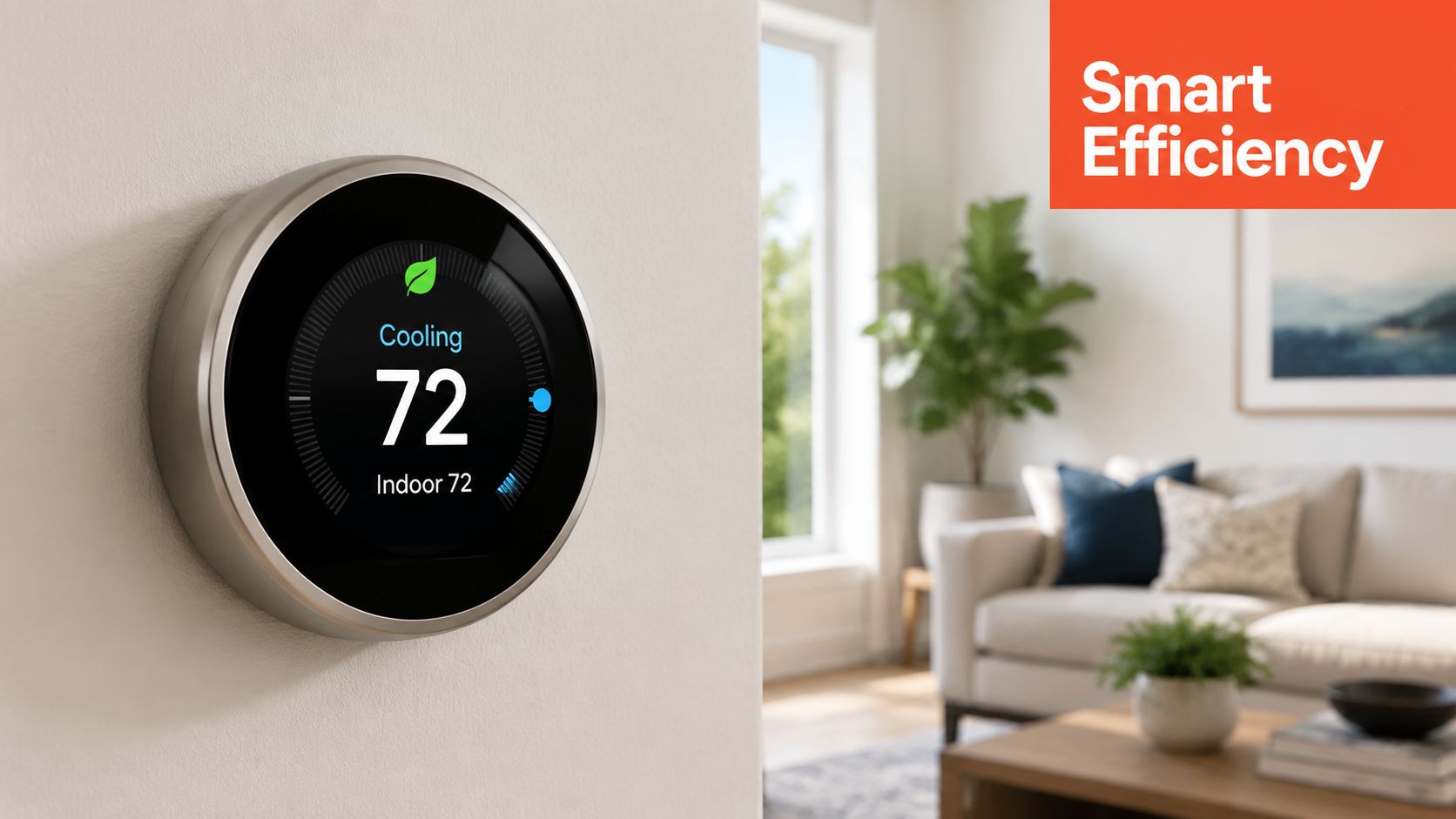
Many agents undersell sustainable homes because they don't document the features well. A seller mentions a smart thermostat, upgraded insulation, or LED conversions, and the details never make it into the listing in a coherent way.
That's a missed opportunity. Buyers who care about sustainability don't just want a label. They want to know what the feature does, how it affects comfort, and whether it seems manageable after move-in.
Document function, maintenance, and everyday use
Practical marketing wins out over greenwashing. If a home has smart controls, efficient lighting, or other energy-related upgrades, explain how they fit into normal routines. Buyers respond better when the feature sounds livable, not technical.
That logic also tracks with the earlier research on practicality. Sustainability adoption rises when features feel simple, affordable, and compatible with everyday life. Your listing language should do that work.
Useful documentation usually includes:
- Feature identification: What was installed and where.
- User benefit: Comfort, convenience, control, or reduced upkeep.
- Maintenance reality: Filters, warranties, setup requirements, and app access.
- Verification: Certifications or records when available.
If your marketing also leans into climate-control upgrades, smart thermostat installation guidance can help you understand the homeowner side of the feature. Just don't oversell projected savings unless you have verified documentation. In most cases, clear explanation beats aggressive claims.
9. Consolidated Property Showing Logistics
Agent sustainability isn't only a content problem. It's a calendar problem.
When showing requests come in ad hoc, agents zigzag across town, sellers leave the house repeatedly, and properties absorb unnecessary traffic. Better logistics reduce all of that. This is one of the least glamorous sustainability features on this list, but it's one of the most useful.
Build routes around serious intent
A tighter showing process starts before anyone gets in a car. Use digital previews, pre-qualification questions, and clear listing media to screen out weak-fit buyers. Then cluster in-person appointments geographically and by stage of seriousness.
That sounds simple because it is. The challenge is discipline. Many agents still say yes to every showing request because they don't want to lose momentum. In practice, poor filtering wastes more time than it creates.
A strong system includes:
- Virtual pre-screening: Ask buyers to review rich media first.
- Grouped scheduling: Line up nearby properties in logical order.
- Seller-friendly windows: Reduce repeated disruption to the home.
- Intent checks: Confirm what the buyer needs to see in person.
Buyers don't mind structure when the structure saves them time. Sellers usually appreciate it even more.
This won't eliminate inefficient days. Some clients will still insist on seeing everything live. But if your workflow nudges buyers through a better process, you'll drive less, show smarter, and protect the property from unnecessary wear.
10. Lifecycle Property Assessment for Sustainable Transactions
A sustainable sale is not just about what a home has today. It is about what the next owner will need to repair, maintain, replace, and document over the next five to ten years.
That shift matters in marketing. Agents who present a property through a lifecycle lens give buyers a clearer picture of ownership costs, reduce post-close frustration, and position themselves as more credible advisors. For eco-conscious buyers, that is often more persuasive than a recycled list of green buzzwords.
Assess the property as an operating asset
Sustainability in real estate marketing is usually framed as a feature checklist. Solar. Smart thermostat. New insulation. Those details matter, but they only tell part of the story. A lifecycle assessment treats the home as an operating asset with systems, service intervals, efficiency implications, and future capital decisions.
That helps buyers evaluate waste before it happens. If an HVAC system is near the end of its useful life, a water heater has no maintenance record, or a smart irrigation setup lacks documentation, the buyer should know early. Clear disclosure gives them time to budget, compare options, and avoid rushed replacements after closing.
For agents, a lifecycle assessment should cover:
- Major systems: Approximate age, current condition, and available service records.
- Efficiency-related upgrades: What was installed, when, and whether permits or warranties are available.
- Maintenance expectations: Filters, servicing, seasonal upkeep, and owner tasks that affect performance.
- Replacement planning: Systems that may need attention soon, with realistic timing rather than vague reassurance.
- Documentation quality: Manuals, receipts, contractor notes, and smart home setup details that support a smoother handoff.
This does not replace an inspection. It improves the quality of the conversation before the inspection happens.
There is a trade-off here. More transparency can surface weaknesses that some agents would rather leave vague. In practice, that usually helps the transaction. Buyers are more likely to stay engaged when they understand the full operating picture upfront, and sellers have a better chance of avoiding renegotiation triggered by preventable surprises.
Used well, lifecycle assessment turns sustainability from a property label into a transaction strategy. It reduces wasteful decision-making, supports longer-term ownership planning, and gives your marketing a level of substance that generic green claims cannot match.
Top 10 Sustainability Features Comparison
| Solution | Implementation Complexity 🔄 | Resource Requirements ⚡ | Expected Outcomes 📊 | Ideal Use Cases 💡 | Key Advantages ⭐ |
|---|---|---|---|---|---|
| AI-Powered Virtual Staging and Decluttering | Medium, depends on image quality and model tuning | High-quality photos/video; staging SaaS | Faster listings; fewer physical staging shipments (large reduction) | Empty homes, new builds, remote listings | Cost-effective visual appeal; unlimited design variations |
| Digital-First Marketing Materials Generation | Low–Medium, pipeline automation and MLS compliance | Single video capture; content generation platform | Rapid MLS-ready assets; printing waste ↓80–90% | Bulk listings, brokerages, portfolio marketing | Consistent, fast listing creation; reduced photographer travel |
| Energy-Efficient Virtual Property Tours | Medium, 3D reconstruction and hosting infrastructure | 360/ video capture; tour hosting; mobile access | Preliminary showings reduced; travel emissions ↓30–50% | Remote buyers, initial screening, commercial site evaluations | 24/7 access; pre-qualification of buyers; lower foot traffic |
| Sustainable Property Renovation Visualization | Medium–High, modelling and cost-estimation integration | Good visuals; material/cost databases; designer input | Construction waste ↓20–40%; better upgrade decisions | Green upgrades, renovation planning, ROI analysis | Visualizes green options; reduces trial-and-error renovations |
| Data-Driven Property Optimization for Market Positioning | High, data integration and analytics modeling | Market data feeds; analytics tools; property inputs | Unnecessary improvements ↓25–35%; faster sales | Pricing strategy, targeted staging, feature prioritization | Focuses resources on high-impact changes; improves targeting |
| Paperless Transaction and Documentation Management | Low–Medium, platform rollout and compliance setup | E-signature tools; secure cloud; user training | Eliminates large volumes of printed docs; faster approvals | Standard transactions, compliance-sensitive deals | Reduces paper waste; improved security and auditability |
| Sustainable Marketing Material Distribution | Low, digital channel adoption and campaign setup | Email/SNS tools; digital assets; analytics | Printing waste ↓70–90%; better targeting and measurability | Consumer-facing campaigns, demographics with digital access | Lower costs; easier updates; measurable performance |
| Energy-Efficient Smart Home Feature Documentation | Medium, detection tools and certification integration | Property docs; energy-rating APIs; verification process | Increased buyer awareness and perceived value | Listings with green tech, eco-conscious buyer markets | Clear presentation of energy savings; supports certifications |
| Consolidated Property Showing Logistics | Medium, scheduling optimization and CRM links | Virtual tours; CRM integration; routing algorithms | Showing-related vehicle emissions ↓25–40%; agent time saved | High-volume showing areas, clustered listings | Reduces unnecessary visits; focuses on qualified buyers |
| Lifecycle Property Assessment for Sustainable Transactions | High, AI analysis plus professional validation | Comprehensive video/data capture; inspection integration | Post-purchase renovation waste ↓30–50%; informed buyers | Older properties, investors, long-term stewardship planning | Transparent condition reporting; maintenance timeline guidance |
Your Sustainable Agent Playbook
Sustainability isn't a side topic anymore. It's operational. The agents who win with it aren't necessarily the ones talking the most about green features. They're the ones building leaner listing systems, reducing waste in prep and promotion, and making sustainability feel practical to clients instead of abstract.
That matters because buyers and sellers respond to what works in real life. If your process cuts unnecessary staging runs, reduces printed collateral, trims low-value showings, and improves documentation, you're doing two things at once. You're lowering friction inside your business, and you're giving eco-conscious clients a clearer reason to choose you.
I'd start small. Replace one physical process that creates obvious waste or delay. For one team, that might be printed brochures. For another, it might be routine staging furniture rentals on lower-margin listings. For a brokerage, it might be the transaction file workflow that still depends on printing, rescanning, and email chaos.
The best part is that these changes usually improve service quality. Virtual staging speeds listing prep. Digital-first content creation shortens time to market. Better virtual tours reduce weak-fit showings. Cleaner documentation improves trust. None of that requires you to turn into a sustainability consultant. It requires you to run a tighter operation.
This is also where many agents make the right strategic shift. Stop marketing sustainability as a moral lecture. Market it as competence. Clients care that your process is efficient, modern, and thoughtful. They care that you're not asking them to spend money on low-impact upgrades or wasting their time with sloppy execution. Sustainability features work best when they show up as better business habits.
If you're auditing your stack, tools like Bounti Labs can fit naturally into this model because they support virtual staging, listing visuals, renovation previews, and digital content creation from a single property walkthrough. That's useful when your goal is to reduce repeat work without lowering marketing quality. The same logic applies outside real estate too. Organizations in other sectors are making similar decisions around cost-effective IT asset disposition strategies because waste reduction and operational efficiency usually belong in the same conversation.
The agents who stand out in 2026 won't just list sustainability features in the property remarks. They'll build them into the way they work.
If you want a simpler way to turn one property walkthrough into listing visuals, descriptions, virtual staging, and renovation concepts, take a look at Bounti Labs. It's a practical option for agents who want a faster, lower-waste marketing workflow without adding more vendors to the process.