The U.S. home improvement market is projected to reach $509 billion in 2025, and homeowner spending on improvements and repairs has increased 82% since 2015, according to this 2025 industry forecast summary. That changes how agents should think about listings.
A listing isn't just a property record anymore. It's a transformation pitch. Buyers want help seeing what a home could become, sellers want proof that presentation affects demand, and agents who can create that vision quickly have a real edge in 2026.
Most home improvement marketing advice still talks like the audience is a contractor trying to book jobs. That overlooks the specific real estate context. Agents aren't selling remodel services. They're using improvement-focused marketing to create desire, reduce buyer hesitation, support pricing, and win more listings with a sharper presentation system.
Why Home Improvement Marketing Matters More Than Ever
The size of the market matters because it tells you where buyer attention already is. People are spending heavily on homes, upgrades, repairs, and cosmetic improvements. That means buyers are no longer evaluating a property as a fixed object. They're evaluating the current condition plus the upside.
That's where home improvement marketing becomes a listing strategy, not a contractor tactic.
Buyers don't just buy square footage
A dated kitchen, an empty living room, or a cluttered basement can create drag even when the floor plan is strong. The listing agent's job is to remove that drag before it becomes objection. If buyers can't see the outcome, they price in risk, delay decisions, or skip the property entirely.
Strong agents already know this in practice. The difference in 2026 is speed. Buyers scroll fast, compare faster, and expect visuals that answer immediate questions:
- Can this room feel modern
- Would my furniture work here
- Is this a light cosmetic update or a major project
- Could I move in now and improve later
If your marketing can answer those questions visually, the listing performs better.
Sellers hire the agent who can show upside
A seller doesn't need another generic promise about exposure. They need a plan for positioning. In many listing presentations, the winning move is showing how you'll market the home's potential before anyone steps through the door.
Practical rule: The agent who shows the future value of the property usually sounds more credible than the agent who only talks about comps and open houses.
That's why visual transformation assets matter so much. They help sellers understand what pre-listing work is worth doing, help buyers understand what's possible, and help agents tell a cleaner pricing story.
AI changed the execution layer
The old workflow was slow. Book the photographer. Maybe hire a stager. Wait for edits. Request alternate versions. Revise copy. Pull stills manually. Then try to resize everything for MLS, social, email, and ads.
That model can't keep up with the pace of modern listing marketing.
A faster system starts with one walkthrough and turns it into usable campaign assets. That includes stills, property copy, decluttered images, staged rooms, restyled spaces, and renovation concepts. The strategic shift is simple. Agents who can produce transformation-focused marketing quickly will present listings better, win more seller confidence, and create more reasons for buyers to engage.
The Agent's Framework Goals and Audiences
Home improvement marketing for agents has a different job than home improvement marketing for contractors. A contractor uses it to sell labor and services. An agent uses it to shape perception around a property.
That distinction matters because it changes what success looks like. The goal isn't to convince someone to hire a remodeler today. The goal is to make a listing easier to imagine, easier to justify, and easier to act on.
The real goals behind the tactic
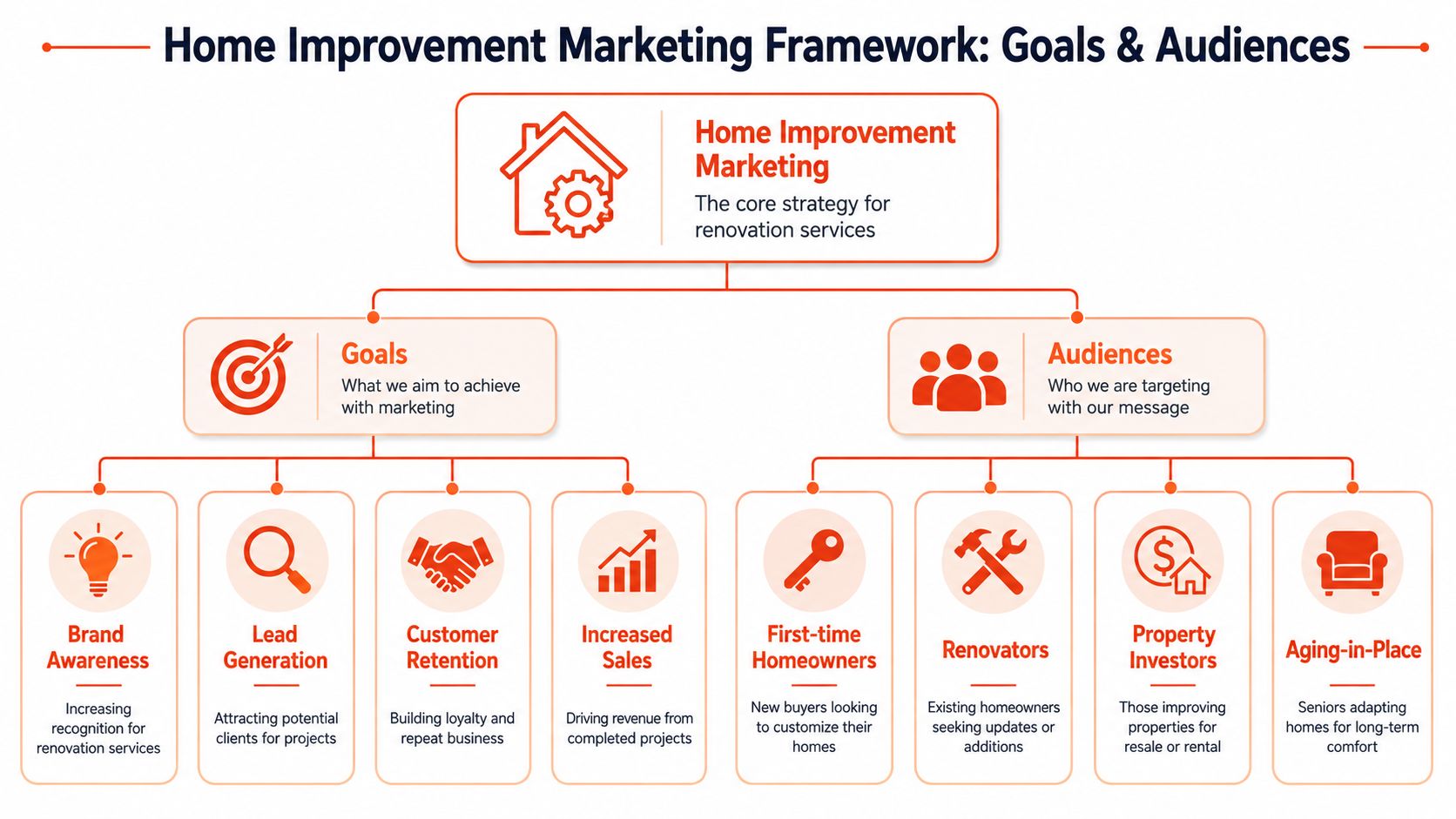
When agents use improvement-focused visuals well, they usually want one or more of these outcomes:
- Increase perceived value so a dated home doesn't get treated like a problem listing
- Reduce hesitation for buyers who need to see a cleaner or more finished version of the space
- Support seller decisions around light prep, cosmetic changes, or virtual presentation
- Differentiate the listing presentation against agents who still market homes as-is without visual strategy
Those are business goals, not decorating goals.
One useful lens comes from NARI's 2024 contractor marketing guidance, which recommends promoting lower-ticket items and demonstrating affordability in tighter-budget conditions. For agents, that translates well. Small, believable updates often convert better than grand renovation fantasies because they reduce decision friction.
Three audiences agents need to message differently
A lot of listing campaigns fail because the visuals are decent, but the messaging is too broad. The buyer types aren't the same.
The visionary buyer
This person likes upside. They'll tolerate dated finishes if the bones are right. What they need is direction, not polish. Show alternate styles, potential layouts, and high-impact cosmetic changes. Don't oversell full gut renovations if the likely buyer just wants a cleaner, sharper version of the existing home.
The move-in-ready buyer
This buyer gets nervous when they see empty rooms, worn finishes, or visual clutter. They need reassurance. Virtual staging, decluttering, and restyling help here because the work of imagining has already been done for them.
Empty rooms don't read as flexible to many buyers. They read as uncertain.
The hesitant seller
Some sellers resist prep because they assume every improvement recommendation means cost, delay, and disruption. They need proof, not theory. Show them simple visual comps. A decluttered primary bedroom. A brightened living room. A digitally updated kitchen concept. Once they can see the presentation gap, the conversation gets easier.
What this framework changes in practice
Instead of asking, “How do I market this listing?” ask a tighter question: “Which audience needs confidence, and what visual will create it fastest?”
That shift usually improves the campaign immediately. It also stops agents from wasting time on broad, pretty content that doesn't solve the actual sales problem.
Choosing Your Digital Marketing Channels
Every channel has a different job. Treating them all the same is one of the biggest mistakes in home improvement marketing for listings. Search captures intent. Social creates desire. Email builds memory. MLS detail pages convert attention into action.
The right mix depends on the property, but the rule is consistent. Match the channel to the stage of decision.
Search and local intent
Search works best when the buyer already knows what they want. Then, neighborhood terms, property-type terms, and feature-specific searches matter. If someone is looking for a fixer with upside in a specific area, your page structure, listing copy, and local landing pages need to reflect that intent clearly.
Operationally, this means:
- Build location relevance with listing pages and supporting content tied to neighborhood search behavior
- Keep calls to action direct so search traffic has an obvious next step
- Optimize local profiles because local-intent discovery often starts there, not on your homepage
The practical guidance from Back40's home improvement marketing overview is useful here. Focus on mobile-responsive search experiences, location-specific relevance, Google Business Profile optimization, and measurable local conversion events instead of broad awareness metrics.
Social for inspiration, not just awareness
Social media drives buying behavior more directly than many agents still assume. It influences 28% of all consumer home improvement purchases as of 2024, according to this home improvement marketing statistics roundup. For agents, that matters because buyers often form their design expectations on visual platforms before they ever book a showing.
That changes what you should post.
Don't just post the exterior, the kitchen, and the “just listed” graphic. Use content that helps people imagine the transformation:
- Before-and-after carousels that show a dated room and a refreshed version
- Short-form walkthrough clips focused on possibility, not just features
- Style variations for the same room so different buyer preferences can see themselves in the space
- Neighborhood-specific posts that connect the home's potential to the local buyer lifestyle
If you want a stronger framework for that channel mix, this guide to real estate social media marketing is a practical complement to a listing-first strategy.
Email does the follow-up work
Not everyone acts on first exposure. Email is where agents keep the listing alive for buyers, sphere contacts, and warm leads who need multiple looks before they respond.
Good nurture content for a home-improvement-focused listing usually includes:
- A first email with the cleanest hero visuals
- A second touch built around transformation angles
- A third touch that answers likely objections, such as layout, cosmetic updates, or room use
- A final follow-up with urgency or new context, like a broker tour, open house, or revised visual package
MLS is still a conversion asset
Agents sometimes treat MLS as the place where assets go after primary marketing is done. That's backwards. MLS is one of the highest-intent environments in the workflow.
If your MLS photos, remarks, and image order don't support the home's potential, the rest of the campaign has to work harder. Use the strongest visual proof early, write remarks that frame opportunity clearly, and avoid vague language like “bring your ideas” when you can show the ideas instead.
Creating High-Impact Visuals with AI
A dated listing usually has the same problem in every market. The home may be fine, but the presentation makes buyers do too much work.
An empty condo feels smaller than it is. A cluttered family room looks harder to own than it is. A dark wood kitchen reads as expensive to fix, even when the likely buyer only needs to see a lighter, updated direction.
That's why visual transformation is the center of modern home improvement marketing.
Start with the room that creates the most hesitation
The smartest workflow isn't “transform everything.” It's “remove the biggest objection first.”
For one listing, that might be the vacant living room that feels cold online. For another, it's the overfilled bedroom that makes storage look limited. For another, it's a tired kitchen where buyers can't tell whether the fix is cosmetic or structural.
I usually think about visuals in three layers:
- Decluttering when the room's current contents are getting in the way
- Staging when buyers need scale, warmth, and layout cues
- Restyling or renovation concepts when the existing finishes are suppressing interest
Used together, those layers create a much better story than raw listing photos alone.
Before and after beats polished branding
Recent guidance points in the same direction. The stronger strategy is rapid, localized visual proof, not broad brand polish. One source notes that strong before-and-after photography can put a firm ahead of 80% to 90% of competitors, as covered in this marketing ideas article from TEGNA. The reason is obvious in listing work. Transformation proof helps prospects decide faster.
Buyers don't need your branding to feel premium. They need the property to feel understandable.
That's where AI tools have changed the workflow. Instead of ordering one edited version of one image and waiting on revisions, agents can generate multiple visual directions quickly, test which version tells the clearest story, and deploy those assets across MLS, email, social, and paid campaigns.
One example is AI photo editing software for real estate imagery, which can help agents compare decluttering, staging, and style changes without rebuilding the campaign each time.
A practical listing scenario
Take an older suburban listing with good square footage, a functional layout, and dated interiors. The traditional approach often goes like this: clean it up, photograph it as-is, write “great bones,” and hope buyers mentally renovate the home.
That approach underperforms because the buyer has to supply the missing vision.
A better workflow looks like this:
- Capture a walkthrough video of the property.
- Pull stills from the most decision-critical rooms.
- Create decluttered versions where personal items or furniture density obscure the space.
- Stage empty or awkward rooms so buyers can judge scale and use.
- Restyle selected rooms to show an updated but believable finish direction.
- Turn those assets into channel-specific creative instead of using the same image everywhere.
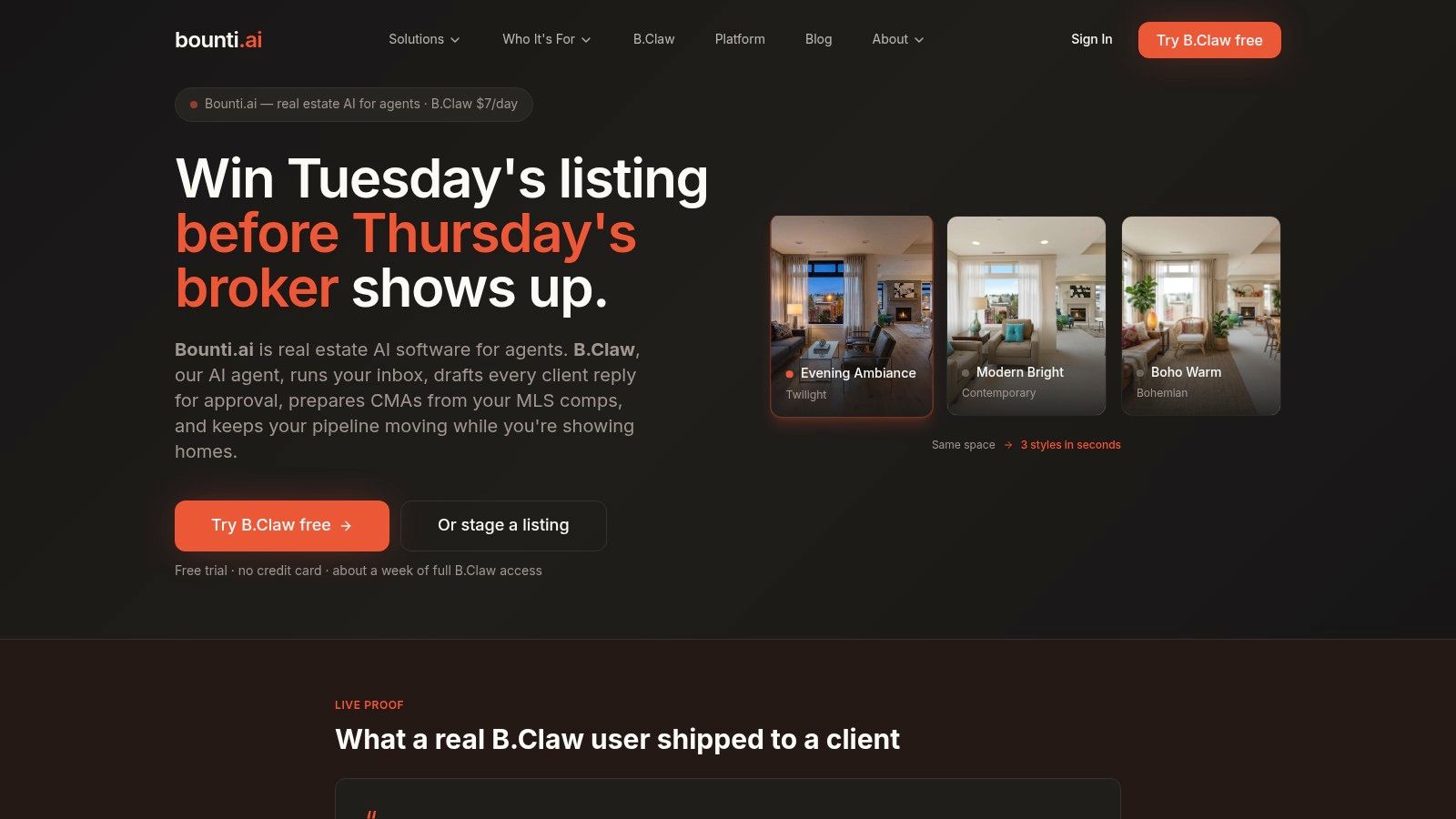
A tool like Bounti fits naturally into the process. With a single video walkthrough, it can generate property descriptions, pull stills, create MLS-ready photos, and produce AI-powered decluttering, staging, restyling, or renovation visuals. For an agent, that solves a real operational problem. You don't need a separate manual workflow for every asset type.
A short demo helps make that shift more concrete.
Use different visual outputs for different decisions
Not every transformed image belongs in every channel.
MLS and portals
Use the cleanest, most credible visuals. Buyers still need trust. If the transformation feels too speculative, it can create confusion.
Social and ads
Side-by-side storytelling works well. Show the current state and the possible state. That contrast is what stops the scroll.
Listing presentations
Sellers respond when you show exactly how you'd market their home, not when you promise “premium marketing.” A few sample transformation concepts are often more persuasive than a long slide deck of generic services.
Planning Your Listing Campaign and Budget
A strong listing campaign doesn't need more activity. It needs tighter sequencing. Most agents overspend on one part of the process and underbuild the follow-up system that converts attention into conversations.
That matters because effective home-improvement-focused marketing usually requires repeated exposure. It can take six to nine touch points to move a prospect from lead to customer, according to Project Map It's marketing guidance. For listings, that means a one-and-done launch rarely does enough.
A simple campaign template for your next listing
Use this planning framework before you order anything or start posting.
Target buyer
Write one sentence on who is most likely to buy the home. Be specific about lifestyle, not just price point.Primary obstacle
Identify what the buyer will hesitate on first. Empty rooms, dated finishes, clutter, odd layout, dark interiors, or uncertainty about cost.Core visual asset
Choose the visual treatment that best removes that obstacle. Declutter, stage, restyle, or show a light renovation concept.Channel order
Decide where the asset appears first. MLS, email, social, paid media, listing presentation, or broker outreach.Follow-up sequence
Plan several touches in advance so you're not improvising after launch.
Field note: Campaign quality usually improves when the agent defines one buyer problem clearly instead of trying to market every possible angle at once.
Traditional spend versus AI-enabled spend
A lot of agents still budget as if every visual improvement requires a physical service. Sometimes that's true. If the seller has a luxury property with standout architecture, in-person staging or styling may be justified. But many listings don't need a full physical production. They need clearer visual communication.
If you're evaluating physical staging options, this resource on furniture rental for home staging tips is useful because it helps agents think through when rental logistics make sense and when they may slow the process down.
Here's a simple comparison structure you can adapt.
| Marketing Tactic | Traditional Approach Cost | AI-Powered Approach Cost | Notes |
|---|---|---|---|
| Staging selected rooms | Higher and often vendor-dependent | Lower and more flexible | Best when buyers need layout and scale cues quickly |
| Decluttering imagery | Manual editing or reshoots | Faster visual cleanup workflow | Useful when occupied homes feel visually busy |
| Alternate style concepts | Usually requires separate design work | Easier to generate multiple directions | Helpful for testing buyer taste without physical changes |
| Listing copy and asset packaging | Manual drafting and coordination | Faster content assembly | Reduces turnaround time across channels |
| Follow-up creative variations | Often limited by time and production | Easier to create multiple versions | Supports multi-touch nurture without rebuilding assets |
Budget for sequence, not just launch
The smarter allocation usually shifts money away from one-time polish and toward reusable campaign assets plus follow-up. That could mean fewer dollars on physical staging for every room and more emphasis on fast visual variants, listing copy, retargeting creative, and automated nurture.
If you want to operationalize that into a repeatable workflow, a purpose-built listing marketing kit workflow is a useful model because it organizes the asset creation process around the listing itself instead of around disconnected vendors.
The key trade-off is simple. Traditional methods can still be valuable, but they're slower to revise. AI-supported workflows are easier to adapt once buyer feedback starts coming in.
Measuring Success with the Right KPIs
Most agents track the wrong things. Likes, reach, and impressions can tell you whether content circulated. They don't tell you whether the listing became easier to sell or whether your marketing helped you win the next appointment.
The better approach is to track KPIs that connect to business outcomes.
Start with conversion, not applause
At the listing level, the most useful questions are straightforward:
- Did the visuals increase inquiries
- Did buyers mention the updated or staged presentation
- Did the seller see your marketing system as a differentiator
- Did the campaign produce warmer follow-up conversations
Those are the signals that tell you the strategy is working.
The KPI stack that matters most
Listing conversion indicators
Track inquiry quality, showing requests, and direct responses to your strongest transformed visuals. If a specific room treatment keeps getting saved, shared, or discussed, that's signal. Use it on future listings.
Sales process indicators
Watch time-to-response, appointment-setting efficiency, and follow-up completion. A fast campaign loses value if incoming leads sit untouched.
Listing win indicators
Pay attention to how often sellers mention your visual marketing plan in the listing appointment. If your presentation system is helping you convert more presentations into signed listings, that's one of the highest-value outcomes in the entire workflow.
Measure what changed behavior, not what looked active.
Tie KPIs to decision-making
A KPI only matters if it changes what you do next.
If staged living rooms drive more inquiry than empty ones, you now know where to prioritize visual work. If alternate kitchen concepts generate conversation but not showings, the treatment may be too speculative. If sellers consistently respond to before-and-after concepts in the appointment, move those earlier in the pitch.
For teams that want a cleaner framework to measure marketing ROI, it helps to separate vanity metrics from revenue-facing ones and review them after each campaign, not just at quarter end.
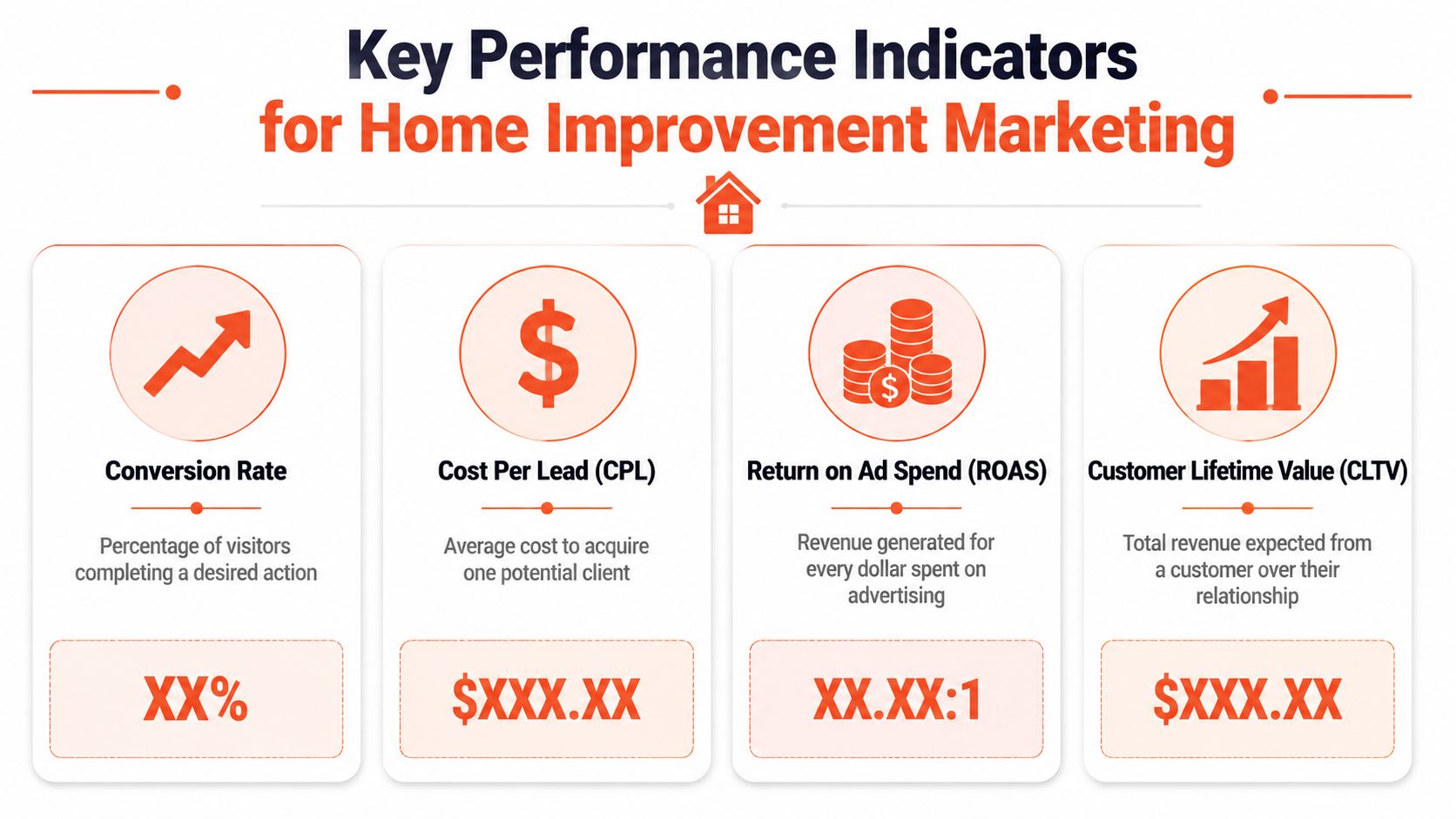
A practical scorecard for agents usually includes:
- Lead quality from each channel
- Speed to first response
- Showing or consultation conversion
- Seller conversion in listing presentations
- Closed-loop feedback on which visual assets influenced decision-making
That's enough to refine the system without drowning in dashboards.
Your Actionable 2026 Marketing Playbook
The old listing model treated marketing as documentation. Take the photos, write the remarks, launch the listing, and distribute it widely. That isn't enough now.
The better model treats home improvement marketing as a decision-acceleration system. You use visuals, copy, sequencing, and fast follow-up to help buyers understand value sooner and help sellers trust your process earlier.
What winning agents do differently
They don't rely on generic exposure language in listing presentations. They show how they'll turn a property's weak spots into a tighter narrative.
They don't treat social media as a side task. They use it to create desire with transformation-focused creative.
They don't spend the whole budget on launch day. They plan for nurture, variation, and repeated touches because people need reminders and proof before they act.
What stops working in 2026
A few habits are getting weaker every year:
- As-is marketing with no visual interpretation
- One set of photos for every channel
- Slow vendor chains for simple asset updates
- Listing presentations built on promises instead of examples
The strategic trade-off is clear. Manual, fragmented workflows can still produce good output, but they usually can't keep pace when you need fast revisions, multiple visual directions, and consistent follow-up.
A practical operating standard
If you want a simple standard for your team, use this:
- Identify the buyer hesitation point
- Create the visual that resolves it
- Distribute it in the channel where that decision happens
- Follow up with sequence, not randomness
- Review which assets moved the conversation
That's a more durable playbook than “post more content.”
For teams that want broader creative perspective on how production and marketing work together, Get Up Productions' guide to marketing is a useful outside reference because it reinforces the value of aligning message, media, and execution instead of treating content as decoration.
The agents who win listings in 2026 won't be the ones with the most marketing jargon. They'll be the ones who can show the clearest version of a property's potential, do it quickly, and repeat the process consistently across every listing.
Stop marketing properties as fixed objects. Start marketing possibilities.
Bounti Labs helps real estate teams turn a single property walkthrough into listing-ready visuals, copy, and transformation assets for staging, decluttering, restyling, and renovation concepts. If you want a faster way to market potential instead of just current condition, explore Bounti Labs.