
You’re probably here because a seller just signed, the photos aren’t booked yet, and the house doesn’t look like it should online. Maybe it’s vacant and cold. Maybe it’s occupied and visually noisy. Maybe the seller typed “home staging services near me,” found ten vendors, and asked you which one is worth hiring.
That’s the core problem. Not whether staging “works” in the abstract, but which staging move produces the strongest return for this specific listing, on this timeline, with this budget.
I treat staging as part of the listing’s marketing system, not as décor. Sometimes that means hiring a physical stager and moving quickly. Sometimes it means skipping the truck, warehouse, install team, and rental cycle entirely and using digital staging to solve the same presentation problem faster. The right answer depends on price point, condition, occupancy, and how fast you need market-ready assets.
Why Staging is a Marketing Investment Not a Cost
An empty listing exposes every weakness in your marketing. Rooms look smaller in photos. Buyers can’t read function. The primary bedroom feels like a blank box instead of a retreat. The dining room becomes “extra square footage” instead of a place to gather.
That’s why I don’t lump staging into seller prep with touch-up paint and mulch. Staging is a buyer communication tool. It tells the buyer how to live in the house, where the furniture fits, what each room is for, and why the layout works.
Buyers respond to usability, not just style
A lot of local home staging content still leans on broad advice like “keep it neutral” or “open the space up.” That’s incomplete. Emerging buyer preferences show more attention on functionality and storage, not just décor. If your staging plan doesn’t help a buyer understand livability, it’s decoration without strategy.
That shift matters when people search for home staging services near me. They’re usually comparing visual taste, but the key differentiator is whether the stager can shape buyer perception around function.
Practical rule: If the room’s purpose isn’t obvious in the first listing photo, staging has to solve that before anything else.
Two staging paths solve different problems
Modern listing prep usually gives you two tools.
The first is traditional physical staging. That works when the in-person showing experience needs to carry as much weight as the online presentation. Luxury homes, homes with awkward scale, and listings where furniture placement changes the feel of the walk-through often justify it.
The second is digital staging, including AI-powered staging. That works when speed, flexibility, and visual testing matter more than physical install. Vacant listings, builders, rental turnovers, and listings that need decluttering or style variation often fit this route better.
A useful reference point is seeing how presentation changes buyer interpretation room by room. These house staging before and after examples show why staging decisions should be tied to marketing outcomes, not personal taste.
What doesn’t work
Three mistakes show up constantly:
- Generic staging themes that ignore local buyer behavior
- Late staging after poor listing photos are already live
- Over-decorating rooms so buyers notice accessories instead of layout
The best staging decisions feel almost invisible. Buyers easily understand the home faster. That’s the whole job.
Finding and Vetting Your Local Staging Partner
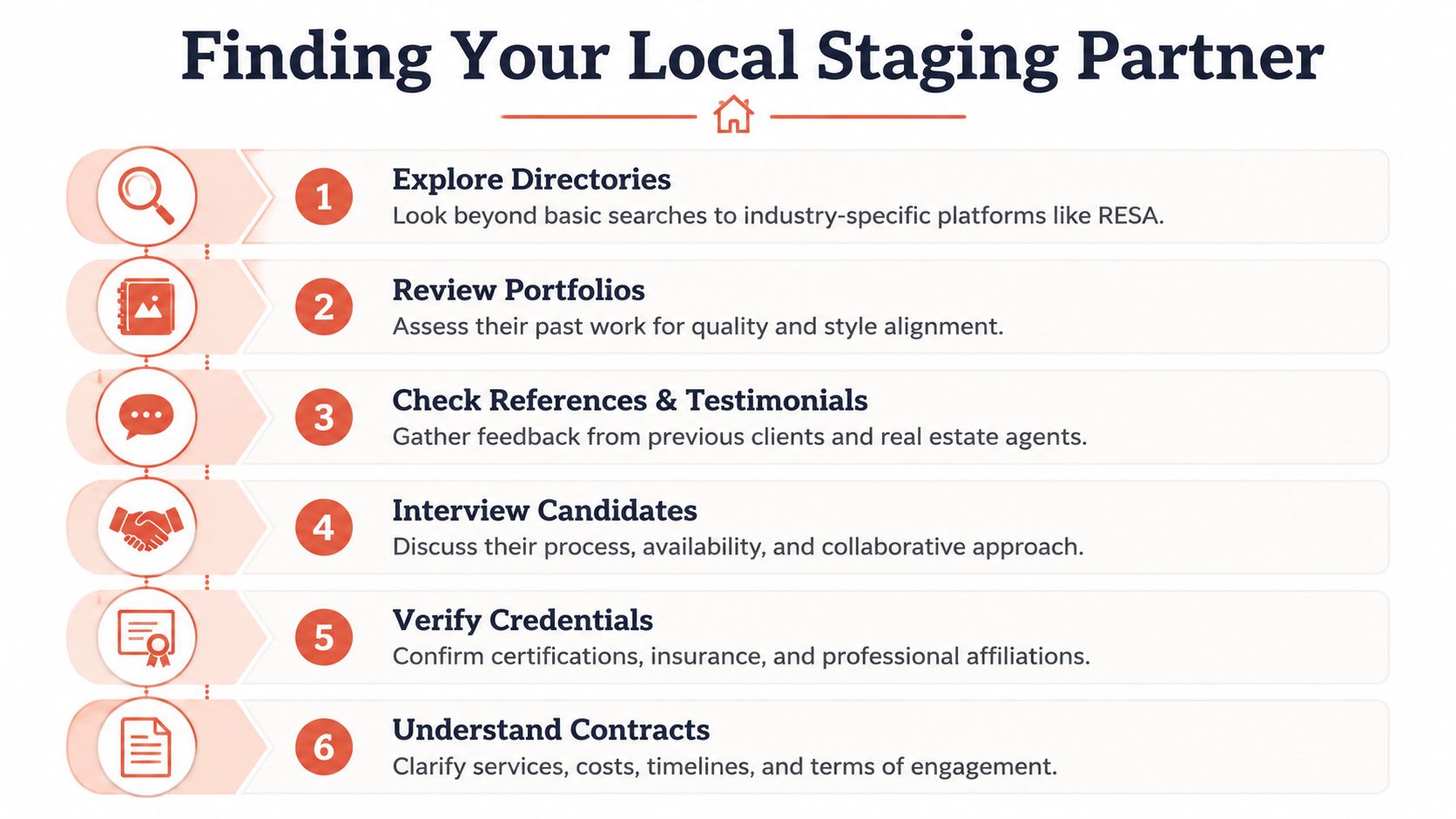
Typing home staging services near me into a search bar is a start. It isn’t a selection process.
The stager you hire influences more than aesthetics. According to National Association of Realtors findings summarized here, 82-83% of buyers’ agents said staging made it easier for buyers to visualize a property as a future home, and 47% of agents said staging influenced most buyers’ views of the property. That makes your stager part of the sales strategy, not a side vendor.
Where to look beyond search results
I’d rather build a short list from multiple channels than trust page-one rankings.
- Industry directories: Look for established professionals in staging associations and local trade groups.
- Agent referrals: Ask listing agents which stagers hit deadlines, not just which ones have pretty Instagram feeds.
- Photographer input: Real estate photographers know which stagers understand camera angles, lens distortion, and composition.
- Move-out and prep vendors: Good junk removal crews often know which stagers run organized installs because they see the property before and after prep. If you’re coordinating cleanout before staging, this guide to junk removal in Durham region, Durham region junk removal is a useful example of the kind of logistics resource that helps the prep timeline stay on track.
What to inspect in the portfolio
Don’t just ask whether the rooms look attractive. Ask whether the stager solves listing problems.
Look for range. Can they handle a dated suburban colonial, a downtown condo, and a larger vacant home without forcing the same style package on each one?
Then look for restraint. A strong portfolio shows furniture scaled correctly to the room, clean sightlines for photography, and layouts that clarify use. Weak portfolios usually reveal one of two issues: everything looks identical, or every room is overfilled.
Good staging doesn’t make buyers admire the stager. It makes buyers understand the house.
The questions that separate pros from decorators
A serious stager should be able to answer process questions cleanly and quickly. If they can’t, you’re not hiring a business partner. You’re hiring uncertainty.
| Category | Question |
|---|---|
| Process | How do you evaluate which rooms should be staged first for this market and price point? |
| Scheduling | What’s your current turnaround from walkthrough to install? |
| Photography | How do you coordinate with the photographer so furniture placement works on camera? |
| Inventory | Do you own your inventory, rent it, or use a mix? How do you avoid repeating the same look across listings? |
| Occupied homes | What’s your process when the seller stays in place during the listing period? |
| Vacant homes | Which rooms do you always stage, and which rooms do you decide case by case? |
| Risk management | Are you insured, and how do you handle damage claims or access issues? |
| Contracts | What triggers additional fees, extensions, or change orders? |
| Style fit | How do you adapt staging to local buyer demographics instead of using one universal aesthetic? |
| Results | How do you decide when physical staging isn’t the right recommendation? |
Red flags I take seriously
Some stagers lose the job before they ever quote.
- They can’t discuss buyer profile. If they only talk style, they’re missing the point.
- They’re vague on timing. Listing prep breaks when install windows are fuzzy.
- They don’t ask about photography. That tells you they still think staging is separate from marketing.
- Their contract language is thin. Ambiguity becomes conflict later.
The best local partner is usually the one who thinks like an operator. They know logistics, visual merchandising, seller management, and listing launch timing. That’s who belongs on your vendor roster.
Decoding Staging Costs and Proving the ROI
Sellers rarely object to staging because they hate the idea. They object because no one framed the math clearly.
The conversation gets easier when you separate price from return. Staging has a real cost. It also has a job: improve presentation enough to protect pricing power and buyer response. If it can’t do that, don’t recommend it.

What sellers are usually paying for
Most quotes bundle several categories together:
- Consultation: The stager walks the property and gives a room-by-room plan.
- Edit and prep guidance: What stays, what leaves, what gets packed, and what gets replaced.
- Furniture and accessories: The visible part sellers focus on first.
- Labor and logistics: Delivery, install, styling, pickup, and schedule coordination.
- Rental period: Especially relevant for vacant listings and slower markets.
That’s why two staging quotes can look similar at first and produce very different experiences. One includes project management and launch coordination. The other mostly includes furniture.
The numbers that matter in the seller conversation
The strongest data point I use is simple and specific. According to Q2 2025 data from the Real Estate Staging Association, staged properties achieved an average sale-to-list price of 109% with an average ROI of 4,415% on staging investments averaging $4,387.
That changes the tone of the discussion. You’re no longer asking a seller to spend money on pillows and chairs. You’re asking whether they want to invest in positioning the listing for a stronger outcome.
A seller also needs context on common spend ranges. The verified data supports these practical benchmarks:
| Cost component | Benchmark from verified data |
|---|---|
| Typical staging cost | $2,300 to $3,200 or about 0.75% of a home’s price |
| Median professional staging cost | $1,500 |
| Consultation-only staging | About $500 |
| Standard home upfront budget | Typically $1,600 to $2,400 |
| Average Q2 2025 staging investment | $4,387 |
How I explain it to sellers
I keep the message direct.
“This isn’t a decorating upgrade. It’s part of the launch budget. We’re spending to improve how buyers understand the home before they ever step inside.”
Then I get specific about trade-offs.
If the home is already well furnished and only needs editing, a consultation may be enough. If it’s vacant and every room feels smaller on camera, partial or full staging often makes more sense. If the seller is highly cost-sensitive and the listing needs visual help more than physical install, digital staging may be the smarter recommendation.
What doesn’t justify the spend
Not every listing needs the same level of staging. I push back when:
- The home is visually strong already and only needs minor styling
- The seller wants full-house staging when only a few rooms drive perception
- The market window is too compressed to support a complicated install
- The quote is asset-heavy but strategy-light
That’s where agents lose credibility. The job isn’t to sell staging at all costs. The job is to allocate prep dollars where they have the highest effect on price and buyer response.
Managing the Staging Project From Contract to Completion
A lot of staging problems aren’t design problems. They’re sequencing problems.
If the contract is loose, the seller doesn’t know what leaves the house, the photographer is booked too early, or the install crew arrives before prep is done, the whole launch slips. That’s expensive because the first impression window is narrow.
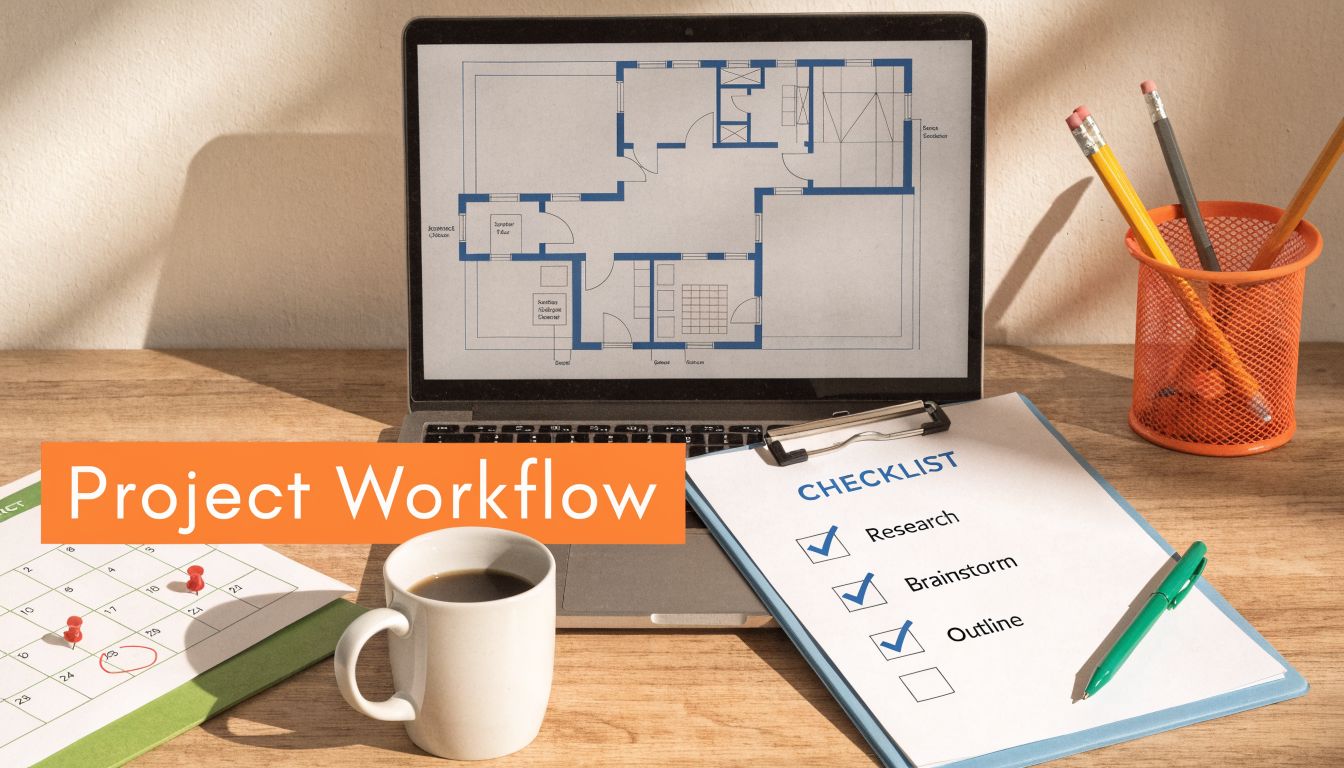
According to research summarized here, properties staged before photography and listing generation achieve 73% more online views, and the optimal workflow is to execute staging within the first 2-7 days of property acquisition. That’s the operational rule that should drive your calendar.
The contract points I won’t leave vague
A staging agreement needs more than a fee and an install date.
Use a checklist that covers:
- Scope of work: Which rooms are included, and whether the job is consultation, occupied staging, partial vacant staging, or full vacant staging
- Access rules: Who opens the property, who can approve changes, and what happens if the seller isn’t ready
- Term length: Especially important when rental furniture is involved
- Damage and liability language: Spell out handling for walls, floors, elevators, and shared building spaces
- Photo-use permissions: Some stagers want rights to use listing images in their portfolio
- Extension terms: What happens if the property doesn’t sell before pickup timing
The timeline that keeps the launch clean
This is the sequence I prefer for a standard listing:
Walkthrough and decision-making
Decide whether the listing needs physical staging, digital staging, or just a consultation edit.
Seller prep
Remove excess furniture, personal items, and anything that competes with the room’s function. If the seller is moving simultaneously, practical decluttering guidance like this expert advice for urban movers can help them make faster keep-pack-donate decisions.
Install scheduling
Lock the install before photography. Don’t “fit it in later.”
Photography and marketing production
Shoot only after the home is fully camera-ready.
Showing period management
Keep the home aligned with how it was photographed.
De-staging
Coordinate pickup with closing milestones, not guesswork.
A delayed install doesn’t just delay staging. It delays photos, listing copy, launch timing, ad creative, and every downstream marketing task.
Common execution failures
The most avoidable mistakes are operational.
| Failure point | What it causes |
|---|---|
| Seller prep isn’t finished | Install crew spends time editing instead of staging |
| Photographer arrives too early | Photos miss the presentation upgrade |
| Contract lacks extension language | End-of-term billing disputes |
| Too many decision-makers | Slow approvals and mixed direction |
| No showing maintenance plan | Home drifts away from launch-day appearance |
Good staging management feels boring. That’s a compliment. It means the listing launches on schedule, the seller knows what to expect, and nobody is improvising on install day.
The AI Alternative When Speed and Cost Matter Most
Traditional staging solves a real problem. It also comes with friction. Scheduling. Inventory. hauling. installation windows. rental terms. seller coordination.
That’s why more agents are looking at digital options first, especially for vacant listings and fast-turn inventory.

According to recent survey findings summarized here, 55–60% of agents believe virtual staging increases perceived value, yet only 30–35% consistently use it. That gap exists because many agents still don’t have a clear rule for when to stage physically and when to stage digitally.
Where digital staging wins
Digital staging is strongest when the listing’s main problem is visual interpretation, not in-person sensory experience.
That includes:
- Vacant rooms that feel smaller or less purposeful in photos
- Properties with tight prep timelines
- Listings where you want multiple style directions
- Homes that need digital decluttering before marketing
- Developments or investor inventory where repeatable asset production matters
For this type of work, tools like Bounti Labs can turn listing visuals into staged, decluttered, or restyled marketing assets from a single walkthrough, which changes how quickly a team can get from raw property to launch-ready materials. If you want a practical breakdown of workflows and use cases, this virtual staging guide is a useful starting point.
Where physical staging still earns its place
Digital staging doesn’t replace everything.
Use physical staging when the seller, buyer pool, or property demands a strong on-site experience. That often applies to homes where scale, flow, or finish level need to be felt in person. It also matters when the seller expects a hands-on presentation strategy and wants the property to show exactly as marketed.
Here’s the simplest comparison:
| Situation | Better fit |
|---|---|
| Vacant listing that needs photos fast | Digital staging |
| Occupied listing that needs editing and furniture removal | Consultation or light physical staging |
| Luxury property where showing experience is central | Physical staging |
| Builder inventory with many similar units | Digital staging |
| Listing where buyers need to compare multiple design directions | Digital staging |
| Seller wants the home furnished for open houses | Physical staging |
A quick product walkthrough helps make the difference tangible:
What agents get wrong about AI staging
The mistake isn’t using AI. The mistake is using it without a policy.
You need consistency on disclosure, image selection, and style realism. Don’t publish fantasy interiors that misrepresent scale or room function. Don’t use digital staging to hide condition issues that will show up the moment a buyer enters the property.
Digital staging works when it clarifies potential. It fails when it creates a version of the house that buyers won’t recognize in person.
Used correctly, AI staging isn’t a cheaper imitation of traditional staging. It’s a separate tool with different strengths. The skill is knowing when those strengths line up with the listing.
Choosing the Right Staging Strategy for Every Listing
The agents who win more listings don’t argue that one staging method is always better. They show sellers that they know how to choose the right one.
That’s the shift. Stop treating staging as a fixed service. Start treating it as a listing strategy decision tied to speed, budget, buyer profile, and the role photos will play in the sale.
Use traditional staging when the showing experience matters most
Physical staging usually earns the budget when:
- The home is higher-end and buyers expect a polished in-person experience
- The layout is hard to read without actual furniture in place
- The seller wants open houses and private showings to match the listing photos
- The house already has enough lead time for consultation, install, photography, and showings
It also helps when the seller needs to see the transformation physically before they buy into the plan. That’s common in occupied homes where editing choices can feel personal.
Use AI or digital staging when speed and flexibility matter more
Digital staging is often the smarter move when:
- The property is vacant
- You need launch-ready visuals quickly
- The seller is budget-sensitive
- You want to test more than one look
- The listing needs decluttering, restyling, or renovation visualization
Good digital editing matters as much as staging itself. If your team is comparing workflows, these tools for best AI photo editing software are worth reviewing alongside staging options.
The practical decision filter I use
Ask four questions before recommending anything:
- What’s blocking buyer confidence right now? Empty rooms, dated visuals, clutter, or confusing function?
- Where will the first impression happen? Online, in person, or both?
- How much time do we really have before launch?
- Which spend changes perception the most for this property?
If the answer points to physical experience, stage physically. If it points to visual speed and optionality, go digital.
One more point matters here. Room planning still has to make sense no matter which method you choose. If you want a plain-language refresher on layout logic, this piece on how to avoid common room planning mistakes is useful because it keeps the focus on furniture placement and flow rather than styling trends.
The seller doesn’t need a lecture on staging theory. They need a recommendation they can trust. When you can explain why one approach fits their listing better than another, you stop sounding like a vendor coordinator and start sounding like an advisor.
If your team wants a faster way to create marketing-ready property visuals, Bounti Labs is worth a look. It helps real estate teams generate listing descriptions, pull stills from walkthroughs, and produce AI-powered decluttering, staging, restyling, and renovation visuals so you can choose the right presentation strategy for each property without slowing down the launch.