Most advice on how to become a house stager is stuck in an older business model. It assumes you need a storage unit, a truck, a furniture budget, and a tolerance for logistics before you can even take your first client.
That path still exists. It also burns cash fast.
The better 2026 play is to build staging skill first, portfolio second, and physical overhead last. That shift matters because staging has real commercial value. Professionally staged properties spend 73% less time on the market and can sell for up to 25% more, while 82% of buyers' agents say staging helps buyers visualize the property as their future home, according to The Zebra’s home staging statistics roundup.
That combination changes the opportunity. Sellers and agents already understand the upside. New stagers no longer have to copy the old capital-heavy model to serve that demand. AI-powered virtual staging gives you a lower-cost way to show taste, solve layout problems, and present a listing well before you own a single chair.
A modern stager still needs judgment. Software doesn't replace buyer psychology, room flow, or restraint. But it does remove a major startup barrier. If you're serious about learning how to become a house stager, the shortest path now is not buying more stuff. It's getting good at making rooms read better on camera, in person, and online.
The Modern House Staging Opportunity
The staging business is attractive for one reason. It solves a problem agents get paid to solve. Homes need to photograph well, show well, and help buyers imagine living there.
That demand isn't theoretical. Agents see it in listing performance and buyer reactions. A stager who can improve presentation is not selling throw pillows. They're helping move inventory.
Why the opportunity is stronger now
The old model created a hard barrier to entry. New stagers were told to buy inventory first and figure out clients later. That's backward. A smarter operator learns design decision-making, builds a visual body of work, and uses digital tools to test styles before committing to a physical inventory strategy.
That approach also matches how people shop for homes now. Buyers often meet a property online before they ever step inside. If a room looks awkward, empty, or dated in the listing photos, the damage happens early.
Staging today is part design service, part marketing service, and part sales enablement for agents.
The practical takeaway is simple. You don't need to become a warehouse manager to become useful. You need to become the person who can look at a room and know what the buyer should notice first, what should disappear, and what should change for the camera.
What the modern toolkit looks like
A modern house stager works across three lanes:
- Physical staging judgment: You need to understand scale, color, lighting, and furniture placement.
- Virtual presentation: You need to know when AI staging is appropriate and when an occupied home needs lighter-touch edits, decluttering guidance, or restyling.
- Business execution: You need to package services in a way agents can buy quickly and repeatably.
That third lane is where many beginners struggle. They spend months studying aesthetics and almost no time learning how listings move, how agents choose vendors, or how to price a package that doesn't collapse under revisions.
If you're entering now, that's an advantage. You can build around lean operations from day one. You can start with consultations, occupied staging guidance, virtual staging, and listing presentation support. Then add physical inventory only if your market and margins justify it.
Developing Your Core Staging Skills and Expertise
Skill comes before certification in this business. House staging has no single required license path, so clients judge the work, the photos, and the experience of working with you more than a badge on your site, as explained in HomeByMe’s guide to becoming a home stager.
That changes how beginners should train. Buy education that sharpens your eye, improves your process, and helps you produce better listing images. Skip anything built to signal status without improving outcomes.

In 2026, that skill stack is wider than many new stagers expect. You still need taste. You also need to know what reads well on camera, what should stay physical, what can be handled virtually, and how to use AI without producing fake-looking rooms that hurt trust.
Learn the skills clients actually pay for
Start with the work that changes listing performance and helps agents sell the service to homeowners.
- Spatial planning: Rearrange a room so it reads larger, calmer, and easier to use.
- Color editing: Spot finishes and textiles that flatten the room or distract in photos.
- Buyer psychology: Remove personal friction and create broad appeal without draining all warmth from the space.
- Visual hierarchy: Control where the eye lands first in a listing photo.
- Communication: Explain edits in plain language to sellers who are emotionally attached to what needs to go.
- Digital judgment: Know when AI staging, virtual furniture placement, or simple photo cleanup is enough, and when a room needs hands-on styling.
That last point matters more than many training programs admit. A low-cost staging business now starts with decisions, not inventory. If you can assess a listing fast and recommend the cheapest change that improves the photos, you are already acting like a profitable operator.
If you want a practical design refresher, Lewis and Sheron's expert design insights are useful because they stay grounded in room-by-room styling choices.
Study listings like a marketer
Beautiful interiors can teach taste. They do not always teach sales.
Review active and sold listings in your market every week. Compare homes that photograph cleanly with homes that feel crowded, dim, or confused. Pay attention to the decisions behind the images, not just whether the room looks expensive.
Use questions like these:
- What does the camera reward in this room?
- Which pieces make the footprint look smaller than it is?
- What can be removed before anything new is added?
- Does the room communicate one clear use?
- Would this room benefit more from physical edits or virtual presentation?
Strong before-and-after analysis speeds up this process. Reviewing house staging before and after examples trains your eye to connect specific edits with changes in perceived value.
Practical rule: If you cannot explain why a room works in one clear sentence, you are not ready to sell the recommendation.
Build judgment through repetition, not more mood boards
Mood boards are easy. Occupied homes are harder, and they teach faster.
Practice on spaces with limits. Tight budgets. bad lighting. oversized furniture. seller resistance. Those constraints are normal in paid work, especially if your model starts with consultations, occupied staging, and virtual staging instead of full installs.
A simple training sequence works well:
- Restyle your own home and shoot each room from listing angles.
- Create multiple versions of the same room, including one physical reset and one virtual concept.
- Help friends, family, or local investors with low-risk occupied staging projects.
- Review the photos critically for glare, scale problems, dead corners, and visual noise.
- Repeat the same room again until your decisions get faster and cleaner.
I tell new stagers to practice restraint before styling flair. Cutting two chairs, one lamp, and a loud rug often improves a photo more than adding a truckload of decor.
A quick visual walkthrough can help you think more like a working stager:
The expertise gap beyond design
The bigger gap is usually business judgment.
Plenty of beginners can spot a bad layout. Fewer can turn that observation into a scoped recommendation, a fast client approval, a revision process that does not eat their margin, and a final image set that agents will order again. That is why AI and virtual staging create such a strong opening for new operators. They cut storage, delivery, and damage risk, but they raise the bar on taste, prompt control, image review, and client expectation management.
You do not need mastery on day one. You need enough skill to improve the room reliably, enough judgment to choose the right staging format, and enough discipline to avoid overselling what a digital transformation can do.
Building a Winning Portfolio Without Breaking the Bank
A portfolio wins work long before a website does. If you're learning how to become a house stager, your first job is not buying furniture. It's creating proof that you can improve a property's presentation.
Traditional portfolio building is expensive because every project drags physical overhead behind it. Furniture sourcing, storage, movers, install time, pickup time, and damage risk all show up before you've built predictable revenue.
The lean model is different. You build a hybrid portfolio with a small amount of hands-on work and a larger bank of virtual transformations that show range, restraint, and market awareness.
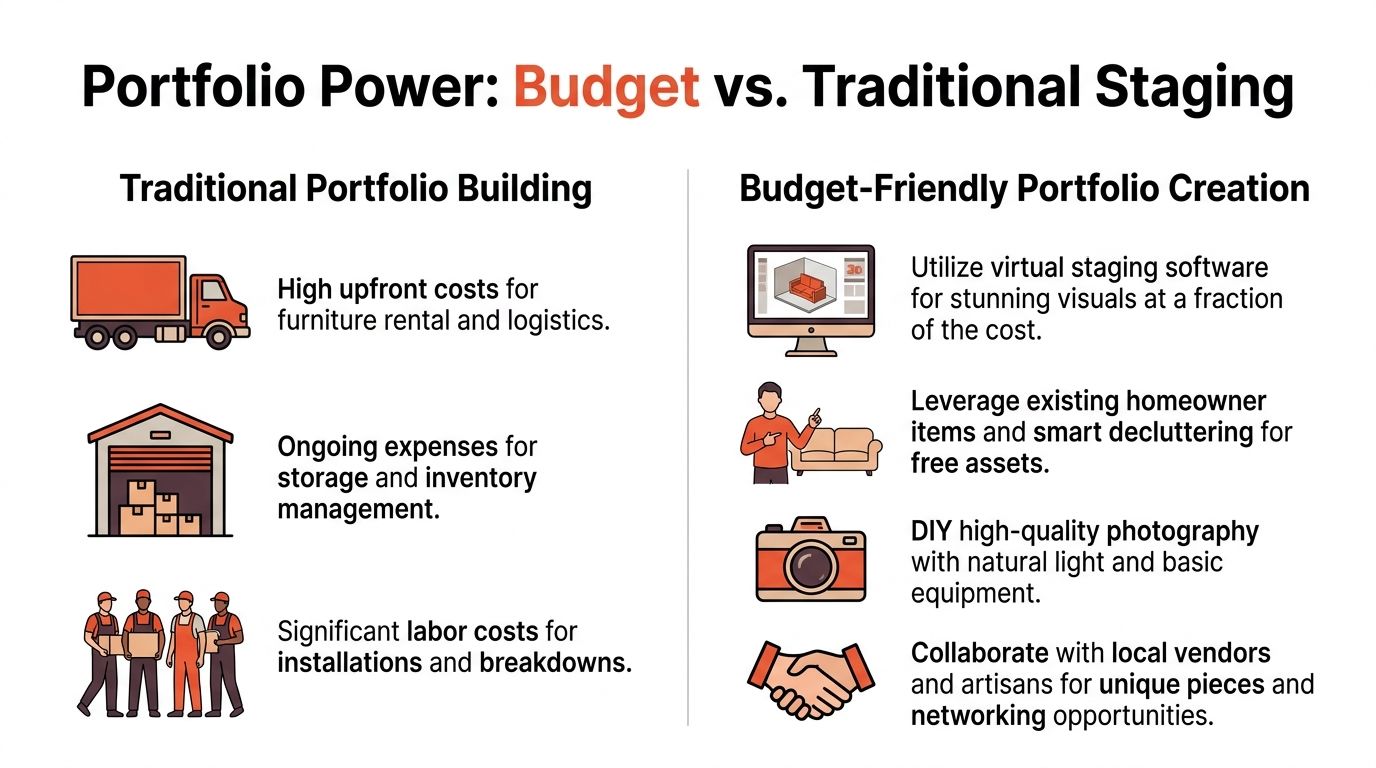
Traditional versus lean portfolio building
| Approach | What you gain | What it costs you |
|---|---|---|
| Traditional physical staging | Real install experience, moving logistics, tactile styling practice | Cash, time, labor coordination, storage pressure |
| Lean AI-hybrid staging | Fast visual variety, low startup costs, easier testing across styles | Requires strong judgment so the visuals don't look fake or generic |
The reason the lean model works now is simple. AI-powered virtual staging tools offer a low-barrier entry point and bypass the need for a $10,000+ furniture inventory. They also matter commercially because 68% of agents now use virtual staging, which makes tool fluency a practical market skill, according to Staging Studio’s expert roundup.
What to include in a starter portfolio
You don't need dozens of projects. You need enough examples to prove you can solve different listing problems.
Include a mix of these:
- Vacant rooms: Show that you can establish scale and purpose.
- Occupied rooms: Show editing skill. Most beginners add too much when they should remove more.
- Awkward spaces: Nooks, narrow dining areas, bonus rooms, and small bedrooms reveal whether you can think.
- Different styles: Keep them market-appropriate. Don't force luxury styling into an entry-level suburban listing.
A strong portfolio page also needs context. Show the before image, the after image, and a short note about the decision. Explain that you turned a vague sitting room into a home office, corrected scale in the living room, or simplified a crowded primary bedroom so it photographed cleanly.
A practical low-cost build sequence
Start with one physical practice project. Use your own home or help someone you know. Focus on decluttering, furniture repositioning, textile swaps, and better photography.
Then expand digitally. Use a virtual staging workflow to create alternate looks for vacant spaces and test several buyer-friendly styles. For this, a guide on virtual staging for real estate listings is useful, helping you think about output quality, room realism, and when digital staging supports the listing instead of distracting from it.
Don't make your portfolio a gallery of tricks. Make it a file of solved problems.
The strongest beginner portfolios are narrow and believable. They don't try to prove you can stage every property type for every client. They show that you can improve presentation, understand listing goals, and make design decisions with discipline.
Pricing Your Services and Crafting Bulletproof Contracts
A lot of new stagers undercharge because they're nervous. Then they overdeliver, revise too much, and discover they've built themselves a demanding job instead of a business.
Pricing starts with clarity about what you're selling. Consultation is one product. Occupied staging support is another. Virtual staging is another. Full-service physical staging is a different animal entirely because labor, sourcing, scheduling, and liability all increase.
Price the scope, not your insecurity
You don't need a complicated menu. You need clear offers with limits.
A practical service mix might include:
- Consultation only: For sellers who need a room-by-room action plan.
- Occupied staging day: For edits using the seller's existing furniture and accessories.
- Virtual staging package: For vacant listings that need MLS-ready visuals.
- Hybrid package: Consultation plus a set of virtually staged images for marketing.
Keep each package tight. State how many rooms are included, how many revisions are allowed, what the turnaround looks like, and whether photography guidance is part of the service.
The income reality matters too. Veteran stagers can earn over $75,000, while median first-year income is around $28,000, and newcomers without a solid business plan and steady lead generation are more likely to struggle, according to Indeed’s career guide for staging homes jobs.
That gap tells you something important. Talent isn't enough. The business side decides who lasts.
What your contract must cover
Many staging disputes are preventable. The problem is usually not the room. It's the missing boundary.
Your agreement should cover at least these points:
Scope of work
Define exactly what you're doing. Name the rooms, the service type, and what deliverables the client receives.Payment terms
State deposit expectations, final payment timing, and what happens if the project expands after approval.Revision policy
Limit revision rounds. Open-ended revisions kill margins fast, especially in visual work.Scheduling and access
Clarify who provides entry, who must be present, and what happens if the property isn't ready.Photo usage
Get permission to use before-and-after images in your portfolio and marketing.Liability and condition notes
Document pre-existing damage, fragile items, pet issues, or unsafe conditions before work begins.
If you want a good plain-English refresher on service agreements, this overview of negotiating service contracts is useful because it focuses on the practical purpose of the contract, not legal theater.
A weak contract doesn't make you look easy to work with. It makes you look inexperienced.
How professionals avoid common pricing mistakes
New stagers usually make one of three errors:
- They bundle too much and absorb extra labor.
- They quote emotionally based on wanting the job.
- They skip written change approvals and end up doing unpaid add-ons.
A better system is to create one standard proposal template and use it every time. Adjust scope. Don't reinvent the process for each lead.
That discipline also helps with confidence. When your offers are defined, your pricing sounds firm because it is.
Marketing Your Staging Business to Land Your First Clients
The fastest way to get early staging clients is not building a broad lifestyle brand. It is solving an active listing problem for the people who already control listing inventory.
For a new stager in 2026, that usually means agents first, sellers second. If you are launching with AI-assisted virtual staging instead of a warehouse full of furniture, this is even more true. Your edge is speed, lower cost, and clear visual proof. Agents buy that faster than they buy a design story.

Focus on the buyer of the service
Listing agents are not hiring you because you have taste. They are hiring you because a room that reads poorly in photos costs attention, showings, and seller confidence.
A useful pitch stays close to business outcomes:
- You help occupied homes look more organized and photo-ready.
- You help vacant rooms feel understandable online.
- You give sellers a realistic action plan instead of vague advice.
- You provide side-by-side visuals that make approval easier.
That last point matters more than many new stagers realize. Virtual staging, AI room mockups, and decluttering previews shorten the sales cycle because the client can react to something concrete. If your service is low-friction and the result is easy to picture, the agent has less explaining to do.
What to build first
Keep your marketing stack lean. Early on, a simple system beats a polished one with too many moving parts.
Use four assets:
- A one-page website: Services, portfolio, service area, contact form.
- A focused social profile: Before-and-afters, room critiques, listing prep tips, short case breakdowns.
- A PDF portfolio: Small enough to email quickly after a conversation.
- A clear offer sheet: What you do, turnaround time, starting price, and what the client needs to send you.
If your portfolio images need cleanup, color correction, or presentation polish before you show them to agents, use one of the best AI photo editing software tools to improve consistency. Clean image standards help more than flashy branding.
Outreach that actually gets replies
Generic introductions get ignored. Listing-specific outreach gets read.
Start with agents who already have active listings in your target zip codes. Review the photos, identify one visual problem, and send a short note with a practical suggestion. A cramped living room, an empty primary bedroom, or a cluttered home office gives you an opening.
Good outreach angles include:
- A listing-specific observation: Point out one room that is not reading well online and suggest a fix.
- A micro audit: Offer a short photo-readiness review with three to five room notes.
- A sample transformation: Send a relevant before-and-after, ideally matched to the agent's market and price band.
- A fast-turnaround offer: Give the agent a small starter service with a tight deadline and clear deliverable.
Send fewer messages. Make each one better.
I have found that agents respond best when they can immediately picture using you on the listing in front of them. A message about "helping homes look their best" is forgettable. A message about "the empty dining area in your Elm Street listing looks undersized in the current photos, and I can mock up two stronger layouts by tomorrow" gives them a reason to reply.
Build referral channels around listing prep
Early referrals often come from people who touch the property before it goes live. Real estate photographers, cleaners, organizers, handymen, painters, movers, and transaction coordinators all hear about listing problems early.
These partners do not need a long pitch. They need to know three things. You reply quickly, your process is clear, and your visuals help the agent market the property.
This is one place where AI-supported staging creates a real advantage. Physical stagers often need more lead time, transport, and scheduling coordination. A virtual-first business can handle smaller jobs, awkward spaces, and faster deadlines without the same overhead. That makes you easier to refer.
The positioning mistake that slows growth
New stagers often market themselves as high-end design consultants too early. That sounds polished, but it can confuse the actual buyer.
Your early brand should communicate speed, clarity, and commercial usefulness. Show that you understand listing photos, buyer perception, room function, and seller constraints. Show that you can work with occupied homes, imperfect finishes, dated furniture, and short launch windows.
That is what gets first clients.
If you want a broader view of how AI is changing outreach and client acquisition on the real estate side, Transforming real estate lead generation with AI is a useful read because it explains how agents are already using AI to speed up prospecting and marketing decisions. That matters because your offer has to fit the workflow your client is already adopting.
Scaling Your Business with Efficiency and AI
Growth in staging doesn't come from doing everything by hand forever. It comes from building a repeatable workflow that lets you handle more listings without lowering quality or turning yourself into the bottleneck.
That starts with standardization. Every project should move through the same basic pipeline. Inquiry, property review, proposal, asset collection, staging plan, client approval, delivery, follow-up.
Where AI creates leverage
AI is most useful when it removes repetitive production work and lets you spend more time on judgment. That includes image generation for virtual staging, decluttering previews, listing visuals, copy support, and room restyling options.
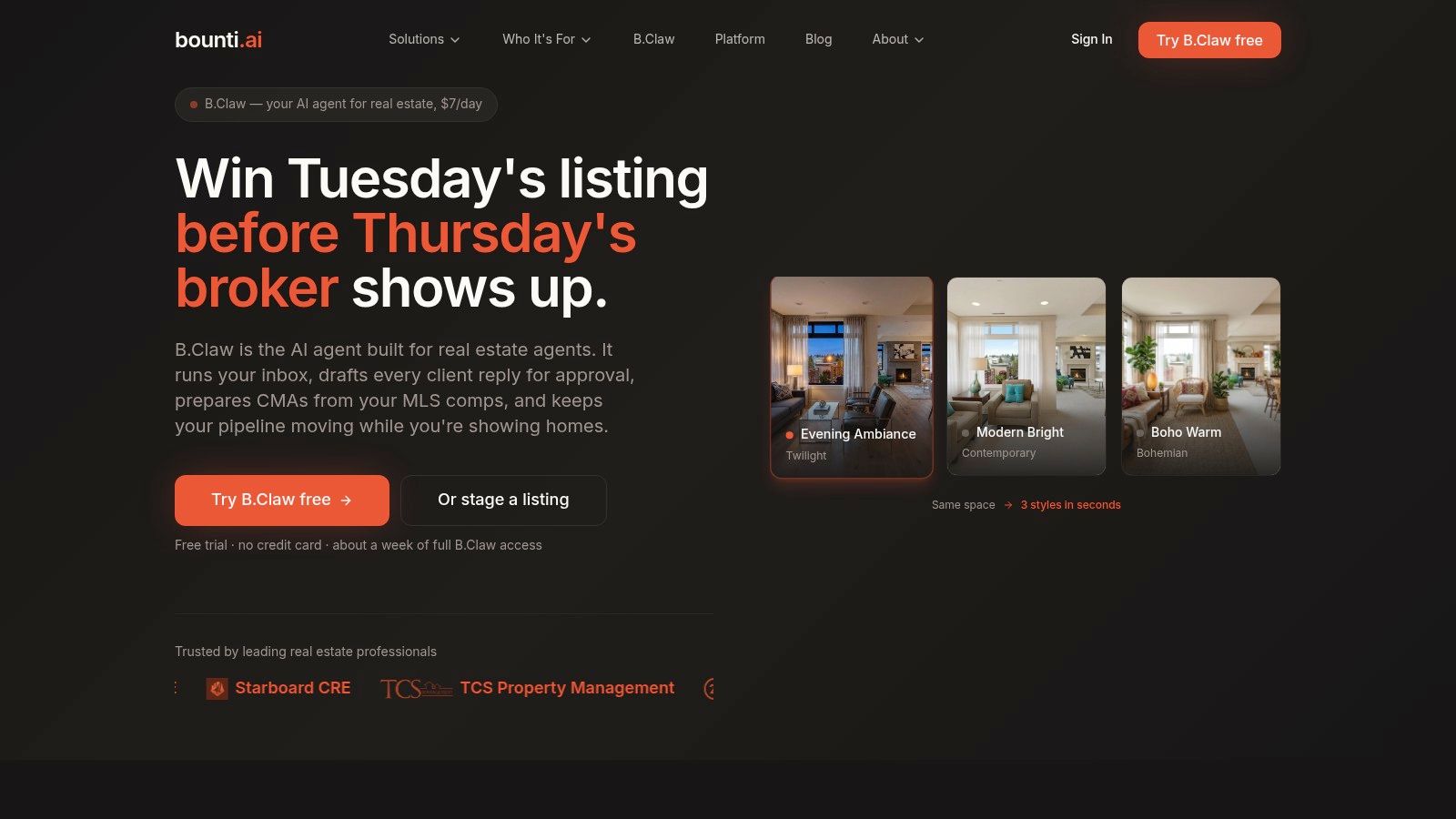
Used well, that changes your operating model. You can review a walkthrough, generate presentation options faster, and respond to agents while the listing is still being prepared. That speed matters because the client often isn't choosing the deepest design thinker. They're choosing the expert who can solve the visual problem before the launch window closes.
If you're building a broader real estate workflow around AI, this piece on Transforming real estate lead generation with AI is useful because it shows how visual presentation, marketing speed, and client capture increasingly live in the same operating system.
Build systems before you hire
Don't hire an assistant just because you're busy. Hire after you've documented the work well enough that someone else can repeat parts of it.
Create simple operating documents for:
- Client intake
- Photo and walkthrough requirements
- Style selection rules
- File naming and asset delivery
- Revision handling
- Follow-up and testimonial requests
You should also improve your visual pipeline. Better source images make every service easier to deliver. A guide to the best AI photo editing software for real estate teams can help you think through the production side, especially if you plan to support agents beyond staging alone.
Where to expand next
The easiest expansion is not always more full-service physical staging. Often it's adjacent services that fit your existing eye and process.
Good next moves include:
- Color consultations
- Pre-listing walk-through reports
- Occupied seller prep packages
- Virtual restyling for stale listings
- Brokerage partnerships for repeat listing support
Scale the part of the business that's easiest to repeat, not the part that looks most impressive on social media.
A modern staging business can stay lean and still become substantial. The operators who last aren't the ones with the most inventory first. They're the ones with the clearest process, the strongest presentation standards, and the best use of tools.
If you want a faster way to launch or modernize your staging workflow, Bounti Labs is built for exactly that kind of operator. With one walkthrough, you can generate listing visuals, pull stills, create MLS-ready photos, and transform spaces with AI-powered decluttering, staging, restyling, and renovation concepts. For agents, stagers, and real estate teams that want lower overhead and faster turnaround, it's one of the cleanest ways to turn staging into a scalable service.