
A buyer can decide a lot before they ever step out of the car. One 2025 survey found buyers were willing to increase their offers by an average of $9,195 for homes with great curb appeal, and it ranked walkways (88%), gardens (68%), and shrubs or hedges (61%) among the most-liked exterior features. That should change how every listing agent thinks about prep.
If you're serious about how to improve curb appeal, stop treating it like a vague landscaping conversation. It's a conversion problem. The front exterior has one job. Get the buyer to want the showing before they've seen the kitchen, the primary suite, or the lot line.
The playbook that works isn't glamorous. It's ordered, fast, and biased toward what reads from the street and in photos. Clean sightlines. Defined edges. One focal point at the entry. No visual clutter. Then you use AI to tighten the final presentation and remove the friction that slows down listing prep.
The Weekend Curb Appeal Blitz for Fast Results
Most sellers don't need a renovation. They need a 48-hour reset that makes the house look maintained, clean, and easy to buy.
The fastest way to improve curb appeal is to follow the sequence that changes first impression. The National Association of REALTORS® styling guidance recommends starting with a curb check, then lawn normalization, then hard-surface detailing, including mowing cool-season grass to about 2.5 to 3 inches, edging sidewalks and driveways, mowing in alternating directions for a striped finish, and using pressure washing to reset the look of driveways, patios, and decks. That order matters because buyers see mess in layers.
Start with the curb check
Stand across the street and stop looking like an owner. Look like a buyer who's late to the next showing.
Ask four questions:
- What catches the eye first. Overgrown lawn, stained concrete, peeling paint, porch clutter, bins, hoses, or dead plants.
- What blocks the architecture. Shrubs covering windows, low branches hiding the entry, random decor hiding the front door.
- What reads as deferred maintenance. Dirty trim, cobwebs, algae on the walk, crooked numbers, a light fixture with bugs in it.
- What won't show up well in listing photos. Flat landscaping, muddy bed lines, patchy mulch, and anything that makes the house look dim.
Practical rule: Don't buy flowers before you remove the distractions buyers notice first.
Use the right order for the blitz
This is the weekend checklist I'd hand to a seller before spending money on bigger upgrades.
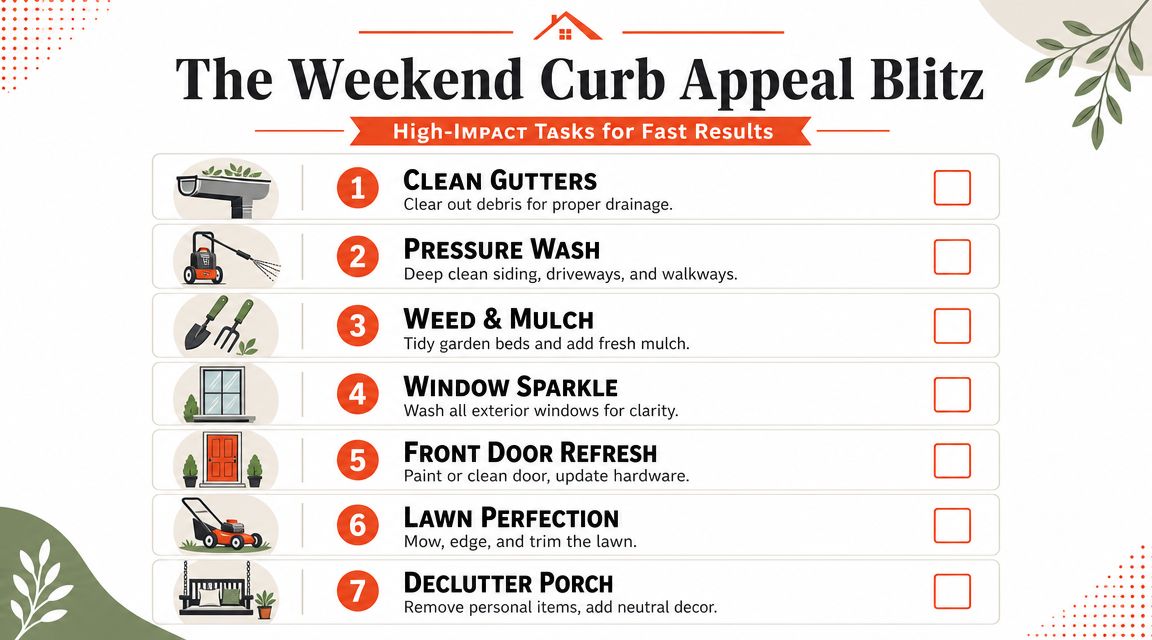
- Declutter the porch and front yard. Remove doormats that look tired, extra planters, kids' toys, delivery boxes, pet items, and seasonal leftovers.
- Normalize the lawn. Mow, trim, and edge. A clean edge along the sidewalk does more for the photo than another decorative item on the porch.
- Pressure wash the hard surfaces. Driveway, walkway, front stoop, and visible patio. Dirt lowers the visual baseline for everything around it.
- Clean the entry. Wipe the door, glass, hardware, and light fixture.
- Trim what hides the home. Pull shrubs back from windows and the walk. Let the facade breathe.
- Mulch only after cleanup. Fresh mulch looks sharp when the bed edges are already defined.
- Check the shot. Stand back at street level and confirm the eye goes to the front door, not to clutter.
What works and what doesn't
A lot of sellers waste time on decorative fixes before they solve visible maintenance. That rarely pays off.
What works is simple:
- Defined edges beat extra accessories.
- Clean concrete beats another porch sign.
- One strong entry focal point beats several small decorative touches.
- Visible maintenance beats trendy styling.
If you're handling mixed-use assets or storefront-adjacent properties, the same exterior-cleaning logic applies to protecting commercial property value. Clean glass, clean pathways, and clean facade lines signal stewardship fast.
High-ROI Landscaping and Hardscaping Investments
After the weekend cleanup, the best spend is the approach buyers and the camera read first. Focus on the route to the door, the planting that frames the facade, and a few hardscape fixes that make the front elevation feel maintained and intentional.
National Association of Realtors reporting on remodeling projects found that standard lawn care, grounds care, and upgraded outdoor enhancements all deliver strong cost recovery because they improve first impressions without forcing a full exterior renovation. For listing agents, that matters because these projects are visible, fast to scope, and easier to tie to showing feedback than decorative extras.
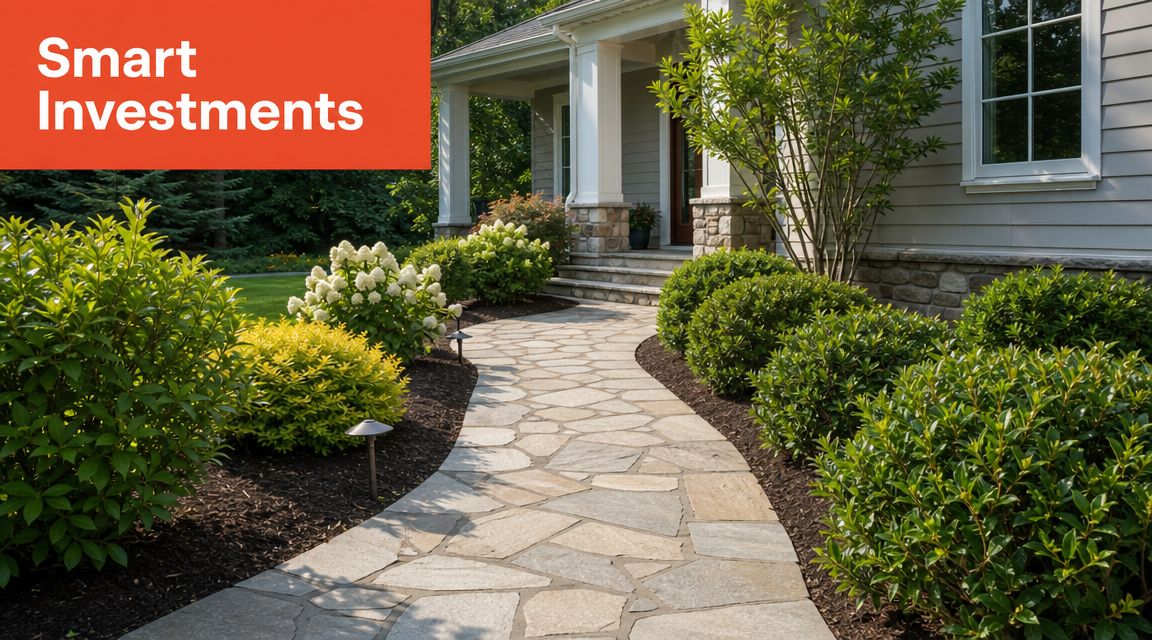
Put the walkway first
Walkways carry more weight than sellers expect. If the path is cracked, stained, narrow, or visually crowded, buyers start discounting the exterior before they process the front door or porch.
I usually price the options in ascending order. Clean and edge the existing path first. Repair trip points and broken pavers second. Replace only if the current material is beyond saving or the entry sequence is genuinely awkward in photos and in person.
The trade-off is simple. A corrected walkway changes how the whole property reads. A few decorative purchases rarely survive the first MLS image.
Useful upgrades here include:
- Cleaning and edge definition so the path reads clearly from the street
- Surface repair for loose pavers, chipped steps, and cracked transitions
- Low, simple path lighting if twilight photos are part of the listing plan
- Plant reduction along the approach to widen the visual corridor without rebuilding the walk
Shape the landscaping around the architecture
Planting should support the house lines. Buyers should see windows, porch columns, and the front door without hunting for them.
That usually means fewer species, fewer containers, and tighter massing. Mature shrubs that cover half the facade may have taken years to grow, but if they hide the architecture, they are costing the seller attention. In practice, I get better results from edited beds with clean repetition than from a yard full of one-off accents.
Fresh mulch helps, but only when the bed shape is already clear. Seasonal color works best at the entry, not scattered across the whole front yard. Overplanting reads like future work.
Exterior color can do just as much heavy lifting as plant material. If siding, trim, or the front door is dragging down the look, this guide on how to transform your home with paint is useful because it focuses on visible curb impact, not just maintenance.
Spend where the camera gets depth
Good curb appeal has depth from the street and clarity at the entry. I coach sellers to evaluate the yard in three zones because it helps them stop overspending on details the listing photos will barely register.
| Zone | What buyers should see | What to avoid |
|---|---|---|
| Street edge | Clean border, consistent turf line, simple framing | Decorative clutter, uneven edging |
| Mid-yard | Open view of the facade, balanced plant mass | Oversized shrubs blocking windows |
| Entry zone | Direct path, visible door, one focal point | Too many pots, mixed materials, visual noise |
That framework also works well with AI tools. A quick exterior mockup in Bounti or another listing workflow tool can show sellers whether the money should go to shrub removal, a bed reset, or a hardscape repair before they call contractors. It speeds up decisions and keeps the scope tied to what will show up in photos.
A short visual primer can help sellers understand why hardscape reads so strongly from the curb.
The best front-yard investments usually feel boring on paper. Straightened edges. Repaired steps. Simpler planting. Cleaner sightlines. Those are the fixes that get a house from curb check to MLS-ready without wasting budget on items buyers will not remember.
A Scalable Curb Appeal Budget Framework
The budget conversation goes sideways when agents talk in vague terms like “let's freshen it up.” Sellers hear expense. You need a framework that ties spending level to visible outcome.
A useful anchor comes from Thumbtack's 2023 survey. It puts a light curb-appeal boost at about $5K in resale value, a medium boost at $15K, and a bigger overhaul at $25K, while 82% of homeowners say landscaping is the biggest bang for the buck. That doesn't mean every seller should spend heavily. It means exterior work belongs in the ROI discussion, not the cosmetic-miscellaneous bucket.
Good budget
This is the lean version. Use it when the house is sound but visually flat.
Focus on:
- Front door refresh with paint or a deep clean
- New or cleaned house numbers
- Fresh mulch
- Basic lighting cleanup
- Porch decluttering
- Lawn edge definition
This tier works when the goal is to eliminate “negatives” instead of create a transformation. You're buying clarity. A lot of listings only need that.
Better budget
Most listing-side opportunities arise when a house needs more than cleanup, but not a rebuild.
Common moves:
- Professional exterior touch-up painting
- Updated light fixture at the entry
- Shrub removal or reshaping
- Bed redefinition
- More substantial pressure washing
- Visible repairs to path, steps, or rail details
This tier tends to work well because buyers can see the improvement immediately, and the seller hasn't spread money across low-visibility projects. The property starts to feel maintained by design, not patched for sale.
Budget filter: If the buyer can't see it from the street or in the first exterior photo, it probably doesn't belong in the first round of curb-appeal spend.
Best budget
Use this when the exterior has a structural presentation problem. The home may need a stronger arrival sequence, a better walkway, major paint work, or more serious hardscape repair.
Examples include:
- Walkway replacement or redesign
- Driveway resurfacing or major repair
- Larger-scale planting reset
- Extensive exterior paint program
- Entry reconstruction or door replacement
This tier can be justified on the right listing, but only if the rest of the home supports it. Don't put premium money into a front approach if the interior condition will immediately undercut the gain.
How to guide the seller decision
I like to frame the choice in terms of problem type:
- Presentation problem means cleanup and styling.
- Maintenance signal problem means paint, concrete, trim, lighting, and overgrowth.
- Design problem means the path, entry, or facade composition itself isn't working.
That keeps the conversation grounded. Sellers don't need a giant menu. They need to know which category they're in and what level of spend matches the listing.
Nailing the Money Shot for Your MLS Listing
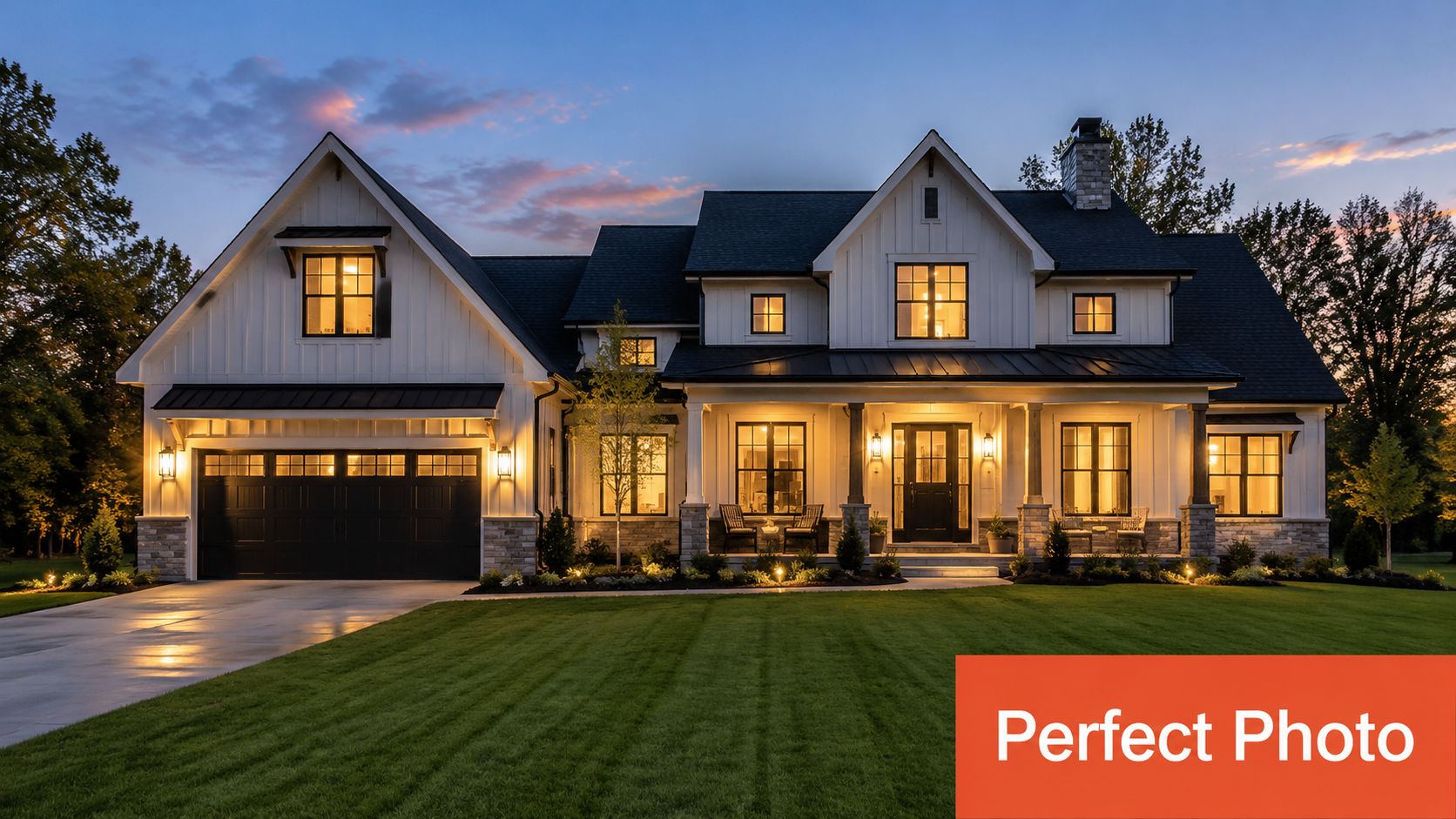
All the exterior work gets judged by one image. If the hero shot misses, a lot of the prep loses its effectiveness.
The best exterior listing photo isn't just pretty. It answers the buyer's first question fast. Is this home cared for, inviting, and worth a click? That's why the camera should emphasize the entry zone, the walkway, and the overall symmetry of the facade.
Set up the shot before the photographer arrives
Don't let the photographer become the cleanup crew. By call time, the bins should be gone, the cars moved, the hose wrapped, the porch simplified, and the path clean.
The same entry principles that help in person also help on camera. High-ROI curb appeal work concentrates on the front door area. Refresh the door, clean or update house numbers, add one statement light fixture, and apply fresh mulch. A common mistake is over-accessorizing. Better results come from one focal color near the entry and one clearly lit path, as outlined in this curb-appeal checklist from iScape.
Give the photographer a clear brief
A lot of agents assume exterior photography is automatic. It isn't.
Share a shot list that includes:
- Primary front elevation with the walkway visible
- Slight angle shot if it improves depth without distorting the facade
- Entry detail shot if the door area is a selling feature
- Twilight version when the lighting and windows support it
Also ask for attention to vertical lines. Crooked lines make a good home look amateur. So does an angle that hides the front door or lets the garage dominate the frame.
Use editing for cleanup, not deception
Some distractions are hard to control on shoot day. Gray sky. Poor seasonal grass color. A car from the neighbor that slipped into frame. That's where editing earns its keep.
The right edits remove noise and restore the intended presentation. They shouldn't misrepresent the structure or fabricate features that don't exist. If you want motion-based listing content that carries the same polished before-and-after feel, this walkthrough on before-and-after video listings is a smart reference point for how visual transformation can strengthen the story around a property.
The exterior photo doesn't need to show everything. It needs to make the buyer want the rest.
Leverage AI for Instant Exterior Transformations
AI is most useful when the property has good bones but weak visual communication. Buyers miss potential all the time. They get stuck on dated paint, sparse landscaping, empty patios, or small distractions that make the whole exterior feel tired.
That's where AI stops being a novelty and becomes a practical listing tool. It helps agents present the home more clearly, faster, and with more variations than a traditional edit-only workflow.
Use AI to close the vision gap
A seller might hesitate on changing the front door color. A buyer might struggle to picture a cleaned-up patio. A team lead might need MLS-ready options from one property walkthrough without waiting on multiple vendors.
AI can help with:
- Decluttering the porch or yard in marketing visuals
- Virtual staging for patios, porches, and outdoor seating areas
- Restyling exterior colors and finishes to test updated looks
- Grounds enhancement to show a cleaner, more coherent front approach
- Before-and-after concepts that help win seller buy-in before any work starts

Where AI fits in a real listing workflow
The strongest use case isn't “fake perfection.” It's speed and optionality.
Say the porch is empty and awkward. Instead of waiting on furniture rental or hoping buyers can imagine scale, AI can show a clean, believable seating setup. If the siding color is dragging down the listing, AI can mock up alternatives so the seller can decide whether a paint quote is worth it. If the lawn is serviceable in person but dead on camera, AI can help the marketing image read the way the home feels on site.
That's especially useful for brokerages trying to standardize visual quality across many listings. Faster iteration means agents can test multiple directions without resetting the whole production process.
Pick the right tasks for AI
Use AI where it adds clarity. Don't use it to conceal defects that a buyer will immediately discover.
Good candidates:
- Removing temporary clutter
- Improving composition
- Testing design options
- Creating staged outdoor scenes
- Generating polished listing visuals from raw capture
Poor candidates:
- Masking material condition issues
- Inventing permanent features
- Changing lot characteristics
- Over-stylizing to the point the home feels inaccurate
If you're comparing tools for this workflow, this guide to best AI photo editing software is useful because it frames AI editing as a practical production choice, not just a creative trick.
The main advantage is simple. AI compresses the time between walkthrough, visual improvement, and go-live. For agents competing on speed, that matters.
Your All-Season Curb Appeal Checklist
Curb appeal isn't a spring-only project. Every season creates its own objections, and strong agents prepare for the season the buyer is seeing.
Spring reset
Spring listings usually need cleanup first and color second.
Use this checklist:
- Clear winter residue from beds, porch corners, and hard surfaces.
- Revive the lawn with mowing, edging, and patch attention where needed.
- Refresh mulch once the beds are weeded and shaped.
- Check gutters and downspouts so drainage issues don't show up visually.
- Add controlled color near the entry, not all over the yard.
Summer control
Summer curb appeal falls apart when growth outruns maintenance.
Keep an eye on:
- Lawn consistency so the yard doesn't look stressed or overcut.
- Weed pressure in cracks, beds, and path edges.
- Patio and porch staging so outdoor living areas feel usable.
- Window and glass cleanliness because bright sun highlights dirt fast.
A staged outdoor space can help buyers understand use. This gallery of house staging before and after is a good reminder that even subtle setup changes can reshape the way buyers read space.
Fall discipline
Autumn can look great, but it turns messy fast.
Focus on:
- Leaf management on the lawn, in beds, and across walkways
- Seasonal plants or decor that feel restrained and intentional
- Exterior lighting checks because buyers may tour closer to dusk
- Shrub trimming so the home doesn't feel boxed in as the surroundings change
Keep seasonal decor simple. The house should still be the subject.
Winter presentation
Winter asks for cleanliness, safety, and warmth.
Prioritize:
- Clear walkways and steps so the approach feels safe
- Visible house numbers and lighting for darker afternoons
- Evergreen accents at the entry if seasonal plantings are dormant
- Clean siding, door, and glass because bare surroundings make grime stand out more
The year-round rule is steady. Keep the sightline to the front door clear, keep the hard surfaces clean, and remove anything that makes the home look harder to own than it is.
Bounti Labs helps real estate teams turn one walkthrough into faster, cleaner marketing output. If you want MLS-ready photos, property descriptions, AI decluttering, virtual staging, and exterior transformations without waiting on a stack of separate vendors, take a look at Bounti Labs.