
You're in a bedroom that should sell the house, but the first thing you notice is the bed. It's black. Large. Visually heavy. In a small or average-size room, it can read as expensive and current, or it can swallow the entire space and make the listing feel darker than it is.
That's why a modern bed black strategy isn't just a decorating choice. It's a marketing decision. Agents run into plenty of design content about black beds, but there's still a real gap around what matters in real estate: how that bed affects photos, room feel, showing flow, and buyer perception. Existing style coverage rarely addresses listing performance, staging ROI, or photography choices for agents, which leaves a practical hole for anyone trying to turn a strong visual feature into a selling advantage, as noted in this discussion of the content gap around black bed styling and real estate concerns from Endurance Beds.
Handled well, a black bed gives the room structure. It can anchor a primary suite, signal a contemporary finish level, and make a basic bedroom look more intentional. Handled poorly, it feels personal, moody, and harder to photograph.
The difference usually comes down to three things. Scale, softness, and image discipline. Get those right, and the black bed stops being a problem you work around. It becomes the thing that makes the room memorable.
The Modern Black Bed a Listing Liability or a Secret Asset
Most agents see a black bed and make the same first judgment. It's too dark. Too dominant. Too specific. The instinct is understandable, but it's incomplete.
A black bed becomes a liability when the rest of the room doesn't support it. White walls with no texture, cheap overhead lighting, undersized rugs, and mismatched bedding make the frame look harsher than it is. Buyers don't separate the bed from the room. They read the whole composition at once.
Why black works better than many agents expect
In the right setting, a modern black bed functions like a visual anchor. It gives the eye a place to land. That matters in listings where the bedroom itself doesn't have strong architecture, large windows, or a standout ceiling line.
What works in its favor:
- It creates structure: Especially in a plain rectangular bedroom.
- It signals intent: Black furniture can make a room feel edited rather than accidental.
- It pairs well with many finishes: Wood, linen, boucle, brass, matte white, and stone all help it land well on camera.
A black bed rarely fails on color alone. It fails when the room around it looks unfinished.
When it hurts the listing
There are rooms where the black bed should be toned down, visually softened, or digitally replaced. I'd be cautious when the room has low natural light, glossy black surfaces, dark wall paint, and little floor area around the bed. In that setup, buyers don't see style first. They see confinement.
A useful test during prep is simple. Stand in the doorway and ask one question: Does the bed define the room, or does it dominate it? If it defines the room, keep it and build around it. If it dominates it, adjust the supporting pieces before the photographer arrives.
The real opportunity for agents
The reason this matters is that most guidance on black beds stays at the design-inspiration level. Agents need a listing playbook. They need to know whether the bed photographs cleanly, whether it makes the room feel tighter, and whether it helps create a polished primary suite in the buyer's mind.
That's where a modern bed black setup can outperform a safer, forgettable choice. Not because black is always better. Because a well-handled black bed can make a bedroom look deliberate, current, and easier to remember after a day of touring homes.
The Staging Blueprint for Rooms with Black Beds
Start with the floor plan, not the throw pillows. If the room feels cramped, no palette will save it.
For staging, room-fit planning is the first technical check. Full-size black beds commonly range from about 54 to 58 inches wide, and the practical method is to measure the room, subtract the bed footprint, then preserve at least 24 to 30 inches of circulation space on the primary side so the room feels functional in person and in photos, based on this staging guidance from Room and Decor.
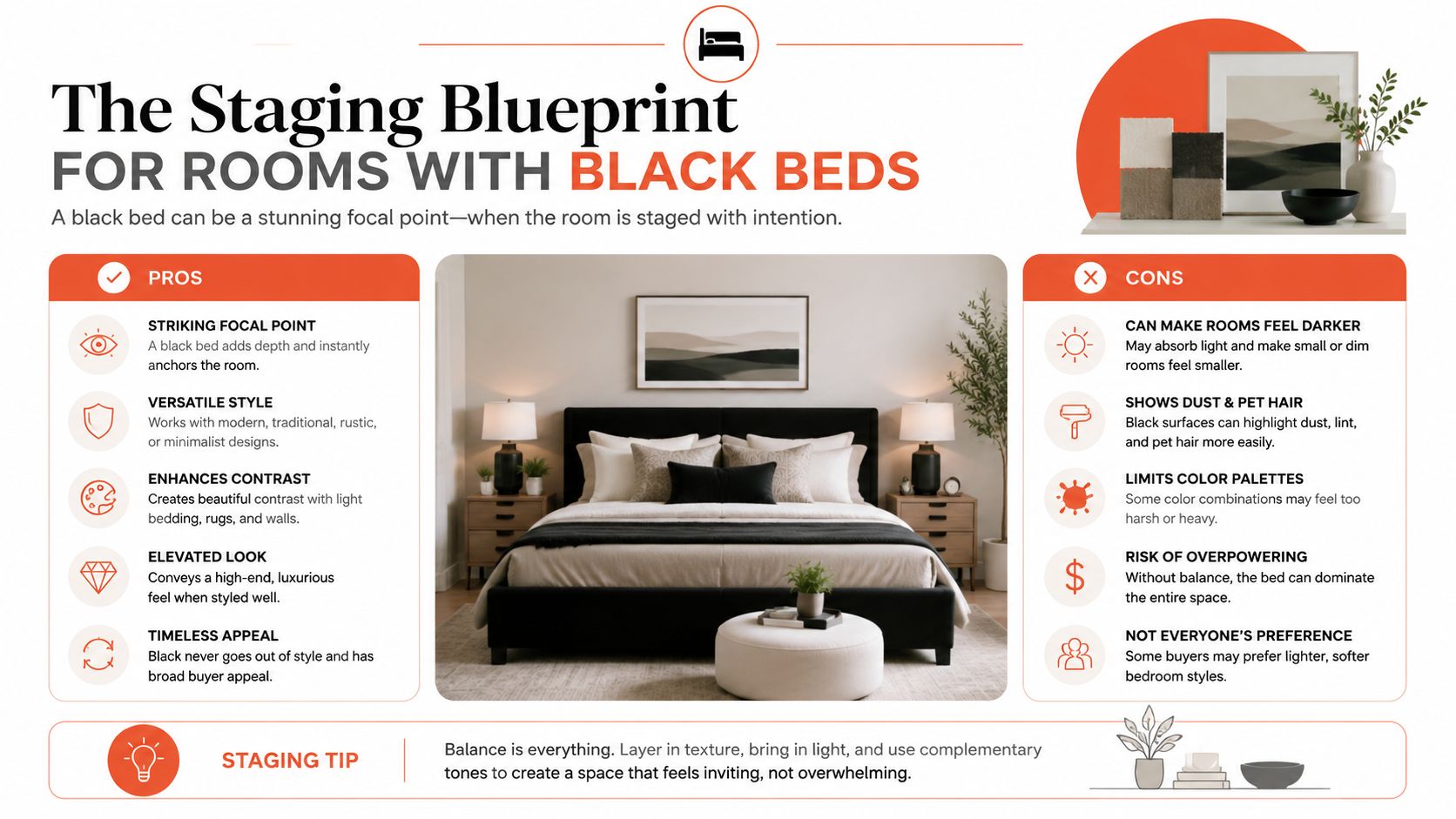
Fix the layout before you style the mood
A black bed needs breathing room. If one side is blocked by a dresser and the other is pinched by a nightstand, the frame will feel bigger than it is.
Use this field checklist:
- Center the bed if the wall allows it: Symmetry makes dark furniture feel calmer.
- Reduce bedside bulk: Narrow nightstands or even one cleaner side table often read better than two chunky pieces.
- Watch bed height: A common mistake is adding a box spring to a platform frame. That unnecessary extra height can make the room look shorter and more crowded in listing photos.
- Choose one focal wall: Don't ask the black bed to compete with a loud accent wall, busy art, and patterned drapery at the same time.
Practical rule: In a smaller bedroom, every extra inch of visible floor matters more than one more decorative object.
Three palette directions that usually work
You don't need a complicated design concept. You need a palette that makes the bed look intentional.
| Palette | Core Colors | Buyer Appeal | Best For |
|---|---|---|---|
| Warm neutral | Ivory, oatmeal, camel, soft taupe, black | Softens the bed and makes the room feel calm | Primary bedrooms and broad-appeal resale |
| Monochrome modern | Black, white, charcoal, greige | Reads clean, current, and architectural | Condos, newer construction, urban listings |
| Contrast with natural warmth | Black, white, oak, walnut, muted green | Keeps the room sharp without feeling cold | Homes needing warmth and personality |
The warm-neutral route is usually the safest for owner-occupied listings. It pulls the black frame into a softer story. The monochrome look can be strong, but only when the room has enough light and enough editing. Natural wood is the easiest way to keep a black bed from feeling severe.
What to add and what to remove
The bed shouldn't be the only dark object in the room, but it also shouldn't have too much competition. Aim for balance.
Use these staging moves:
- Layer texture, not clutter: A knit throw, linen bedding, or a low-pile rug gives the eye relief.
- Bring in softness below the bed: An area rug that extends beyond the frame helps lighten the footprint.
- Warm the lighting: Black furniture under cold bulbs can look flat and uninviting.
- Cut personal styling: Heavy framed family photos, stacked books, and too many candles make the setup feel owner-specific.
If the room is vacant or inconsistently furnished, a digital plan can help before you spend on physical pieces. A practical reference is this virtual staging guide for real estate listings, especially when you're deciding whether to work with the existing bed or replace the look virtually.
Dressing the Bed for a High-End Look
A black bed frame can look expensive or unfinished depending on what sits on top of it. The frame gives you the outline. The bedding sells the feeling.
The biggest mistake is leaning too hard into the darkness. Black comforter, black pillows, black bench, black art. That doesn't read as luxury in listing photos. It usually reads flat. A buyer should see comfort first, then style.

Good, better, best on a black bed
Good is clean white bedding with two sleeping pillows and a folded throw. That already lifts the frame and gives contrast.
Better adds layered neutrals. Think white or ivory duvet, Euro shams behind standard pillows, and one textured lumbar pillow. The room starts to feel considered.
Best looks refined without looking fussy. That usually means a crisp base layer, one textured quilt or coverlet, restrained pillow layering, and a throw with visible texture rather than strong pattern.
The combinations that consistently photograph well
A black bed benefits from materials that catch light differently. Flat cotton alone can look plain. Mixing surfaces creates visual depth without making the room look busy.
Reliable combinations include:
- Crisp white with oat or sand accents: Broad appeal and easy contrast
- Ivory linen with charcoal touches: More editorial, but still calm
- Soft greige and cream: Good when walls are bright white and need warming
- White bedding with a camel throw or bench: Helps bridge black furniture to warmer flooring
If you want a consumer-facing reference on layering and comfort choices, Gorins has a useful piece on customizing your bed for better rest. It's not written for listing agents, but the logic carries over. Buyers respond to beds that look both composed and livable.
Buyers don't count pillows. They judge whether the room feels finished.
How to make it look polished without overstyling it
The best-styled listing beds have restraint. I'd rather see fewer, larger pieces than a pile of small decorative pillows that have to be moved before every showing.
A clean setup often includes:
- Two Euro shams in back: They give height and help anchor the composition.
- Standard sleeping pillows in front: Keep them full and squared, not limp.
- One accent pillow or lumbar: One is enough in most properties.
- A folded layer at the foot: This can be a quilt, coverlet, or textured throw.
What doesn't work
Some beds look “done” in person but collapse on camera. Usually it's because the bedding is too thin, too wrinkled, or too dark against the frame.
Avoid these common misses:
- Tiny pillows on a substantial headboard
- Highly reflective satin or shiny synthetic fabrics
- Messy draping that reads careless instead of relaxed
- Overly branded or seasonal bedding
If the mattress itself feels skimpy, use thicker bedding and stronger pillow structure to build perceived comfort. You don't need a dramatic hotel setup. You need a bed that tells buyers the bedroom is where they'll exhale.
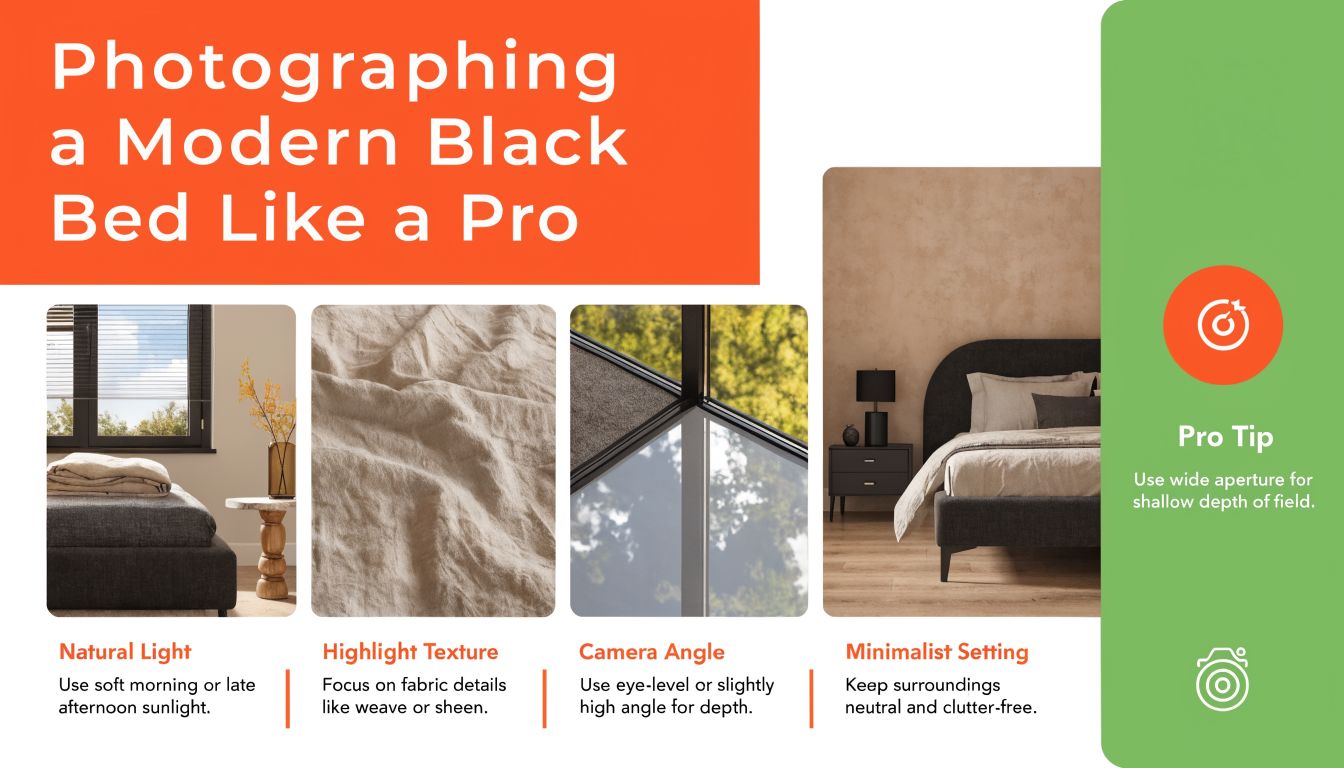
Photographing a Modern Black Bed Like a Pro
Dark furniture punishes lazy photography. A modern black bed can lose all detail in one shot and turn glossy enough to reflect half the room in the next. That's why staging and photography have to work together.
For real estate photography, black finishes show dust, fingerprints, and lint more readily under bright listing lighting, and matte or textured black surfaces are usually easier to keep camera-ready than glossy ones. Material also changes the look and use case. Solid wood, metal, and upholstered versions present differently, and one black solid-wood platform listing even advertises a 1,000-pound weight capacity, which is relevant for furnished rentals where durability matters, according to this product detail from Bed Bath & Beyond.
The three mistakes that ruin the shot
Most bad bedroom photos with black beds fail in one of three ways.
First, the bed becomes a dark block with no visible shape. That happens when the room is underlit or the exposure is set for the windows instead of the furniture.
Second, the frame picks up reflections. Glossy surfaces bounce lamps, windows, and even the photographer into the image.
Third, the angle exaggerates the mass of the bed. Shooting too low or straight-on can make the frame feel wider and heavier than it is.
How to correct them
The fix usually isn't expensive gear. It's discipline.
- Use soft natural light when possible: Diffused daylight gives black finishes more nuance.
- Turn on supporting lamps carefully: Bedside lamps can warm the frame, but blown-out bulbs pull attention away from the bed.
- Shoot from a slightly higher three-quarter angle: This usually shows depth, bedding texture, and more floor.
- Clean the frame last: Wipe down black surfaces right before the photographer shoots, not hours earlier.
- Separate black from black: If the wall art, bedding, and frame are all dark, the image loses edge definition.
If the camera can't see texture, buyers won't read quality. They'll just see a dark object.
Smartphone and pro-photographer guidance
If you're shooting with a phone for social, avoid aggressive filters. They often crush the shadows and erase the detail that makes the bed look expensive. Tap to expose for the bed, not the brightest window, then adjust slightly brighter if the frame looks muddy.
If you're directing a pro, ask for one hero shot that treats the bed as the anchor and one wider room shot where the bed supports the space instead of owning it. Both matter. The first creates desire. The second reassures buyers about layout.
When the room has mixed light or tricky windows, it helps to understand how exposure balancing works in listing imagery. This overview of HDR photography for real estate is a useful reference for agents who want cleaner bedroom photos without losing detail in dark furniture.
Instantly Perfect Your Photos with AI Staging
Some black beds are worth styling in place. Others aren't. The frame may be too bulky, the headboard too dated, the bedding too personal, or the wall color behind it may fight every improvement you make. That's where AI earns its keep.
Physical staging still matters. So does a good photographer. But not every listing has time for furniture swaps, reshoots, and handyman work between intake and launch. If the room is almost right, AI lets you fix the almost.

When AI is the smarter move
I reach for digital staging or restyling in a few common situations.
One is the occupied listing where the seller's black bed is usable, but the room around it isn't. Nightstands are crowded, cords are visible, and the bedding feels too personal. Another is the vacant room where a modern bed black concept would help buyers understand the scale and style of the space. A third is the listing that already has acceptable photography, but the bedroom needs a cleaner, broader-appeal presentation without another shoot.
In those cases, AI can handle tasks that usually slow agents down:
- Decluttering surfaces: Removing visible personal items around the bed
- Restyling finishes: Shifting wall color, art style, or soft goods to support the frame
- Virtual staging: Replacing the existing setup with a more marketable bedroom composition
- Testing versions: Comparing a warmer look versus a sharper modern look for the same room
What AI should change and what it shouldn't
Use AI to solve presentation problems, not floor plan truth. The bed style can change. The room dimensions can't. The best results respect the actual architecture while improving what a buyer sees first.
That means AI is well suited for:
- Updating an outdated black bed visually
- Softening a room that feels too stark
- Creating consistency across mismatched listing photos
- Showing an empty bedroom with a realistic use case
It's not a license to turn a small bedroom into a luxury suite that doesn't exist. Buyers punish that quickly when they walk in.
A practical workflow agents can use
A clean process beats random editing requests.
- Start with an actual photo: Make sure the room is clean and photographed straight.
- Decide the role of the bed: Keep, refine, or replace.
- Choose one target buyer mood: Calm luxury, urban modern, family-neutral, furnished rental.
- Edit supporting elements first: Walls, rugs, bedside clutter, and linens usually matter more than adding extra decor.
- Review for believability: If the bed now looks too large, too ornate, or inconsistent with the home, pull it back.
One option for this workflow is Bounti Labs, which can generate listing visuals from property imagery and apply AI-powered decluttering, staging, and restyling. For agents comparing categories of tools, this guide to AI photo editing software for real estate is a useful place to benchmark what different editing approaches are good at.
Why this matters for speed to market
The business case is simple. Bedrooms with black beds often need precision. Precision usually takes time. AI shortens the path between “this room is close” and “this room is ready to publish.”
That helps in situations where you need to:
- Launch before a weekend
- Refresh stale listing photos
- Present alternate looks to a seller
- Support remote owners or property managers
- Standardize visual quality across multiple units
The value of AI staging isn't that it replaces judgment. It lets agents apply judgment faster.
Used well, AI doesn't hide a room. It clarifies it. And with a black bed, that clarity matters because the line between elegant and heavy is thin.
Marketing the Modern Bedroom in Your Listing Description
Once the room looks right, don't waste the work with flat copy. “Bedroom with black bed” says nothing. The listing description should translate the visual into a buyer-facing benefit.
A black bed usually signals one of three things in marketing language: contemporary style, boutique-hotel polish, or grounded calm. Pick the one that fits the property. Don't stack all three into one sentence.
Phrases that help the room sell
These are stronger than generic bedroom copy because they connect the bed to the feel of the space:
- Elegant primary suite anchored by a contemporary black bed
- Hotel-inspired bedroom with layered neutrals and clean modern lines
- Stylish sleeping space with a bold black frame softened by warm textures
- Modern bedroom design that balances contrast, comfort, and simplicity
- Inviting retreat with curated finishes and a strong architectural focal point
If the room is especially small, avoid language that overpromises. Don't call it sprawling, oversized, or grand. Instead, emphasize efficiency, polish, and design intent.
Match the copy to the actual look
When the room reads warm and approachable, use words like calm, restful, curated, and textured. If it leans sharper and more urban, use sleek, contemporary, architectural, and refined.
A few examples:
- For a resale suburban home: The primary bedroom feels calm and finished, with a modern black bed frame, soft neutral layers, and a boutique-suite vibe.
- For a condo: A crisp modern bedroom pairs strong black accents with clean lines and understated styling.
- For a furnished rental or model unit: The bedroom presents a polished, durable design language with a contemporary black frame and easy-care finishes.
What to leave out
Don't write like a furniture catalog. Buyers care less about the bed as an object than the life it suggests in the room.
Skip:
- Overdescribing the furniture piece
- Overusing trendy design buzzwords
- Calling attention to dark tones unless they're balanced by warmth
- Writing copy that sounds staged rather than livable
The best descriptions make the room feel intentional and easy to imagine living in. That's the whole job. A modern bed black setup can absolutely help you do that, but only if the staging, photography, AI cleanup, and copy all point in the same direction.
Bounti Labs helps real estate teams turn raw property imagery into cleaner marketing assets, including AI decluttering, virtual staging, restyling, MLS-ready visuals, and listing copy support from a single walkthrough. If you want a faster way to refine bedrooms, test a modern black bed look, or publish more polished visuals without a long staging cycle, explore Bounti Labs.