Open houses still matter because they surface high-intent buyer behavior in a compressed window. The National Association of REALTORS® notes that buyers with household income between $250,000 and $499,999 are more likely to find their home through an open house than buyers in other income brackets, which is one reason serious agents use these events to probe motivation, timing, and offer readiness through focused questions rather than small talk. That's the significant opportunity. You're not just touring a house. You're gaining negotiating power, identifying risk, and deciding whether the asking price matches the property's actual condition and ownership cost.
Most buyers ask whatever comes to mind. Strong buyers and strong agents use a framework. They ask about repairs, permits, utility bills, time on market, seller motivation, and exposure to things that won't show up in staging photos. That's how you separate attractive presentation from durable value.
If you're preparing for a showing from the seller side, Sparkle Tech Window Washing's open house advice is a useful reminder that presentation still shapes first impressions. But curb appeal only gets you to the front door. The questions you ask during an open house determine whether you should keep walking, negotiate harder, or leave.
1. What are the property's age, major renovations, and maintenance history?
A polished kitchen tells you almost nothing by itself. You need the timeline behind it. Ask when the roof, HVAC, plumbing, and electrical were last updated, who did the work, and whether records exist. Recent renovations can add value, but only if they were done correctly and documented.
The most important follow-up is whether major work was permitted. Current open-house guidance consistently emphasizes renovations, needed repairs, and whether upgrades were completed properly because buyers have shifted toward fact-based due diligence instead of surface-level impressions, as noted in Pacaso's open-house question guide. A fresh remodel without permits can turn into an inspection problem, an insurance problem, or both.

What to verify on the spot
Walk the home with a systems mindset, not a décor mindset.
- Roof and exterior Ask the age of the roof, whether there have been leaks, and whether repair invoices exist. If the answer is vague, inspect ceilings, attic access points, fascia, and drainage lines more carefully.
- Mechanical systems Ask about HVAC service history, water heater age, panel upgrades, and plumbing replacements. “Updated” is not a useful answer unless the seller can tie it to a date and a scope of work.
- Paper trail Request receipts, warranties, contractor names, and permit closeout details when available.
Practical rule: If the seller can describe the renovation but can't document it, treat the upgrade as unverified until inspections prove otherwise.
For listing agents, documenting improvements visually can make these conversations cleaner. Tools built for AI renovation value analysis for real estate agents can help organize before-and-after visuals and present updates in a way buyers can evaluate more confidently. And if a buyer starts drilling into roof condition, it helps to understand the same technical questions roof pros expect, like the ones covered in advice from Four Seasons Roofing.
A good answer here creates confidence. A fuzzy answer creates a repair reserve in the buyer's head, whether the seller likes it or not.
2. What are the utility costs and energy efficiency ratings?
Buyers often underestimate operating cost and then fixate on purchase price. That's backwards. Two homes with similar asking prices can carry very different monthly burdens, especially if one has older windows, poor insulation, or an aging HVAC system.
This is one of the most technically useful questions to ask during an open house because utility history gives you a reality check. Industry guidance recommends asking for average electricity, gas, water, and internet costs, along with permit records and contractor details for major updates, because those records help buyers verify operating-cost drag and compliance risk rather than relying on verbal claims, according to David Bell Group's open-house guidance.

Red flags that matter
A seller or agent doesn't always have every bill at the open house, but the quality of the answer still tells you a lot.
- High but unexplained bills That can point to poor insulation, old equipment, or deferred maintenance.
- New systems without backup records If someone says the HVAC is new, ask who installed it and whether warranty documents transfer.
- Room-to-room inconsistency A house that feels hot upstairs, cold downstairs, or drafty near windows may have performance issues no utility estimate fully captures.
A practical buyer move is to pair the utility question with a physical walk-through of the panel, ducting access, attic insulation, window seals, and the age labels on mechanical systems. That turns a generic “What are the bills?” question into usable due diligence.
A strong listing package includes recent statements and a short explanation of efficiency upgrades. Without that, buyers assume uncertainty, and uncertainty usually gets priced against the seller.
3. Are there any HOA fees, and what do they cover?
An HOA fee isn't just a line item. It's a governance issue, a lifestyle issue, and sometimes a deferred-maintenance issue hiding in plain sight.
Ask what the fee covers, whether there are reserve studies or budgets available, and whether special assessments are pending or being discussed. In a condo or planned community, a low monthly fee can be good. It can also mean the association has underfunded reserves and pushed real repair costs into the future.
Where the leverage comes from
Don't stop at the monthly amount. Ask how the association handles roofs, exterior walls, insurance, landscaping, common plumbing, gates, elevators, or amenities. A buyer who doesn't understand those boundaries can misjudge both cost and responsibility.
If the answer to “What does the HOA cover?” sounds improvised, expect surprises later.
Use this question to test transparency. Strong answers usually include the governing documents, recent meeting notes, and a clear explanation of restrictions on rentals, pets, renovations, parking, and exterior changes. Weak answers tend to rely on broad phrases like “they handle most things,” which usually means no one wants to get specific.
A real-world example is a townhouse that looks affordable until the buyer learns the HOA controls exterior repairs, has aging common infrastructure, and may levy an assessment after move-in. Another is a community with a higher monthly fee that effectively offsets ownership burden because it includes meaningful maintenance and insurance obligations. The fee itself isn't the problem. Lack of clarity is.
For agents, this is one of the fastest ways to build trust. Have the documents ready and explain them in plain English.
4. What is the neighborhood's school district quality and ratings?
Even buyers without children ask this question because school boundaries affect resale, demand consistency, and buyer pool depth. But the wrong way to handle it is to give broad opinions or make claims you can't support.
The right approach is to direct buyers to boundary verification, commute realities, and neighborhood-level context. That means discussing how people use the area. How far is the drop-off route? Are there traffic bottlenecks near pickup time? Do nearby amenities support the kind of household likely to buy here later?
What works in practice
Hyperlocal knowledge matters more than generic boosterism. A listing agent who can explain school-zone logistics, neighborhood patterns, and block-by-block context usually serves the buyer better than one who just says “great schools.” For teams building that kind of local market positioning, this piece on hyperlocal real estate agents in 2026 is useful for thinking through how neighborhood expertise gets operationalized.
Here's the trade-off. If you overstate school quality, you create compliance and credibility risk. If you avoid the subject entirely, you leave buyers to guess. The middle path is strongest: verify the assigned district, encourage independent school research, and give practical location context you can stand behind.
- Ask about boundary certainty District lines can matter as much as district reputation.
- Ask about daily logistics Commute friction changes how a location feels after move-in.
- Ask about nearby activity patterns Stadium traffic, pickup congestion, and event noise affect livability.
For buyers, this question is less about “Is this a good school?” and more about “How does this location behave day to day, and who will want it next if I sell?”
5. What natural disasters, environmental hazards, or insurance risks exist?
A staged living room won't tell you if the lot has flood exposure, wildfire risk, drainage problems, or boundary complications. You have to ask directly.
This is one of the more underserved areas in open-house conversations. Chase explicitly recommends asking whether a home is in a flood zone, whether it has been recently surveyed, and whether easements exist, which pushes due diligence beyond cosmetic condition into longer-term risk and insurability in a way many open-house checklists still miss, as outlined in Chase's home-viewing questions.
Ask whether the property has had water intrusion, prior insurance claims, slope issues, wildfire hardening work, or known environmental concerns. Then ask the question many buyers forget: how difficult is this home to insure on normal terms?
Here's a useful visual primer on flood-zone risk:
What buyers should press on
Environmental risk isn't always a deal-breaker. It is always a pricing and ownership-cost variable.
- Flood exposure Ask whether flood insurance is required or recommended.
- Fire and storm history Ask whether the property has suffered prior damage and what mitigation has been done.
- Survey and drainage Ask whether water moves toward or away from the structure, and whether a recent survey is available.
A common scenario is a home that shows beautifully in dry weather but reveals grading trouble only after the first hard rain. Another is a property near open land where insurance underwriting has become more restrictive than buyers expect. If the listing side has already assembled disclosures, survey material, and insurance context, that home tends to feel more financeable and less risky.
6. What are the property tax rates, recent assessments, and potential tax increases?
Monthly payment shock often comes from taxes, not principal and interest. Buyers who skip this question can love a home they can't comfortably carry.
Ask for the current tax bill, whether the assessed value is likely to change after sale, and whether any exemptions or caps currently benefit the seller but won't transfer. Don't assume the prior owner's tax situation will be yours.
Use the tax answer as a pricing test
This isn't just a budgeting question. It helps you compare similar homes on a more honest basis. A property with lower visible upkeep but significantly higher tax exposure may be less attractive than a slightly pricier home with a more stable annual carry.
For agents running valuation conversations, a disciplined comparable analysis matters here because buyers don't react to sticker price alone. A workflow built around AI CMA comparative market analysis automation can help teams present price relative to broader cost burdens, including taxes, in a more structured way.
A smart buyer asks three versions of the same question:
- What is the current bill?
- What event triggers reassessment here?
- What should I expect after closing, not before it?
For a quick refresher on how tax rates are calculated in practice, INTELLI's Texas property tax guide offers a clear framework buyers can adapt when reviewing local records. The tax answer won't usually kill a deal on the spot. But it often changes how aggressive a buyer should be on price.
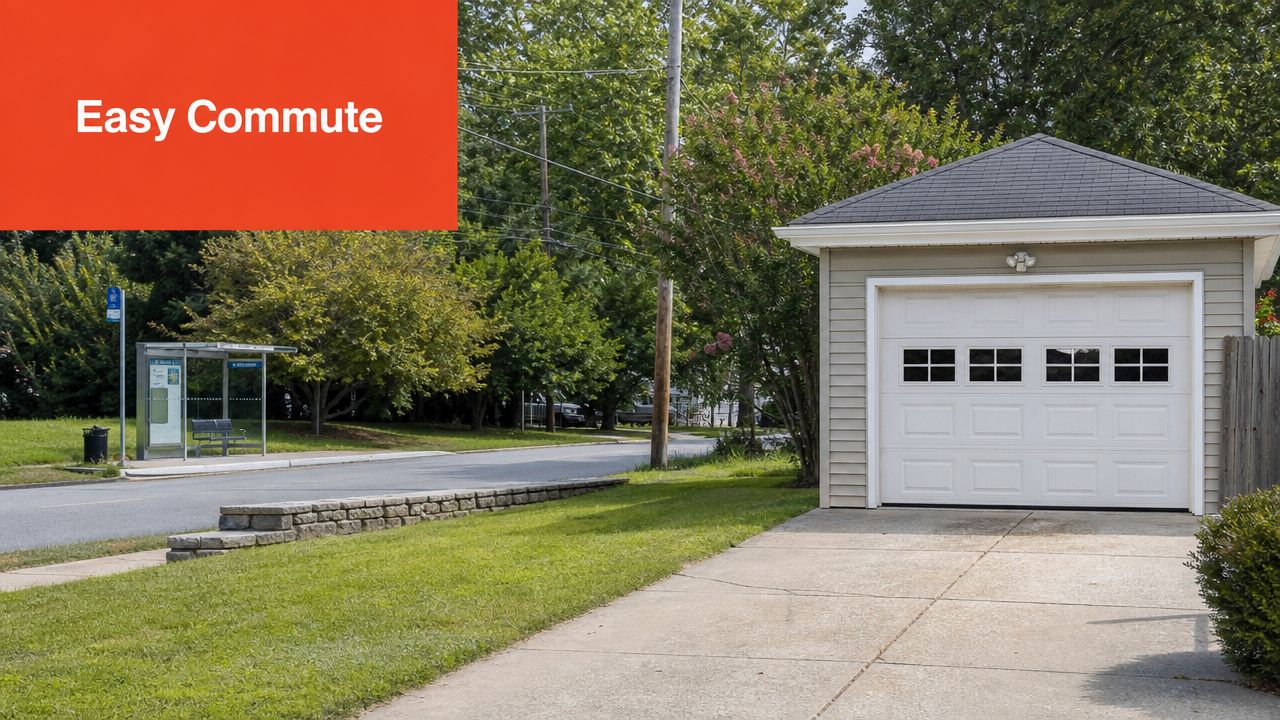
7. How is parking, and what are the commute options to major employment centers?
Parking and commuting are quality-of-life issues that become value issues fast. A house can be beautiful and still wear people down if the daily logistics are bad.
Ask where guests park, whether street parking is restricted, whether garage space is functional or mostly storage, and how the route behaves during rush hours. If the property serves a household with hybrid work patterns, ask how the location performs on both office days and home days. Noise, delivery access, school traffic, and transit reliability all matter.
What separates a good answer from a sales answer
“Easy parking” and “close to everything” are meaningless unless someone defines them.
Buyers should test commute claims themselves. Drive the route, check transit schedules, and look at the block at night.
A practical example: a city home may technically include two parking spaces, but one is tandem, one is too tight for larger vehicles, and street restrictions make hosting difficult. A suburban property may look quiet during the open house but sit near a corridor that backs up badly during school pickup and evening return traffic. Those details affect buyer satisfaction more than another accent wall ever will.
For listing agents, the best practice is simple. Be precise. State the number and type of spaces, permit requirements, nearby transit options, and actual friction points if they exist.
8. What is the neighborhood crime rate, and how safe is the area?
This is a sensitive question, and many agents handle it poorly by either saying too much or saying nothing useful at all. The practical approach is to point buyers toward objective resources while also discussing property-specific security features and day-to-day observations that are directly relevant to the home.
Ask about lighting, visibility from the street, gate access, package theft patterns, parking exposure, and whether neighbors are mostly owner-occupants, long-term tenants, or short-term visitors. Those factors change how a block feels and how a property functions.
Focus on property risk, not vague reassurance
Don't ask for a generic promise that the area is “safe.” Ask targeted questions that affect use and insurability.
- Entry points Are side gates, rear access areas, and garage entries exposed?
- Street conditions Is the street well lit and regularly active, or isolated after dark?
- Security improvements Are there cameras, reinforced doors, alarm systems, or fencing?
A practical example is a charming bungalow with great interior updates but poor rear-lane visibility and minimal exterior lighting. Another is a condo in a busy district where the building itself is secure, but package handling and guest access are constant friction points. These aren't abstract concerns. They affect comfort, insurance, and future buyer appeal.
Agents should stay factual and avoid unsupported neighborhood claims. Buyers should verify independently and visit the area at different times. Open house impressions are too narrow on their own.
9. What future development or zoning changes are planned for the area?
What's around the property can matter as much as the property. A quiet lot today may back up to construction tomorrow. A sleepy corridor may become more convenient, more valuable, and more congested at the same time.
Ask whether nearby parcels are under review, whether zoning changes have been proposed, and whether there are planned road, retail, transit, or multifamily projects in the pipeline. Then ask the harder question: who benefits if those plans move forward?
Read future change as upside and friction
Development isn't automatically good or bad. It depends on proximity, scale, and use.
- Potential upside Better retail access, improved infrastructure, stronger neighborhood services.
- Potential friction Construction noise, privacy loss, parking pressure, traffic, and view changes.
- Practical check Review city planning agendas and permit activity for adjacent and nearby parcels.
A real example is the buyer who falls in love with an unobstructed backyard view that exists only because the neighboring lot hasn't been built yet. Another is the buyer who dismisses a rougher corridor without realizing a public improvement project could materially improve daily convenience. Open houses rarely surface this information unless someone asks directly.
For agents, local planning literacy emerges as a trust signal. You don't need to predict the future. You do need to know what's been proposed, what's approved, and what buyers should verify before they commit.
10. Are there any easements, restrictions, or encroachments affecting the property?
This question sounds legalistic, but it's highly practical. Easements and encroachments affect what the buyer can build, fence, modify, insure, and dispute later. They also change how much of the land is usable.
Ask whether there are utility easements, shared-drive arrangements, access rights, drainage paths, recorded restrictions, or known boundary issues. If a fence, shed, retaining wall, or driveway appears close to a line, ask whether a recent survey confirms placement.
Why this matters before the offer
Some title issues are manageable. The danger is discovering them too late, after the buyer has emotionally committed and money is already out the door.
A property can have a clean interior and a messy title story. Open house due diligence should look for both.
A realistic scenario is a backyard that seems ideal for an addition or pool until the buyer learns a utility easement limits improvements across a large portion of the lot. Another is a side-yard fence installed years ago in the wrong location, creating a neighbor issue that no one wants to discuss casually during an open house. Restrictions can also affect rentals, exterior changes, lot use, and accessory structures.
Buyers should request the preliminary title material and survey as early as possible. Listing agents who front-load that information reduce friction and strengthen confidence. When no one can explain the property's legal constraints clearly, buyers usually assume the worst and write offers accordingly.
Open House: 10 Key Questions Comparison
| Topic | 🔄 Implementation complexity | ⚡ Resource requirements | 📊 Expected outcomes | 💡 Ideal use cases | ⭐ Key advantages |
|---|---|---|---|---|---|
| What are the property's age, major renovations, and maintenance history? | Moderate, collect records and conduct inspections | Inspection fees, renovation receipts, photos, contractor reports | More accurate valuation; fewer post-sale surprises | Older homes, listings after renovation, disclosure-sensitive sales | Builds buyer trust; reveals true condition |
| What are the utility costs and energy efficiency ratings? | Low–Moderate, compile bills and efficiency reports | 12 months of utility bills, ENERGY STAR/efficiency certifications, meter data | Clear operating cost estimates; may command premium | Energy-conscious buyers; homes with solar or upgraded systems | Attracts budget/environmental buyers; reduces operating cost uncertainty |
| Are there any HOA fees, and what do they cover? | Low, request HOA packet and budgets | HOA bylaws, budgets, CC&Rs, contact with management | Transparent recurring cost profile; affects buyer pool size | Condos, master-planned communities, amenity-rich neighborhoods | Justifies fees with amenities; prevents surprises |
| What is the neighborhood's school district quality and ratings? | Low, gather ratings and commute info | School ratings (GreatSchools), district reports, commute times | Influences buyer demographics and resale premiums | Family buyers, long-term investors, school-zone marketing | Drives demand; explains price premiums and faster sales |
| What natural disasters, environmental hazards, or insurance risks exist? | Moderate, research hazard maps and risk history | FEMA maps, hazard assessments, insurance quotes, environmental reports | Affects insurability and costs; may shrink buyer pool | Properties in flood/quake/fire-prone areas, coastal regions | Prevents liability; informs insurance budgeting |
| What are the property tax rates, recent assessments, and potential tax increases? | Low–Moderate, obtain tax bills and assessment history | Official tax bills, assessor records, exemption info, historical trends | Impacts annual ownership costs and affordability | All buyers prioritizing long-term budgeting and comparisons | Clarifies long-term expenses; aids negotiation and planning |
| How is parking, and what are the commute options to major employment centers? | Low, map parking and transit options | Transit maps, WalkScore, parking permit rules, drive-time analysis | Influences daily cost/quality of life and desirability | Urban flats, commuter suburbs, transit-oriented developments | Highlights convenience; can justify price premium |
| What is the neighborhood crime rate, and how safe is the area? | Moderate, aggregate crime stats and trend data | FBI/local police reports, CrimeReports/NeighborhoodScout, trend charts | Strong effect on value, insurance, and sale velocity | Family-focused markets, investors evaluating risk | Builds buyer confidence; explains pricing and demand |
| What future development or zoning changes are planned for the area? | Moderate–High, review planning documents and hearings | City/county plans, zoning maps, planning commission minutes | Can drive significant appreciation or depreciation | Investors, buyers seeking growth or avoiding disruption | Positions property for future value narratives; informs risk |
| Are there any easements, restrictions, or encroachments affecting the property? | High, requires title, survey, and legal review | Title report, boundary survey, legal counsel, recorded docs | May limit use or reduce value; affects transferability | Properties near utilities, shared access, or historic designations | Prevents legal disputes; clarifies property rights and obligations |
From Questions to Closing Your Action Plan
The best open-house strategy is simple. Don't treat the visit as a vibe check. Treat it as the first pass of due diligence. That means every answer should help you classify the property into one of three buckets: move forward confidently, move forward with price protection, or walk away.
The strongest questions to ask during an open house do two jobs at once. They uncover risk, and they reveal negotiating advantage. If the seller can't document renovations, that affects confidence. If utility costs are unclear, that affects total ownership math. If the HOA is vague, if the tax picture may change after closing, if a survey is missing, or if environmental exposure hasn't been addressed, the buyer has legitimate reasons to slow down, verify more, and avoid paying a premium for uncertainty.
For buyers, the practical next step is to write down answers immediately after the visit and sort them into categories. Verify now, inspect later, negotiate later. “Verify now” includes anything document-based, like permits, utility bills, HOA records, title exceptions, easements, and tax history. “Inspect later” covers system life, moisture, drainage, roof condition, and workmanship quality. “Negotiate later” includes issues that don't have to kill the deal but should affect price, credits, or contingency structure.
For listing agents, this framework works in reverse. If you prepare these answers before the open house, you eliminate hesitation before it forms. Buyers trust homes that come with records, not just staging. A listing package that includes maintenance history, utility context, HOA documentation, tax clarity, and known risk disclosures does more than answer questions. It reduces ambiguity, and reduced ambiguity helps transactions hold together.
That's also where visual merchandising and information packaging intersect. If a team uses a platform that can organize property details from a walkthrough, generate marketing assets, and present renovations or layout possibilities clearly, the open-house conversation becomes more factual and less improvised. Bounti Labs is one option real estate teams may use for that kind of property presentation workflow.
A strong open house doesn't persuade by hiding problems. It wins by making the property legible. Buyers can price what they understand. They discount what they don't.
Bounti Labs helps real estate teams turn a simple property walkthrough into clearer marketing and better buyer communication. If you want a faster way to generate listing visuals, property descriptions, and open house materials from one video walkthrough, explore Bounti Labs.