You’ve got the listing. The photos are scheduled. The home has good light, decent finishes, and a layout that should work. But it’s empty, and empty rooms rarely help a buyer commit.
A vacant living room feels smaller than it is. A primary bedroom without scale feels awkward. A dining area disappears unless someone defines it. That’s why renting furniture for home staging has become standard operating procedure for serious listing agents. It gives buyers a visual story, and it gives you control over that story.
The business case is strong. The average ROI from home staging is 158%, and about 85% of staged homes sell for 5% to 25% over asking price, according to Relics Rentals’ guide to furniture rentals for home stagers. But skill isn’t just deciding to stage. It’s knowing what to stage, how much to rent, and when to use a hybrid approach so you don’t overspend on rooms that don’t need full physical installation.
The Power of Staging An Introduction for Agents
Start with the walk-through buyers will experience.
Stand at the front door and ask three questions. What’s the first room they see? Where does the eye stop? Which spaces will either make the home feel larger or make it feel unfinished? In most listings, the answer is clear within minutes. The entry, living room, kitchen-adjacent dining area, and primary bedroom usually carry the emotional weight.
That’s where renting furniture for home staging does its best work. Furniture gives proportion to a room. Rugs anchor floating spaces. Art directs the eye away from weak corners and toward the home’s strengths. Good staging doesn’t decorate. It edits.
A strong seller conversation also starts here. Don’t present staging as “extra.” Present it as marketing infrastructure. If a seller wants top-tier photos, a sharper first impression, and stronger in-person showings, staging belongs in the same category as photography and pricing strategy.
For a broader perspective on how staging supports sale preparation, The Definitive Guide To Home Staging And Maximizing Your Profit is a useful companion read.
Build a baseline budget before you call vendors
Most new agents make the same mistake. They ask a rental company for a quote before deciding which rooms need full treatment.
Use a simple planning formula:
- Core rooms first: count the living room, primary bedroom, dining area, and entry.
- Add one support space if needed: office, secondary bedroom, or patio if that space clearly affects the buyer’s impression.
- Choose full, partial, or accessory-only staging by room: not every space needs a full install.
Then give the seller a range, not a vague promise. Explain that the baseline budget should cover the highest-impact rooms first, and that expansion happens only if the listing strategy justifies it.
Practical rule: If a room won’t appear prominently in photos or influence the showing path, it usually doesn’t deserve a full rental package.
If you want a quick way to tighten your marketing workflow before physical staging decisions are locked in, many agents now review visual planning tools alongside their listing process on Bounti’s real estate agent platform.
Assess Your Property and Set a Realistic Staging Budget

A staging budget should come after a property assessment, not before it. If you skip that step, you’ll either overspend on low-value rooms or understage the spaces buyers care about most.
Walk the property with a checklist. I’d focus on three filters: buyer impact, photo impact, and flaw management. A room that performs well on all three should get budget priority.
Identify the rooms that carry the listing
Some rooms need furniture to read correctly. Others don’t.
Use this sequence:
- Living room: This is often the image that defines the listing. If the seating area is unclear, buyers assume the room is smaller or less functional than it is.
- Primary bedroom: Buyers need scale here. A bed, nightstands, and minimal decor quickly establish comfort and proportion.
- Dining area: Open-plan homes often need this zone defined so the layout feels intentional.
- Entry or foyer: This area sets the tone. A console, mirror, or bench can make the home feel finished instead of vacant.
- Flexible room: If the property has a bonus room, office, or awkward nook, stage only if it solves confusion.
A common mistake is staging too many secondary bedrooms while ignoring the front-facing spaces that drive photos and first impressions.
Match the style to the buyer, not your personal taste
The rental package should fit the house and the likely buyer profile.
A clean transitional look works in most suburban resale listings because it feels current without becoming polarizing. Minimal modern works well when the architecture already supports it. A farmhouse package can still work in the right property, but only if the finishes and neighborhood support that story. If the furniture fights the architecture, the staging looks borrowed instead of well-matched.
The best staged rooms feel like the home’s natural next version, not a decorator’s side project.
Use the rent-versus-own math correctly
For most agents, renting wins because you need flexibility, not inventory.
The key breakeven point between renting and owning staging furniture lands around 12 to 24 months of reuse, and for a typical 2-month staging job, renting might cost $1,800 plus $400 per month, while purchasing a similar set could cost $9,000 upfront, according to We Set The Stage’s breakdown of when it makes sense to own staging furniture. Unless you stage at high volume and can reuse inventory consistently, ownership usually creates more operational drag than advantage.
That’s especially true once you account for storage, repairs, replacements, and the headache of tracking what’s available for the next listing.
Vet the rental company before you commit
Not all staging vendors run a clean operation. Ask direct questions.
- Inventory fit: Do they have a style package that matches the home, or are they forcing every property into the same look?
- Contract flexibility: Can they handle short initial terms and extensions if the listing stays active?
- Logistics: Who handles delivery, setup, and pickup? Is there one point of contact?
- Condition standards: Is the furniture photo-ready, or are you going to discover worn edges on install day?
- Damage process: What happens if movers scrape a wall or a piece is damaged during the rental term?
If you’re estimating broader moving or logistics costs for a seller who’s also relocating, a practical planning tool like this moving cost calculator can help frame the bigger conversation around sale prep.
Select a Winning Style and Source Your Rental Furniture

The right style package should disappear into the home. Buyers should notice the space, not the staging effort.
That means your first decision isn’t vendor. It’s aesthetic direction. If the house has warm wood floors, traditional trim, and a conventional floor plan, a soft transitional package usually lands better than stark minimalism. If the home is angular, bright, and contemporary, cleaner silhouettes and restrained decor will read better on camera and in person.
Pick a style that supports the architecture
You don’t need a long design theory lecture. You need a usable filter.
Here’s a working shortcut:
- Transitional: Best for broad buyer appeal. Safe choice for most listings.
- Contemporary minimal: Best when the home already has strong lines, open space, and modern finishes.
- Soft organic: Useful in homes with natural textures, warmer tones, and a more lifestyle-driven buyer.
- Farmhouse or rustic accents: Only when the bones of the home support it. Otherwise it can date the listing.
The biggest miss I see is over-accessorizing. Rental furniture should clarify the room’s purpose. It shouldn’t become the room’s personality.
Choose your sourcing partner based on execution
National providers can be easier for repeatable systems, wider inventory, and predictable logistics. Local boutique companies can be stronger on design nuance and market-specific taste. Neither is automatically better.
Compare them on operational reliability:
- Response speed: Do they quote quickly and revise without friction?
- Install quality: Are they styling rooms well, or just dropping furniture in place?
- Inventory depth: Can they maintain consistency across multiple rooms?
- Photographic awareness: Do they understand how furniture reads in listing photos?
- Extension process: Can they keep the property staged if the sales cycle stretches?
A rental partner earns repeat business when the install day feels boring. No surprises, no substitutions, no last-minute scrambling.
After you narrow the style direction, it helps to review how other agents think about room composition and flow in practice:
Run the timeline like a listing launch, not a decor project
Treat staging as part of the marketing calendar. The sequence matters.
- Sign the rental agreement early. Lock the install date before photography is booked.
- Confirm the scope room by room. Don’t rely on “full-home staging” language if only key spaces matter.
- Prep the property before delivery. Cleaners, painters, and handymen should be done first.
- Attend the install or send a trusted coordinator. Small adjustments on site can save a weak photo set.
- Walk the property after setup. Check sightlines, art height, lamp placement, and whether any room still feels unresolved.
New agents often learn an expensive lesson. A stylish package doesn’t fix a bad layout decision. Placement matters more than quantity.
Coordinate Logistics From Contract to Installation Day
The cleanest staging projects are the ones that look almost simple from the outside. Behind that, the agent is managing timing, liability, access, and budget exposure.
Physical rentals can produce a strong in-person showing, but they also create risk when a listing doesn’t move as quickly as expected. That’s why a hybrid model is becoming the smarter operational choice. Instead of physically staging every room up front, you can use virtual concepts first to determine which spaces merit the rental spend.
Review the contract like a project manager
Before you approve anything, check the parts that usually get ignored:
- Term length: Make sure the initial period matches the likely sales window.
- Extension terms: Understand how the vendor handles month-to-month carryover.
- Damage responsibility: Clarify who pays if furniture is damaged during showings, open houses, or tenant occupancy.
- Access and rescheduling: Late cleaners, delayed repairs, or missed lockbox access can create fees and force rebooking.
- Pickup conditions: Confirm what the vendor expects before de-staging.
A vague contract usually turns into a messy closeout.
Why AI-first de-risks the rental decision
This is the practical advantage of the hybrid workflow. You can create the marketing vision before committing to the full physical package.
If a property has five empty rooms, that doesn’t mean all five need rented furniture. Start with virtual staging concepts to test layout, define style direction, and create listing assets. Then rent only the spaces that matter most in person, usually the rooms that anchor the showing path or need tactile presence.
That approach cuts waste in two ways. First, it reduces the number of rooms you physically stage. Second, it helps you avoid ordering a package that looks good in theory but doesn’t fit the room once installed.
Installation day should be tightly managed
Use a short field checklist:
- Access confirmed: Keys, gate codes, alarm instructions.
- Property ready: Cleaning complete, repairs complete, floors dry, surfaces clear.
- Photo priorities noted: Tell the crew which angles will likely lead the listing.
- Final walk-through: Check for wall scuffs, missing accessories, and any room that still feels underfurnished.
When agents treat staging as a design event, problems stack up. When they treat it like launch operations, the install tends to stay on track.
Amplify Results with a Hybrid Staging Strategy
The old choice was simple but inefficient. Either pay for full physical staging or skip it and accept weaker presentation.
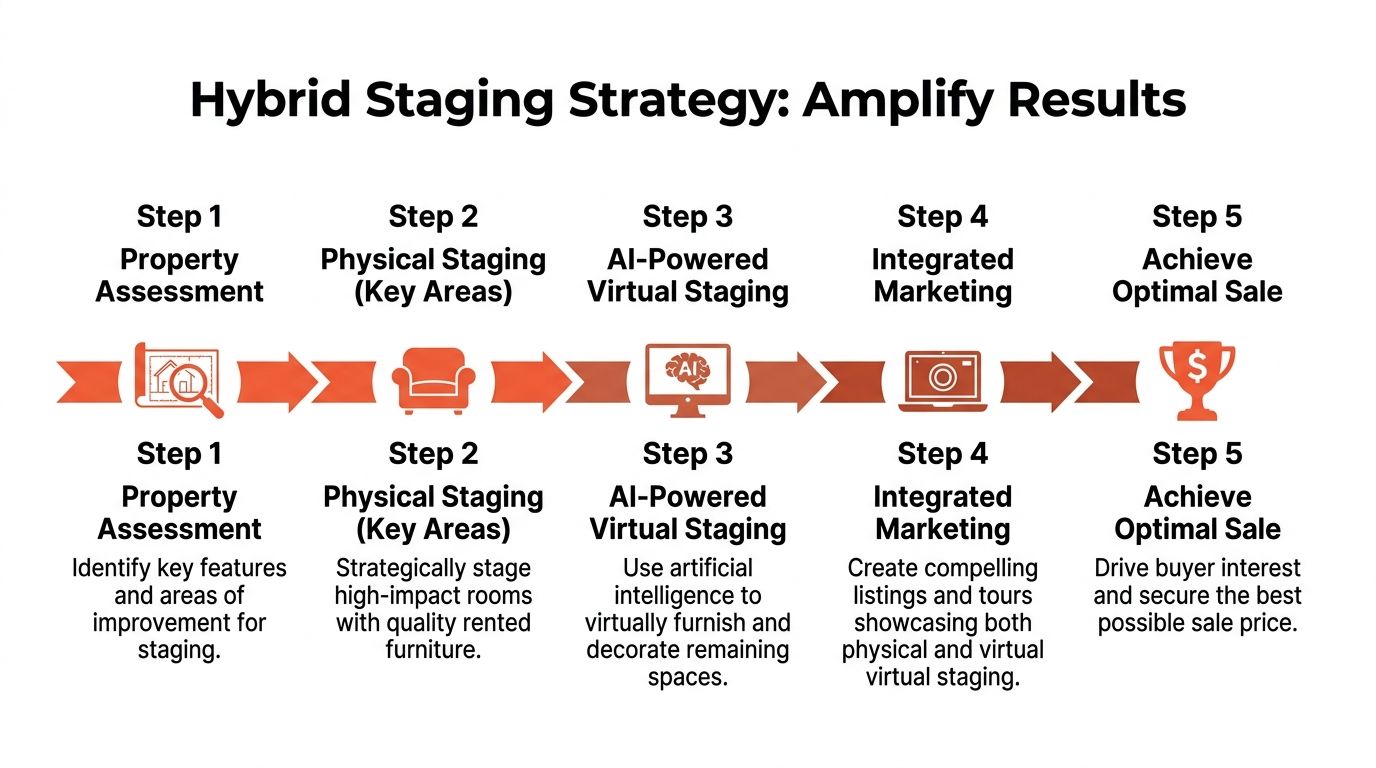
A better model is to separate marketing visibility from in-person sensory impact. Use virtual staging first to generate polished listing visuals and test room concepts. Then deploy physical rentals only where they have the highest showing value. That’s the practical sweet spot for renting furniture for home staging in a tighter, more cost-conscious workflow.
Why the hybrid model works
Physical rentals can cost $500 to $600 per room per month, and that becomes a real risk if a home sits longer than expected. A hybrid AI-first model helps agents reduce physical rental needs by over 50%, alongside a 25% year-over-year increase in virtual staging adoption, according to Miller Waldrop’s discussion of furniture rental for home staging.
That’s the key operating insight. Don’t spend physical staging dollars evenly across the house. Spend them where buyers will feel the absence if you don’t.
A five-step workflow agents can actually use
Capture the property as-is
Start with a full walkthrough and gather the visuals you need for listing prep.Create virtual concepts for every meaningful room
This gives you immediate marketing materials and reveals which spaces benefit most from design intervention.Choose the physical winners
Usually that means one or two anchor rooms rather than a blanket install.Rent for the showing path
Prioritize the areas buyers experience emotionally, not every bedroom with four walls.Market both intelligently
Use the strongest visuals online and support the in-person visit with selective physical staging.
For agents comparing editing and staging tech options before they build this workflow, this roundup of best AI photo editing software is a practical place to evaluate what fits your process.
Use physical staging where buyers need proof. Use virtual staging where buyers need possibility.
A simple ROI formula for sellers and team reviews
You don’t need a complicated spreadsheet to explain the value.
Use this formula:
| Measure | Formula |
|---|---|
| Staging ROI | (Additional sale proceeds attributable to staging minus staging cost) divided by staging cost |
| Marketing efficiency | Compare staging cost against the listing’s improved presentation and reduced need for broad physical installs |
| Hybrid decision test | If a room helps online marketing but adds little to the in-person showing, keep it virtual |
The point isn’t to pretend every dollar of price improvement came from staging alone. The point is to show that staging should be judged as a marketing investment, and hybrid staging gives you more control over that investment.
Measure Your Staging ROI and Plan for De-Staging
A staged listing shouldn’t end with “the house looked great.” You need a closeout process that proves the investment and wraps the rental cleanly.
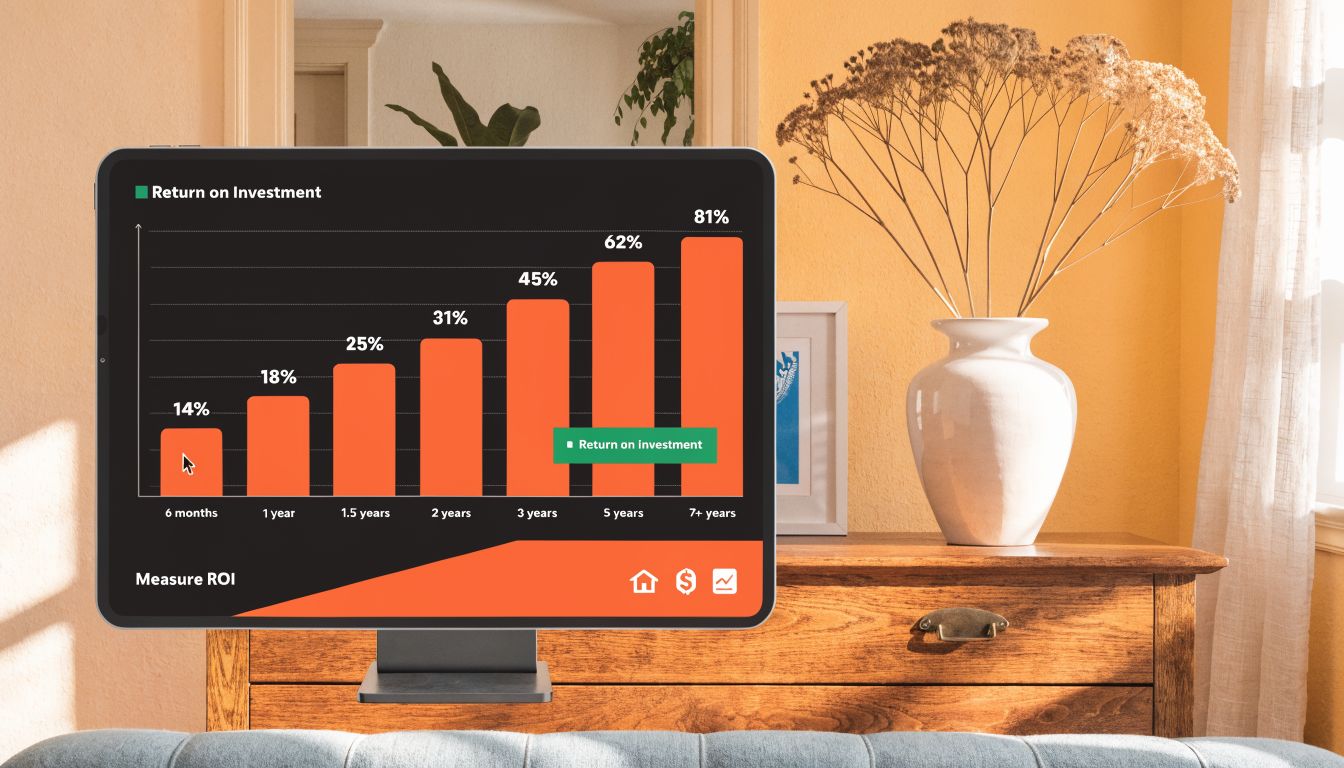
Professionally staged properties spend 73% less time on the market than unstaged homes, and 47% of buyer agents say staging has a positive effect on their clients’ purchasing decisions, according to The Zebra’s home staging statistics. Those are useful talking points with future sellers, but they’re even more useful when paired with your own listing records.
Track the right outcomes
Keep the review simple:
- Presentation result: Did the staged rooms become the lead images and strongest showing spaces?
- Seller result: Did the home move with fewer pricing headaches and stronger buyer confidence?
- Operational result: Did the rental company install and remove on schedule, with no damage dispute?
If you want to pair staging with other practical pre-sale improvements, this guide on ways to increase home value before selling helps frame where cosmetic work supports the listing strategy.
Handle de-staging before it becomes a scramble
Most problems happen at the end, not the beginning.
Use a short closeout checklist:
- Schedule pickup early: Don’t wait until after closing chaos starts.
- Walk the property before removal: Check walls, floors, and accessories.
- Photograph condition at handoff: Useful if there’s any dispute.
- Confirm contract closure in writing: Make sure the vendor acknowledges return and completion.
If you want a clearer visual sense of what staging changes in a listing presentation, these house staging before and after examples help show the difference sellers often struggle to picture.
Frequently Asked Questions About Furniture Rentals
How long should I rent furniture for a listing?
Match the initial term to the expected selling window in your market and choose a vendor that allows extensions. Shorter commitments are easier to defend to sellers, especially when you’re using a hybrid plan and only staging the highest-impact rooms physically.
Should I fully stage every vacant room?
No. That’s usually where budgets get wasted. Stage the rooms that shape the online first impression and the in-person showing path. Leave low-impact spaces unstaged or handle them virtually if they still need definition in marketing.
Who pays if something gets damaged?
That depends on the rental agreement, which is why damage language matters before install day. Read the liability and waiver terms closely and make sure the seller understands them before furniture enters the home.
What works best in occupied homes?
Less is usually more. Edit the seller’s existing furniture first. Then use rental accessories or a limited number of replacement pieces only where the home needs stronger scale, cleaner style, or better photo composition.
When does a hybrid staging strategy make the most sense?
It works best when the home needs strong listing visuals fast, but a full physical install feels too expensive or too risky. It’s also effective when only one or two rooms need tactile impact for showings, while the rest mainly need better online presentation.
What should a new agent avoid on the first rental job?
Don’t over-stage. Don’t approve a package from a mood board alone. And don’t let photography get booked before install timing is locked.
Bounti Labs helps agents create better property marketing from a single walkthrough. If you want faster listing visuals, AI-powered decluttering and staging, and a cleaner path to a hybrid staging workflow, explore Bounti Labs.