
About 70 percent of homes in the United States don't meet basic ventilation requirements, and soffits and fascias play a meaningful role in that gap, according to The Roof Guys on soffit and fascia. Listing agents usually treat the roof edge as trim. Buyers, inspectors, and underwriters often don't.
That difference matters in a sale.
When roofing soffit and fascia are sound, they signal a home that's been maintained with some discipline. When they're stained, soft, loose, or patched badly, they raise bigger questions fast. Is water getting behind the gutter? Is the attic trapping heat and moisture? Did the seller ignore exterior maintenance for years? Those aren't cosmetic questions. They affect buyer confidence, inspection reports, repair requests, and sometimes financing.
I've seen agents lose their negotiating advantage because they described roofline issues as "minor exterior wear" when the buyer's inspector saw ventilation problems, water staining, and likely rot. I've also seen agents protect their sellers by catching those issues early, pricing them appropriately, and presenting the condition with clear documentation and strong visuals. The difference isn't luck. It's knowing what you're looking at and knowing how to frame it.
Why Soffit and Fascia Matter More Than You Think
Roughly 70 percent of U.S. homes miss basic ventilation requirements, as noted earlier. For listing agents, that puts the roof edge in play faster than many sellers expect. Soffit and fascia condition can influence buyer confidence, inspection language, repair credits, and how cleanly a deal gets to closing.
Agents usually know how to discuss shingles, age, and visible roof wear. The underside and edge of the eave get less attention, even though they affect airflow, moisture control, gutter attachment, and the first impression buyers form from the street. On listing photos, a straight, clean roofline reads as maintained. In an inspection report, stained or deteriorated soffit and fascia often trigger wider questions about drainage, attic conditions, and deferred exterior care.
Buyers rarely ask about soffit intake by name. They comment that the second floor feels hot, the exterior looks tired, or the house seems like it will need work soon. Those reactions have consequences. A buyer who feels uncertainty early is more likely to write cautiously, ask for credits, or walk when the inspection confirms what the roofline already suggested.
What buyers read from the roofline
A clean fascia line, intact soffit panels, open venting, and gutters that sit tight to the house all support the same message. The seller has kept up with visible maintenance, and the home may have fewer unpleasant surprises.
The opposite message is expensive.
Peeling paint, swollen wood, soft corners, loose aluminum wrap, and sagging gutter runs tell buyers to budget for more than trim repair. In practice, these defects often travel with clogged gutters, moisture intrusion at the roof edge, pest entry, or hidden wood rot. Even when the repair itself is modest, the perception hit can be larger than the invoice.
Buyers do not separate cosmetic neglect from systems neglect. If the roof edge looks ignored, they assume the attic, drainage, and exterior envelope may have been ignored too.
That affects pricing strategy. It affects the seller's disclosure posture. It also affects how aggressively you should prepare documentation before the home hits the market. If soffit and fascia are in good shape, photograph them well and mention maintenance in the listing notes. If they are not, decide early whether the better move is repair, allowance, or pricing the home to reflect condition.
Why this matters in marketing
Exterior trust starts before a showing. Buyers form opinions from the first photo, the drive-up, and the first few minutes at the curb. Roofline condition plays into all three.
If you're planning pre-listing updates, a broader guide to home exterior improvements can help sellers sort high-visibility work from lower-return projects. Soffit and fascia deserve a place on that shortlist because they do two jobs at once. They improve presentation, and they reduce the odds that a buyer's inspector becomes the first person to define the issue.
For agents using Bounti or similar listing tools, this is also a framing advantage. Strong exterior visuals, clear condition notes, and documented repairs help control the story before buyers, inspectors, and contractors start writing their own version. That protects the seller, sharpens marketing, and gives you firmer ground in negotiation.
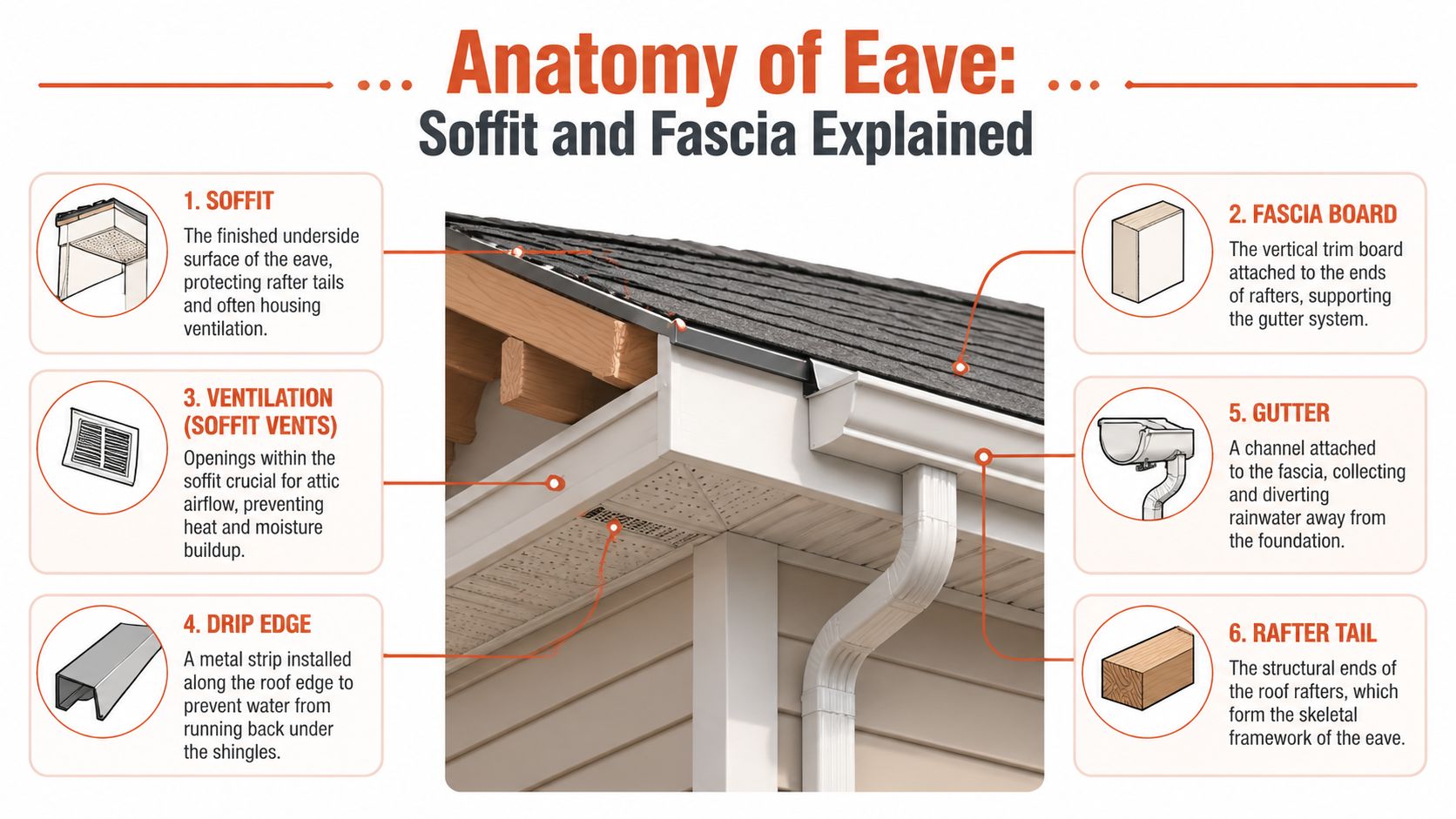
Anatomy of the Eave Soffit and Fascia Explained
Think of the eave as the roofline's skin and lungs. The fascia is the visible face at the edge. The soffit is the finished underside of the overhang. One helps close and protect the edge. The other often helps the house breathe.
If an agent can't identify those parts, it gets harder to explain why a stained underside or a bowed edge is a real issue and not just weathering.
What each part does
The fascia is the vertical trim board or metal-facing component attached along the rafter ends. It's where the gutter system is commonly secured. If that edge weakens, gutters can pull away, water can move behind the system, and the roof edge can start failing in a way buyers notice quickly.
The soffit covers the underside of the eave. In many homes, it's vented. Those openings aren't decorative. They serve as intake for attic airflow.
Other parts around them matter too. The drip edge helps move water off the roof edge correctly. The rafter tails form the structure underneath. The gutter handles runoff. When one part is failing, the neighboring parts often show clues first.
For agents who want a homeowner-friendly primer to share with sellers, Understanding home soffit and fascia explains the basics in plain language.
Why ventilation isn't optional
Attic ventilation works best when intake and exhaust are balanced. Installation guidance calls for a system with intake under the eaves and exhaust higher at the roof peak, often measured by 1 square foot of net free area for every 150 to 300 square feet of ceiling area, according to Quality Edge installation guidance for soffit and fascia. That same guidance notes that proper balance can extend roof lifespan by 20 to 30 percent.
That matters because agents often hear buyers complain about symptoms instead of causes. Hot second floors. Musty attic smells. Dark staining near eaves. Premature wear on roofing materials. Poor intake ventilation can sit behind all of that.
A soffit vent isn't a hole in the trim. It's part of the airflow path that helps the roof system stay dry and stable.
The plain-English version for sellers and buyers
If you need a short explanation during a listing appointment, use this:
- Fascia holds the edge together: It finishes the roofline and supports the gutter attachment area.
- Soffit protects the underside: It closes off the overhang and often contains the intake ventilation.
- Vents move air into the attic: Without that intake, heat and moisture can build up where buyers can't see it.
- A straight, clean eave means more than curb appeal: It usually suggests the roof edge, drainage, and ventilation have been managed with care.
Agents don't need to sound like roofers. They do need to explain the house clearly enough that a seller understands why this area deserves attention before photos, showings, and inspections.
A Guide to Soffit and Fascia Materials and Styles
A roofline that photographs cleanly and reads as low-maintenance can support pricing. A roofline with swollen wood, patchwork trim, or obvious sagging invites buyer caution before anyone reads the remarks. For listing agents, the material at the eaves is not a small detail. It affects perceived upkeep, inspection risk, and how much credibility you have when you describe the exterior as well cared for.
Most listings fall into five categories: wood, vinyl, aluminum, composite or fiber-based products, and premium metal systems. Each sends a different message to buyers. Match that message to the house, the neighborhood, and the seller's budget.
The quick comparison agents can use
Using cost ranges summarized in Angi's soffit and fascia pricing guide, here is the fast version agents can use during listing prep:
| Material | Cost (per linear ft) | Average Lifespan | Maintenance Level | Best For |
|---|---|---|---|---|
| Wood | Fascia $1 to $3; soffit $12 to $36 per 12-foot section | Shorter service life if paint and caulking are neglected | Higher | Traditional homes where matching original trim matters |
| Aluminum | Fascia $8 to $20; soffit $96 to $240 per 12-foot section | Long service life in many exterior applications | Low to moderate | Sellers who want durability with less upkeep |
| Vinyl | Generally between wood and aluminum | Common low-maintenance option | Low | Budget-conscious updates and mainstream resale prep |
| Composite or fiber-based options | Generally between wood and aluminum | Often selected for durability with a more finished look | Moderate to low | Homes where sellers want less upkeep without a full metal upgrade |
| Premium metal systems | Soffit $5 to $12; fascia $6 to $10 | Long service life | Low | Sellers marketing long-term durability |
Cost alone does not decide the recommendation. Buyer expectation does.
Wood looks right until maintenance slips
Wood still makes sense on older homes, custom homes, and properties where original trim detail supports the price point. It paints well, matches historic character, and usually looks better than vinyl on architecture with strong lines and deeper trim profiles.
It also fails in ways buyers notice fast. Peeling paint, soft corners, open joints, and carpenter bee damage show up in photos and again during inspection. I see agents lose negotiating room here because the trim looked "mostly fine" at listing and clearly deferred by the time the buyer's inspector pushed a screwdriver into it.
If wood is sound and recently maintained, say so and keep the wording tight. If it is patched, soft, or visibly swollen, price and position the home accordingly.
Vinyl and aluminum serve different listing strategies
Vinyl helps sellers who need a cleaner look without a large exterior budget. It can make an inconsistent roof edge look more uniform before photos, and that can help on entry-level or middle-market listings where buyers prioritize low upkeep over architectural purity.
The trade-off is perception. On a higher-end house, vinyl can read as a shortcut.
Aluminum usually presents better. It has a sharper finished edge, holds up well, and supports listing language such as low-maintenance trim or durable exterior finishes with less risk of sounding inflated. That distinction matters in competitive markets where buyers compare photos side by side. Clean eave lines also read better in HDR real estate listing photography, especially on bright exteriors where shadowed overhangs can make defects stand out.
Premium metal systems change the buyer conversation
More advanced metal soffit and fascia systems belong in the marketing story when they are already installed. According to ABC Metal Roofing's overview of soffit and fascia systems, metal options can reduce leak risk compared with exposed wood and may outlast wood by decades.
That does not mean every seller should replace existing trim before listing. On many homes, a targeted repair and paint job produces a better return than a full upgrade. But if a property already has a well-installed metal edge system, call it out. Buyers hear "less upkeep" and "longer service life" as future cost control.
Durable eave materials support a stronger ownership story, especially when the rest of the exterior presents at the same level.
The listing language that holds up
Use material facts that a buyer, appraiser, or inspector can live with.
- Maintained wood: Emphasize original character, painted trim, and documented upkeep.
- Vinyl: Emphasize easy-care exterior trim and a refreshed roofline.
- Aluminum or premium metal: Emphasize durability, weather resistance, and lower maintenance demands.
- Mixed materials or visible patching: State repairs clearly and keep invoices ready.
The best material is not the fanciest one. It is the one that fits the house, supports the asking price, and does not create an avoidable negotiation problem two weeks into escrow.
The Agent's Inspection Checklist for Common Defects
You don't need to perform an inspector's job before a listing goes live. You do need to spot the defects most likely to show up in a report and put your seller in a stronger negotiating position.
Start from the street. Then get closer. Look at the roofline as a system, not as isolated pieces of trim.

What to scan first from the driveway
Your first pass should answer one question. Does the eave line look straight, dry, and consistent?
If the answer is no, slow down. Uneven fascia lines, visible sagging, and dark sections under the eaves usually mean the issue isn't cosmetic alone.
Use this field checklist:
- Look for staining: Brown or dark marks under the overhang often point to water movement where it shouldn't be.
- Check paint and finish failure: Peeling, blistering, or flaking on wood trim often means repeated moisture exposure.
- Watch the gutter line: Gutters pulling away from the fascia can indicate weakness at the attachment point.
- Notice vent blockage: Dirt, insulation, nests, or paint buildup at soffit vents can restrict airflow.
- Spot patchwork: Mixed materials or inconsistent sections often mean partial repairs. That isn't automatically bad, but it deserves follow-up.
What deserves a closer look near the house
Once you're under the eaves, pay attention to softness, openings, and biological signs. Probe visually, not physically, unless the seller or contractor is present and it's safe to do so.
The factors that tend to matter most in negotiations are:
Rot at joints and corners
Corners and seams fail early because water lingers there. If the wood looks swollen or split, assume a buyer's inspector will flag it.Pest entry points
Gaps, loose panels, and damaged vent covers can create easy access for insects or small animals. Even when the infestation is old, buyers hear "entry point" and think future expense.Improper previous repairs
Face-nailed metal, crude caulking, uneven replacement sections, or poorly aligned panels tell the buyer that repairs may have been reactive rather than correct.
If you can see the defect without a ladder, a buyer will see it in person, in photos, or in the inspection report.
Good listing prep also means documenting condition well. If you need cleaner, more balanced exterior images that help you evaluate rooflines before launch, this piece on HDR photography for real estate is useful for understanding how exterior detail reads in listing media.
A quick visual example helps newer agents understand the inspection mindset.
Climate changes what you should expect
Soffit and fascia don't fail the same way in every market. Generic advice misses that.
In humid areas, pay close attention to mold-like staining, soft wood, and signs of chronic moisture. In freeze-thaw climates, look harder at joints, paint failure, and evidence that water has backed up or moved behind the edge. In dry climates, UV wear and brittleness may be more visible than rot, but failed seals and vent blockage still matter.
That climate lens helps you ask better pre-listing questions. Did the seller recently clean gutters? Have there been recurring roof edge leaks? Were vent openings ever painted shut? You aren't diagnosing every cause. You're identifying what needs a contractor, a disclosure note, or a pricing decision before the buyer's side does it for you.
Advising on Repair and Replacement Costs
A small soffit or fascia defect can turn into a four-figure concession faster than sellers expect. For listing agents, the job is not just estimating repair cost. It is deciding whether the condition should be fixed, priced in, or disclosed in a way that protects the seller's position once inspection objections start.
Cost ranges for this work vary widely, as noted earlier in the article, because the invoice is rarely just about trim boards. Height, access, paint matching, gutter removal and reinstallation, hidden rot, and pest cleanup all change the number. That is why a minor-looking roof-edge issue can produce a modest handyman quote on one house and a larger contractor estimate on another.

The numbers agents should keep handy
Use cost ranges as a decision tool, not a script. Sellers want a simple answer, but buyers and inspectors react to context. A short run of isolated damage near one overflow point is a different conversation from recurring deterioration along multiple elevations.
In practice, these are the buckets that matter most:
- Localized repair: Best case when damage is limited, access is easy, and surrounding material is still sound.
- Moisture-related repair: Usually costs more because the trim failure is only part of the problem. Gutters, drip edge, or roof edge flashing may need attention too.
- Pest-related work: The visible repair may be straightforward, but exclusion, cleanup, and replacement of chewed or contaminated material can add cost fast.
- Section replacement or full run replacement: Often the better choice when the finish is patchy, boards are warped in several spots, or the repaired area will stand out in listing photos.
That last point matters more than sellers think. If a repair still leaves a roofline that looks uneven, you may spend money and still invite a credit request.
Repair versus replacement affects pricing strategy
I tell agents to separate transaction repairs from presentation repairs.
A transaction repair is done to answer a known defect before the buyer's inspector writes it up. A presentation repair is done because the house needs to look maintained in photos, at the driveway, and during showings. Sometimes one contractor visit solves both. Sometimes it does not.
Repair usually makes sense when the defect is isolated, the color and profile can be matched, and the seller needs a practical fix before list date. Replacement is easier to defend when the materials are mismatched, the deterioration repeats, or the repaired area would still photograph poorly. That difference shows up in negotiation. Buyers rarely value a patch the same way a contractor does, especially when staining or soft wood suggests long-term moisture.
How to advise the seller without overpromising
Be specific. “There is visible deterioration at the rear fascia near the gutter return” is useful. “The trim needs work” is not.
Then tie the condition to likely buyer reaction:
- If fixed before listing: Cleaner marketing, fewer inspection questions, and better odds of holding price.
- If left as-is with bids in hand: Better seller control over the narrative and a stronger basis for resisting inflated repair credits.
- If left as-is without documentation: Higher risk that a buyer assumes hidden damage and asks for more than the repair should cost.
This is also where your marketing tools matter. Before the property goes live, use visual prep and planning to decide whether the roof edge will read as maintained or neglected in exterior media. A strong example of that process appears in these house staging before and after examples, especially for sellers who need help understanding why small exterior details affect buyer confidence.
For broader listing presentation strategy, this guide on improve property sales with staging can help frame where exterior condition fits into the overall pre-list plan.
The agent's recommendation should be tied to sale risk
Do not tell sellers to replace everything just because defects exist. Tell them what the condition is likely to cost them if they do nothing.
If the issue is visible from the front, likely to be called out by an inspector, or likely to make buyers suspect hidden moisture, get quotes before launch. If the defect is minor and well documented, a repair or disclosure-based strategy may be enough. The goal is not perfect soffit and fascia. The goal is fewer surprises, cleaner marketing, and stronger ground during negotiations.
How to Market and Stage Soffit and Fascia in Listings
Most agents underuse the roofline in marketing. They either ignore it or mention it only when it's new. That's not utilizing a potential advantage.
When roofing soffit and fascia are clean, straight, and consistent, they help the whole exterior read as maintained. Buyers may not name the feature, but they react to the order it creates. The front elevation feels sharper. The gutter line looks intentional. The house appears cared for.

What to show in photos
Don't rely only on wide hero shots. Include at least one angle where the eave line is visible and well lit. Late-day shadow can make even good soffits look stained, so choose lighting that shows the trim clearly.
What helps most:
- Straight-on front elevation shots: They reveal whether fascia lines look clean and true.
- Slight upward angles at entries: Useful when soffits are fresh, vented, and visually tidy.
- Detail shots after exterior refresh work: Best when sellers have completed painting or trim replacement and you want buyers to notice quality.
If the exterior needs visual prep beyond basic cleaning, broader advice on improve property sales with staging can help sellers understand which presentation moves shape buyer response.
What to say in the listing description
Write benefits, not parts lists.
"Updated exterior trim" is vague. "Low-maintenance soffit and fascia" gives the buyer a clearer ownership signal. If the work is recent and documented, say that. If the trim is durable metal or aluminum, frame it as reduced upkeep and a more weather-resistant roof edge. If the original wood has been maintained well, tie it to character and visible care.
Avoid empty language like "attention to detail throughout" when the roofline says otherwise. Buyers compare your words to the photos.
When the condition is imperfect
Not every seller will repair before listing. Some homes need repositioning, not concealment.
In those cases, staging and visualization become useful because they help buyers understand the home's potential without misrepresenting current condition. A strong before-and-after visual strategy can help when the issue is worn trim, dated colors, or an exterior that needs freshening. This example of house staging before and after is a useful reference for thinking about how visual transformation changes buyer perception.
The key is honesty. Don't crop out a damaged roofline if buyers will see it during the showing. Present the house well, disclose accurately, and make sure the asking price and visuals tell the same story.
Vetting a Contractor for Soffit and Fascia Work
Agents get asked for contractor referrals all the time. This category deserves more caution than most because bad soffit and fascia work can create hidden water and ventilation problems that surface after closing. If your referral performs poorly, the seller remembers who made the introduction.
The basic questions still matter. Licensing, insurance, scope, timing, and written estimates. But for roofing soffit and fascia, you need more targeted questions.
Questions that separate specialists from patch crews
Ask the contractor how they handle ventilation, not just trim replacement. If they can't explain how intake at the eaves works with exhaust higher on the roof, they may be treating the job as cosmetic wrap rather than part of the roof system.
Then ask about installation specifics.
- How will you verify vent openings stay functional after installation?
- How do you handle drip edge and water management at the fascia line?
- What fasteners and attachment method will you use?
- If you find rot behind the visible trim, how will you document and price that?
- Will the finished work match existing material and profile, or will it be visibly different?
These questions matter because many bad outcomes begin with a contractor covering damaged material, trapping moisture, or reducing airflow.
What a solid estimate should include
A useful bid should identify whether the price covers removal, disposal, substrate repair, vented versus non-vented soffit, fascia replacement, and repainting or finishing if applicable. If the estimate uses vague allowances, ask for clarification before your seller approves it.
You also want photo documentation. Before photos protect the seller. Progress photos help if hidden damage appears. Final photos support disclosures and buyer conversations.
A contractor who documents well usually manages the job well. A contractor who speaks vaguely usually bids vaguely too.
For brokerages and managers who coordinate vendors across multiple properties, a more organized operations workflow matters. Teams handling recurring exterior maintenance can benefit from systems designed for property management support, especially when they need consistency across listings and rentals.
Protecting your reputation while helping the client
Don't promise outcomes you can't control. Refer two or three contractors when possible. Tell the seller why each one may fit the job. Keep your role clear. You're facilitating a decision, not warranting the work.
The best contractor referral is one that reduces ambiguity. Clear scope. Clear documentation. Clear explanation of how the roof edge will perform when the work is done.
Bounti Labs helps real estate teams turn a simple property walkthrough into better marketing. With Bounti Labs, agents can generate listing descriptions, pull stills, create MLS-ready visuals, and transform spaces with AI-powered decluttering, staging, restyling, or renovation concepts. If you want cleaner presentation, faster marketing output, and stronger property storytelling without waiting on multiple vendors, it's worth a look.