In a competitive real estate market, the kitchen is more than a functional space; it's the emotional core of a home and a critical factor in a buyer's decision. For listing agents, mastering the art of kitchen staging is a vital skill that can directly impact market time and final offer values. Generic advice to simply declutter and clean is no longer sufficient. Today's buyers are looking for a space that paints a picture of a desirable lifestyle, one that feels both aspirational and welcoming.
This guide moves beyond the obvious, presenting a strategic collection of staging ideas for kitchen spaces, each designed for a specific property style and target buyer. We will cover nine distinct approaches, from sleek contemporary designs to warm, rustic layouts, giving you actionable steps and professional tips for each. Understanding these specific strategies is a key component of knowing how to stage a home for selling to its full potential. Whether you're preparing a luxury chef's kitchen or a cozy galley, these insights will help you create a powerful first impression, capture buyer interest, and secure faster, more profitable sales.
1. Minimalist Kitchen Staging
Minimalist kitchen staging is a powerful technique that prioritizes clean lines, open space, and functionality over ornamentation. This approach goes beyond simple decluttering; it's about curating a space that feels expansive, modern, and high-end. By stripping away personal items, excess appliances, and countertop clutter, you allow potential buyers to project their own lifestyle onto the kitchen, making it one of the most effective staging ideas for kitchen layouts, especially for smaller or open-concept homes.
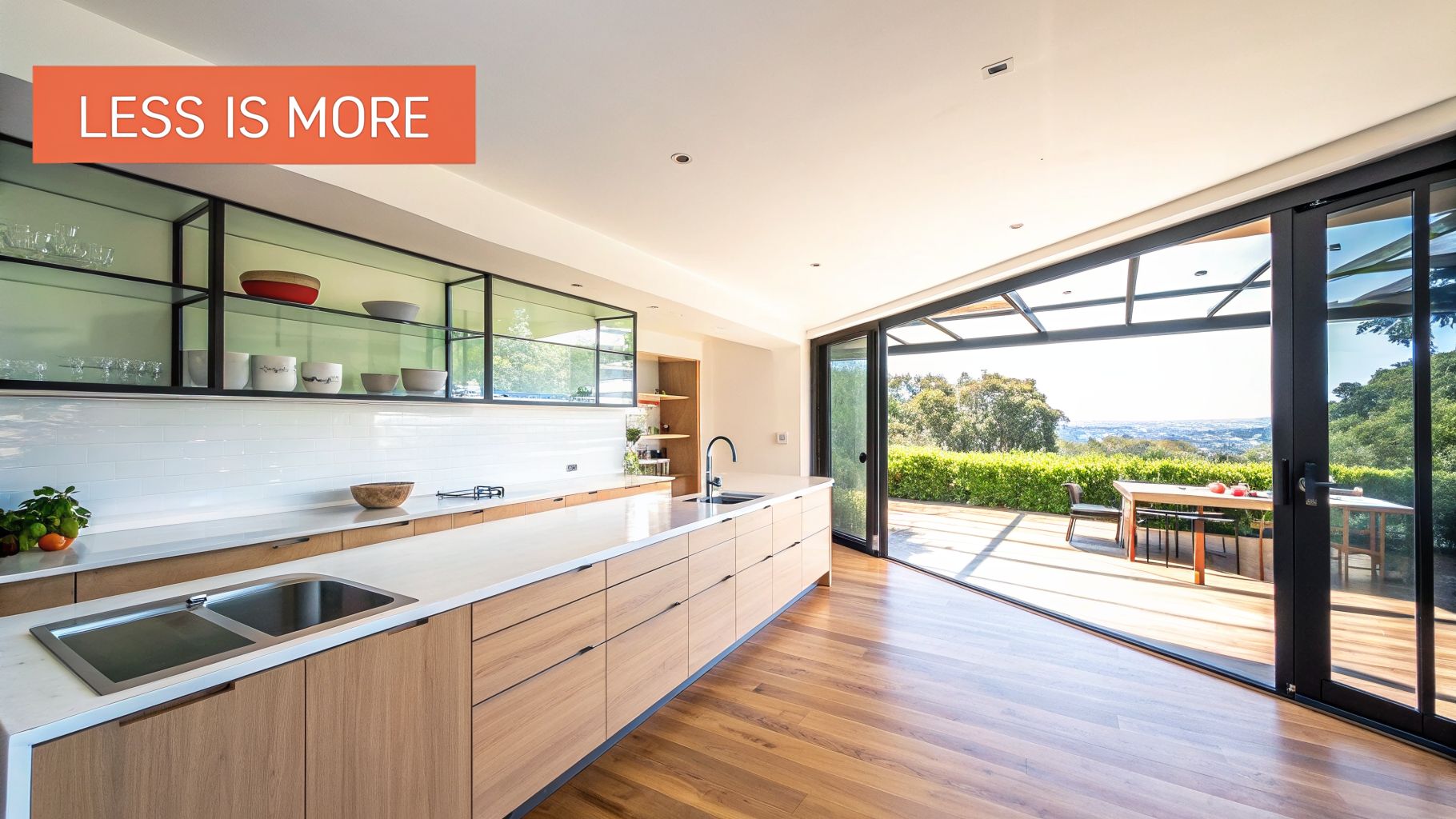
The core principle is that less is more. Think of the pristine, aspirational setups in IKEA showrooms or modern luxury apartment listings. These spaces feel usable and visually calm, which helps buyers focus on the kitchen’s inherent features like cabinet quality, counter space, and layout, rather than being distracted by the seller's belongings.
How to Implement Minimalist Staging
- Radical Decluttering: Remove everything from countertops except one or two high-end decorative items. A bottle of premium olive oil, a sleek knife block, or a simple vase with a single green stem works perfectly.
- Conceal Appliances: Store toasters, coffee makers, and blenders in cabinets or a pantry. The goal is to maximize the visible counter area, which is a major selling point.
- Organize Inside and Out: Use coordinating drawer organizers for utensils and cabinets. While buyers may not inspect every drawer, a quick peek that reveals order reinforces the home's well-maintained image.
- Virtual First Pass: Before moving a single item, use AI-powered tools to visualize a decluttered space. A detailed virtual staging guide can show you how to digitally remove items from photos to test the minimalist look and create compelling marketing materials quickly.
Agent Insight: Minimalist staging is not about making a kitchen feel sterile. The key is to balance empty space with strategic, high-quality accents and excellent lighting to create a warm, inviting, and spacious atmosphere that photographs beautifully.
2. Warm Hospitality Kitchen Staging
Warm hospitality staging transforms a kitchen from a purely functional room into the heart of the home. This approach focuses on creating an inviting atmosphere that tells a story of comfort, family gatherings, and joyful entertaining. By adding curated food displays, cozy textures, and warm lighting, you help buyers emotionally connect to the space, making it one of the most effective staging ideas for kitchen layouts designed for connection.
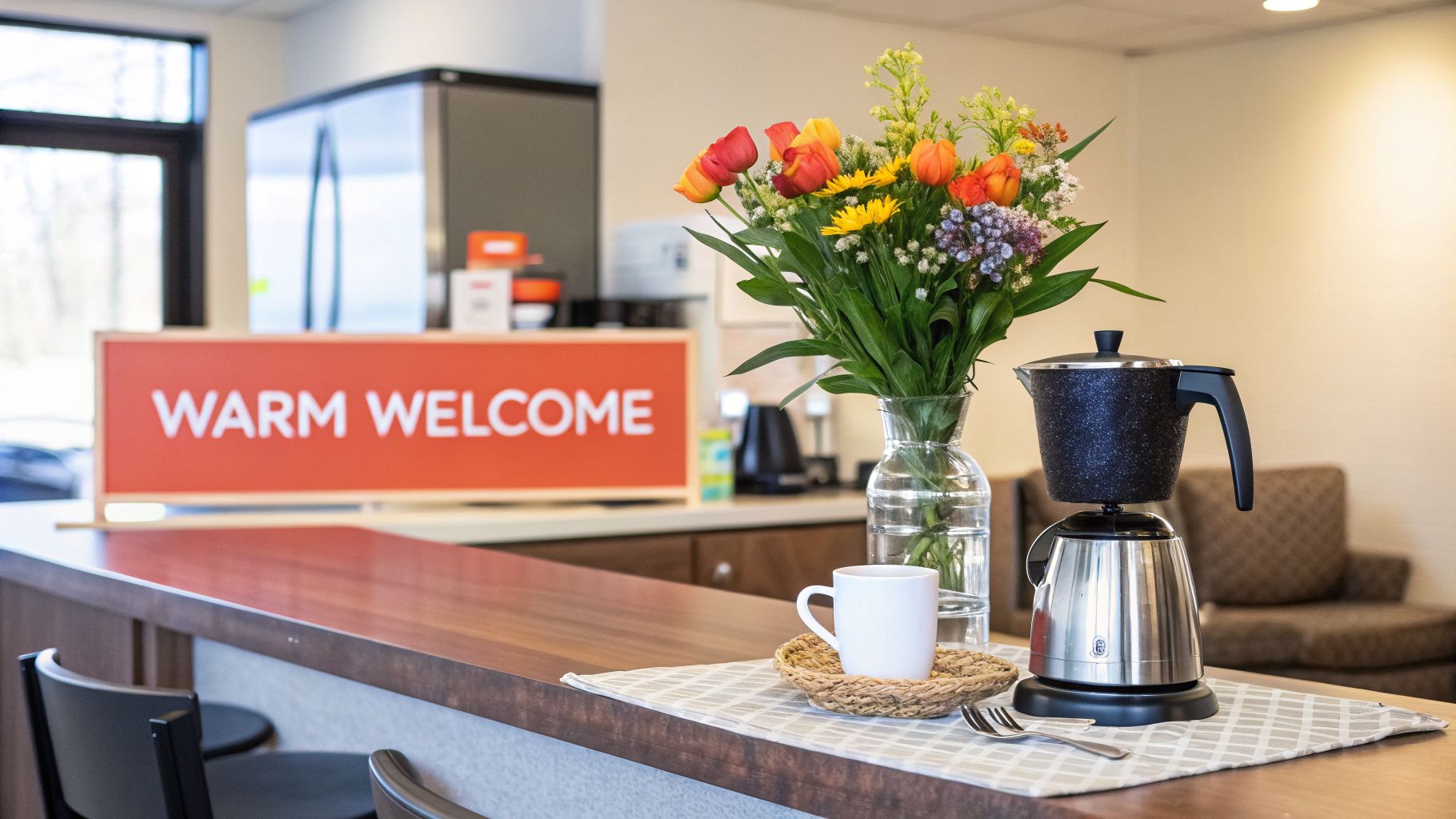
Inspired by the aspirational yet lived-in feel of Pottery Barn or Williams-Sonoma displays, this method encourages potential buyers to envision themselves making coffee on a lazy Sunday morning or hosting friends. It’s about selling a lifestyle, not just a property. The goal is to make the space feel generous, welcoming, and ready for creating memories.
How to Implement Warm Hospitality Staging
- Create Lifestyle Vignettes: Set up two or three styled vignettes. A simple coffee station with quality ceramic mugs, a sleek coffee maker, and a small bowl of fresh coffee beans is a classic. Another option is a baking station with a stand mixer, a cookbook opened to a cookie recipe, and a jar of flour.
- Incorporate Fresh (or Faux) Elements: A bowl of vibrant green apples, lemons, or artichokes adds a pop of natural color. If spoilage is a concern, high-quality artificial produce and fresh-looking faux flowers provide the same visual appeal without the maintenance.
- Set the Mood with Lighting: Swap out harsh, cool-toned bulbs for warmer ones (around 2700K). Installing under-cabinet lighting or using smart bulbs to adjust the color temperature can instantly create a cozy and inviting ambiance.
- Add Soft Textures: Drape a clean, stylish tea towel over the oven handle or sink. If there’s an eat-in area or island seating, add simple linen-blend cushions to the stools or chairs to soften the look and suggest comfort.
Agent Insight: The key to this style is curated storytelling, not clutter. Each item should have a purpose and contribute to the welcoming narrative. Focus on evoking a feeling of generosity and community to make the kitchen feel like a place where life happens.
3. Modern Industrial Kitchen Staging
Modern industrial staging combines raw, exposed materials with clean, contemporary lines to create a sophisticated, urban aesthetic. This style is not just for warehouse lofts; it’s a powerful way to add character and a high-end feel to kitchens with modern architectural features. By highlighting elements like stainless steel, brick, concrete, and metal accents, you present a space that feels both edgy and thoughtfully designed, making it a standout among staging ideas for kitchen layouts for buyers seeking a distinct, city-inspired vibe.
The appeal lies in the honest use of materials and a no-frills approach to design, influenced by brands like Restoration Hardware and CB2. It creates a narrative of a space that is both functional and a work of art, which resonates with buyers in urban markets or anyone drawn to a bold, yet refined, interior style.
How to Implement Modern Industrial Staging
- Balance Raw with Warmth: The key is to prevent the space from feeling cold. Balance hard surfaces like steel or concrete with a warm wood cutting board, a woven basket, or rich leather-topped bar stools.
- Curate Open Shelving: If the kitchen has open shelves, style them with purpose. Use matching sets of matte black or white dishware, simple glassware, and avoid clutter. A few cookbooks with minimalist spines can add a touch of personality.
- Incorporate Greenery: Add a single green plant, like a snake plant in a modern concrete planter or a small pot of fresh herbs on the counter. This touch of life softens the industrial edge.
- Emphasize Matte Finishes: Opt for matte black or brushed metal finishes on hardware, faucets, and light fixtures. Shiny chrome can look clinical, while matte textures add depth and sophistication.
Agent Insight: This style works best when the home has at least one existing industrial-style feature, like a concrete floor, exposed ductwork, or a brick wall. Lean into that feature and build the staging concept around it for an authentic, cohesive look that captivates buyers.
4. Luxury High-End Kitchen Staging
Luxury high-end kitchen staging focuses on creating an atmosphere of exclusivity and superior quality. This technique goes beyond simple tidiness to highlight premium materials, designer appliances, and bespoke features that appeal to affluent buyers. By curating an environment that speaks of craftsmanship and sophistication, you showcase the kitchen as the heart of a luxurious lifestyle. This is one of the most aspirational staging ideas for kitchen settings, perfect for properties in prime markets and homes with significant architectural value.
The goal is to tell a story of opulence and attention to detail. Think of kitchens featured in Architectural Digest or the showrooms of designers like SieMatic and Poliform. These spaces are not just functional; they are works of art, where every element, from the faucet to the cabinet pulls, has been carefully selected to convey a message of unparalleled quality.
How to Implement Luxury High-End Staging
- Focus on Signature Elements: Instead of cluttering the space, draw attention to one or two standout features, like a marble waterfall island or a custom-built range hood. Let these elements be the heroes of the room.
- Curate with Designer Accessories: Introduce a single, significant object like a designer vase, a high-end art piece, or an exclusive cookbook on a stand. This signals a sophisticated taste level.
- Showcase Technology Subtly: Highlight integrated smart home features, like automated lighting or a built-in coffee system, without making the space feel technical. Ensure all appliances are spotlessly clean and professionally polished.
- Create Digital Variations: Use AI tools to generate different styled versions of your listing photos. Showcasing the kitchen set for a morning coffee versus an evening cocktail party can broaden its appeal. You can find the best AI photo editing software to quickly produce these compelling visuals.
Agent Insight: In the luxury market, authenticity is paramount. Invest in professional staging that uses genuine, high-quality items. Faux luxury is easily spotted and can undermine the property's perceived value. Every detail should reinforce a narrative of quality and exclusivity.
5. Farmhouse & Rustic Kitchen Staging
Farmhouse and rustic kitchen staging evokes a sense of warmth, comfort, and timeless appeal. This style leans on natural materials, vintage-inspired accessories, and a cozy, lived-in feel to create a space that feels both authentic and aspirational. By incorporating elements like wood finishes, open shelving, and charming details, you can craft one of the most inviting staging ideas for kitchen settings, appealing to buyers who value family, tradition, and a connection to heritage.
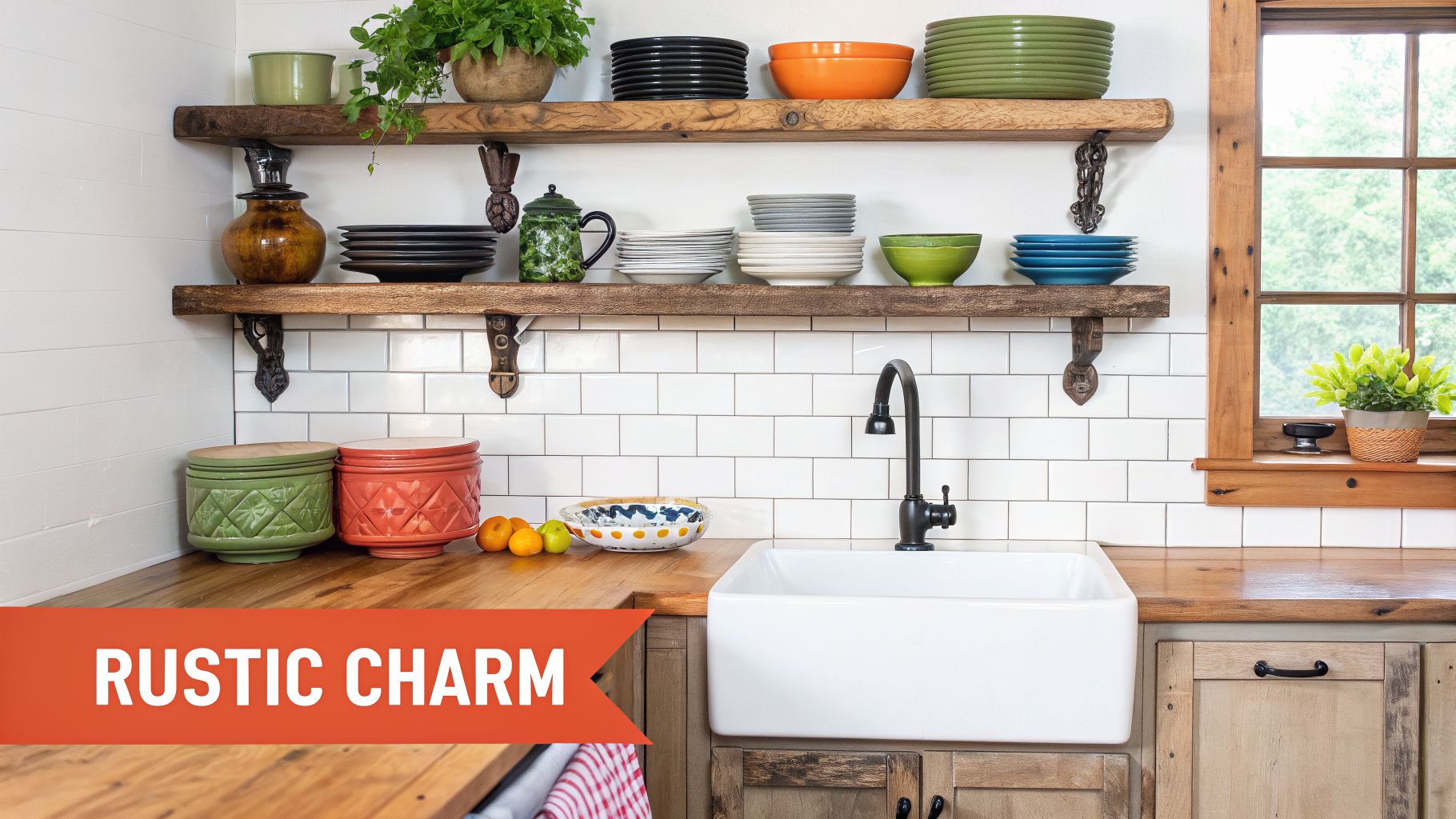
Popularized by lifestyle brands like Magnolia, this aesthetic is not about creating a cluttered, old-fashioned space. Instead, it’s a curated balance of rustic charm and modern functionality. The goal is to make a home feel welcoming and grounded, suggesting a slower-paced, more intentional lifestyle that resonates strongly in both rural and suburban markets.
How to Implement Farmhouse & Rustic Staging
- Curate Open Shelving: Style open shelves with a mix of beautiful and functional items. Arrange a set of matching white ceramic dishes, a few vintage bowls, and a stack of classic cookbooks with attractive spines. Aim for 5-8 well-placed items per shelf.
- Incorporate Natural Materials: Use wood cutting boards, linen tea towels, ceramic canisters, and metal utensil holders. Place fresh greenery in a simple vase or a bundle of dried wheat for a seasonal touch.
- Add Vintage Accents: Introduce two or three antique or vintage-style pieces that serve as conversation starters. This could be a distressed wooden sign, a small scale, or a collection of antique mixing bowls.
- Test Finishes Virtually: Before committing to decor, use a virtual staging tool to test different wood tones and finishes. This can help you see if a darker wood cutting board or a lighter-toned basket works better against the existing countertops and cabinetry.
Agent Insight: The key to successful farmhouse staging is balancing rustic elements with a clean, organized presentation. The kitchen should feel homey, not messy. Ensure modern appliances are integrated seamlessly, presenting them as a deliberate part of a thoughtfully designed space.
6. Contemporary Clean Kitchen Staging
Contemporary clean kitchen staging highlights current design trends by mixing sleek lines, interesting textures, and a forward-thinking aesthetic. This approach balances the sparseness of minimalism with curated personality, using modern pieces and subtle color accents to create a space that feels fresh and intentional. It's one of the most effective staging ideas for kitchen layouts designed to attract buyers seeking sophisticated, move-in-ready homes that reflect today's style.
The goal is to create a look similar to what you might see in a West Elm or CB2 catalog. Every item feels deliberate, combining functionality with high-end design. By mixing materials like warm woods with cool metals and matte finishes with satin ones, you add depth and visual interest without creating clutter. This shows buyers a kitchen that is not just a workspace but a stylish hub of the home.
How to Implement Contemporary Clean Staging
- Mix Materials and Finishes: Combine contrasting textures. For example, pair matte black cabinet hardware with warm wood open shelving or place a sleek, sculptural ceramic vase on a polished stone countertop.
- Incorporate Modern Art: Add two or three modern art pieces or sculptural objects. These should be simple and impactful, serving as focal points that add personality without being distracting.
- Use Subtle Color Accents: Introduce a pop of color through a few strategic items. Trendy bar stools, a set of high-quality kitchen towels, or a modern fruit bowl can bring life to a neutral palette.
- Keep Hardware Cohesive: Ensure all cabinet pulls, knobs, and faucets share a modern, coordinated style. This small detail creates a powerful sense of unity and high-quality finish.
Agent Insight: Contemporary staging is about intentionality. Every piece, from the live plant in a modern planter to the knife block, should feel like it was chosen for its design. This curated approach tells a story of a modern, well-cared-for home.
7. Mediterranean & European Kitchen Staging
Mediterranean staging brings the warmth and rustic elegance of European coastal living into a kitchen. This style is built on earthy color palettes, natural textures, and old-world charm, making it a perfect match for homes with Mediterranean, Spanish Colonial, or Tuscan-inspired architecture. By incorporating elements like terracotta, wrought iron, and handmade ceramics, you create a narrative of travel, quality craftsmanship, and a relaxed, sophisticated lifestyle. It stands out as one of the most character-rich staging ideas for kitchen staging, ideal for connecting with buyers who appreciate culture and authenticity.
The goal is to evoke a sense of sun-drenched European villas where the kitchen is the heart of the home. This approach helps potential buyers envision themselves hosting gatherings, enjoying artisanal foods, and living a life of casual elegance. The focus is on texture, warmth, and a few well-chosen statement pieces rather than a sterile, modern aesthetic.
How to Implement Mediterranean Staging
- Focus on a Warm Palette: Introduce colors like ochre, terracotta, deep blues, and olive green through accessories. This can be achieved with painted tiles used as a backsplash, rustic pottery, or even a strategically placed piece of art.
- Incorporate Natural Materials: Use wood cutting boards, bowls of fresh citrus fruits, and rustic linen tea towels. Displaying a few bottles of high-quality European olive oil or wine adds an authentic touch.
- Add Organic Elements: Place fresh herbs like basil, rosemary, or oregano in simple ceramic pots on the windowsill or countertop. The greenery and fragrance contribute to the sensory experience.
- Select Statement Accessories: Limit accessories to 3-5 key items. A piece of vintage copper cookware, a wrought-iron pot rack, or a large, rustic ceramic bowl can serve as a compelling focal point without creating clutter.
Agent Insight: This style thrives on authenticity, not perfection. A bit of patina on a copper pot or the imperfect glaze on a ceramic vase adds to the charm. Use warm lighting to highlight these textures and enhance the earthy color palette, making the space feel inviting and timeless.
8. Transitional Kitchen Staging
Transitional kitchen staging is a highly effective strategy that merges traditional and contemporary design elements to create a timeless, broadly appealing space. This style balances the classic comfort of traditional kitchens with the clean lines of modern design, resulting in a look that feels both fresh and familiar. It is one of the safest and most successful staging ideas for kitchen makeovers because it avoids polarizing extremes and resonates with the widest possible range of buyers.
This approach is about creating a harmonious blend. Think of the inviting yet polished kitchens often featured on HGTV shows or in Pottery Barn catalogs. They combine classic features like shaker-style cabinets with modern elements like sleek hardware and stainless steel appliances. The result is a kitchen that feels updated and high-end without being cold or stark, making buyers feel instantly at home. You can see powerful transformations by studying compelling house staging before and after examples.
How to Implement Transitional Staging
- Mix and Match Materials: Combine a classic element, like a farmhouse sink or glass-front cabinets, with modern touches such as quartz countertops or contemporary hardware. The contrast creates visual interest.
- Neutral Color Foundation: Stick to a palette of two to three neutral colors like gray, beige, and white. Introduce a single, subtle accent color through accessories like a fruit bowl or dish towels.
- Balance Old and New Accessories: Decorate with items that bridge styles. A simple white ceramic pitcher, wooden cutting boards, and a modern cookbook stand are perfect examples.
- Statement Lighting: Install a single, distinctive light fixture that blends both styles, such as a modern drum pendant or a sleek lantern-style fixture over the island.
Agent Insight: The goal of transitional staging is to create a "blank slate" that feels luxurious and well-designed. This style's wide appeal minimizes the risk of alienating buyers, making it an excellent choice for almost any property, from suburban family homes to urban condos.
9. Kitchen Lighting & Ambiance Staging
Kitchen lighting and ambiance staging is a specialized approach that focuses on transforming a kitchen's feel through strategic lighting. This technique recognizes that light profoundly impacts how buyers perceive space, color, cleanliness, and mood. By layering different types of light, you can highlight key features, create a sense of warmth, and make the kitchen one of the most memorable and appealing spaces in the home. It's one of the most impactful staging ideas for kitchen layouts because it can dramatically alter a room's character without major renovations.
This method goes beyond simply turning on an overhead light; it’s about creating an emotional response. Think of the inviting glow in a high-end restaurant or the perfectly illuminated displays in a luxury kitchen showroom. These spaces use light to direct attention, create depth, and establish a specific atmosphere, making the kitchen feel both functional and aspirational.
How to Implement Lighting & Ambiance Staging
- Layer Your Lighting: Combine ambient (general), task (focused), and accent lighting. Install warm-toned recessed lights (around 3000K) for overall brightness and add under-cabinet LED strips to illuminate countertops, making them appear clean and spacious.
- Add a Statement Piece: A stylish pendant light over an island or a chic fixture above the sink can act as a visual anchor and a point of interest, adding a touch of modern design.
- Install Dimmers: Dimmers are a small but powerful upgrade. They allow you to adjust the lighting for showings, keeping it bright to emphasize cleanliness and dimming it slightly to create a warm, inviting atmosphere for evening viewings.
- Simulate with AI: Before investing in electrical work, use AI-powered staging tools to experiment with different lighting scenarios. You can add or change fixtures in photos to see what combination of under-cabinet, pendant, and recessed lighting best showcases the space.
Agent Insight: Proper lighting can make or break a kitchen's appeal in photos and in person. Avoid harsh, cool-toned fluorescent bulbs that create a clinical feel. The goal is to create an even, warm, and shadow-free environment that makes the kitchen look bigger, cleaner, and more welcoming.
9-Style Kitchen Staging Comparison
| Style | Implementation Complexity (🔄) | Resource Requirements (⚡) | Expected Outcomes (⭐📊) | Ideal Use Cases (📊) | Key Advantages & Tips (💡) |
|---|---|---|---|---|---|
| Minimalist Kitchen Staging | Low — simple declutter & organization | Low — storage, minimal decor | ⭐⭐⭐⭐ — larger perceived space; strong modern appeal | Small kitchens, urban condos, contemporary homes | Highlights architecture; easy to maintain; use AI declutter; keep 1–2 decor items |
| Warm Hospitality Kitchen Staging | Moderate — vignette setup & upkeep | Moderate — props, fresh items, warm lighting | ⭐⭐⭐⭐ — strong emotional/lifestyle appeal; photogenic | Family homes, islands/breakfast nooks, entertaining-focused listings | Creates welcoming vibe; refresh perishables; use artificial produce if needed |
| Modern Industrial Kitchen Staging | Moderate–High — source finishes & fixtures | High — quality metals, appliances, lighting | ⭐⭐⭐⭐ — sophisticated urban appeal; highly marketable | Lofts, urban properties, high-ceiling contemporary kitchens | Showcases materials; balance with warm textures; favor matte finishes |
| Luxury High-End Kitchen Staging | High — professional styling & detail work | Very high — premium appliances, custom pieces | ⭐⭐⭐⭐⭐ — justifies premium pricing; attracts affluent buyers | Multi‑million-dollar homes, custom or designer kitchens | Hire pro stager; focus on 1–2 signature elements; pro photography recommended |
| Farmhouse & Rustic Kitchen Staging | Moderate — curate vintage pieces & textures | Low–Moderate — reclaimed wood, antiques, accessories | ⭐⭐⭐⭐ — strong nostalgic/emotional appeal; broad market fit | Rural/suburban homes, properties with character or farmhouse sinks | Masks wear; curate open shelves (5–8 items); balance rustic with neat styling |
| Contemporary Clean Kitchen Staging | Low–Moderate — selective modern styling | Moderate — modern accessories, art, finishes | ⭐⭐⭐⭐ — trendy, design-conscious appeal; photogenic | Mid-range homes, urban/suburban, design-focused buyers | Mix materials for interest; use subtle accents; leverage virtual restyling |
| Mediterranean & European Kitchen Staging | Moderate — specialty finishes & curated antiques | Moderate–High — tiles, vintage cookware, warm materials | ⭐⭐⭐ — distinctive cultured aesthetic; selective appeal | Mediterranean/Spanish Colonial homes, SW/CA properties, villas | Use 3–5 statement pieces; warm lighting and herbs; avoid over-theming |
| Transitional Kitchen Staging | Low — blend of classic + modern elements | Low–Moderate — neutral furnishings, balanced finishes | ⭐⭐⭐⭐ — widest buyer appeal; timeless presentation | Mainstream residential properties, model homes, broad demographics | Broad marketability; stick to 2–3 base colors + one accent; keep intentional styling |
| Kitchen Lighting & Ambiance Staging | Moderate — layered lighting design; possible wiring | Moderate — fixtures, LEDs, dimmers, smart controls | ⭐⭐⭐⭐⭐ — high visual impact; improves photos and perceived quality | Poorly lit kitchens, evening showings, any style needing visual boost | Transformational ROI; simulate scenarios with AI; use layered warm lighting and dimmers |
Staging Smarter, Not Harder: Your Kitchen's Untapped Potential
The kitchen is more than just a room with appliances; it’s the active heart of a home, where life unfolds. Effective staging is the art of showcasing this potential, turning a functional space into an emotional touchstone for prospective buyers. As we've detailed, the most successful agents don't rely on a single playbook. Instead, they strategically select staging ideas for kitchens that align with the property's architecture and the aspirations of its target demographic. Whether it’s the clean simplicity of a Minimalist setup, the inviting warmth of a Farmhouse design, or the sleek sophistication of a High-End Luxury kitchen, each style tells a different story.
The core principle is intentionality. Moving beyond generic decluttering, your goal is to curate an environment. This means mastering the nuances of each approach, from the specific materials in an Industrial kitchen to the precise accessory placement in a Transitional one. Remember the power of sensory details; the right lighting, a pop of color, or a single well-placed plant can completely alter a room's atmosphere and make it memorable in a sea of online listings.
To elevate your strategy and stay ahead of design movements, consider what buyers will want tomorrow. For instance, a small but impactful update to a backsplash or floor can signal a modern, well-maintained home. Exploring the latest kitchen tile trends for 2026 can provide inspiration for minor renovations that offer a significant return on investment, ensuring the property feels current and desirable.
Key Takeaways for High-Impact Staging
- Strategic Matching: Always match the staging style to the home's character and the likely buyer. A modern condo demands a different touch than a country estate.
- Focus on Emotion: The goal is not just to show a clean kitchen but to help buyers envision themselves living, cooking, and entertaining in the space. Use props and lighting to create a specific mood.
- Detail-Oriented Execution: Success lies in the small things. Countertop vignettes, fresh textiles, and appropriate hardware are not afterthoughts; they are central to a convincing presentation.
- Efficiency is Your Ally: In a fast-paced market, the ability to quickly visualize and present different staging options is a significant advantage. Using digital tools to create mockups saves time and helps sellers commit to a vision.
Ultimately, mastering these varied staging ideas for kitchen spaces moves you from a sales agent to a trusted advisor. By understanding the psychology of design and applying it with precision, you build a powerful marketing narrative that resonates with buyers, justifies asking prices, and accelerates the journey from listing to closing. You are not just selling a house; you are selling a dream, and the kitchen is where that dream often begins.
Ready to bring these kitchen staging ideas to life in seconds? Bounti Labs lets you virtually stage any kitchen with a single photo, allowing you to test styles, create stunning marketing visuals, and show sellers the true potential of their space instantly. Explore the future of staging at Bounti Labs.