What if you had a world-class interior designer on speed dial, ready to stage any property in minutes, for pennies on the dollar? That’s the reality of virtual staging AI. It's a marketing tool that uses artificial intelligence to turn photos of empty, cold, or dated rooms into beautiful, fully-furnished spaces that stop online buyers in their tracks.
What Is Virtual Staging AI and Why It Matters Now
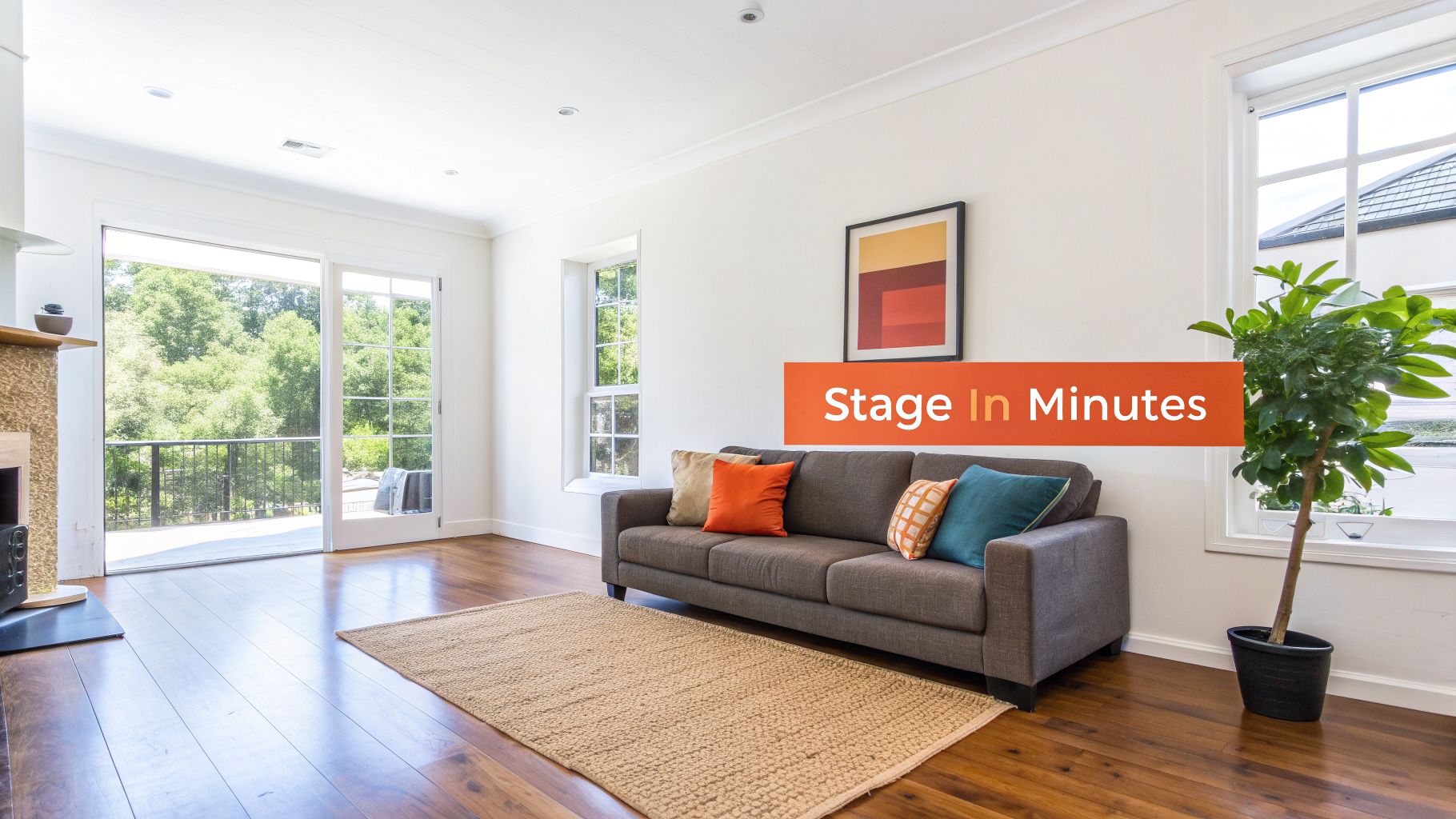
Let's be honest: the home search starts and ends online. With 97% of buyers starting their hunt by scrolling through listings, that first digital impression is everything. And this is where most agents hit a wall—the empty room problem.
An unfurnished property is a dead end for a buyer's imagination. It looks cold and sterile. The bare floors and vacant corners force buyers to do the hard work of imagining a life there. Most won't bother. This "visualization gap" is a listing killer; buyers can't see the potential, so they just keep scrolling.
From Manual Service to Instant Solution
For years, the only answer was traditional physical staging. That meant calling movers, renting expensive furniture for weeks or months, and juggling logistics—a nightmare that could cost thousands and take a week before you could even take a photo.
Then came the first version of virtual staging, where designers would manually edit furniture into photos. It was cheaper, sure, but still slow. You were looking at days of back-and-forth to get just a few images done. The real shift is virtual staging AI, which automates the entire process. Instead of waiting on a designer, the AI analyzes your photo and spits out a photorealistic, beautifully furnished room in seconds.
This isn't just a photo editing trick. It's a fundamental change in how you market a property. Virtual staging AI lets you take control of the buyer's first impression and create an emotional connection instantly.
You're solving the empty room problem immediately and affordably. You get to show a property's true potential and make it feel like a warm, inviting home from the very first click. This is non-negotiable in a market where staged homes consistently sell faster and for more money. You can dive deeper in our complete virtual staging guide for real estate to see how this impacts the entire sales cycle.
Why This Is No Longer Optional
The modern real estate game is won with speed and visual appeal. Agents who get stunning, compelling listings online faster have a massive advantage. Virtual staging AI is how you get that edge.
Here's a quick look at how the old way stacks up against the new.
Traditional Staging vs Virtual Staging AI At a Glance
| Factor | Traditional Physical Staging | Virtual Staging AI |
|---|---|---|
| Cost | $3,000 - $8,000+ per project | A few dollars per image |
| Time to Market | 1-2 weeks (coordination, moving, setup) | Under 2 minutes |
| Logistics | Complex: movers, rentals, insurance | Simple: upload a photo |
| Flexibility | One look, difficult to change | Unlimited styles and revisions |
| Buyer Disruption | Furniture fills the space during showings | Empty space for buyers to tour freely |
As you can see, the difference is night and day. Virtual staging AI gives you a clear, measurable advantage.
- Massive Cost Savings: Slash your marketing budget by over 90% compared to physical staging. That's money you can put back into lead generation or other parts of your business.
- Unbeatable Speed: Get properties listed in hours, not weeks. Instant turnarounds let you capture buyer interest the second a property hits the market.
- Create an Emotional Connection: Help buyers see themselves in the home. That's what gets them to book a tour and, ultimately, write an offer.
This technology isn't a "nice-to-have" anymore. It's a core part of the modern agent's toolkit for winning listings and delivering for clients.
How AI Actually Designs a Photorealistic Room
So, how does this all work? It might feel like some kind of design magic, but what’s happening under the hood is a fascinating blend of data and artistry.
Think of the AI as an interior designer who has studied millions of beautiful homes. It's not just dropping random furniture into a photo; it has developed a deep, intuitive sense of style, composition, and what makes a room feel right.
The whole process is built for busy agents, not tech wizards. You start by simply uploading a photo of an empty or outdated room. The second that image hits the server, the AI gets to work.
First, It Scans the Digital Canvas
Before placing a single virtual object, the AI performs a sophisticated analysis of the room. It’s not just looking at a flat picture; it's deconstructing the space to understand its geometry and architecture.
The system instantly identifies the critical elements:
- Room Dimensions: It figures out the approximate scale to ensure furniture isn't comically large or small.
- Architectural Features: It maps out the windows, doors, fireplaces, and other permanent fixtures.
- Lighting Sources: The AI pinpoints where the light is coming from—be it a sunny window or a ceiling fixture—and analyzes the existing shadows.
- Perspective and Angles: It calculates the camera's exact viewpoint so that every added object sits perfectly within the space, grounded and realistic.
This analysis creates a digital blueprint of the room. It’s like the AI is building a 3D model in its head from your 2D photo. This step is what separates high-quality virtual staging from cheap photo editors that leave furniture looking like it's floating.
Then, It Generates the Perfect Design
Once the AI understands the space, the creative part begins. This is where it pulls from that massive library of design knowledge. You give it a simple direction—like choosing “Modern,” “Farmhouse,” or “Scandinavian”—and the AI acts as your personal designer.
It selects and arranges furniture that not only fits the style you chose but also works with the room's specific layout and dimensions.
The ultimate goal is photorealism. The AI meticulously renders every object, paying close attention to how shadows should fall based on the room's light. A sofa near a bright window will have soft highlights and deep shadows, just like it would in real life.
This obsession with detail is what makes or breaks the final image. The AI ensures the scale of a chair feels right next to a sofa and that the texture of a rug looks correct on the floor. It’s this combination of matching perspective, lighting, and scale that makes the result nearly indistinguishable from a physically staged room.
For a great example of how different design elements can be generated and swapped out in a specific space, check out the dreamkitchen AI's platform to see this technology in action.
Making Powerful Tech Feel Simple
The real breakthrough here is that modern AI platforms hide all this complexity behind an incredibly simple interface. You don't need to know a thing about 3D modeling, lighting physics, or generative algorithms.
The tech does all the heavy lifting.
This puts the power to create incredible marketing materials—once reserved for those with huge budgets—into the hands of any agent. Platforms like Bounti Labs take this a step further, letting you generate stunningly realistic designs in seconds.
You get total control over your listing’s first impression, with zero technical headaches. It builds confidence not just in the tool, but in your own ability to market any property to its absolute fullest potential.
The Financial Case for AI Staging
In real estate, every dollar you spend on marketing needs to work for you. While AI-staged photos look great, the only question that really matters is: what’s the ROI?
The answer turns virtual staging from a nice-to-have marketing expense into a high-yield investment. It’s not just about pretty pictures. It’s about a simple formula: dramatically lower costs, a higher sale price, and less time on the market. That’s a powerful combination that directly impacts your bottom line and your client's final check.
This infographic lays out the simple, powerful workflow behind these gains.
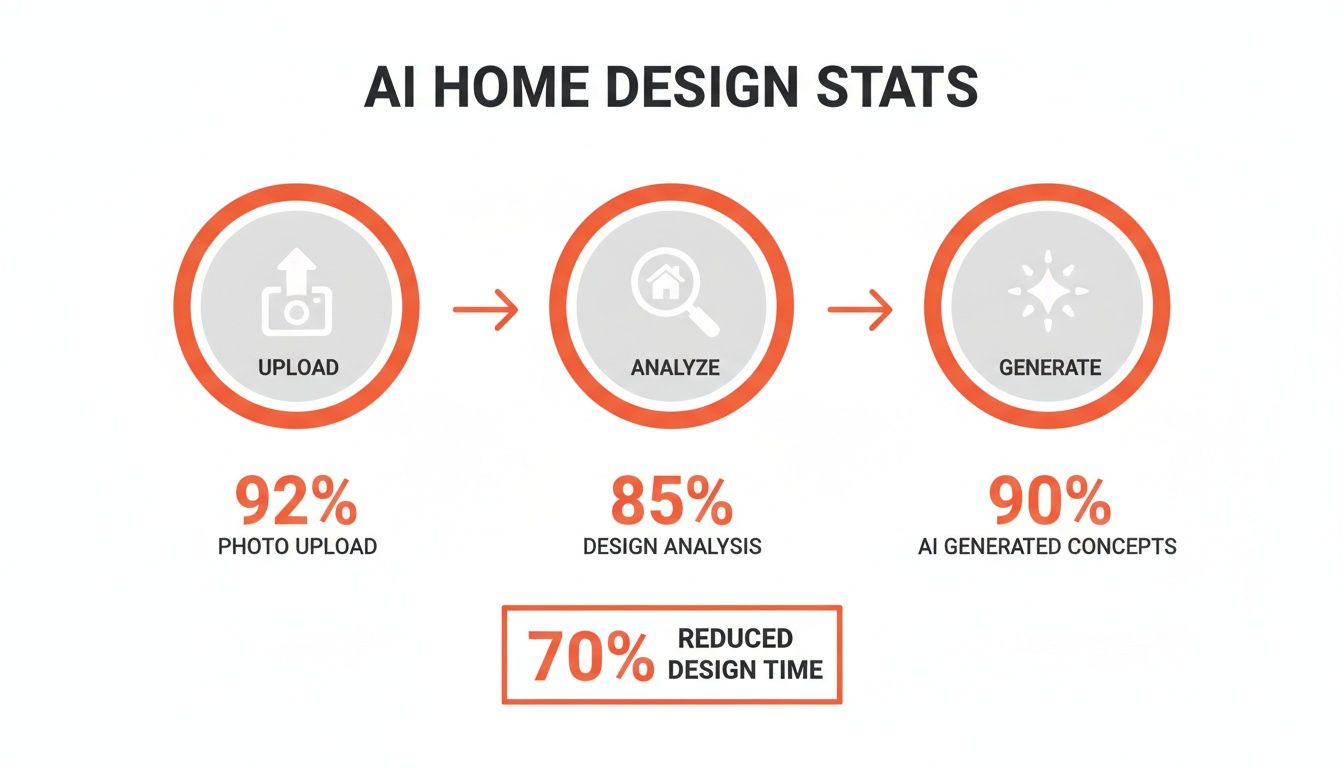
It’s a quick cycle—upload, analyze, generate—that produces professional results in minutes, cutting out weeks of logistical headaches and the costs that come with them.
Slashing Marketing Spend
The most obvious win is the massive cost difference. Traditional staging is a serious budget item, involving consultations, furniture rental, movers, insurance, and de-staging. All in, you’re easily looking at $3,000 to $8,000 or more, depending on the house and location.
Virtual staging AI cuts that expense by over 90%. Instead of paying thousands for a single project, you can stage an entire home’s worth of photos for a tiny fraction of that. For just a few dollars an image, you can create unlimited design concepts—something that would be financially out of the question with physical furniture.
This isn't just about saving money; it's about reallocating your marketing budget where it matters most. The thousands you save can be put toward targeted digital ads, professional videography, or other high-impact activities that get you more eyeballs.
Driving Higher Offers and Faster Sales
Beyond the cost savings, AI virtual staging directly contributes to a better final sale price. When buyers can instantly picture themselves in a space, they form an emotional connection. That connection leads to stronger, more competitive offers.
The data shows virtual staging is an ROI machine, delivering returns between 500% and a wild 3,600%. For luxury properties, a virtual stage can help secure sale price premiums of 8-12%. Even for mid-market homes, offers often jump by 1-10%. It all comes down to building perceived value and making your property pop online. You can find more data on virtual staging ROI and its market impact here.
This financial boost is amplified by slashing carrying costs. Every day an empty property sits on the market, it’s leaking money—mortgage, taxes, insurance, utilities. Because staged homes sell so much faster, AI staging helps your seller stop the bleeding sooner.
Quantifying the Return
Let's run the numbers on a conservative, real-world example.
Scenario: A Mid-Range Home Listed at $500,000
- Traditional Staging Cost: A modest job might run you $4,000.
- Virtual Staging AI Cost: Staging five key photos could cost about $50.
- Immediate Savings: You've pocketed $3,950 from day one.
Now, let's look at the sale price. A conservative 3% bump on a $500,000 home adds $15,000 to the final offer.
By spending just $50 on virtual staging AI, you not only saved your client nearly $4,000 upfront but also helped them walk away with an extra $15,000 in equity. That’s a total financial swing of $18,950. This is the concrete power of making a small, smart investment in your listing's first impression—a clear financial argument that proves your value as an agent.
How AI Staging Helps Sell Homes Faster

In real estate, time on market is the enemy. Every day a property sits unsold, it's costing your client money and draining your momentum. The number one job after signing a listing is to get it sold fast, and virtual staging AI is one of the most effective tools for making that happen.
The technology attacks the single biggest bottleneck in getting a property to market: prep time. Let's be honest, traditional physical staging is a logistical nightmare. It involves coordinating movers, renting furniture, and waiting around for everything to be just right before you can even think about photos. This headache can easily tack on 10-21 days before your listing even sees the light of day.
AI staging obliterates that delay. You can get a complete set of beautifully furnished photos back the very same day your photographer sends you the files. That means you can go live immediately and start capturing buyer interest while your competition is still on the phone with a furniture rental company.
Capture Their Attention Instantly
The second your listing hits the MLS, you're in a race for attention. You have a very short window to make an impact, and let’s face it, empty rooms just don’t stop the scroll. They look cold, small, and uninspired.
AI-staged photos flip that script entirely. Suddenly, you’re showcasing a warm, inviting home that pulls people in. This isn't just about looking pretty—it translates directly into the online metrics every agent obsesses over.
Listings with compelling, staged images simply perform better. You get more:
- Clicks: Buyers are far more likely to click on a thumbnail showing an aspirational, finished space.
- Saves: When a buyer saves your listing, it's one of the strongest indicators of real interest.
- Tour Requests: This is the real prize. Getting buyers in the door is the whole point, and great photos are proven to drive more showing appointments.
By grabbing that attention from day one, you build a wave of early momentum that is absolutely critical for a quick sale. You aren’t just getting more views; you’re attracting higher-quality buyers who are already connecting with the home.
Help Buyers See Themselves at Home
So, why do staged homes sell faster? It's simple psychology. An empty room is a blank canvas, but it forces buyers to do all the creative work. You're asking them to imagine their life there, and for many, that’s a real challenge.
A beautifully staged home does that heavy lifting for them. It tells a story. It lets buyers instantly picture themselves hosting friends in the dining room or unwinding in the living room after a long day. That’s how an emotional connection is made.
This is the connection that turns a casual browser into a committed buyer. It's what makes them feel that a property is "the one" and pushes them to write a fast, strong offer. In fact, studies show that virtual staging AI can cut home selling times by up to 73% while seriously boosting buyer engagement. That aligns with NAR data showing 83% of buyers' agents agree that staging helps clients visualize themselves in a home, speeding up their decision-making. You can see more data on how AI helps homes sell faster on Collov.ai.
When you use virtual staging AI, you’re not just marketing a house; you’re selling a lifestyle. It’s a powerful tool that helps you stand out, create urgency, and slash your Days on Market—giving you a serious edge in any market.
Your Step-by-Step AI Staging Workflow
Getting started with virtual staging AI doesn't mean you need a design degree or a background in coding. The whole point is to give busy real estate pros a simple path to incredible results, fast. The entire workflow, from taking the first photo to publishing the listing, breaks down into just a few manageable steps.
By following a consistent process, you’ll be able to create photorealistic images that don’t just fill an empty room—they get buyers to stop scrolling and start imagining their future.
Prepare and Capture Your Best Shot
Let's be blunt: garbage in, garbage out. The quality of your final staged image depends entirely on the photo you start with. You can't feed the AI a blurry, dark picture and expect a magazine-worthy result.
To give yourself the best shot at success, nail the photography first.
- Clean and Declutter: Before you even think about your camera, make sure the room is spotless and completely empty. While AI can remove clutter, starting with a clean slate gives it the best possible canvas to build upon.
- Use High-Resolution Photos: Grab your DSLR and shoot in the highest resolution you can. A top-tier smartphone can also deliver great results, but only if the lighting is perfect.
- Focus on Great Lighting: Natural light is your best friend. Shoot during the day to get bright, even lighting that helps the AI render convincing shadows and highlights on the virtual furniture.
Once you have a collection of crisp, well-lit photos of your empty spaces, you’re ready for the magic. Getting this first step right is non-negotiable for believable results.
Choose Your Tool and Design Your Space
With great photos in hand, it’s time to jump into an AI staging platform. This is where the fun really begins. Tools like Bounti Labs are designed for speed and simplicity, making the creative part almost effortless.
Here’s how it usually works:
- Upload Your Image: Just drag and drop your high-resolution photo of the empty room into the tool.
- Select Your Style: Pick an aesthetic that speaks to your target buyer. Most platforms offer a range from Modern and Scandinavian to Farmhouse and Industrial.
- Generate and Refine: The AI does the heavy lifting, generating a furnished room in seconds. You can then make quick edits, like asking the AI to change the couch or add some art to the walls.
Remember, you're not just filling a room; you're telling a story. Staging a spare room as a home office speaks to a remote professional, while a nursery setup will catch the eye of a growing family.
Market Your Listing with Transparency
You’ve got your gorgeous, staged photos. Now what? It’s time to get them in front of buyers on the MLS, social media, your website, and in print materials.
But here’s the crucial part: always be transparent. Leading a buyer to believe staged photos are real is bad for business and can get you in hot water with your local board.
Stick to these simple rules for disclosure:
- Clearly Label Your Images: Add a discreet watermark or caption like "Virtually Staged" to every AI-generated photo.
- Show Both Versions: Whenever you can, include the empty and the staged photos in your listing gallery. This shows buyers the home’s potential without hiding its current state.
Following this simple workflow lets you integrate virtual staging AI into your marketing ethically and effectively, creating visuals that capture attention and build trust from the very first click.
Beyond Staging with Advanced AI Real Estate Tools
Think of virtual staging AI as your starting point. It’s fantastic for filling an empty room, but that’s just scratching the surface of what’s possible today. The real magic happens when you move past just adding a sofa and a coffee table.
Modern AI platforms are more like a complete digital renovation crew. They give you a whole suite of tools to solve the real, messy marketing challenges you face every day. This is how you stop showing a property for what it is and start selling the vision of what it could be.
Showcase Potential with Virtual Renovations
We’ve all been there: a listing with a perfectly functional but hopelessly dated kitchen. Buyers walk in, and you can see their imagination just shut down. Instead of losing them to shag carpets or avocado-green appliances, a virtual renovation lets you show them the future.
With a few clicks, you can present two photos side-by-side: the original space, and a stunning AI-generated "after" shot that features:
- New Cabinets: Swap dark, heavy wood for bright, modern shaker-style cabinets.
- Updated Countertops: Replace that old laminate with photorealistic quartz or granite.
- Modern Backsplash: Add a stylish subway tile or a pop of color with a geometric pattern.
- New Flooring: Instantly trade worn-out linoleum for sleek hardwood or tile.
This isn’t a gimmick. It’s about overcoming objections before they’re even spoken. For a buyer's agent, it helps your clients see past the fixer-upper and visualize their dream home. For a commercial broker, it’s a game-changer for illustrating different office layouts or tenant improvements in a raw, empty space.
Declutter and Enhance in Seconds
Beyond full-scale renovations, sometimes you just need to clean up the shot. These are the quick, high-impact fixes that make your listing photos look clean, polished, and professional.
The goal is to remove every possible distraction so a home's best features can shine. AI puts this process on autopilot, saving you from awkward conversations with sellers about their clutter.
Two of the most valuable tools in your arsenal are AI Item Removal and Landscape Enhancement. Item removal digitally erases anything—stray toys, a messy bed, even a previous tenant's bulky furniture—to give you a clean slate.
Meanwhile, landscape tools can turn a patchy, brown lawn into a lush green carpet or swap a gray, dreary sky for a perfect blue one. These small tweaks make a massive difference in curb appeal. For a deeper dive, check out our guide to the best AI photo editing software for real estate.
When you use these advanced tools, you’re no longer just marketing a property’s current condition. You're proactively shaping a narrative, presenting a compelling vision that attracts more buyers and helps you close deals faster.
Common Questions About Virtual Staging AI
Jumping into any new tech is exciting, but let's be honest—it also brings up some big questions. As you think about adding virtual staging AI to your marketing toolkit, it's totally normal to wonder about compliance, quality, and how to talk about it with your clients.
We get it. Here are some straight-up answers to the questions we hear most often from agents in the field.
Is Virtual Staging AI Compliant with MLS Rules?
Let's tackle the big one first. The short answer is yes, AI virtual staging is fully compliant with MLS rules—as long as you play by the rules of transparency.
The core principle comes from Article 12 of the NAR Code of Ethics, which requires agents to present a "true picture" in their marketing. This is non-negotiable, and it simply means you have to be upfront when a photo has been digitally enhanced.
Here’s how to do it right every time:
- Always Disclose: Label every single AI-staged image with a clear watermark or text overlay, like "Virtually Staged" or "Digitally Furnished." No exceptions.
- Show Both Versions: Your best bet is to include the original, empty photo right next to the staged one in your MLS gallery. This offers complete transparency, showing buyers the home's potential while being honest about its current state.
- Never Hide a Flaw: This should go without saying, but it's unethical and often illegal to use AI to cover up cracks, stains, or any other physical defects. Your job is to sell potential, not to deceive.
Keep in mind that local rules can add another layer. For example, agents in California should be familiar with the specifics of AI-generated photos under the AB-723 law, which we break down in our guide.
How Can I Guarantee Photorealistic Results?
The quality of virtual staging AI can make or break a listing. A cheesy, fake-looking image will hurt you more than an empty room ever could. Getting it right comes down to two things: the quality of your original photo and the smarts of the AI platform you choose.
Garbage in, garbage out. Always start with high-resolution, professionally lit photos. The AI needs clean data to understand the room's light, shadows, and dimensions. A blurry or dark photo will only lead to a disappointing, unrealistic result.
From there, it's all about the tool. A professional-grade AI will excel at rendering accurate lighting, scale, and perspective, making the virtual furniture look like it truly belongs in the space.
Quality virtual staging isn't just about dropping a couch into a photo. It’s about how the AI understands the room's physics—the way light from a window bounces off a leather chair or how a shadow realistically falls behind a table. That's what separates a professional tool from a cheap gimmick.
How Do I Explain This to My Clients?
When you bring this up with sellers, frame it as the powerful, cost-effective marketing advantage it is. Explain that it's a tool to help sell their home faster and for a better price by creating an instant emotional hook for online buyers. A side-by-side of an empty room versus a beautifully furnished one usually seals the deal.
For buyers, honesty is always the best policy. When they arrive for a showing at a staged property, the conversation is simple: "As you saw online, we've virtually staged the home to help everyone see its amazing potential. The great news for you is that it's a completely blank canvas to make your own." This approach sets clear expectations and builds immediate trust.
Ready to put these answers into practice? Bounti Labs is built from the ground up to make creating stunning, compliant, and photorealistic visuals for your listings fast and effortless. Transform your properties and attract more buyers by exploring what you can do at https://www.bounti.ai.