National resale data consistently shows the same pattern. Buyers form their opinion of a home before they read the feature sheet, and the exterior does a large share of that work.
For an agent, siding is not just a materials decision or a contractor line item. It shapes price perception, maintenance expectations, and how easily a listing fits the buyer's mental shortlist. A tired exterior can make a well-priced home feel like deferred maintenance. The right exterior story can help the same property read as cared for, updated, and worth a stronger offer.
That is why the better question is not just, “What is the best siding for a home?” The better question is which siding helps this property show well, support its asking price, and reduce friction during showings, inspections, and negotiation.
I advise sellers to treat siding as a marketing asset first and a construction choice second. Material specs matter, but only if you can translate them into buyer language: lower upkeep, better durability, stronger architectural fit, or a cleaner path to resale. Pair that message with the right photos, listing copy, and real estate marketing tools, and siding becomes part of the sales strategy instead of a last-minute repair discussion.
Siding Is More Than a Material It Is a Marketing Tool
Remodeling cost studies keep pointing to the same seller lesson. Exterior work does more than fix a house. It changes how buyers price risk the moment they pull up to the curb.
Siding sets that tone fast. Buyers read it as a shortcut for maintenance, durability, and how much cash they may need after closing. In listing strategy, that matters because price reductions often start with buyer hesitation, and buyer hesitation often starts outside.
Agents who treat siding as part of the marketing plan usually give sellers better advice. The question is rarely which product wins in a vacuum. Ultimately, the question is which exterior helps this home photograph well, justify the asking price, and hold up under inspection scrutiny in this zip code.
What market adoption means for listing strategy
Buyers compare a listing against what they have already toured, what they see online, and what has recently sold nearby. That makes siding familiarity part of marketability.
As noted earlier, four materials dominate new single-family construction: stucco, vinyl, fiber cement, and brick or brick veneer. That does not make them interchangeable. It means buyers are comfortable with them, appraisers see them often, and agents can position them without a long explanation.
That familiarity has real sales value.
A house that wears a common regional siding material usually creates less friction during showings because buyers already understand the upkeep and appearance. A house with a mismatched exterior can feel like a future project, even if the installation is technically sound. Sellers pay for that uncertainty through longer days on market, softer offers, or repair credits.
For practical homeowner-facing guidance on material fit, climate, and upkeep, I often compare contractor input like Moore Construction Co. siding recommendations against neighborhood comps and buyer expectations before advising on pre-listing updates.
How to position siding in seller conversations
Sellers often want a simple answer. Give them a market answer instead.
Use siding to frame four points that matter in a listing presentation:
- Maintenance story: Will buyers see low upkeep or future weekend projects?
- Price support: Does the material match the standard buyers expect at this price point?
- Architectural fit: Does it look right for the house, or does it feel like a cost-cutting patch?
- Marketing performance: Will it read cleanly in exterior photography, video, and thumbnail search results?
That last point gets missed. A siding choice can be technically acceptable and still hurt the listing if it looks flat, dated, heavily textured, or visibly patched in photos. Strong presentation starts with the exterior itself, then gets amplified by real estate marketing tools for listing presentation and follow-up.
The siding is not the headline. The buyer confidence it creates is what helps the home sell.
The Seven Major Siding Contenders in 2026
Agents don't need to become contractors, but they do need a fast, accurate way to describe siding options to clients. The easiest approach is to keep a one-line pitch for each material ready.
The core seven at a glance
- Vinyl siding: The low-maintenance workhorse for sellers who want broad buyer appeal without a premium price tag.
- Fiber cement siding: The durable upgrade that gives buyers a more substantial, long-term ownership impression.
- Wood siding: The character play, beautiful when maintained, risky when the exterior already shows wear.
- Brick siding or brick veneer: The stability signal, especially strong for traditional architecture and buyers who value permanence.
- Stucco: The regional specialist, often a natural fit in markets where texture and heat performance shape buyer expectations.
- Metal siding: The modernist option, strong for contemporary homes and buyers who like crisp lines and a more architectural look.
- Composite siding: The compromise material, designed to offer the appearance of wood with less upkeep than natural wood.
What works in client conversations
A seller rarely needs a technical lecture. They need clear trade-offs. If you say vinyl is “cheap,” you've weakened the listing before it hits the MLS. If you say it's “widely chosen because buyers understand the maintenance profile,” you've reframed it as practical and saleable.
Wood is another good example. On the right home, it creates warmth and authenticity. On the wrong home, especially one with deferred maintenance, it raises questions about rot, repainting, and hidden repair costs. The material isn't the problem. The mismatch is.
For agents who want a contractor-style plain-English overview of the main categories, Moore Construction Co. siding recommendations are a useful reference because they lay out the common materials in a format that's easy to translate into seller conversations.
Buyers don't compare siding in a vacuum. They compare what the siding says about effort, expense, and how soon they'll need to touch the exterior after closing.
The fastest way to narrow the field
Use three filters before discussing aesthetics:
- Neighborhood fit: If most nearby homes lean brick, stucco, fiber cement, or vinyl, stay conscious of buyer expectations.
- Target buyer profile: Investor buyers, move-up families, and luxury buyers react differently to the same material.
- Ownership story: Some materials help you sell “low maintenance.” Others help you sell “custom character.”
That's the practical frame behind the question of what is the best siding for a home. It's not a lab test. It's a positioning decision.
The Ultimate Siding Comparison Cheat Sheet for Agents
When sellers ask for a side-by-side answer, they don't need a lecture. They need a comparison that connects specs to resale language.
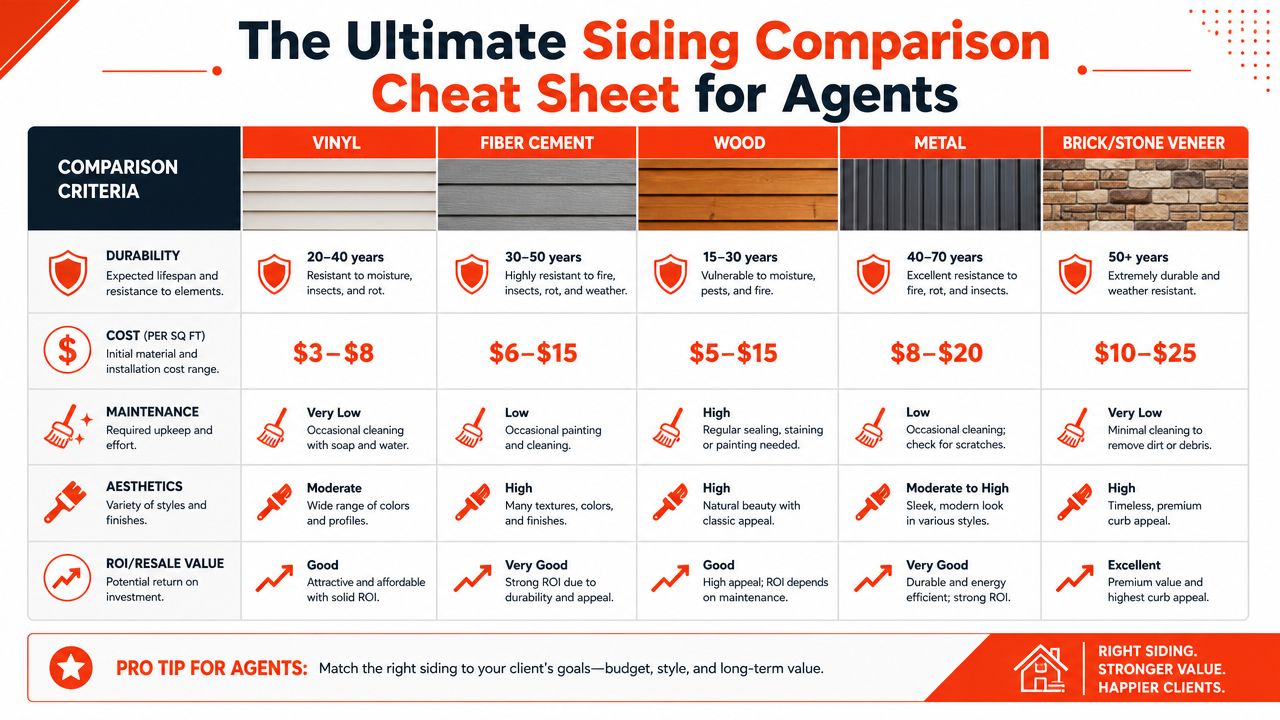
Quick comparison table
| Material | Cost position | Durability | Maintenance | Aesthetic flexibility | Best fit for listings |
|---|---|---|---|---|---|
| Vinyl | Lower-cost category | Good for many mainstream applications | Low | Broad color and profile range | Budget-conscious updates and broad resale appeal |
| Fiber cement | Higher upfront than vinyl | Strong all-around durability | Low to moderate | Can mimic wood and fit many styles | Sellers who want a premium exterior story |
| Wood | Varies, often higher upkeep burden | Depends heavily on care | High | Excellent natural character | Historic, cottage, or design-led homes |
| Metal | Often premium-looking | Strong in harsh exposure when properly selected | Low to moderate | Clean, modern look | Contemporary homes and design-forward marketing |
| Brick or stone veneer | Higher capital feel | Strong long-term perception | Low | Best on traditional architecture | Listings where permanence and prestige matter |
Fiber cement as the benchmark upgrade
The strongest all-around technical option for many homes is fiber cement. It typically carries an installed lifespan of around 50 years and cost estimates in the $5 to $14 per sq. ft. range, according to James Hardie's siding type overview. For agents, the number matters less than the narrative it supports: higher upfront investment, lower replacement risk, stronger durability story.
That's useful in pricing conversations because sellers often focus too narrowly on installation cost. Buyers usually react to visible condition, perceived longevity, and whether the exterior feels like a near-term problem.
How to explain the trade-offs
Use this language with clients:
- Vinyl wins on simplicity: It's often the easiest way to clean up a tired exterior and present a low-maintenance ownership story.
- Fiber cement wins on confidence: It tends to support stronger “quality construction” messaging, especially when the rest of the home has been updated to match.
- Wood wins on charm: It can be the right move when architecture carries the listing, but only if condition is excellent.
- Metal wins on identity: It's not for every buyer, but it can sharpen the design story on a modern home.
- Brick or stone veneer wins on permanence: It helps buyers feel they're purchasing something solid and established.
For agents who need a rough planning resource before they bring in bids, Penn Ohio's siding cost breakdown is a practical way to frame early budgeting discussions without overpromising exact numbers.
A good exterior comparison also helps during pre-list prep. This video gives a useful visual overview of siding considerations that agents can translate into buyer-facing language.
What agents should actually optimize for
The right choice usually comes down to five listing outcomes:
- Street appeal in photos
- Low visible maintenance
- Fewer buyer objections during walkthroughs
- A believable value narrative
- A finish that matches neighborhood expectations
Agent takeaway: A cheaper siding material can still be the smarter listing decision if it removes visible wear, aligns with the market, and lets buyers feel the home is move-in ready.
If the exterior looks inconsistent with the price point, buyers assume the rest of the house may be inconsistent too. That's why siding has outsized influence on perceived value.
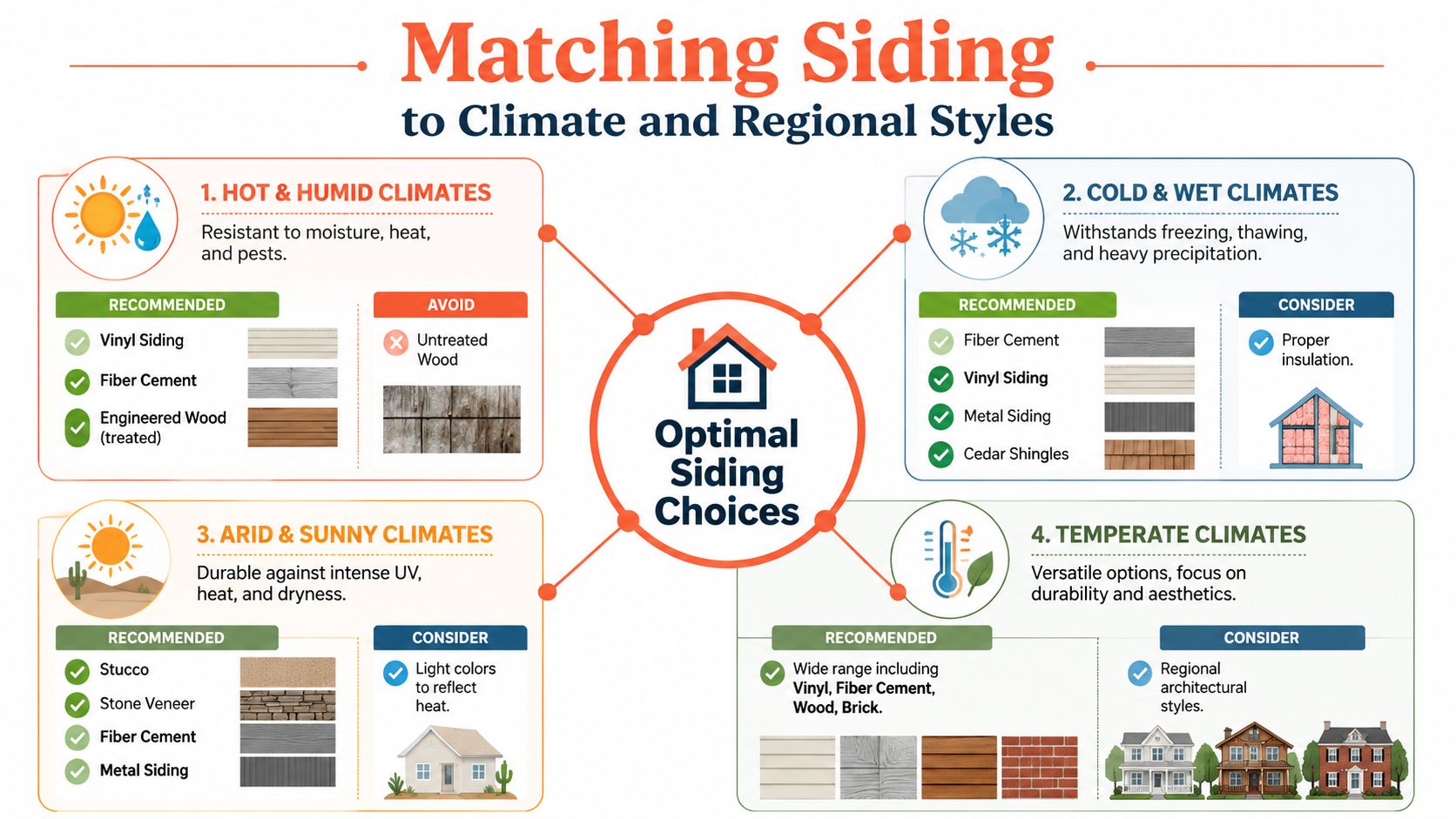
Matching Siding to Climate and Regional Styles
Climate is the first filter. Style comes second.
Agents who skip that order often help sellers make expensive cosmetic choices that don't hold up. A handsome exterior that struggles in local conditions becomes a future buyer objection, and smart buyers sense that quickly.
Hot humid markets
In hot, damp regions, moisture resilience matters more than almost anything else. Guidance on climate durability notes that fiber cement, brick, and stucco are among the materials less prone to mold, while vinyl is low-maintenance and wood is attractive but maintenance-heavy, as discussed in this regional siding guide from eXp Realty.
That creates a clear listing strategy. If a seller is chasing charm with wood in a wet, bug-prone environment, you need to warn them that beauty can turn into upkeep anxiety for buyers.
Best fit: fiber cement, stucco, brick, and in many cases vinyl.
Risky choice: wood on homes where maintenance discipline hasn't been excellent.
Freeze thaw and mixed climates
Cold-wet and mixed climates punish weak installation details. Buyers may not know the technical language, but they can spot swollen trim, paint failure, and moisture staining.
Fiber cement often earns attention in these areas because it supports a tougher durability story. Vinyl can also work well when product quality and installation are solid. What doesn't work is acting like any material will perform well without careful detailing around joints, flashing, and transitions.
Coastal and high-wind zones
Generic advice quickly becomes inadequate. For coastal and high-wind areas, fiber cement or performance-focused vinyl with a double-layer mounting hem are often recommended for superior salt and wind resistance, according to Roof Maxx's siding guidance. That same guidance points to a key truth agents should repeat to clients: installation quality is as important as material choice.
On a windy or coastal property, “we used the right siding” isn't enough. Buyers need confidence that the siding was installed correctly.
Best fit: fiber cement and performance-focused vinyl.
Risky choice: any product installed poorly, even if the material itself is suitable.
Arid, sunny, and wildfire-prone areas
In dry and sunny markets, stucco often makes immediate regional sense because buyers already associate it with the local housing stock. Fiber cement and masonry-based looks can also support a durable, climate-aware exterior story.
For wildfire-prone areas, non-combustibility becomes more persuasive in buyer conversations. That's where fiber cement can stand out. If you're advising on a rebuild, major exterior renovation, or a home competing on durability, that feature deserves attention.
Regional style still matters
A Cape-style home in the Northeast, a Southwestern stucco property, and a contemporary infill build don't need the same answer. Climate narrows the field. Architecture chooses among the finalists.
That's the practical answer to what is the best siding for a home in real life. The best material is the one that survives the local environment and still looks like it belongs on that street.
Boosting Curb Appeal and ROI What Sells a Listing
New siding doesn't just change the house. It changes the conversation around the house.
When buyers pull up to a listing, they start making financial assumptions immediately. If the exterior looks dated, they mentally reserve money for repairs. If it looks clean and current, they shift toward emotional buying. That's why siding can do more than improve curb appeal. It can reduce the discount buyers try to build into their offers.

The clearest resale number agents can use
Consumer Reports cites 2024 Cost vs. Value findings showing that replacing vinyl siding recoups 97% of its cost at resale, which helps explain why vinyl remains such a strong-volume choice for sellers focused on return, according to the Consumer Reports siding buying guide.
That is a rare number agents can use with confidence because it connects a visible exterior project directly to resale performance.
Turning specs into listing language
Don't describe siding the way a contractor would. Describe it the way a buyer hears value.
Try translations like these:
- Low maintenance becomes “less immediate upkeep after closing.”
- Moisture resistance becomes “fewer concerns about hidden exterior deterioration.”
- Durability becomes “stronger long-term ownership story.”
- Updated finish becomes “better curb appeal in photos and at the showing.”
A siding project also works best when it's packaged with presentation. If you're helping a seller see how exterior upgrades support the full visual story of a home, the same logic behind before-and-after home staging strategy applies outside too. Buyers respond to a property that feels intentionally prepared, not partially improved.
A fresh exterior helps buyers believe the rest of the house has been cared for with the same discipline.
Which homes benefit most from a siding conversation
Not every listing needs replacement. Many just need better positioning. Focus on siding as a value lever when:
- The front elevation looks tired in photos: Even strong interiors struggle when the cover image underperforms.
- Buyers are likely to overestimate repair costs: Old or visibly worn siding invites exaggerated assumptions.
- The home sits in a competitive price band: Exterior freshness helps a listing feel more move-in ready than nearby options.
- The neighborhood standard has risen: A dated exterior stands out faster when surrounding inventory looks updated.
For a seller-facing explanation of why siding can influence value and buyer perception, Superior Home Improvement's siding guide is a useful supplemental read in plain language.
What actually helps listings sell faster
The winning curb appeal narrative usually has three parts:
- The siding looks consistent with the asking price
- The material supports the local buyer's maintenance expectations
- The photos communicate care before the showing even starts
Agents who treat siding as a marketing asset get better seller buy-in. They stop discussing cladding as a construction line item and start presenting it as a tool for stronger first impressions, cleaner buyer psychology, and more defensible value.
Advising Clients Your Siding Decision Checklist
A good siding recommendation should feel structured, not opinionated. Sellers get overwhelmed when they see too many materials and too many style photos. A checklist keeps the conversation practical.
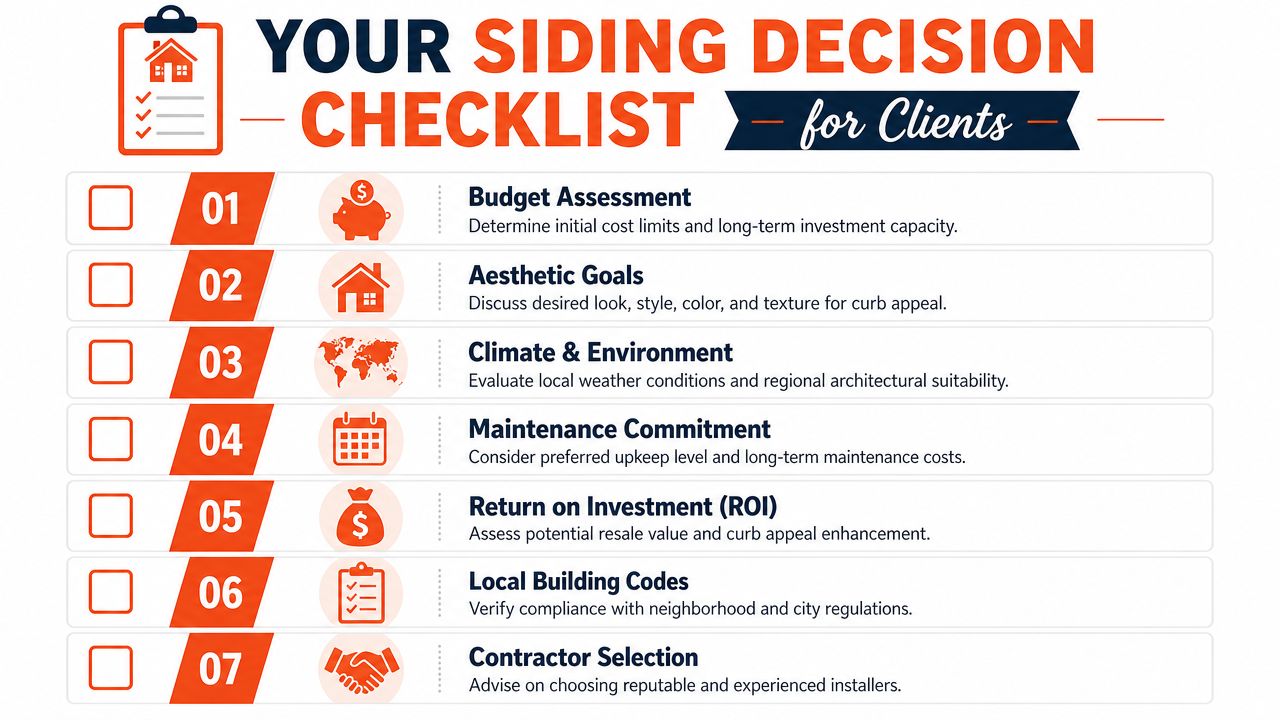
The seven questions to ask before recommending anything
What's the actual budget range?
Don't ask for a vague target. Ask whether the seller wants the lowest practical cost, the strongest long-term option, or the best compromise between the two.Is the home being held or sold soon?
A seller preparing for market may prioritize curb appeal and resale efficiency. A long-term owner may care more about replacement risk and maintenance burden.What does the neighborhood already support?
Walk the block, review recent listings, and note what looks normal at that price point. The best siding choice often reinforces local expectations rather than trying to outsmart them.
The condition and style questions
What architectural story should the exterior tell?
Brick and stone veneer can strengthen traditional homes. Fiber cement works across many styles. Wood can be compelling on cottages and historic homes, but only when the rest of the exterior matches the promise.How much maintenance will the owner really tolerate?
Be blunt here. If the client doesn't want repainting cycles or regular exterior attention, steer them away from options that depend on disciplined upkeep.What climate stress matters most at this address?
Moisture, salt, wind, heat, freeze-thaw, and wildfire exposure should all shape the shortlist before color boards come out.- Who will install it, and can they do it well?
Material selection can't rescue poor workmanship. If the installation is weak, the listing may end up with visible defects, warranty issues, or inspection concerns that erase the value of the upgrade. - Not just purchase cost
- Not just curb appeal
- But durability over time, maintenance burden, and replacement cycle
Ask the maintenance question early. Sellers often choose with their eyes and regret it with their calendar.
The final question that protects everyone
Use the checklist as a script, not a handout. A strong agent doesn't just answer “what is the best siding for a home.” A strong agent narrows the decision until the right answer becomes obvious for that specific property.
The Future of Siding Lifecycle Cost and Sustainability
Most siding conversations still stop at two variables. What does it cost, and does it look good?
That's no longer enough. A more useful lens is lifecycle value. Some materials look affordable on day one but become less attractive when you factor in future repainting, repairs, or earlier replacement. That matters to owners, but it also matters to buyers reading between the lines of a listing.
Current coverage on siding trends increasingly points out that many guides miss lifecycle economics and embodied carbon, even though a material that seems cheaper upfront may look less compelling when replacement frequency and environmental impact enter the conversation, as noted in this discussion of siding lifecycle and sustainability.
What this means for agents
Forward-looking agents should start using a broader value script:
That doesn't mean every buyer is asking about embodied carbon directly. It means more buyers are receptive to a practical sustainability story when it also supports financial logic. A longer-life exterior can be marketed as lower-hassle ownership, fewer future disruptions, and a more thoughtful renovation decision.
If you want a way to think through renovation upside in a more strategic way, AI renovation value analysis for real estate agents reflects the kind of broader valuation mindset agents should bring to exterior upgrades.
The agents who stand out over the next few years won't be the ones with the longest material list. They'll be the ones who can connect siding choice to resale positioning, long-term ownership logic, and buyer confidence.
Bounti Labs helps agents turn property potential into market-ready visuals and marketing assets fast. With Bounti Labs, you can transform a listing from a simple walkthrough into polished photos, stronger descriptions, and renovation-ready visual concepts that help sellers see the value of smart exterior and interior updates before the home hits the market.